


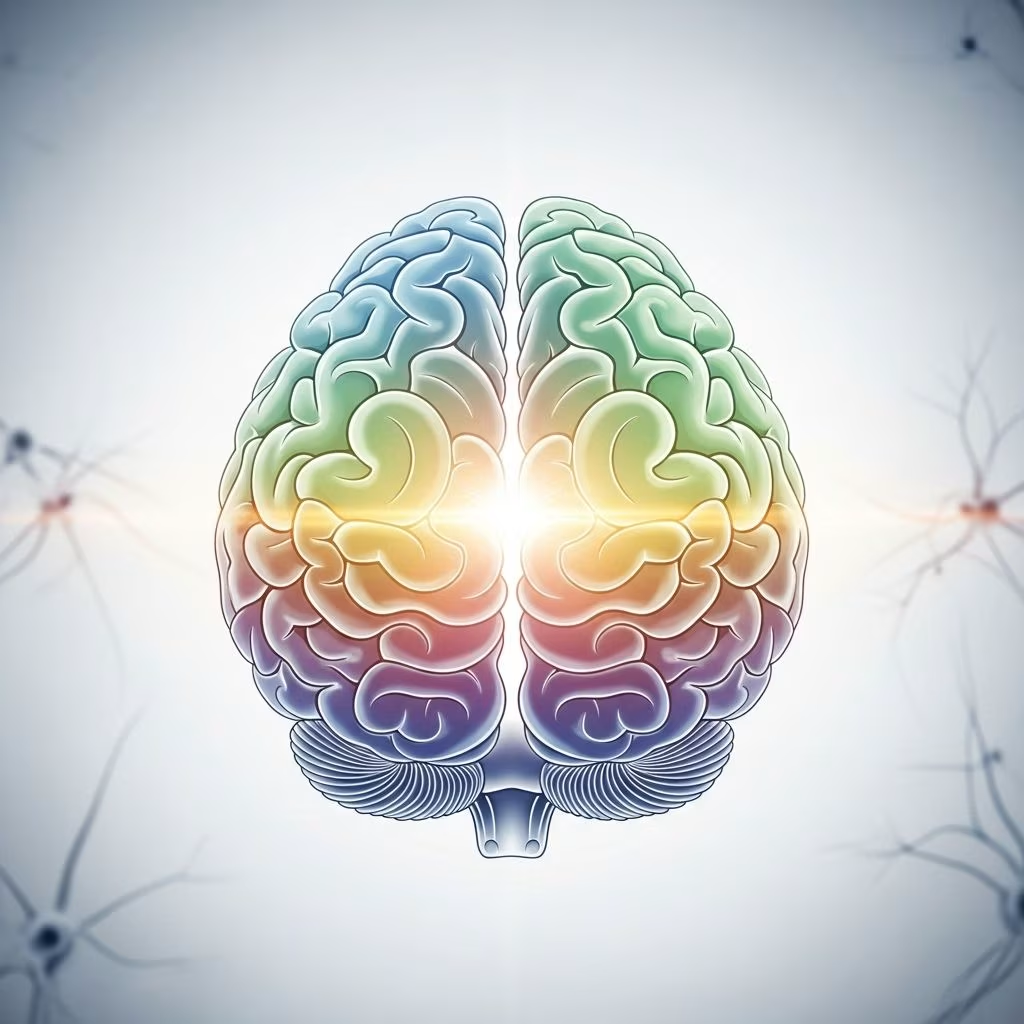
Neurotypical is a term used to describe people whose neurological development and functioning align with what is broadly expected by societal and cultural standards. This concept exists in contrast with neurodivergent—an umbrella term for individuals whose brain processes and behaviors fall outside these norms, such as people with autism spectrum disorder, ADHD, or dyslexia.
Understanding Neurotypicality
To fully comprehend neurotypicality, it is important to look beyond simple definitions. In contemporary discourse, “neurotypical” does not imply superiority or a value judgment; rather, it helps define the common developmental path against which differences are noted. Recognizing what is typical allows for the identification and appreciation of neurological diversity within the human population.
- Neurotypical individuals make up a significant majority of the population, estimated at around 80–85%.
- Society’s institutions—such as schools, workplaces, and social organizations—tend to cater to the preferences and needs of neurotypical people.
- The term is not static; what is ‘typical’ varies across cultures, age groups, and historical contexts.
Defining Neurotypical: Key Traits
Being neurotypical is associated with certain patterns of behavior and development. People considered neurotypical usually:
- Reach developmental milestones—such as walking, talking, social engagement—at broadly expected times.
- Naturally adapt to social norms and cues (like eye contact, facial expressions, and conversational rhythms).
- Process sensory information (sounds, sights, textures) within the tolerance levels set by societal expectations.
- Adjust with relative ease to new routines or unplanned changes.
- Demonstrate average proficiency across cognitive, organizational, and communication skills.
Table: Neurotypical vs. Neurodivergent
| Aspect | Neurotypical | Neurodivergent |
|---|---|---|
| Developmental Milestones | Reached in expected age range | May be delayed or different |
| Social Skills | Grasps social cues easily | May interpret or express social cues differently |
| Sensory Processing | Tolerates typical sensory input | Might experience hypersensitivity or hyposensitivity |
| Adaptability | Adapts readily to change | Change may cause stress or confusion |
| Cognitive Patterns | Linear and conventional | May be more non-linear or creative |
Common Characteristics of Neurotypical Individuals
While not all neurotypical people fit a mold, many share a cluster of overlapping characteristics. These traits help distinguish neurotypicality from neurodivergence, but always with the recognition that every human is unique.
- Effective Communication: Neurotypical people often use and interpret verbal and non-verbal cues with ease, including body language, tone shifts, and facial expressions.
- Emotion Regulation: Typically, they can manage and modulate emotions in socially expected ways, adapting responses to context.
- Standard Sensory Processing: Most neurotypical individuals tolerate sensory stimuli without lasting discomfort, such as loud noises, crowded places, or textures.
- Adaptation to Routine: They usually manage transitions, shifts in schedule, or unexpected events with less pronounced stress.
- Societal Inclusion: They find it easier to fit into traditional educational, social, and occupational settings.
- Range of Interests: Their interests and hobbies typically align with their peer group and adapt with age.
The Origins and Uses of the Term “Neurotypical”
The term “neurotypical” originated within the autistic community as a useful way to reference people not on the autism spectrum. Its meaning has since broadened to encompass the general population with standard neurological development. The use of this term:
- Distinguishes between typical and atypical neurological patterns
- Helps highlight the ways mainstream society is oriented around neurotypical thinking and behavior
- Avoids framing autism or other neurological differences strictly in medical or deficit terms
This shift in language reflects growing awareness of neurodiversity—the perspective that different ways of thinking and processing information are natural forms of human variation.
Neurodiversity: Beyond Neurotypical vs. Neurodivergent
Neurodiversity reframes differences not as deficiencies, but as valuable aspects of human variation. Instead of viewing conditions such as autism, ADHD, and dyslexia as flaws to be “fixed,” the neurodiversity movement acknowledges their challenges and their unique strengths.
Key principles of neurodiversity include:
- All brains are different, and diversity is inherent to humanity.
- Standard approaches to education and employment may unintentionally exclude or disadvantage neurodivergent people.
- Social, emotional, and occupational inclusion require flexible approaches and systems that honor individual needs.
The concept also encourages reshaping societal structures and attitudes, supporting accommodations for all individuals to thrive regardless of neurodevelopmental status.
Challenges Faced by Neurodivergent Individuals
Despite social progress, neurodivergent individuals often encounter significant challenges, most of which arise not from their condition but from society’s default orientation toward neurotypical experience. Common difficulties include:
- Lack of understanding: Stereotypes and misconceptions about autism, ADHD, and other forms of neurodivergence can create barriers to acceptance.
- Social isolation: If social norms or communication styles differ, neurodivergent people may struggle to connect with others.
- Inadequate accommodations: Workplaces and schools may lack the resources or flexibility needed to support diverse learning and working styles.
- Stigma and discrimination: Negative societal attitudes can limit opportunities and undermine self-esteem.
Addressing these challenges requires promoting greater empathy, adaptability, and awareness within systems designed primarily for neurotypical needs.
Recognizing the Privileges of Neurotypicality
Because much of the world is built around neurotypical assumptions, being neurotypical carries implicit privileges. These can manifest as:
- Ease of access to education and healthcare services designed for standard developmental paths
- Social acceptance, fewer misunderstandings, and greater likelihood of positive feedback in social and professional settings
- General absence of pressure to “mask” or modify one’s fundamental way of experiencing the world
- Alignment between personal processing or learning styles and established societal systems
Understanding these privileges is essential for building more inclusive institutions, practices, and attitudes.
Frequently Asked Questions (FAQs)
Q: What does it mean if someone is neurotypical?
A: Neurotypical individuals have patterns of thought, perception, sensory processing, and behavior that align with the societal norm. They often reach developmental benchmarks at expected ages and adapt more readily to standard education, work, and social environments.
Q: Is being neurotypical “better” than being neurodivergent?
A: No. Neurotypicality is not inherently superior or preferable. Neurodiversity highlights the value in neurological differences. Many neurodivergent individuals possess unique perspectives, talents, and strengths that are essential for a flourishing, creative society.
Q: Can someone be a mix of neurotypical and neurodivergent traits?
A: Yes. Human neurology exists along a spectrum. Not all neurotypical people meet every typical benchmark, and neurodivergent individuals may demonstrate neurotypical abilities in some areas. The distinctions primarily guide understanding but do not dictate identity.
Q: Why is understanding neurotypicality important?
A: Recognizing how society defaults to neurotypical assumptions is vital for inclusivity. Awareness helps reduce barriers for neurodivergent individuals and fosters empathy, support, and flexibility in education, the workplace, and beyond.
Q: How can society better support neurodivergent people?
A: Increased understanding, targeted accommodations, flexible policies, and a cultural shift toward valuing all forms of neurodiversity are key steps. Actively including different perspectives in decision-making processes drives innovation and social cohesion.
Key Takeaways
- The term neurotypical describes people who develop and function as society expects, with all the privileges and widespread institutional support this involves.
- Neurodivergence describes those whose brain function or development differs significantly from typical standards, representing vital diversity rather than deficiency.
- Societal systems are often unintentionally exclusive; understanding neurotypicality is foundational to creating more accommodating and equitable structures.
- Embracing neurodiversity benefits everyone by fostering creativity, resilience, and empathy throughout society.
Recognizing, respecting, and supporting neurodiverse experiences is not just a social good—it is essential for building a more innovative, compassionate, and inclusive future.
References
- https://www.advancedautism.com/post/neurotypical-meaning
- https://www.brighterstridesaba.com/blog/what-is-neurotypical-vs-neurodivergent/
- https://www.abtaba.com/blog/neurotypical-meaning
- https://www.medicalnewstoday.com/articles/what-does-neurotypical-mean
- https://my.clevelandclinic.org/health/articles/neurotypical


