


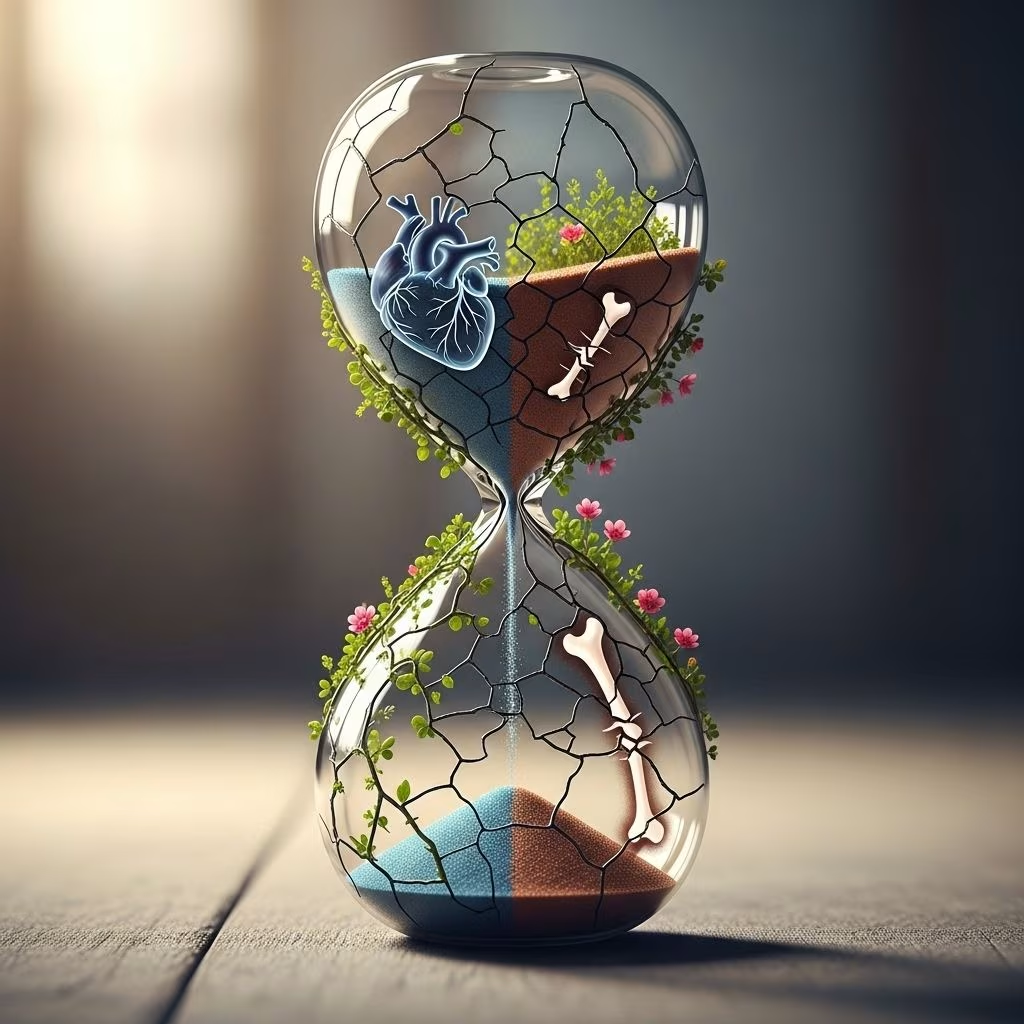
Does Time Heal All Wounds? Exploring a Common Belief
The phrase “time heals all wounds” has been widely repeated for centuries, comforting those in emotional and physical pain by promising eventual relief as days pass. But does time alone truly heal our deepest wounds, or is the healing process far more complex than this familiar adage suggests?
The Origin and Cultural Significance of the Saying
First attributed to the ancient Greek poet Menander around 300 B.C., the maxim has endured throughout history as a universal balm for suffering individuals. Yet, as society has advanced and psychological understanding has improved, scientists and clinicians challenge the literal truth of this phrase, emphasizing the importance of active participation in healing rather than passive passage of time.
Emotional Wounds: More Than Just the Passing of Time
Emotional wounds differ considerably from physical injuries. They often arise from grief, loss, trauma, betrayal, or prolonged stress and are frequently invisible to others. While physical recovery may follow a predictable course, emotional pain is much more individual and unpredictable.
- Grief from the loss of a loved one may persist for years, never fully vanishing but changing in nature over time.
- Trauma, especially related to abuse, betrayal, or violence, can leave enduring scars that time itself cannot erase without active intervention.
The Fluid Nature of Emotions
Emotions are highly dynamic. Intense feelings such as grief, heartbreak, and sadness can feel overwhelming in the short term. For many, these emotions soften over weeks and months, becoming more manageable, particularly when paired with coping mechanisms or support systems.
A key misconception is that painful emotions simply dissipate as time passes. Research and clinical experience consistently show that emotional wounds often fester or even worsen if ignored or suppressed, leading to chronic distress, anxiety, or depression.
Does Time Diminish Pain?
Time can, under the right circumstances, lessen the intensity of emotional distress. Its role is evident in experiences of heartbreak or bereavement, where the sharpest pain tends to subside with distance from the event. However, this softening is not universal or guaranteed. For some, unresolved issues persist, leaving individuals stuck in grief or trauma for extended periods.
| Emotional Wound Type | Role of Time | Healing Factors |
|---|---|---|
| Heartbreak | Usually lessens with time | Support, self-reflection, growth |
| Grief from Loss | May diminish, often lingers | Active processing, social support |
| Trauma/PTSD | Often persists without help | Therapy, coping strategies, resilience |
| Betrayal/Abuse | Time alone rarely heals | Forgiveness, letting go, intervention |
Scientific Evidence: What Do Studies Reveal?
Research on Grief Recovery Over Time
Grief studies show symptoms tend to decrease with time, but this is not always linear. For example, research found prolonged grief symptoms were highest one to two years after a loss, possibly due to a paradox in the timing of social support. Immediately following bereavement, the shock phase makes support less effective. As shock wanes and vulnerability rises, social networks often withdraw, assuming time has done its work. This can leave individuals feeling isolated, struggling alone as grief persists.
Long-Term Trauma and Mental Health
Longitudinal studies on posttraumatic stress disorder (PTSD) demonstrate that time alone does not necessarily heal psychological injuries. Without proper intervention—such as counseling, therapy, or supportive relationships—traumatic stress may remain, sometimes for years after the event. Active measures, such as seeking mental health care and practicing emotional processing, are essential for recovery.
Physical Healing and the Influence of Perceived Time
Recent scientific inquiry offers a fascinating twist: our psychological perception of time can impact physical healing. Experiments in which subjects were led to believe more or less time had elapsed revealed that minor wounds healed faster when participants believed more time had passed, independent of actual elapsed time. This finding, rooted in the theory of mind–body unity, suggests that expectations, beliefs, and perceptions actively shape physiological processes.
- Less stressed individuals healed faster, demonstrating the intertwined effects of psychological and physical health.
- Older participants healed more slowly, indicating that both biological and psychological factors are at play.
Language and beliefs about healing matter—in short, how we think about time can influence our physical and emotional recovery.
The Time-Support Paradox: When Help Is Needed Most
Another critical finding from grief research is what scientists call the “time-support paradox”:
- Immediately after a loss, family and friends offer the most help, but the bereaved are usually in shock and unable to fully benefit.
- As time goes on, social support often fades away, despite growing need for comfort and guidance as the initial shock wears off.
- Individuals may feel most vulnerable and alone a year or more after their loss, even as support systems assume healing should be complete.
This mismatch illustrates why ongoing support is vital for genuine healing. Relationships, professional interventions, and community care should persist beyond the first days and weeks after a traumatic event.
The Active Process of Healing
Expert consensus across psychology, psychiatry, and wellness disciplines is clear: time by itself does not heal all wounds. Instead, healing is a dynamic, participatory process. Key steps include:
- Acknowledgement and acceptance: Denying pain rarely leads to recovery; facing emotions head-on is essential.
- Seeking support: Professional help, peer groups, family, and friends can provide necessary resources and comfort.
- Active processing: Journaling, meditation, and reflection help give meaning to difficult experiences and reveal pathways to growth.
- Forgiveness and letting go: Releasing resentment—whether toward others or oneself—can be transformative.
- Building resilience: Developing coping strategies and inner strength helps navigate future adversity.
Those who engage with their healing, rather than waiting for time to do the work, tend to fare best. Many wounds, emotional or physical, never vanish entirely; however, active effort can create personal growth and strength from hardship.
Mind-Body Unity: A Holistic Perspective
The concept of mind-body unity holds that psychological processes are inseparable from physical health. Our thoughts, expectations, and beliefs about time and healing can directly impact recovery times and well-being. Ignoring either aspect risks prolonging suffering or missing key opportunities for improvement.
Leading researchers urge a shift in how we think about recovery—from strictly biomedical models to approaches that value psychological influence and holistic care.
Common Questions About Time and Healing
Does time always heal emotional wounds?
Time may lessen some pain naturally, especially for minor heartbreak or disappointment. However, major trauma, severe grief, and abuse usually require active measures—in some cases, wounds may never fully heal without intervention.
How can I help myself heal emotionally?
- Acknowledge your feelings and avoid suppressing them.
- Reach out for support from trusted people or professionals.
- Practice self-care and explore healthy coping mechanisms (e.g., writing, meditation, exercise).
- Be patient and compassionate with yourself throughout the process.
Can changing how we think about time speed up physical healing?
Research shows that perception and expectations about time can influence physical recovery rates. Mindfulness, reduced stress, and positive beliefs are linked to improved outcomes.
Why does grief sometimes feel worse long after the loss?
As initial shock diminishes, individuals may become more aware of their loss, with support networks presuming recovery is complete. Thus, true vulnerability and need for help may peak months or years after the event.
Strategies for Supporting Healing—For Yourself and Others
- Active Listening: Simply being present and attentive to someone’s pain can be a powerful source of comfort.
- Consistent Support: Offer help over weeks and months, not just in the immediate aftermath of crisis.
- Encourage Professional Help: Suggest counseling or therapy when needed.
- Validate Experiences: Respect the individual’s pace of recovery—avoid judgments or pressure to “get over” pain quickly.
- Promote Healthy Routines: Gentle reminders to maintain sleep, nutrition, and exercise routines can support healing.
What If Wounds Never Fully Heal?
Some loss and trauma may never vanish completely. Rather than expecting perfect closure, experts suggest finding meaning, purpose, or personal growth through adversity. Pain can sometimes be transformed into strength, empathy, or motivation to help others.
Conclusion: The Truth Behind “Time Heals All Wounds”
While time may lessen pain and provide perspective, true healing is rarely automatic. Active engagement, support, and a holistic view of health are all crucial for overcoming life’s deepest wounds. The myth that time alone cures all suffering can discourage people from seeking help or leave them feeling isolated as recovery stalls.
The reality is that everyone’s healing journey is unique, requiring patience, effort, and compassion. And while some pain may persist, resilience and growth are often possible, even if the path to recovery is longer and more complex than a simple passage of time would suggest.
Frequently Asked Questions (FAQs)
Q: Does time itself heal every kind of wound?
A: No. Time can reduce emotional pain, but most wounds need active healing efforts, support, and sometimes professional intervention.
Q: How does perceived time affect physical recovery?
A: Studies show that the belief that more time has passed can speed up healing, illustrating the importance of psychological factors in physical recovery.
Q: Why is support critical long after trauma or loss?
A: As initial shock fades, individuals may feel more vulnerable and in need of help, even as social support often diminishes—creating a time-support paradox.
Q: What active steps can facilitate emotional healing?
A: Processing emotions, seeking support, practicing self-care, and being open to new coping skills are all essential for recovery.
References
- https://pmc.ncbi.nlm.nih.gov/articles/PMC11423554/
- https://www.psychologytoday.com/us/blog/common-sense-science/202502/does-time-heal-all-wounds
- https://news.harvard.edu/gazette/story/2024/03/glimpse-into-how-mind-may-affect-healing/
- https://www.nature.com/articles/s41598-023-50009-3
- https://pubmed.ncbi.nlm.nih.gov/26042579/
- https://popcenter.asu.edu/sites/g/files/litvpz3631/files/library/CrimePrevention/Volume_12/10-Shaw-2.pdf
- https://www.psychologytoday.com/us/blog/meditation-for-modern-life/202407/does-time-really-heal-all-wounds-unveiling-the-truth-0
- https://www.tandfonline.com/doi/abs/10.1080/07481187.2023.2297065


