


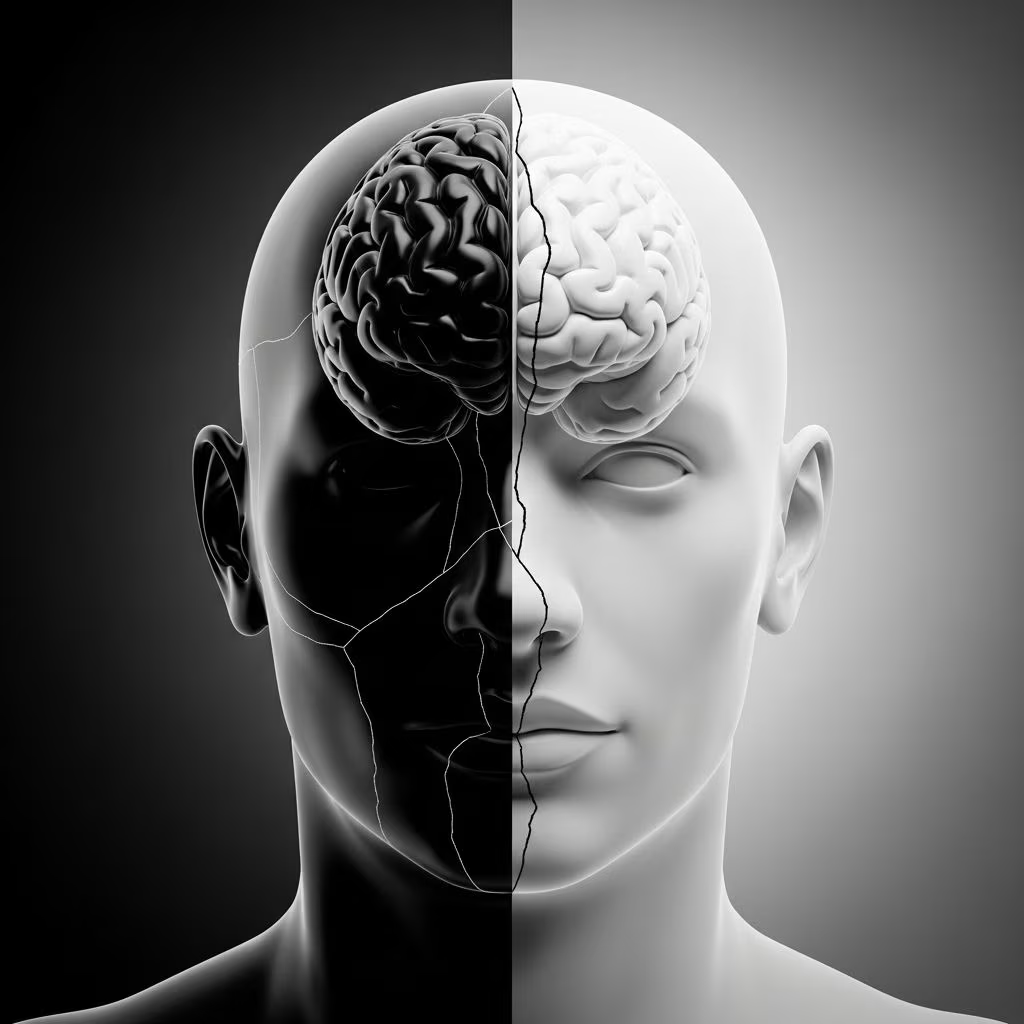
Dichotomous Thinking: Understanding Black-and-White Mentality
Dichotomous thinking, often called black-and-white thinking or all-or-nothing thinking, is a common cognitive distortion in which people see life in extremes, categorizing people, experiences, or outcomes as entirely good or bad, success or failure, with no shades of gray in between.
What Is Dichotomous Thinking?
Dichotomous thinking is a mental pattern where experiences or outcomes are split into two mutually exclusive categories, ignoring nuance and complexity. This mode of thought is characterized by either/or reasoning, and it frequently underpins emotional and relational problems.
- Also referred to as polarized or all-or-nothing thinking.
- Sees outcomes as either successes or failures, with no room for mistakes or partial achievements.
- Common in many individuals, but persistent patterns may indicate a deeper mental health issue.
This type of thinking can be automatic and irrational, often occurring so quickly that individuals do not recognize the pattern unless they reflect on their thoughts and feelings.
Common Features of Dichotomous Thinking
- Evaluating situations as “all good” or “all bad.”
- Labeling people as “friends” or “enemies.”
- Relying on absolute terms such as “always,” “never,” “every,” or “none.”
- Struggling with uncertainty, nuance, or unpredictability.
- Discomfort with ambiguity or situations that cannot be easily categorized.
Examples of Dichotomous Thinking
Dichotomous thinking pervades many aspects of everyday life and often emerges in moments of stress or vulnerability. Recognizing these patterns is the first step to change.
- Academic Performance: “If I don’t get a perfect score, I’m a failure.”
- Self-esteem: “Getting criticized at work means I’m incompetent.”
- Appearance: “If I look anything less than perfect, I’m unattractive.”
- Relationships: “If my partner forgets something important, they don’t care about me at all.”
- Goals and Achievements: “If I can’t achieve the outcome I want exactly as I planned, then I’m a loser.”
In all these cases, the person is disregarding middle-ground possibilities and focusing solely on two extremes, often reinforcing negative emotions and self-perceptions.
Psychological Impact of Dichotomous Thinking
While dichotomous thinking is a common cognitive shortcut, persistent use can have significant implications for mental health and emotional regulation.
- Increases Anxiety and Stress: By viewing setbacks as total failures, anxiety is heightened and stress increases over possible outcomes.
- Harms Self-Esteem: Self-worth becomes fragile, tied to unrealistic standards of all-or-nothing success or perfection.
- Impairs Relationships: People may expect perfection from others, leading to disappointment and conflict.
- Reduces Problem-Solving Skills: Fixating on extremes obscures creative or flexible solutions to challenges.
- Fuelling Negative Self-Image: Dichotomous thinking can exacerbate feelings of helplessness, worthlessness, and despair.
Underlying Causes of Dichotomous Thinking
Dichotomous thinking can have numerous roots, ranging from neurological and developmental to learned behavioral patterns and stress responses. Notably, it often serves as a defense mechanism—an attempt to simplify and manage psychological discomfort.
- Childhood Experiences: Early environments that enforce strict behavioral standards or strong rewards and punishments can encourage black-and-white thought patterns as a coping method.
- Personality Structure: Some individuals are temperamentally more rigid or anxious, increasing susceptibility to polarized thinking.
- Societal Reinforcement: Media messages, family beliefs, and social narratives that focus on extremes or promote perfectionism can reinforce these cognitive distortions.
- Stress and Overwhelm: Under acute stress, the brain reverts to simplified thinking for speed and certainty, triggering more dichotomous beliefs and judgments.
Conditions Linked to Dichotomous Thinking
Dichotomous thinking is closely associated with several mental health conditions, and while it is not a diagnosis itself, it is considered a symptom or contributing cognitive pattern in disorders such as:
- Borderline Personality Disorder (BPD): Characterized by unstable relationships and self-image, with classic splitting between extremes of love and hate.
- Depression: Negative interpretations of self and life that focus on failings or losses, with no room for hope or success.
- Anxiety Disorders: Catastrophic and rigid thought patterns heighten fears of negative outcomes.
- Eating Disorders: Perfectionism, self-criticism, and rigid rules about eating or body image are often examples of black-and-white thinking.
- Obsessive-Compulsive Disorder (OCD): All-or-nothing rules drive compulsive rituals and avoidance behaviors.
| Condition | Example of Dichotomous Thinking |
|---|---|
| Borderline Personality Disorder | “People are either all good or all bad.” |
| Depression | “If today is a bad day, my whole life is worthless.” |
| Eating Disorders | “If I eat one forbidden food, I’ve failed completely and must give up on my diet.” |
Is Dichotomous Thinking a Mental Illness?
Dichotomous thinking is not a mental illness; rather, it is a cognitive distortion or faulty pattern of thinking. However, it can be persistent and disruptive, especially for individuals with underlying mental health concerns. Addressing this thinking style is often an important part of cognitive-behavioral interventions.
The Role of Language in Black-and-White Thinking
The words we use shape our thoughts and reinforce dichotomous patterns. Certain phrases and absolutes are strong indicators of black-and-white thinking:
- “Always” and “never”
- “Completely” and “totally”
- “No point” “every,” or “none”
Such language reinforces rigid categories and can increase feelings of helplessness or anger when reality doesn’t fit these extremes.
Consequences of Dichotomous Thinking
Black-and-white thinking affects more than just mood; it influences actions, expectations, and life satisfaction.
- Impaired Relationships: Expecting perfection can lead to frequent disappointment and conflict with others.
- Career Limitations: Believing you must be perfect or you’re a failure may result in missed opportunities and career burnout.
- Difficulty with Change: Inflexibility makes adjusting to new situations or accepting mistakes harder.
- Overwhelming Emotions: Emotions are intensified by viewing experiences as total disasters or total successes.
How to Recognize Dichotomous Thinking
Identifying this pattern is critical before change can happen. Signs you might be thinking dichotomously include:
- Using absolute terms in self-talk.
- Feeling like a failure after minor setbacks.
- Labeling people or situations as purely good or bad.
- Difficulty accepting feedback as constructive rather than personal failure.
Practical Strategies to Overcome Dichotomous Thinking
Combating dichotomous thinking involves both self-awareness and cognitive restructuring. Here are practical approaches:
- Notice the Pattern: Keep a journal to catch extreme statements or thoughts. Reflect on whether there is evidence for the extremes you see.
- Seek the Gray Areas: Actively practice finding middle ground when evaluating events, people, or yourself. Ask, “What might I be missing between these two extremes?”
- Practice Flexible Thinking: Challenge your assumptions by brainstorming alternatives and seeing the continuum in experiences.
- Cognitive Behavioral Therapy (CBT): CBT can help identify and challenge distorted thinking by introducing more balanced alternatives.
- Mindfulness and Self-Compassion: Learning to observe thoughts nonjudgmentally and treat oneself kindly supports more nuanced and realistic views.
- Language Awareness: Replace absolutist words with more moderate terms: change “always” to “sometimes” or “never” to “rarely.”
When to Seek Help
If dichotomous thinking is creating significant distress, interfering in relationships, affecting work or school, or is part of another mental health challenge, professional support can be invaluable.
- Therapists can help identify cognitive distortions and create tailored intervention plans.
- Support groups and peer counseling also provide space to reflect and challenge rigid patterns.
Frequently Asked Questions (FAQs) on Dichotomous Thinking
Q: Is dichotomous thinking always a problem?
A: Not always. While most people think in extremes occasionally, it only becomes problematic when it dominates your thinking, leads to emotional distress, or impairs functioning.
Q: Can children develop dichotomous thinking?
A: Yes, children often see the world in black and white before their capacity for abstract and nuanced thought matures. For most, this lessens with age, but stressful environments can reinforce these patterns.
Q: What therapies are most effective?
A: Cognitive Behavioral Therapy (CBT) is the gold standard. Mindfulness training and dialectical behavior therapy (DBT) are also effective for helping develop more balanced thinking.
Q: Why do some people struggle more than others?
A: Factors include personality traits, childhood environment, mental health diagnoses, and current stressors. Perfectionism and high expectations, whether self-imposed or societal, often worsen dichotomous thinking.
Q: How long does it take to change this thinking style?
A: Change varies. With practice, self-awareness, and often with professional help, most people can shift toward more balanced thinking over time.
Summary
Dichotomous thinking is a cognitive distortion that affects everyone but can be especially problematic for those with perfectionist tendencies or mental health concerns. Recognition, challenging rigid patterns, and practicing flexible thinking are key steps. With conscious effort, most individuals can learn to think less in absolutes and more in shades of gray, leading to healthier emotions and relationships.
References
- https://www.betterhelp.com/advice/personality-disorders/understanding-dichotomous-thinking-and-what-it-means-for-you/
- https://psychologycorner.com/assertive-communication-resources/what-is-dichotomous-thinking/
- https://www.betterup.com/blog/black-and-white-thinking
- https://en.wikipedia.org/wiki/Splitting_(psychology)
- https://mentalhealthcenterkids.com/blogs/articles/all-or-nothing-thinking
- https://www.rula.com/blog/black-and-white-thinking/
- https://www.embarkbh.com/treatment/mental-health/signs-symptoms/all-or-nothing-thinking/
- https://www.simplypsychology.org/all-or-nothing-thinking-examples.html


