


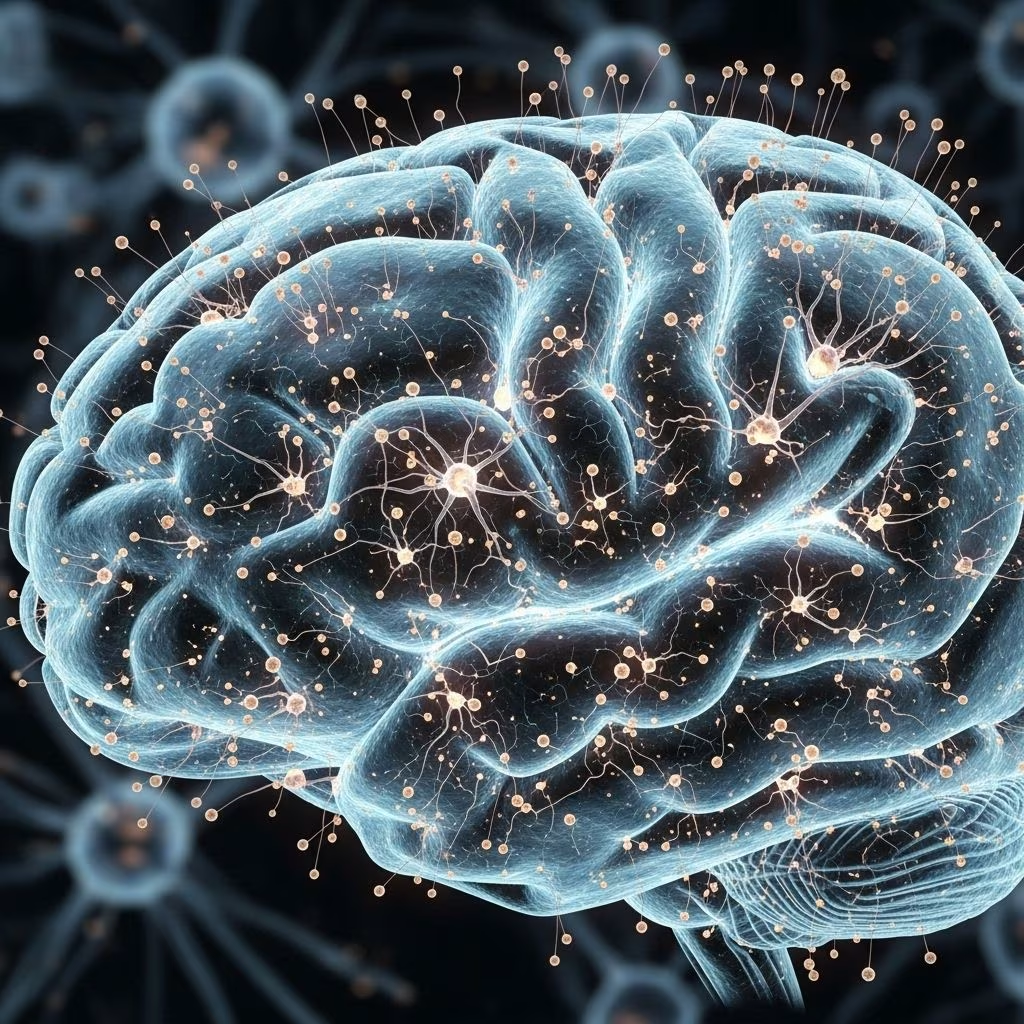
Adult Neurogenesis: Can We Grow New Brain Cells?
For decades, scientists believed the human brain, after reaching maturity, could not grow new neurons. Recently, cutting-edge research has challenged this view. Adult neurogenesis – the process of generating new brain cells in adulthood – has become one of neuroscience’s most significant and debated discoveries. This article takes a deep dive into the science, controversies, implications, and ways to support neurogenesis through lifestyle and advances in medicine.
What Is Adult Neurogenesis?
Neurogenesis refers to the growth and development of new neurons (brain cells). While this process was once thought to occur only during fetal development or early childhood, recent work shows it continues, albeit at a much slower pace, in select areas of the adult brain, primarily the hippocampus, which is essential for learning, memory, and emotion regulation.
- Neural stem cells in the adult brain can divide and mature into functional neurons
- Most adult neurogenesis is localized to the subgranular zone of the dentate gyrus & the subventricular zone
- New neurons integrate into existing circuits and may support cognitive functions
Historical Perspective: The Shift in Scientific Thinking
The belief that neurogenesis stops after early development was largely unquestioned until the 1960s, when Joseph Altman showed evidence of new neuron formation in adult rats. Over time, further research — notably using carbon-14 dating and other molecular techniques — confirmed that neural progenitors persist in adults and can produce neurons. By 1998, human studies provided direct evidence of neurogenesis occurring later in life after patients received specific medical tracer compounds.
- Early skepticism was due to limited detection tools
- Molecular biology advances now reveal neurogenesis in human hippocampus
- Modern studies use single-nucleus RNA sequencing and machine learning for enhanced accuracy
Where Does Neurogenesis Happen in Adults?
Neurogenesis in adults is much less widespread than in developing brains. The most prominent regions include:
- Hippocampus: Subgranular zone of the dentate gyrus
- Subventricular zone: Lining of the lateral ventricles
Other regions may have limited or controversial neurogenesis activity, but evidence is strongest in the hippocampus.
How Is Adult Neurogenesis Studied?
Studying neurogenesis in the adult human brain presents methodological challenges. Modern approaches include:
- Marker-based techniques: Tracking proteins and molecules specific to neural precursor cells
- Imaging: MRI, PET scans, and nuclear magnetic resonance spectroscopy
- Single-cell genetics: Sequencing RNA to identify gene activity unique to newborn neurons
- Carbon-14 dating: Measuring cell birth date based on environmental isotopes
The Evidence for Adult Neurogenesis
- A 2024 study combined advanced genetics and machine learning to confirm adult hippocampal neurogenesis, identifying neural progenitor cells in mature human brains.
- Research finds ongoing formation of new neurons even in the brains of older adults, including those affected by mild cognitive impairment and Alzheimer’s disease.
- Studies suggest neurogenesis rate in adults is slower than during development and varies among individuals.
- Animal models offer robust evidence, with new neurons observed in rodent brains throughout life.
Despite compelling new data, some experts continue to debate the extent and functional impact of neurogenesis in adult humans, citing methodological limitations.
Why Does Adult Neurogenesis Matter?
- Learning & Memory: New neurons appear to enhance the brain’s ability to form and retain memories, adapt to new information, and support learning.
- Mood & Emotions: The hippocampus also helps regulate emotional health; impaired neurogenesis is linked to depression and anxiety.
- Resilience: Neurogenesis may underlie recovery from injury and help maintain cognitive function as we age.
Implications for Brain Health and Disease
| Condition | Impact of Neurogenesis |
|---|---|
| Alzheimer’s & Mild Cognitive Impairment | Neurogenesis persists but is diminished with greater impairment. |
| Depression | Reduced hippocampal neurogenesis is associated; antidepressant drugs may promote neurogenesis. |
| Brain Injury | New neurons can help repair damaged circuits, offering hope for recovery. |
What Influences Neurogenesis in Adults?
Multiple factors influence the rate and functional impact of adult neurogenesis:
- Genetics: Individual variability in neurogenesis is partly inherited.
- Age: Neurogenesis slows with age but does not cease entirely.
- Environment: Enriched environments, learning, and physical activity stimulate growth of new neurons.
- Stress: Chronic stress and trauma can inhibit neurogenesis.
- Disease: Neurodegenerative conditions and inflammation may reduce neurogenesis.
Lifestyle Factors That Support Neurogenesis
While genetics set the baseline, lifestyle choices have a profound impact on brain plasticity. Key ways to encourage neurogenesis include:
- Regular Aerobic Exercise
Physical activity, especially aerobic exercise like running or swimming, is one of the most consistently supported practices for boosting new neuron growth. - Learning & Cognitive Stimulation
Engaging in new skills, puzzles, or complex tasks promotes neurogenesis. - Meditation & Mindfulness
Mindfulness-based practices help regulate stress and may protect neurogenesis. - Quality Sleep
Sufficient and high-quality sleep supports both neural health and plasticity. - Nutrition
- Omega-3 fatty acids: Found in fish, flaxseed, walnuts; support neuron membrane structure.
- Phytonutrients: Antioxidants and polyphenols reduce inflammation, supporting healthy brain cells.
- Social Engagement
Meaningful social connections and stimulation improve cognitive reserve.
Myths and Realities About Adult Neurogenesis
- Myth: Neurogenesis stops after childhood.
Reality: Evidence proves ongoing neuronal growth in select regions into late adulthood. - Myth: All areas of brain produce new cells.
Reality: Most neurogenesis occurs in the hippocampus and certain zones. - Myth: New neurons instantly enhance intelligence.
Reality: Integration and maturation into functional networks takes time and is affected by many factors.
Current Challenges and Future Directions
Neuroscientists continue to debate technical details including:
- Methods: Direct observation in living human brains remains limited.
- Rates and Functional Significance: Neurogenesis may be highly variable; not all adults may produce new neurons at the same rate.
- Therapeutic Approaches: There is growing interest in using pharmaceuticals or genetic techniques to promote neurogenesis, especially to treat age- or trauma-related decline.
Innovative Research Areas
- Stem cell therapy: Experimental treatments aim to stimulate the brain’s innate capacity for repair
- Genetic and molecular targeting: Modifying gene activity in neural progenitors to enhance neuron growth
- Advanced imaging: More precise visualization of neurogenesis in living individuals
Frequently Asked Questions (FAQs)
Can adults really grow new brain cells?
Yes. Recent research has definitively shown that adults can grow new neurons, particularly in the hippocampus, although the rate is lower than during development.
Does neurogenesis help prevent Alzheimer’s?
Neurogenesis continues in adults with cognitive impairment, but appears reduced with disease progression. More research is needed to clarify its protective role.
How can I increase neurogenesis?
Regular aerobic exercise, learning new skills, maintaining a healthy diet, and managing stress can all promote neurogenesis.
Is neurogenesis the same as brain plasticity?
No. While related, brain plasticity includes many ways the brain changes, including synaptic remodeling. Neurogenesis refers specifically to generation of new neurons, a special form of plasticity.
Does everyone experience adult neurogenesis?
Most people do, but the rate and functional impact vary due to age, genetics, health, and environment.
Key Takeaways
- Adult neurogenesis is real and mostly occurs in the hippocampus
- It plays a crucial role in learning, memory, mood, and resilience
- Lifestyle choices significantly affect the rate of new neuron growth
- Modern science is exploring ways to harness neurogenesis for therapy
The human brain’s ability to grow new cells in adulthood revolutionizes our understanding of cognitive health. By supporting neurogenesis through lifestyle, and continuing scientific research, we can strive for healthier, more adaptive brains across the lifespan.
References
- https://www.livescience.com/health/neuroscience/can-adults-make-new-brain-cells-new-study-may-finally-settle-one-of-neurosciences-greatest-debates
- https://www.science.org/content/article/genetic-evidence-our-brains-make-new-neurons-adulthood-may-close-century-old-debate
- https://www.nia.nih.gov/news/new-hippocampal-neurons-continue-form-older-adults-including-those-mci-alzheimers
- https://news.ki.se/new-research-confirms-that-neurons-form-in-the-adult-brain
- https://www.neuroscijournal.com/articles/jnnd-aid1102.php
- https://pmc.ncbi.nlm.nih.gov/articles/PMC6659986/
- https://med.stanford.edu/news/all-news/2024/10/study-generating-neurons.html
- https://www.frontiersin.org/journals/cellular-neuroscience/articles/10.3389/fncel.2020.576444/full


