


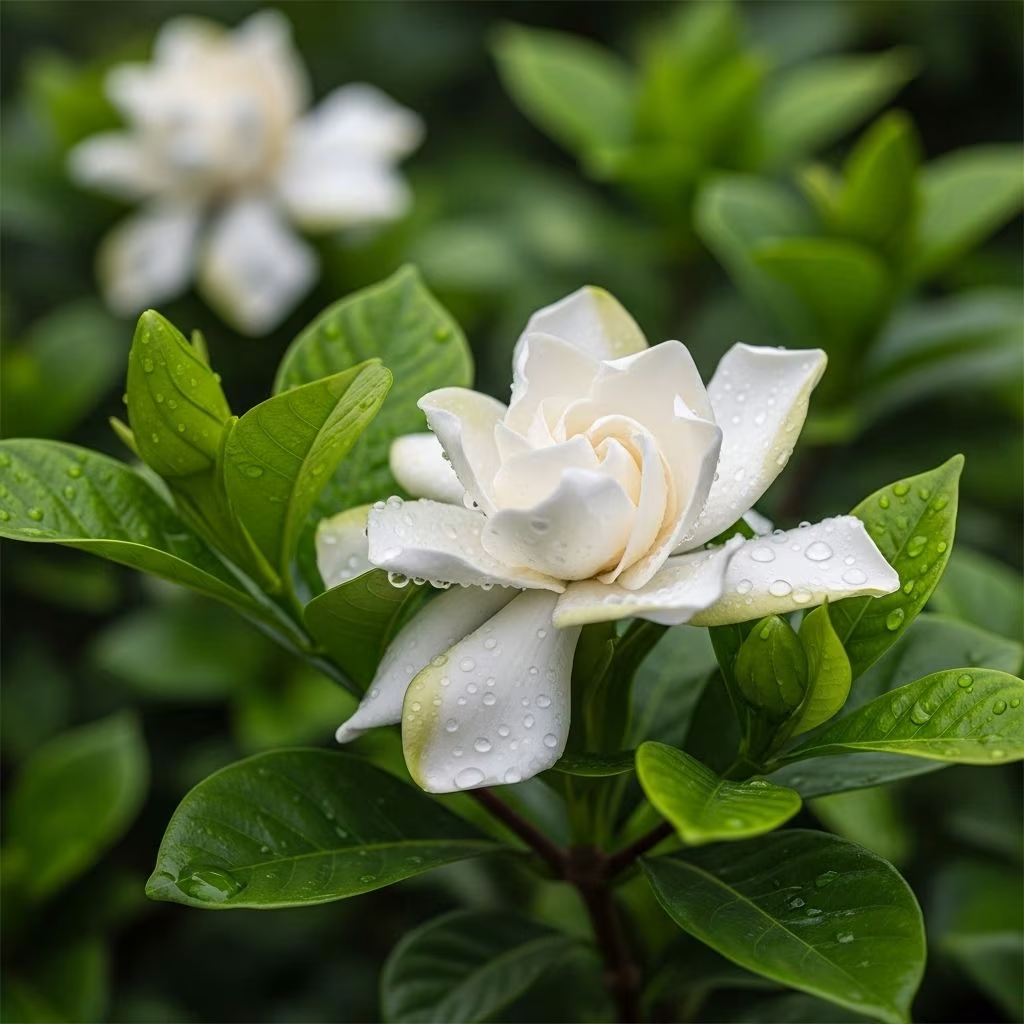
Gardenia flower extract, derived primarily from Gardenia jasminoides, is gaining momentum in the skincare industry due to its impressive array of bioactive compounds. It offers skin rejuvenation, potent anti-aging effects, antioxidant protection, anti-inflammatory actions, and more, making it an exciting ingredient for modern cosmetic formulations. This guide provides an exhaustive overview of Gardenia flower extract’s skin benefits, its mechanisms of action, key cosmetic applications, and a balanced investigation of its side effects and safety profile.
Introduction: Gardenia Flower Extract in Skin Care
Gardenia jasminoides, a member of the Rubiaceae family, has been celebrated in traditional Chinese medicine for centuries. Modern dermatological research highlights its diverse benefits for skin health, owing to its rich profile of antioxidants, peptides, flavonoids, and immune-modulating compounds . Recent advances in extraction methods have amplified its potency, allowing for effective integration into contemporary skin care products .
Skin Benefits of Gardenia Flower Extract
Gardenia flower extract’s clinical and laboratory studies have uncovered potent bioactivity. Key skin benefits demonstrated include:
- Anti-Aging & Skin Rejuvenation: Gardenia extract boosts growth differentiation factor 11 (GDF11) production in skin cells, leading to increased collagen synthesis and reduction of wrinkles, sagging, and loss of firmness .
- Wrinkle Reduction: In double-blind clinical trials, participants using creams with Gardenia extract saw up to a 26% decrease in facial crow’s feet after 56 days, compared with no significant change for placebo .
- Antioxidant Protection: It mitigates damage from blue light and environmental stressors by neutralizing reactive oxygen species (ROS) as effectively as ascorbic acid, preserving skin health .
- Moisturization & Elasticity: Ferulic acid and related compounds enhance hyaluronic acid and collagen, supporting youthful skin texture and plumpness .
- Anti-Inflammatory & Soothing: Mild anti-inflammatory and antiseptic properties help reduce redness, soothe dry or tired skin, and support skin barrier recovery .
- Melatonin-like Benefits: Research shows Gardenia extract maintains circadian rhythm and protects against digital stress via melatonin-mimetic activity, safeguarding skin from blue light-induced mitochondrial stress .
Summary Table: Core Skin Benefits
| Benefit | Mechanism | Clinical Evidence |
|---|---|---|
| Anti-Aging/Rejuvenation | GDF11 & Collagen synthesis | +26% wrinkle reduction in 4-8 week trials |
| Antioxidant Protection | Reduces ROS, shields from UV/blue light | In vitro and human keratinocyte studies |
| Skin Firmness/Elasticity | Increases collagen, supports hyaluronic acid | Improved elasticity documented via Cutometer® testing |
| Anti-Inflammatory/Soothing | Reduces inflammatory mediators, mild antiseptic | Observed in topical and clinical trials |
| Melatonin-Mimetic Actions | Preserves natural melatonin cycle | Volunteer studies & receptor affinity analysis |
Active Components and Mechanisms
The efficacy of Gardenia flower extract depends on its bioactive molecular constituents, which include:
- Peptides & Flavonoids: These compounds amplify collagen production and skin density while supporting antioxidant activity .
- Ferulic Acid: A plant-based antioxidant, ferulic acid strengthens cellular walls and protects skin from free radical damage, supporting tone and elasticity .
- Crocin & Crocetin: Crocin (glycosylated) is enzymatically transformed by skin microbiota into crocetin, which acts as a melatonin mimic binding to MT1 receptor and regulating skin circadian rhythm .
- Sugars & Glycoproteins: Plant cell wall sugars aid moisturizing and skin firmness .
- Other Antioxidants: Compounds like geniposide and gardenoside add to free radical neutralization .
Collectively, these molecules orchestrate a synchronicity of anti-aging, antioxidant, and rejuvenating activities, distinguishing Gardenia extract from standard botanical actives.
Cosmetic Uses of Gardenia Flower Extract
Cosmetic manufacturers increasingly include Gardenia flower extract in products targeting multiple skin concerns. Its versatility and safety profile support the following key applications:
- Anti-Aging Creams: Concentrations up to 2% are clinically validated for wrinkle reduction and firmness improvement .
- Moisturizers: Enhanced moisture retention supports hydration for dry and mature skin .
- Eye Contour Products: Improves luminosity and reduces dark circles in eye-specific formulations .
- Serums: Gardenia extract serums address oxidative stress and environmental exposure, ideal for urban skin care routines.
- Facial Sprays: Offers instant refreshment and soothing action for tired, inflamed, or stressed skin .
- Sunscreens & Digital Pollution Shields: In combination with UV filters, it protects against blue light-related premature aging .
- Recovery Balms: Its antiseptic and anti-inflammatory properties are valuable for calming irritated post-procedural skin .
Popular Gardenia-Infused Products
- Anti-aging creams (0.5–2% extract concentration)
- Moisturizing facial sprays with Aloe, Herbs, and Rosewater
- Eye contour revitalizing gels
- Digital pollution and blue light barrier creams
- Calming balms for sensitive or intolerant skin
Side Effects and Safety Considerations
Although Gardenia flower extract is broadly considered safe and skin-friendly, some considerations are important:
- Allergic reactions: Botanical extracts can trigger local irritation or allergic contact dermatitis in sensitive individuals. Symptoms might include redness, itching, or burning sensations.
- Photosensitivity: No evidence currently suggests Gardenia extract induces photosensitivity; in fact, its antioxidant properties may protect against sun-related damage .
- Combinations with other actives: Synergistic blends with peptides or hyaluronic acid typically demonstrate favorable safety profiles. However, consumers should avoid excessive layering with strong acids or exfoliants to prevent overstimulation.
- Pediatric and pregnant use: Limited clinical data exist for use during pregnancy or on infant skin. Consultation with a dermatologist is recommended for these groups.
- Long-term safety: Studies up to 56 days show no adverse effects in controlled settings ; longer-term studies are ongoing.
Potential Side Effects Table
| Side Effect | Frequency | Recommended Actions |
|---|---|---|
| Allergic contact dermatitis | Rare | Discontinue and consult physician |
| Mild irritation | Very rare | Reduce dosage/frequency, patch test first |
| Interaction with strong exfoliants | Possible | Limit concurrent use, monitor skin |
| Unknown risk in pregnancy/children | Not established | Consult dermatologist |
Frequently Asked Questions (FAQs)
Q: Is Gardenia flower extract suitable for sensitive skin?
Most clinical studies indicate good tolerance, even among sensitive skin types, due to the extract’s anti-inflammatory and soothing effects. However, patch testing is advised for individuals with known plant allergies .
Q: How does Gardenia extract improve skin firmness?
By stimulating GDF11 and increasing collagen synthesis, Gardenia extract directly enhances skin elasticity and firmness, leading to more youthful appearance .
Q: Can Gardenia extract help with digital stress and blue light damage?
Research confirms its unique efficacy against oxidative damage caused by digital device blue light. It acts both as an antioxidant and as a protector of the skin’s natural melatonin cycle .
Q: How long does it take to see results?
Clinical evaluations demonstrate visible improvements in wrinkle depth, elasticity, and skin texture after 4–8 weeks of topical use at concentrations up to 2% .
Q: Are there any contraindications or drug interactions?
No significant contraindications are reported for topical use. However, individuals using prescription retinoids or performing aggressive chemical exfoliation should introduce Gardenia extract gradually to avoid irritation.
Conclusion
Gardenia flower extract is emerging as a multi-functional ingredient that delivers measurable improvements in skin appearance and health. Its dual antioxidant and collagen-boosting properties, along with the ability to protect from blue light and digital stress, position it as a valuable addition to advanced skin care formulations. While side effects are rare and manageable, best practices include patch testing, monitoring for irritation, and proper product selection for individual skin types. The future of plant-derived actives such as Gardenia jasminoides holds significant promise for holistic and science-backed skin care.
References
- https://tks-hpc.h5mag.com/hpc_today_1_2024/skin_care_-_skin_rejuvenating_properties_of_a_powerful_blend_of_gardenia_jasminoides_peptides_and_flavonoids
- https://pmc.ncbi.nlm.nih.gov/articles/PMC10003113/
- https://www.mariobadescu.com/blogs/mb/ferulic-acid
- https://pmc.ncbi.nlm.nih.gov/articles/PMC3966326/
- https://www.paulaschoice.es/en/gardenia-florida-fruit-extract/ingredient-gardenia-florida-extract.html
- https://www.nature.com/articles/s41598-024-84190-w


