


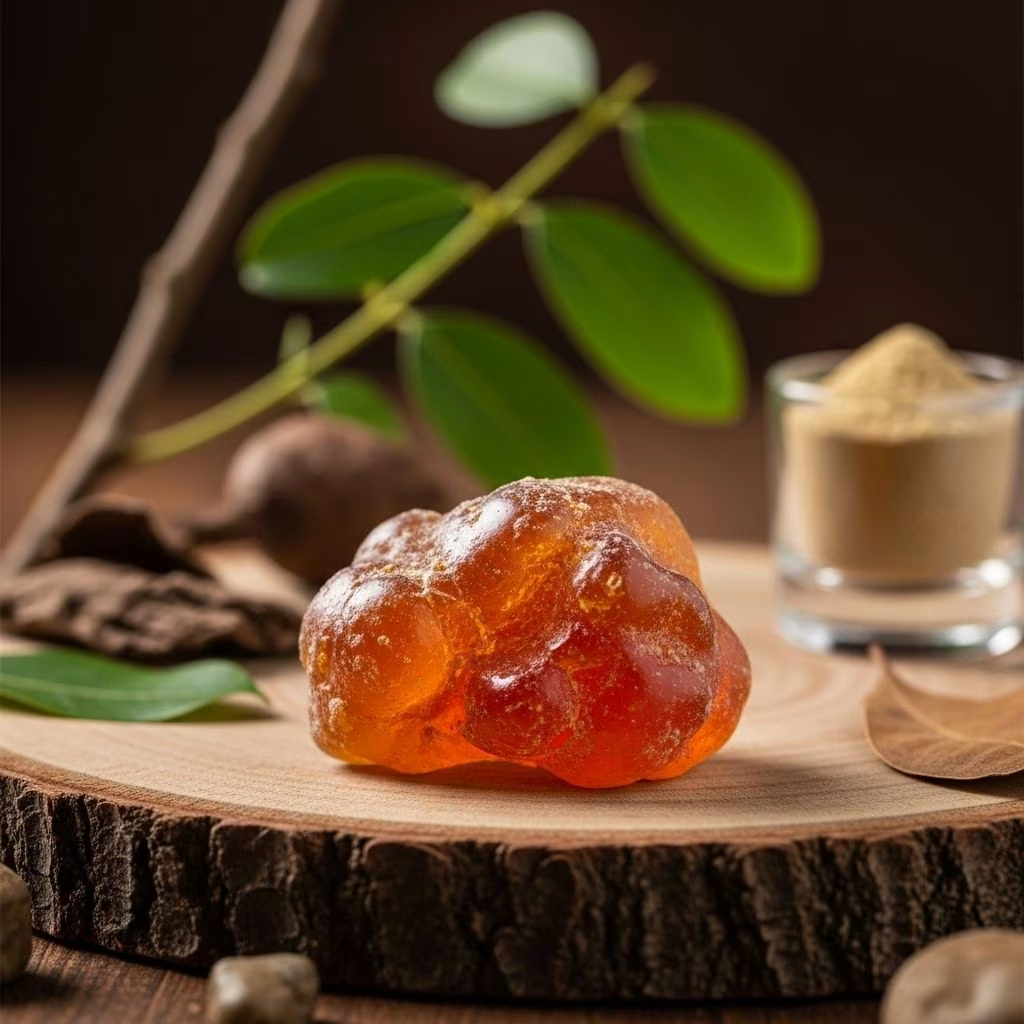
Ghatti gum, also known as Indian gum or gum ghatti, has evolved from an indigenous forest product of India and Sri Lanka to a globally significant natural hydrocolloid. This comprehensive article delves into its botanical source, physical and chemical characteristics, health and industrial benefits, broad applications, and taste profile, providing valuable insights for food scientists, health professionals, industrial technologists, and curious consumers alike.
Introduction
Gum ghatti is a natural, water-soluble polysaccharide with a high molecular weight, extracted as an exudate from the stems of trees primarily found in the dry deciduous forests of India and Sri Lanka. With a track record of traditional use and modern industrial popularity, it functions as a thickening, emulsifying, and stabilizing agent across diverse sectors, including food, pharmaceuticals, textiles, cosmetics, and petroleum engineering.
Botanical Origin and Production
Botanical Source: Ghatti gum is obtained from the trees of Anogeissus latifolia, belonging to the Combretaceae family. The tree grows predominantly in the forests of central and southern India, as well as parts of Sri Lanka.
- Traditional Harvesting: The gum is collected as an exudate (a sticky secretion) that flows out from the stems of the tree. Collection typically occurs by making incisions into the trunk or branches, allowing the gum to ooze and solidify.
- Sun Drying & Sorting: Post-harvest, the gum ‘tears’ are sun-dried, sorted by colour, size, and purity. Mechanical processing removes bark and sand before grinding and blending for specific applications.
- Export & Commerce: The gum derives its name from ‘ghats’, the mountain passes through which it was traditionally transported.
Synonyms and Traditional Names
- Anogeissus latifolia gum
- Gum ghatti
- Indian gum
- British Indian gum
- Ghati gum
- Marike gum
Composition and Chemical Properties
Gum ghatti is a complex heteropolysaccharide and can be described by its molecular makeup and physical nature:
- Polysaccharide Structure: Contains arabinose, galactose, mannose, xylose, and uronic acids (galacturonic and glucuronic), primarily as calcium and magnesium salts.
- Molar Ratios: L-arabinose:D-galactose:D-mannose:D-xylose:D-glucuronic acid roughly in a 10:6:2:1:2 ratio, with trace 6-deoxyhexose.
- Water Solubility: Highly soluble in water; insoluble in ethanol. Forms thixotropic solutions, meaning viscosity increases rapidly with concentration and agitation.
- Physical Appearance: Amorphous, translucent, varying from yellowish-white to reddish-brown. Powder forms range from buff white to tan brown.
- CAS Number: 9000-28-6
- Molecular Shape: Rod-like configuration in solution, contributing to its functional properties.
Sensory Profile: Taste & Appearance
- Taste: Bland and neutral, lacking significant sweetness or bitterness. This makes it ideal for addition to food products without altering the flavor profile.
- Odor: Practically odorless or very faint natural woody aroma.
- Texture: Contributes to viscosity and mouthfeel as a thickener in prepared food applications.
- Color: From pale yellowish-white to brownish depending on purity and processing.
Health and Functional Benefits
The versatile molecular structure and natural origin of ghatti gum result in an array of health and industrial benefits:
Nutritional and Health Benefits
- Prebiotic Source: Acts as a prebiotic, promoting beneficial gut bacteria and supporting overall digestive health.
- Hypoallergenic Profile: Free from common allergens such as gluten, dairy, and nuts; suitable for people with severe food allergies.
- Low-Calorie / Fat Substitute: Frequently used in reduced-fat and fat-free food products, enhancing texture without adding calories.
- Water-Soluble Dietary Fiber: Contributes to daily fiber intake and aids in digestion.
Functional and Industrial Benefits
- Powerful Emulsifier: Exceptional ability to stabilize and blend oil-water mixtures; often superior to gum arabic in emulsification efficacy.
- Thickening Agent: Enhances viscosity and consistency in foods, pharmaceuticals, and technical emulsions.
- Stabilization and Heat Tolerance: Maintains the integrity of gels and emulsions even under temperature and pH fluctuations.
- Binder in Tablets: Used in pharmaceutical tablets as a binder and disintegrant, aiding in active ingredient release.
- Biodegradable & Non-toxic: A sustainable, environment-friendly alternative to synthetic additives in manufacturing.
Applications and Uses
Ghatti gum’s widespread utility is evident across food, pharmaceuticals, industry, cosmetics, and specialty sectors. Here is a detailed overview:
Food Industry Applications
- Thickener: Used in sauces, gravies, salad dressings, spreads, ice creams, and dairy alternatives to improve creaminess and mouthfeel.
- Emulsifier: Permits stable oil-in-water mixtures, enabling longer shelf-life and more consistent product texture.
- Fat Replacement: Common in low-fat or fat-free baked goods and spreads, delivering a rich texture without added fats.
- Stabilizer: Supports uniformity and prevents ingredient separation in processed foods.
- Edible Fiber Enrichment: Adds functional fiber value to food formulations.
Pharmaceutical & Medical Uses
- Tablet Formulation: Acts as a binder and disintegrant, facilitating controlled release and effective ingredient dispersion in pills.
- Suspensions & Hydrogels: Used in suspensions and pharma hydrogels for controlled viscosity and stability.
Industrial, Textile and Other Non-Food Uses
- Adhesive: Applied as a glue in textiles and paper products to bind fibers and provide structure.
- Dye Thickener: Used to thicken dyes in textile printing and sizing, ensuring even dye distribution.
- Dedusting Agent: Applied in oil emulsions for rock wool, fiberglass, and fiber wool production to bind dust and impart hydrophobicity.
Cosmetic and Personal Care
- Thickener in Lotions and Creams: Enhances viscosity and texture in personal care products.
- Stabilizer in Hair Care: Used for product stability in hair gels and conditioners.
Petroleum & Specialty Applications
- Petroleum Industry: Employed as an emulsifier to prevent fluid loss and enhance blending processes in oil drilling and processing.
Comparison with Other Hydrocolloids
The following table compares the key properties and common uses of ghatti gum with other popular natural gums:
| Property | Ghatti Gum | Gum Arabic | Gum Karaya |
|---|---|---|---|
| Chemical Composition | Complex polysaccharide; arabinose, galactose, mannose, xylose, uronic acids | Polysaccharide; arabinose, galactose, rhamnose, glucuronic acid | Polysaccharide; galactose, rhamnose, galacturonic acid |
| Water Solubility | High | Very high | Moderate |
| Viscosity in Solution | Medium-High | Medium | High |
| Emulsification | Excellent | Very Good | Moderate |
| Applications | Food, pharma, adhesive, textiles, petroleum, cosmetics | Food, beverages, pharmaceuticals, cosmetics | Food, pharmaceuticals, textiles |
| Taste | Bland/Neutral | Mild/Slightly sweet | Bitter or mildly acidic |
| Hypoallergenic | Yes | Yes | Yes |
| Biodegradable | Yes | Yes | Yes |
Safety, Hypoallergenic Profile and Environmental Impact
- Generally Recognized as Safe (GRAS): When used in recommended quantities, ghatti gum is considered safe for human consumption and industrial use.
- Hypoallergenic: Ghatti gum does not contain common food allergens, making it suitable for gluten- or dairy-free diets and sensitive populations.
- Non-Toxic & Biodegradable: Natural origin ensures toxicity is minimal and biodegradability reduces environmental impact in all applications.
- Regulatory Package: CAS #9000-28-6 underpins regulatory consistency across industries.
Frequently Asked Questions (FAQs)
Q: What is ghatti gum made from?
A: Ghatti gum is made from the exudate of Anogeissus latifolia trees, harvested, dried, and purified for use in various industries.
Q: Is ghatti gum safe to eat?
A: Yes, it is widely recognized as safe in food applications when used as recommended, and is also hypoallergenic.
Q: Does ghatti gum affect the taste of foods?
A: No, it is bland and neutral, meaning it can be used in foods without altering the flavor, making it exceptionally versatile.
Q: How does ghatti gum compare to gum arabic?
A: Ghatti gum offers similar or superior emulsification and thickening properties, but with slightly higher viscosity in solution.
Q: Is ghatti gum environmentally friendly?
A: Yes, its biodegradability and non-toxicity make it a preferred choice over synthetic chemicals in food, pharma, and industrial uses.
Final Thoughts
Ghatti gum stands out as an underappreciated hydrocolloid with vast applications in the food, pharmaceutical, textile, and technology industries. Its blend of functional benefits, health-friendly profile, and sustainable processing makes it a crucial ingredient for modern product development. Its bland taste, superior emulsification, hypoallergenic nature, and eco-friendly credentials ensure a stable future in global markets, and ongoing research continues to expand its utility in innovative and advanced industrial sectors.
References
- https://cameo.mfa.org/wiki/Ghatti_gum
- https://www.premcemgums.com/portfolio-item/gum-ghatti/
- https://pmc.ncbi.nlm.nih.gov/articles/PMC10918680/
- https://krystal-colloids.com/blogs/benefits-of-gum-ghatti/
- https://www.willy-benecke.com/gum-ghatti/?lang=en
- https://nama-group.com/portfolio-items/gum-ghatti/
- https://ymerdigital.com/uploads/YMER2406R4.pdf


