


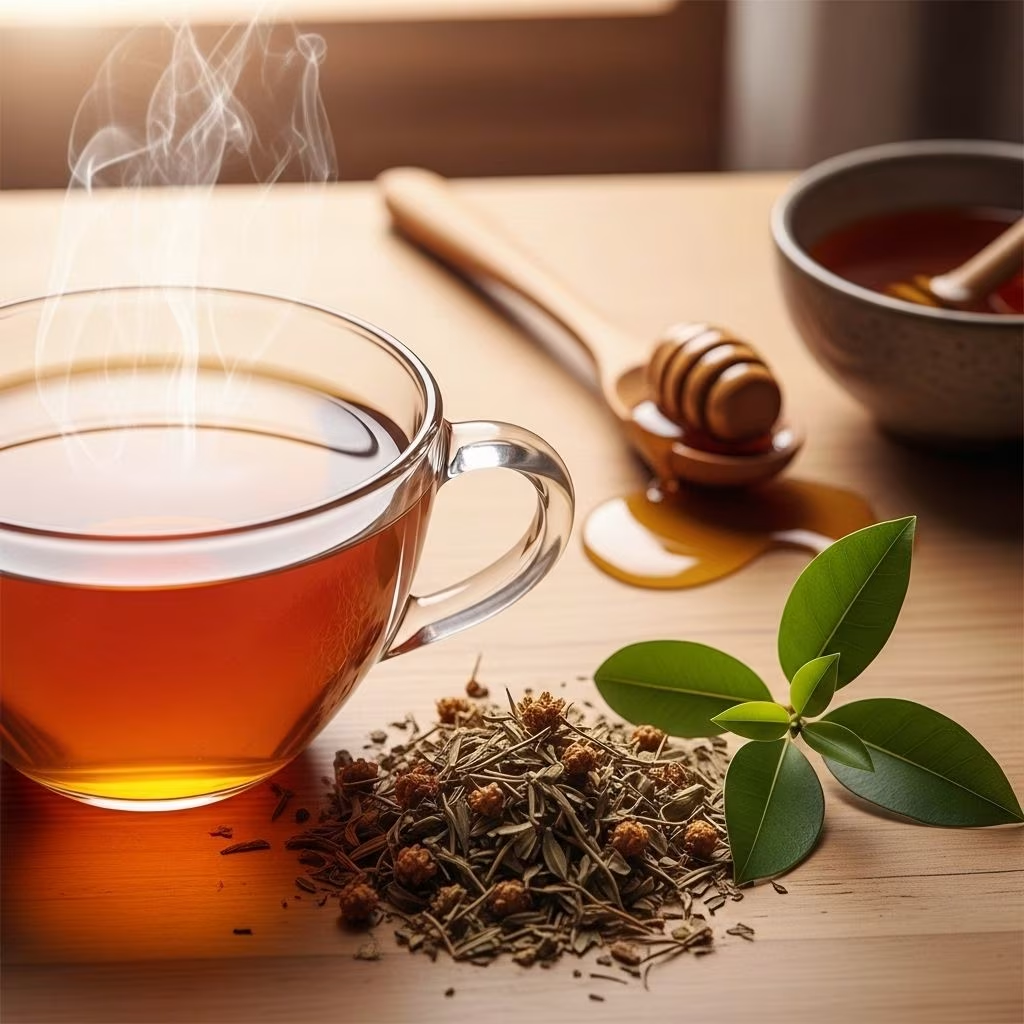
Honeybush Tea: Skin Benefits, Uses & Side Effects
Honeybush tea, derived from the Cyclopia species indigenous to South Africa, has gained global recognition for its potential role in skincare, wellness, and traditional medicine. This article presents an extensively researched, science-based exploration of Honeybush tea—including its impact on skin health, practical uses, and possible side effects, helping you make informed choices about its inclusion in your routine.
Introduction to Honeybush Tea
Honeybush tea originates from several Cyclopia plant species found in the southern Cape regions of South Africa. The tea earned its name from the subtle honey-like aroma of the flowers and leaves, and it has been consumed both as a traditional beverage and as part of folk remedies for centuries. Unlike other popular herbal teas, Honeybush stands out for its unique composition of polyphenols, low tannin content, and natural sweetness.
History and Cultural Usage
- Traditional remedy for respiratory ailments, colds, and coughs.
- Used by indigenous communities for its perceived calming and health-supporting properties.
Bioactive Compounds in Honeybush Tea
Honeybush tea is rich in bioactive compounds that impart both health and skin benefits. Key constituents include:
- Polyphenols: Potent antioxidants including mangiferin, hesperidin, and other flavonoids that help counteract oxidative stress.
- Isoflavones: Such as genistein and formononetin, which have phytoestrogenic properties and can mimic estrogen’s effects in the body.
- Low Tannin Content: Minimal bitterness compared to black or green tea, making honeybush gentle on the digestive system.
These compounds have been explored for their therapeutic, cosmetic, and antioxidant potential.
Skin Benefits of Honeybush Tea
Scientific research has increasingly focused on Honeybush tea’s ability to enhance skin health and combat visible aging. Below are the main skin benefits supported by clinical studies and laboratory research:
Anti-Wrinkle and Anti-Aging Effects
- Studies confirm that topical applications of honeybush extract and fermented honeybush reduce epidermal thickness and alleviate wrinkles caused by UVB irradiation, with fermented honeybush presenting a greater anti-wrinkle effect than unfermented extracts.
- Masson’s trichrome staining showed increased collagen fiber distribution in the dermal layer, suggesting enhanced skin elasticity and reduced wrinkle formation when treated with honeybush extract.
- A 12-week clinical study involving 120 participants found that daily supplementation with honeybush extract significantly improved global skin wrinkle grade, especially in areas prone to crow’s feet.
Antioxidant and Photo-Protective Properties
- Honeybush tea’s polyphenols protect skin cells from oxidation due to ultraviolet (UV) radiation, potentially reducing the development of wrinkles, sunburn, and skin thickening.
- Antioxidant levels in honeybush formulations (at concentrations above 0.625 mg/ml) are sufficient to counteract oxidative toxins, suggesting honeybush can help mitigate free radical damage associated with skin aging.
Improved Skin Smoothness and Texture
- Clinical studies show that topical honeybush creams (from Cyclopia maculata and Cyclopia genistoides) notably improve skin smoothness compared to placebo creams.
- Skin scaliness was reduced to a greater extent by C. maculata formulations, indicating efficacy in alleviating rough or flaky skin.
| Effect | Study Type | Results |
|---|---|---|
| Wrinkle Reduction | Animal, Human Clinical | Significant reduction in epidermal thickness and wrinkle grade |
| Collagen Synthesis | Animal | Increased collagen fiber distribution in dermal layer |
| Skin Smoothness | Human Clinical | Superior improvement compared to placebo |
| Antioxidant Action | Laboratory/Clinical | Counteracts oxidative stress at sufficient concentrations |
| Hydration | Clinical | No clear improvement over placebo |
Additional Potential Skin Benefits
- Reduces Skin Reddening and Peeling: Animal studies indicate honeybush extracts can ease signs of sunburn and photodamage.
- Promotes Even Skin Tone: Antioxidants may assist in reducing oxidative damage and hyperpigmentation, though more clinical data is needed.
Uses of Honeybush Tea in Health & Beauty
Honeybush tea’s applications span internal consumption as a beverage and topical use in skincare. Below is an overview of its main uses:
Dietary Consumption
- Honeybush tea is naturally caffeine-free and rich in antioxidants, making it a soothing beverage for daily use.
- Traditional and modern herbalists recommend it for relief from respiratory distress, cold symptoms, and menopausal complaints due to its phytoestrogen content.
Topical Application in Skincare
- Incorporated into creams, lotions, and serums designed to enhance skin smoothness, reduce scaliness, and support anti-ageing properties.
- Used in homemade face masks and toners for antioxidant and soothing effects.
Other Health and Therapeutic Uses
- Supports Immune System: Contains mangiferin, which may enhance macrophage activity, aiding immune defense.
- Weight Management Potential: Early research shows honeybush tea may inhibit fat accumulation and stimulate fat breakdown in fat cells.
- Relief from Menopausal Symptoms: Isoflavones act as phytoestrogens, helping stabilize hormonal fluctuations in menopause.
- Respiratory Health: Traditionally used as a tonic for alleviating coughs and cold symptoms.
Potential Side Effects and Safety
While honeybush tea is widely regarded as safe, understanding its limitations and safety profile is crucial for informed use.
Documented Safety and Tolerability
- Clinical studies do not report significant adverse reactions to honeybush tea or topical formulations when used as directed.
- Generally suitable for most individuals, including children and pregnant women, due to low caffeine and tannin content. However, robust long-term safety data is limited.
Possible Side Effects
- Skin Sensitivity: Rare cases of contact sensitivity may occur in individuals prone to allergic reactions. Patch testing of topical products is recommended.
- Gastrointestinal Disturbance: Excessive consumption may cause mild GI discomfort, as seen with many herbal teas.
- Interactions with Medications: Isoflavones and polyphenols may theoretically interact with hormone therapy, anticoagulants, or other active pharmaceuticals. Consult with a healthcare provider before regular use.
Contraindications and Precautions
- Pregnant or breastfeeding women should use with caution and consult medical professionals, despite a generally favorable safety profile.
- Individuals with existing hormone-sensitive conditions (such as certain cancers) should avoid phytoestrogen-rich products without physician guidance.
- Topical products should be avoided on broken, irritated, or sunburned skin without professional advice.
Known Limits of Evidence
- Most studies on honeybush tea’s skin benefits involve small sample sizes or animal models, meaning effects in broader populations are not fully understood.
- Long-term side effects and high-dose implications are yet to be studied in detail.
Frequently Asked Questions (FAQs)
Q: Can honeybush tea be used on sensitive skin?
A: Yes, honeybush tea is suitable for sensitive skin due to its low tannin content and soothing polyphenols. However, perform a patch test before applying new honeybush-based formulations to avoid possible irritation.
Q: How does honeybush compare to rooibos for skin health?
A: Both honeybush and rooibos teas offer valuable skin care benefits due to their antioxidant profiles, but honeybush contains different polyphenols (notably mangiferin and hesperidin). Studies suggest honeybush formulations may be more effective in ameliorating skin scaliness and smoothness, while rooibos has a longer tradition in skincare.
Q: Is honeybush safe for daily consumption?
A: Honeybush tea is caffeine-free and generally well-tolerated when consumed daily in moderate amounts. As with any herbal product, excessive intake may cause mild digestive upset in sensitive individuals.
Q: Are there any known drug interactions?
A: No major drug interactions have been documented. However, the isoflavone content may theoretically influence medications that affect hormone levels or blood clotting. Consult your doctor if you are on prescription medication, especially hormone therapy, blood thinners, or similar drugs.
Q: Can honeybush tea help with acne or eczema?
A: Preliminary research suggests honeybush’s antioxidants and anti-inflammatory effects may assist in soothing irritated skin and reducing redness. However, clinical evidence for honeybush tea in acne or eczema management is limited, and more research is needed.
Conclusion
Honeybush tea stands out as a versatile herbal product with demonstrated antioxidant and anti-wrinkle effects, practical uses for improving skin texture, and a favorable safety profile for most users. Its potential extends beyond skin health to encompass immune support, weight management, and relief of menopausal symptoms. As scientific research continues, honeybush tea may gain a larger role in natural skincare and holistic wellness strategies. For optimal benefits and safety, use honeybush tea and topical products responsibly, consult healthcare professionals for personalized guidance, and stay informed of emerging evidence in herbal medicine.


