


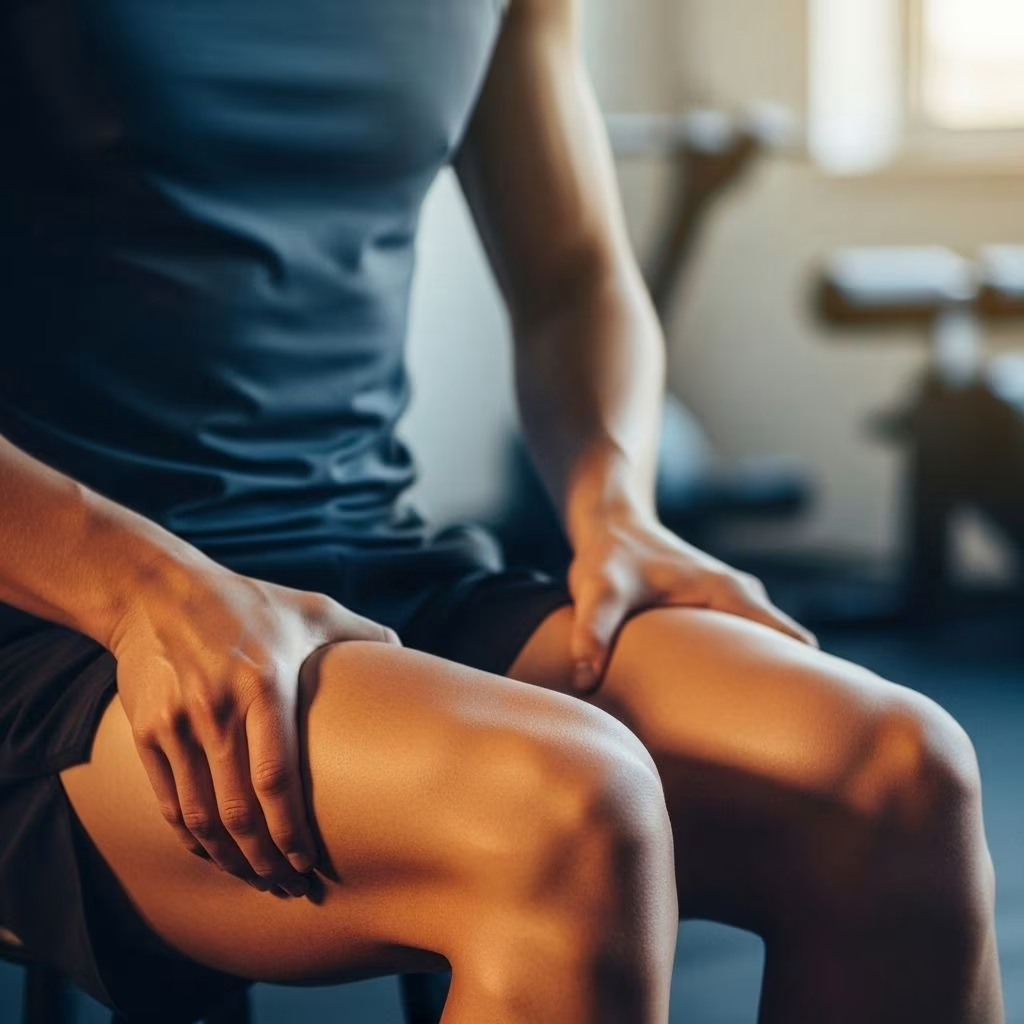
Post-workout muscle soreness is a familiar companion for anyone committed to a fitness routine. Whether you’re lifting weights, running marathons, or simply pushing your body beyond its comfort zone, that characteristic ache signals your muscles are adapting and growing stronger. However, excessive soreness can derail your training schedule and impact your quality of life. Understanding how to effectively manage and relieve sore muscles is essential for maintaining consistency in your fitness journey and achieving your goals.
The science behind muscle soreness has evolved significantly, revealing that what we experience isn’t simply “lactic acid buildup” as once believed. Modern research points to a complex interplay of inflammatory responses, microscopic muscle damage, and the body’s natural healing processes. More importantly, we now understand that supporting these processes can dramatically improve recovery time and reduce discomfort.
Understanding Post-Workout Muscle Soreness
Delayed Onset Muscle Soreness, commonly known as DOMS, typically manifests 12 to 48 hours after intense physical activity. This phenomenon occurs when you subject your muscles to unfamiliar stress or intensity levels that exceed their current capacity. The discomfort you feel isn’t weakness—it’s actually a sign of your body’s remarkable ability to adapt and become stronger.
When you engage in strenuous exercise, particularly activities involving eccentric muscle contractions where muscles lengthen under tension, microscopic tears develop in the muscle fibers. These tiny breaks in the tissue trigger an inflammatory response as your body rushes to repair the damage. Fluid accumulates in the affected area, causing the characteristic swelling and tenderness associated with muscle soreness. This repair process is fundamental to muscle growth and strength development, making some degree of soreness an inevitable part of progress.
What Causes Intense Muscle Soreness
Several factors contribute to the severity of post-workout soreness. Understanding these triggers can help you anticipate and manage discomfort more effectively. Training intensity plays a primary role—pushing significantly harder than your baseline fitness level almost guarantees pronounced soreness. When you challenge your body with weights, distances, or durations beyond your normal capacity, the microscopic muscle damage increases proportionally.
Eccentric exercises deserve special attention because they consistently produce more soreness than other movement patterns. These exercises involve lengthening muscles under load, such as lowering weights during bicep curls or descending stairs. The controlled lengthening creates greater tension on muscle fibers, resulting in more extensive microscopic damage and subsequent soreness.
Unfamiliar movements also trigger heightened soreness. When you recruit muscle groups that rarely activate in your regular routine, those untrained fibers experience significant stress. This explains why trying a new sport or workout style often leaves you exceptionally sore, even if you’re generally fit. Additionally, high-impact activities like running, jumping, or plyometric exercises create additional mechanical stress through repeated ground contact, amplifying the inflammatory response.
Is Muscle Soreness Actually Beneficial
The relationship between muscle soreness and fitness progress is nuanced. Moderate soreness indicates you’ve successfully challenged your muscles, triggering the adaptation response necessary for strength gains and improved endurance. The discomfort you experience represents your body’s investment in building stronger, more resilient muscle tissue. Without pushing into this zone of productive discomfort, meaningful physical development becomes unlikely.
However, it’s crucial to distinguish between productive soreness and problematic pain. Soreness typically presents as a diffuse, achy sensation spread across the muscle belly. It should feel manageable, rating around 4 out of 10 or lower on a pain scale. This type of discomfort is your body communicating that repair and adaptation are underway. In contrast, sharp, localized pain—particularly over tendons or joints—may signal injury rather than normal training adaptation. Pain that intensifies rather than improves after 48-72 hours, or that significantly restricts your range of motion, warrants professional evaluation.
The Role of CBD in Exercise Recovery
Recent scientific exploration has illuminated promising connections between CBD and post-exercise recovery. CBD, or cannabidiol, interacts with the endocannabinoid system, a biological network that regulates numerous physiological processes including inflammation, pain sensation, and homeostasis. This system plays a crucial role in how your body responds to exercise-induced stress and initiates recovery mechanisms.
Research suggests that CBD may modulate the body’s inflammatory response to exercise-induced muscle damage. Rather than suppressing inflammation entirely, which could potentially interfere with adaptation, CBD appears to help prevent an excessive inflammatory reaction that can prolong soreness and extend recovery time. By supporting more balanced inflammatory signaling, CBD may help your body achieve homeostasis—physiological equilibrium—more efficiently after intense physical activity.
The potential benefits of incorporating CBD into your recovery routine extend beyond inflammation management. Studies indicate CBD may help reduce the intensity of muscle soreness, potentially allowing you to return to training sooner without compromising recovery quality. Additionally, CBD’s well-documented effects on sleep quality and neurological function may indirectly support recovery by optimizing the conditions under which your body repairs and rebuilds muscle tissue.
Effective Strategies for Relieving Sore Muscles
Managing post-workout soreness requires a multifaceted approach that addresses both immediate discomfort and long-term recovery optimization. The most effective recovery protocols combine several complementary strategies that work synergistically to reduce inflammation, maintain mobility, and support tissue repair.
Proper nutrition forms the foundation of effective recovery. Your body requires specific nutrients to repair damaged muscle fibers and replenish depleted energy stores. Protein provides the amino acids necessary for muscle protein synthesis, while carbohydrates restore glycogen reserves that fuel your next workout. Healthy fats support the anti-inflammatory processes and maintain cellular membrane integrity. Consuming a balanced meal containing all three macronutrients within two hours post-workout optimizes the recovery environment. Consider combinations like quinoa with grilled chicken and vegetables, or whole grain toast with nut butter and fruit to deliver comprehensive nutritional support.
Hydration deserves equal attention because water facilitates virtually every metabolic process, including those involved in muscle recovery. Dehydration impairs nutrient delivery to damaged tissues and slows the removal of metabolic waste products that contribute to soreness. Aim to consume water consistently throughout the day, paying particular attention to replacing fluids lost during exercise. The exact amount varies based on individual factors, but monitoring urine color provides a practical gauge—pale yellow indicates adequate hydration.
Active Recovery: Movement as Medicine
Counterintuitively, gentle movement often provides more relief than complete rest when managing muscle soreness. Active recovery involves performing low-intensity exercise that maintains blood flow to recovering muscles without imposing additional training stress. This approach leverages your cardiovascular system to deliver oxygen and nutrients to damaged tissues while simultaneously clearing metabolic byproducts that contribute to discomfort.
Active recovery works through several mechanisms that collectively accelerate healing and reduce soreness intensity. Sustained blood flow to skeletal muscles helps clear lactate, a metabolite often associated with the burning sensation during intense exercise. While lactate itself doesn’t directly cause DOMS, efficient clearance supports the broader recovery process. Additionally, gentle movement prevents the stiffness that develops when sore muscles remain immobile for extended periods. This maintained mobility reduces the perception of soreness and makes returning to regular training feel less daunting.
Effective active recovery activities include walking, easy cycling, swimming, or gentle yoga flows. The key is maintaining intensity at approximately 30-40% of your maximum effort—you should be able to hold a conversation comfortably throughout. Duration can range from 20-45 minutes, providing enough stimulus to promote circulation without taxing your recovery capacity. Incorporating active recovery between intense training sessions, or on days when soreness feels particularly pronounced, can significantly improve how quickly you feel ready to train hard again.
Stretching and Mobility Work
Incorporating stretching before and after workouts serves multiple recovery-related purposes. Pre-workout stretching, when performed dynamically with controlled movement through full range of motion, prepares muscles for the demands ahead by increasing tissue temperature and neural activation. This preparation may reduce the severity of subsequent soreness by ensuring muscles are optimally ready for training stress. Dedicate 10-15 minutes to dynamic stretches targeting the muscle groups you’ll emphasize during your workout.
Post-workout stretching shifts to static holds that maintain or improve flexibility while potentially easing the tightness associated with muscle soreness. Gentle static stretching promotes parasympathetic nervous system activation, signaling your body to transition from the stressed state of training to the restorative state of recovery. Hold each stretch for 20-30 seconds without forcing range of motion, focusing on breathing deeply and allowing muscles to gradually release tension.
CBD Topical Applications for Targeted Relief
CBD-infused topical products offer localized relief for particularly sore muscle groups. These formulations deliver CBD directly to the affected area, where it can interact with cannabinoid receptors in the skin and underlying tissues. Recovery creams and balms combine CBD with other soothing ingredients to address both discomfort and inflammation at the site of application.
When selecting a CBD topical for recovery, formulation quality significantly impacts effectiveness. Emulsion-based products demonstrate superior bioavailability compared to oil-based alternatives, meaning more CBD penetrates the skin barrier to reach target tissues. Additionally, the total CBD content matters less than the delivery system—a well-formulated product with moderate CBD concentration often outperforms a poorly absorbed formula containing higher amounts.
Application timing and technique influence results. For general post-workout soreness, applying CBD cream immediately after showering allows absorption through open pores while muscles remain warm and receptive. For chronic problem areas like persistently tight lower back muscles or recurring shoulder tension, consistent daily application regardless of immediate workout timing may provide more sustained benefit. Massage the product thoroughly into the affected area using circular motions to enhance absorption and promote local circulation.
Temperature Therapy for Muscle Recovery
Strategic application of heat and cold therapy can significantly impact soreness severity and recovery speed. Each temperature extreme offers distinct benefits depending on the timing and nature of your discomfort. Understanding when to apply each modality optimizes their effectiveness.
Cold therapy, typically applied immediately after intense exercise, helps control the initial inflammatory response by constricting blood vessels and reducing metabolic activity in the affected tissues. This vasoconstriction limits the fluid accumulation that contributes to swelling and soreness. Ice baths, cold showers, or localized ice application for 10-15 minutes post-workout can blunt the severity of subsequent DOMS. However, timing matters—some evidence suggests that excessive ice immediately after training might slightly impair long-term adaptation by interfering with inflammatory signaling necessary for muscle growth.
Heat therapy becomes more appropriate 24-48 hours after training when the acute inflammatory phase has passed. Warmth dilates blood vessels, increasing circulation to sore muscles and delivering the oxygen and nutrients necessary for repair. Heat also reduces muscle stiffness by improving tissue elasticity, making movement feel less restricted. Warm baths, heating pads, or warm compresses applied for 15-20 minutes can provide substantial relief from persistent soreness.
Sleep: The Ultimate Recovery Tool
Quality sleep represents perhaps the most powerful recovery intervention available, yet it’s frequently undervalued in recovery protocols. During deep sleep stages, your body releases growth hormone and other anabolic signals that drive muscle repair and adaptation. Sleep deprivation significantly impairs these processes, prolonging soreness and compromising training adaptations.
Prioritize 7-9 hours of sleep nightly, paying particular attention to sleep quality following intense training sessions. Create an environment conducive to restorative sleep by maintaining a cool room temperature, eliminating light sources, and establishing a consistent bedtime routine. CBD may support better sleep quality through its anxiolytic properties and influence on sleep-wake cycles, potentially offering dual benefits for individuals struggling with both soreness and sleep quality.
Progressive Training: Prevention Through Smart Programming
The most effective long-term strategy for managing muscle soreness involves thoughtful training progression that challenges your body without overwhelming its recovery capacity. Gradually increasing training volume and intensity allows your muscles to adapt progressively, reducing the severity of soreness as you advance. This approach, known as progressive overload, balances the stimulus necessary for improvement with adequate recovery time.
Avoid dramatic jumps in training difficulty, whether that means doubling your running mileage in a single week or adding several exercises to your resistance routine simultaneously. Instead, implement modest increases of 5-10% in volume or intensity each week. This conservative progression still drives adaptation while keeping soreness manageable. Additionally, periodizing your training with planned recovery weeks every 3-4 weeks gives your body extended time to fully recover and supercompensate, emerging stronger than before.
Choosing the Right CBD Products for Recovery
The CBD market’s explosive growth has created both opportunities and challenges for consumers seeking recovery support. Product quality varies dramatically, making informed selection crucial for achieving desired results. Several factors distinguish effective CBD recovery products from ineffective alternatives.
Delivery system fundamentally impacts CBD bioavailability—the percentage of consumed CBD that actually reaches your bloodstream and target tissues. Traditional oil tinctures face absorption challenges because CBD is fat-soluble and water-resistant, limiting uptake in the aqueous environment of your digestive system. Emulsion technologies overcome this limitation by breaking CBD into nano-sized particles that disperse in water, dramatically improving absorption rates. Products utilizing these advanced delivery systems may provide benefits at lower doses than conventional oils.
Third-party testing verification ensures products contain the CBD concentrations claimed on labels while remaining free from contaminants like heavy metals, pesticides, and residual solvents. Reputable manufacturers provide certificates of analysis from independent laboratories, offering transparency about product composition. Always verify testing before purchasing CBD for recovery purposes.
Full-spectrum versus isolate formulations present another consideration. Full-spectrum products contain the complete array of cannabinoids, terpenes, and other compounds found in hemp, which may work synergistically through the “entourage effect” to enhance benefits. CBD isolate products contain only pure CBD, which some individuals prefer due to concerns about trace THC content in full-spectrum options. Both formats can support recovery; the optimal choice depends on individual preferences and circumstances.
Frequently Asked Questions
Q: How long does post-workout muscle soreness typically last?
A: DOMS generally peaks 24-72 hours after exercise and gradually subsides over 5-7 days. Soreness lasting beyond one week may indicate injury rather than normal training adaptation and warrants professional evaluation.
Q: Can I work out when I’m still sore from my previous session?
A: Light to moderate soreness doesn’t preclude training, though you may want to target different muscle groups or reduce intensity. Severe soreness that restricts range of motion suggests allowing additional recovery time before intense training.
Q: How quickly does CBD work for muscle soreness?
A: Topical CBD applications may provide localized relief within 15-30 minutes. Oral CBD products typically require 30-90 minutes for effects to manifest. Consistency over several days often yields more noticeable benefits than single applications.
Q: Is it better to rest completely or do light activity when very sore?
A: Light activity typically provides more relief than complete rest. Active recovery maintains blood flow to sore muscles, accelerating healing while preventing stiffness. Keep intensity low enough that you’re not adding new training stress.
Q: Does CBD have any side effects when used for exercise recovery?
A: CBD is generally well-tolerated with minimal side effects. Some individuals may experience mild digestive changes, drowsiness, or dry mouth. Start with lower doses and consult a healthcare provider, especially if taking other medications.
Q: Should I take anti-inflammatory medication for muscle soreness?
A: Regular use of NSAIDs for normal training soreness may impair long-term muscle adaptation. Reserve these medications for genuine pain rather than routine soreness. Natural alternatives like CBD offer relief without potentially interfering with training adaptations.
Q: How can I tell the difference between normal soreness and an injury?
A: Normal soreness feels diffuse across the muscle belly, gradually improves after 48-72 hours, and rates below 5/10 in intensity. Injury presents as sharp, localized pain—often over tendons—that doesn’t improve with time and may worsen with specific movements.
References
- https://nextevo.com/blogs/news/cbd-and-exercise-recovery-what-to-know
- https://nextevo.com/blogs/news/cbd-and-exercise-recovery
- https://www.henryford.com/Blog/2025/02/8-Ways-To-Ease-Post-Workout-Muscle-Pain
- https://nextevo.com/blogs/news/why-you-need-to-try-active-recovery
- https://nextevo.com/blogs/news/discover-the-best-cbd-recovery-cream-for-post-workout-relief
- https://nextevo.com/blogs/news/elevate-fitness-with-cbd-the-path-to-smoother-recovery
- https://nextevo.com/blogs/news/cbd-for-pre-workout-enhancing-performance-and-recovery
- https://pmc.ncbi.nlm.nih.gov/articles/PMC11442837/
- https://pmc.ncbi.nlm.nih.gov/articles/PMC8369499/


