


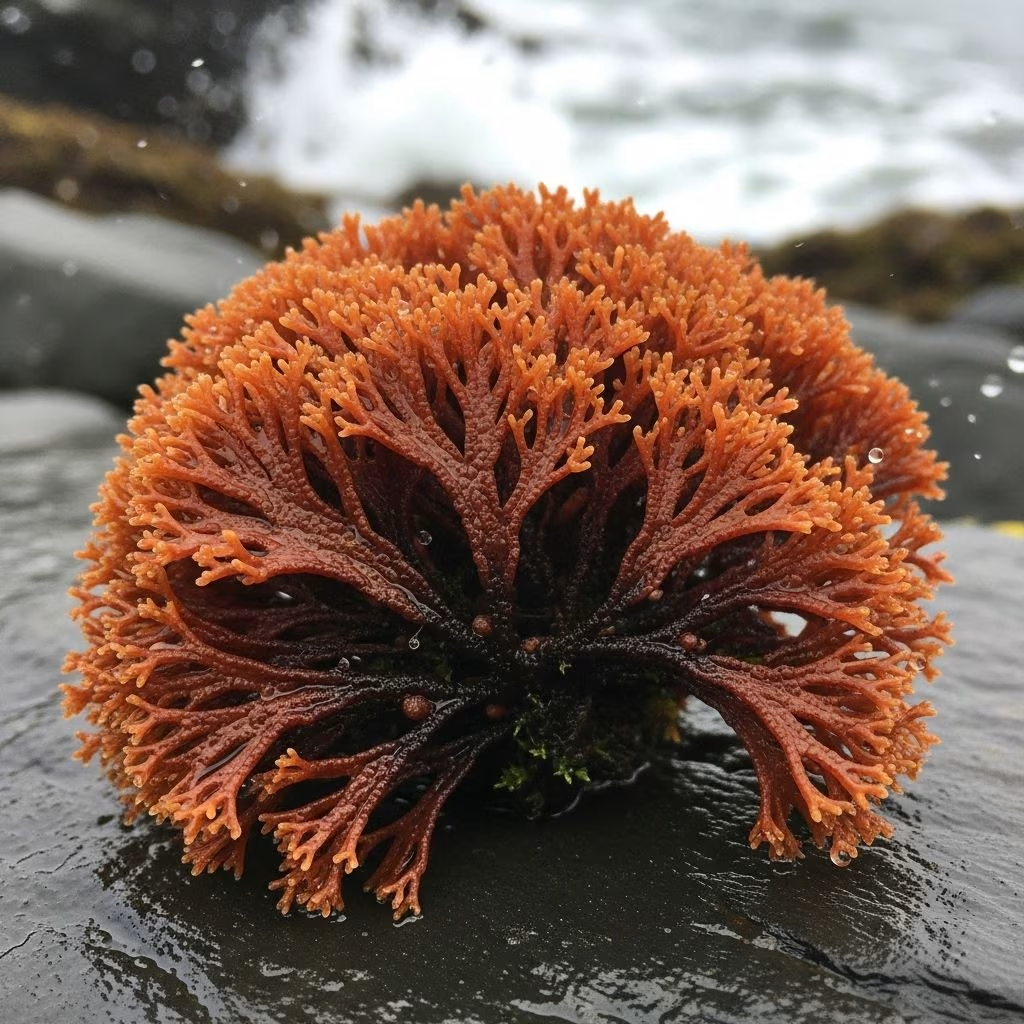
Irish moss, also widely known as carrageen, has a rich history and growing reputation as a nutrient-dense seaweed. From its traditional role in European coastal diets to its contemporary status as a superfood, Irish moss fascinates with its benefits, culinary uses, and distinct qualities.
Introduction: What Is Irish Moss?
Irish moss (Chondrus crispus), also called carrageen or carrageen moss, is a red algae species common on the rocky Atlantic coasts of Europe and North America. The name “carrageen” derives from the Irish word carraigín, meaning “little rock”.
This tufted seaweed is known for its fan-like branching fronds that measure 5 to 25 cm (2–10 inches) long. Traditionally, it’s been harvested for food, medicine, and as a natural source of carrageenan.
Botanical Classification and Habitat
- Family: Gigartinaceae
- Genus and species: Chondrus crispus
- Common names: Irish moss, carrageen, carrageen moss
Irish moss grows attached to rocks from the intertidal zone to deeper subtidal zones across the British Isles, continental Europe, and the eastern coastlines of North America. The fronds are flat, fan-shaped, and forked, sometimes ending in small pointed horns. The color varies from yellow-green to deep purple, influenced by light exposure and habitat.
Irish moss exhibits an alternation-of-generations life cycle, with both sexual (haploid) and asexual (diploid) stages.
Nutritional Profile of Irish Moss
| Nutrient or Mineral | Content |
|---|---|
| Carrageenan (polysaccharides) | ~55% of dry weight |
| Protein | ~10% of dry weight |
| Mineral Matter | ~15% of dry weight |
| Iodine & Sulfur | High |
| Other minerals (e.g., calcium, potassium, iron, magnesium, zinc) | Respectable levels |
| Vitamins A, E, K, Folate, Riboflavin | Present in trace amounts |
This seaweed contains vital micronutrients and is reputed for its iodine content (important for thyroid function), as well as calcium, potassium, magnesium, and iron. It is essentially fat-free and low in calories, making it a nutrient-dense food source.
Key Compounds and Constituents: What Makes Irish Moss Unique?
- Carrageenan: The primary polysaccharide (up to 55% by dry weight)—responsible for Irish moss’s gel-like properties. Carrageenan is widely used as a thickener and stabilizer in the food and cosmetic industries.
- Protein: Nearly 10% of dry weight.
- Mineral matrix: Notably rich in iodine, sulfur, calcium, potassium, and magnesium.
The distinctive gelatinous texture comes from boiling the whole plant, which releases carrageenan, forming a jelly that holds 20 to 100 times its own weight in water.
Health Benefits of Irish Moss
Irish moss has a long-standing tradition as both a food and a folk remedy. Modern research has started to validate many of its purported benefits:
- Soothes the digestive tract: The mucilaginous carrageenan coats and relaxes mucous membranes, helping alleviate symptoms of gastritis, heartburn, and ulcers; it may also act as a mild bulking laxative.
- Supports respiratory health: Traditional use includes soothing coughs, sore throats, and congestion due to its demulcent and antiviral properties.
- Source of essential minerals: Supplies iodine (important for thyroid health), calcium, magnesium (for bone and nerve health), iron, and potassium.
- Anti-inflammatory and antioxidant effects: Phytochemicals and minerals may help counteract inflammation and oxidative stress.
- Topical benefits: Used in creams and lotions for burns, rashes, and skin irritations due to its emollient and soothing qualities.
- Immunity: Some compounds show antiviral activity against a range of pathogens.
- Bulking and satiety: The gel can help promote a feeling of fullness, supporting weight management goals.
Historically, Irish moss was considered a survival food; it even played a crucial nutritional role during the Irish potato famine of the 19th century.
Culinary Uses and Preparation
Irish moss is prized both as an ingredient and a natural thickener:
- Traditional recipes: Irish moss is boiled with milk and sweeteners (sugar, honey) to produce a pudding-like dessert (blancmange or moss pudding), a practice still common in Ireland and parts of the UK.
- Carrageen gel: Boiling Irish moss yields carrageenan gel, which cools into a jelly that can be stored and used as needed. This gel is a vegan substitute for gelatin.
- Food thickener: Used to thicken soups, stews, gravies, and plant-based dairy alternatives (milks, yogurts, mousses).
- Smoothies and beverages: Whole, flaked, or powdered Irish moss can be blended into smoothies or teas for richness and added nutrition.
Irish moss is commercially available in various forms:
- Whole fronds (often sun-dried and bleached)
- Flakes
- Powder
Powdered Irish moss dissolves in water and substitutes for cornstarch in many recipes, providing a neutral, creamy consistency. Once cooked and cooled, Irish moss is nearly odorless and tasteless in food applications.
Taste and Texture: What to Expect
- Raw aroma: Irish moss has a strong, earthy, oceanic scent reminiscent of a seaside or damp garden.
- Flavor profile (cooked): Once boiled and strained, Irish moss is virtually flavorless, allowing it to blend unobtrusively into a wide array of foods.
- Texture: When prepared, Irish moss contributes a smooth, creamy, or jelly-like mouthfeel, similar to dishes made with gelatin or agar.
Potential Risks and Considerations
- Allergy risk: Rare, but people with seaweed or iodine allergies should exercise caution.
- Carrageenan controversy: Some extracted forms of carrageenan (not the whole food form) used industrially have been associated with digestive concerns in sensitive individuals. However, eating whole Irish moss is considered much safer as the carrageenan is not isolated.
- Iodine content: Excessive intake could contribute to thyroid issues in predisposed individuals; moderate consumption is recommended.
- Contaminants: As with any sea vegetable, sourcing from clean, unpolluted waters is crucial due to the risk of heavy metal accumulation.
Irish Moss vs. Other Sea Moss Varieties
| Feature | Irish Moss (Chondrus crispus) | Caribbean Sea Moss (Gracilaria spp./Eucheuma spp.) |
|---|---|---|
| Native region | North Atlantic coasts | Caribbean, tropical/subtropical waters |
| Main use | Traditional Irish/European food, supplement, thickening agent | Jamaican/Caribbean tonics, thickener, supplement |
| Texture (cooked) | Gel-like, soft, subtle taste | Generally milder flavor, gel-producing |
| Color variety | Dark red/purple to yellow-green | Gold, purple, green tones |
While their applications and nutritional value are broadly similar, Irish moss (Chondrus crispus) and Caribbean “sea moss” (Gracilaria/Eucheuma species) are distinct botanically. Both are rich in polysaccharides but grow in different regions and climate zones.
Harvesting and Environmental Sustainability
- Wild harvesting: Traditional hand-harvesting from shallow, rocky beaches during low tide using rakes or by collection of washed-ashore fronds.
- Conservation status: Irish moss remains common in its native areas, but local regulations and sustainability practices are important for preventing over-harvesting.
- Farming: Large-scale farming is less common for Chondrus crispus (Irish moss) than it is for tropical sea moss species.
- Quality control: Always source from reputable suppliers who test for contaminants and use sustainable practices.
Frequently Asked Questions (FAQs)
Q: Is Irish moss the same as sea moss?
A: In health and culinary circles, “sea moss” is often used interchangeably with Irish moss, but technically “sea moss” refers to several different red algae. Irish moss proper is Chondrus crispus, native to the North Atlantic. Caribbean sea moss (Gracilaria or Eucheuma) shares similar properties but is botanically distinct.
Q: Is carrageenan in Irish moss safe?
A: Whole-food Irish moss, as traditionally used, is considered safe for most people. Industrially extracted carrageenan does have some controversial studies regarding gut health, but these concerns center on isolated, processed extracts—not on whole cooked seaweed in its natural form.
Q: How do you prepare Irish moss at home?
A: To make homemade Irish moss gel, soak dried moss to rehydrate and remove sand/debris. Rinse thoroughly, then simmer in water (optionally with milk or sweetener) until it dissolves and forms a gel or pudding. Strain and store the gel in the refrigerator.
Q: What are common culinary uses?
A: Irish moss gel is added to traditional puddings, dairy and non-dairy cheeses, plant-based milks, soups, gravies, and smoothies for a nutritious and creamy boost. It can also act as a vegan thickener or stabilizer in baked goods and desserts.
Q: Does Irish moss contain heavy metals or toxins?
A: Like other seaweeds, Irish moss may absorb trace elements from polluted waters. Choose product sourced from clean, regulated regions, and reputable brands. Check for third-party quality testing.
Conclusion
Irish moss (carrageen) is a remarkable seaweed with a long history of nourishing communities. Sought after for its gelling power, nutritional value, and versatile uses, it is largely tasteless and blushes many modern foods with creaminess. As with all sea vegetables, moderation and quality sourcing are key to enjoying its benefits safely.
References
- https://www.britannica.com/science/Irish-moss
- https://en.wikipedia.org/wiki/Chondrus_crispus
- https://www.learningherbs.com/blog/irish-moss-uses
- https://totallywilduk.co.uk/2022/01/31/irish-moss-id-guide/
- https://seaveg.com/pages/what-is-irish-moss
- https://www.foodingredientfacts.org/irish-moss-the-history-of-carrageenans-roots/
- https://www.wildlifetrusts.org/wildlife-explorer/marine/seaweeds-and-seagrass/carrageen
- https://plants.ensembl.org/Chondrus_crispus/Info/Annotation/


