


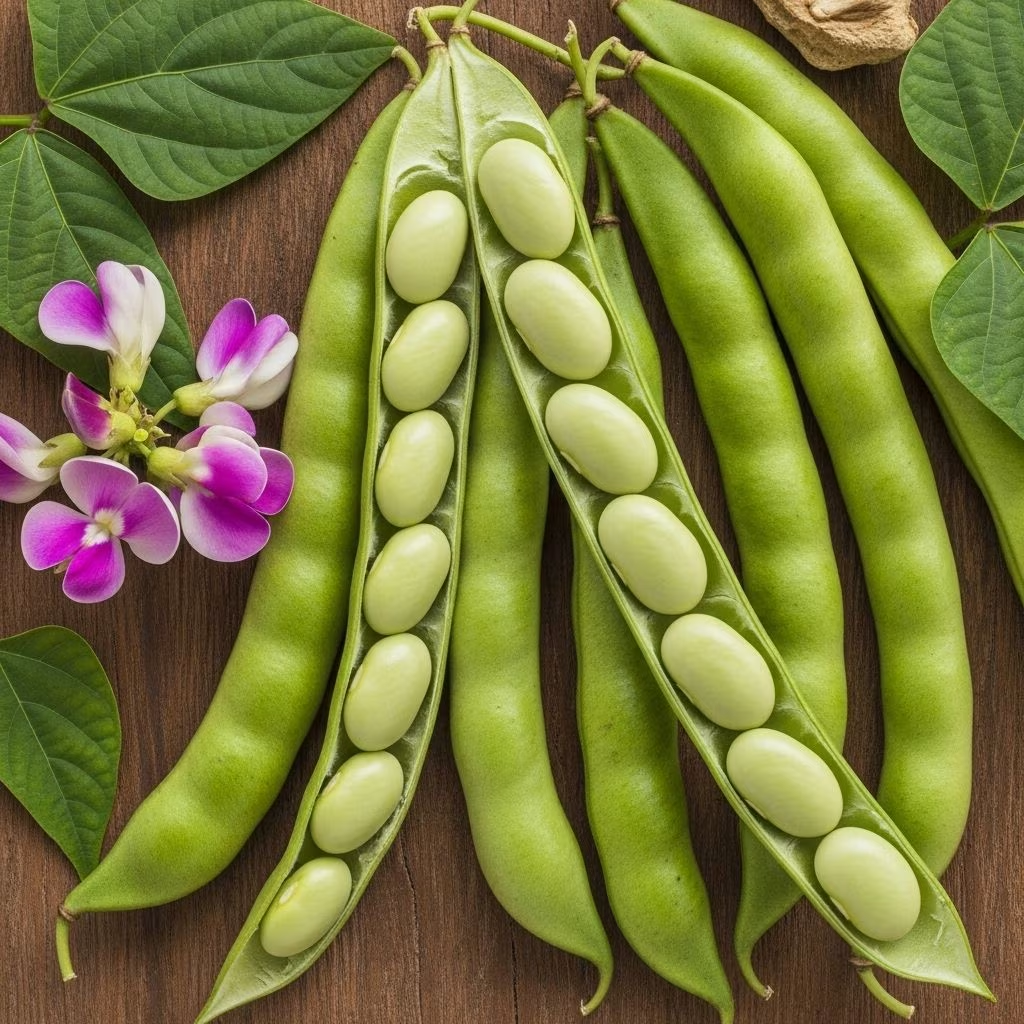
What Is Jack Bean?
Jack bean (Canavalia ensiformis) is a remarkable tropical legume that belongs to the Leguminosae family, also known by various names including Chickasaw Lima bean, sword bean, horsebean, and gotani bean. This vigorous climbing plant is native to the West Indies and Central America but has spread throughout tropical and subtropical regions worldwide, earning recognition as both a valuable food source and an exceptional cover crop.
The plant is characterized by its impressive climbing ability, capable of reaching heights of up to 2 meters (6.6 feet) when provided with adequate support and nutrition. Jack bean produces distinctive sword-shaped seedpods that can grow up to 36 centimeters (14 inches) long and 3.8 cm wide, containing large white seeds with distinctive brown seed scars that cover approximately one-third of the seed’s length.
What sets jack bean apart from other legumes is its exceptional adaptability and resilience. The plant thrives in challenging environmental conditions where other crops might fail, making it an invaluable resource for sustainable agriculture and food security in developing regions.
Nutritional Profile and Health Benefits
Jack bean offers an impressive nutritional profile that makes it a valuable addition to both human and animal diets. The seeds contain approximately 58.4% carbohydrates, 25.2% protein, and only 5.21% fat, providing a well-balanced macronutrient composition that rivals many traditional legumes.
Key Nutritional Components
The high protein content of jack bean makes it particularly valuable in regions where animal protein sources are limited or expensive. The protein quality is substantial, containing essential amino acids necessary for human nutrition. The carbohydrate content provides sustained energy, while the low fat content makes it suitable for various dietary requirements.
Beyond macronutrients, jack bean contains various micronutrients and bioactive compounds. However, it’s important to note that raw jack beans contain antinutritional factors, including concanavalin A, a lectin protein that requires proper processing to eliminate potential toxicity.
Health Benefits
When properly prepared, jack bean offers several health benefits. As a legume, it provides dietary fiber that supports digestive health and helps regulate blood sugar levels. The high protein content makes it valuable for muscle maintenance and growth, while the complex carbohydrates provide sustained energy release.
The plant’s ability to fix nitrogen in soil also means that jack beans grown in nitrogen-rich environments may contain higher levels of certain nutrients, though this requires further research to fully understand the implications for human nutrition.
Culinary Uses and Taste Profile
The taste and culinary applications of jack bean vary significantly depending on the stage of harvest and preparation method. Understanding these variations is crucial for anyone interested in incorporating this versatile legume into their diet.
Taste Profile
Young jack bean pods, when harvested early, have a mild, slightly sweet flavor reminiscent of green beans or snap peas. The texture is tender and crisp, making them suitable for stir-frying, steaming, or adding to soups and stews. As the pods mature, they become tougher and develop a more pronounced, somewhat earthy flavor.
Mature jack bean seeds, when properly cooked, have a nutty, slightly sweet taste with a creamy texture similar to lima beans or fava beans. The flavor is generally described as mild and pleasant, making it adaptable to various culinary preparations and seasoning profiles.
Traditional and Modern Culinary Applications
In Brazil, where jack bean is called “feijão-de-porco” (pig bean), it has been traditionally used in rural communities as both human food and animal fodder. Native tribes in Arizona and Mexico historically used jack beans for food and forage, particularly during drought periods when other crops failed.
In Asian cuisine, particularly in Japan, jack bean has found more widespread acceptance. It’s often prepared as a vegetable dish, incorporated into soups, or processed into paste-like preparations. The young foliage is also edible and can be prepared similarly to other leafy greens.
Modern culinary applications include processing jack beans into milk alternatives, similar to soy milk production. This involves soaking, grinding, filtering, and heating the beans to create a protein-rich beverage that can serve as a dairy substitute in various applications.
Preparation Methods
Proper preparation is essential when cooking jack beans due to their antinutritional factors. Young pods can be prepared with minimal processing, similar to green beans. However, mature seeds require more careful preparation, including thorough soaking, multiple water changes, and extended cooking times to ensure safety and palatability.
Agricultural and Environmental Benefits
Jack bean’s agricultural value extends far beyond its nutritional content, making it a cornerstone crop for sustainable farming practices and environmental restoration.
Nitrogen Fixation Capability
As a member of the legume family, jack bean forms symbiotic relationships with rhizobia bacteria in root nodules, enabling it to fix atmospheric nitrogen. Research indicates that jack bean can fix between 167-205 pounds of nitrogen per acre, significantly reducing the need for synthetic nitrogen fertilizers and improving soil fertility for subsequent crops.
Cover Crop and Soil Conservation
Jack bean excels as a cover crop, capable of establishing 85% ground cover within 60 days of emergence. This rapid establishment helps prevent soil erosion, suppress weeds, and protect soil structure. The plant produces approximately 4,915-6,250 pounds of dry matter per acre, contributing substantial organic matter to the soil when incorporated as green manure.
The deep root system of jack bean helps improve soil structure and water infiltration while accessing nutrients from deeper soil layers, making them available to subsequent crops when the plant decomposes.
Weed Suppression and Natural Pest Control
Jack bean produces natural phytochemicals that act as pesticides, bactericides, and fungicides, providing biological pest control benefits. The plant is particularly effective at suppressing vigorous weeds, including Pennisetum species, and can provide rapid ground cover in agricultural plantations.
This natural pest control capability reduces the need for synthetic pesticides, supporting more sustainable agricultural practices and protecting beneficial insects and soil microorganisms.
Preparation Methods and Safety Considerations
While jack bean offers numerous benefits, proper preparation is crucial due to the presence of antinutritional factors, particularly concanavalin A, a lectin protein that can be harmful if not properly processed.
Safety Considerations
Raw jack beans contain mild toxins that require removal through proper cooking. Concanavalin A, the primary concern, is somewhat resistant to heat treatment, making thorough cooking essential. Even small amounts of this protein can be harmful to both humans and animals, emphasizing the importance of proper preparation.
Recommended Preparation Methods
For mature seeds, the recommended preparation involves several steps. First, soak the beans for 8-12 hours or overnight, changing the water several times during the soaking period. After soaking, drain and rinse the beans thoroughly before cooking.
Cook the beans in fresh water for an extended period, typically 45-60 minutes of boiling, depending on the size and age of the beans. The cooking water should be discarded, and the beans should be rinsed again before final preparation or consumption.
Young pods require less intensive preparation but should still be cooked thoroughly. A 10-15 minute cooking time is usually sufficient to ensure safety while maintaining texture and nutritional value.
Global Cultivation and Distribution
Jack bean cultivation has spread from its origins in the West Indies and Central America to tropical and subtropical regions worldwide, adapting to diverse environmental conditions and agricultural systems.
Geographic Distribution
Today, jack bean is found throughout the tropics and subtropics, including West Africa, Asia, Latin America, South America, India, and the South Pacific. It’s also cultivated in the southwestern United States and Hawaii, demonstrating its adaptability to various climatic conditions.
The plant thrives in areas with annual rainfall between 650-2000mm, evenly distributed throughout the year. It tolerates altitudes up to 1800 meters and temperature ranges of 15-30°C, making it suitable for a wide range of geographic locations.
Environmental Adaptability
Jack bean’s remarkable adaptability allows it to grow in challenging conditions where other crops might fail. It tolerates drought, salinity, and waterlogging, making it valuable for marginal agricultural lands. The plant grows best in soil pH ranges from 4.5-8.0 and tolerates various soil types, including nutrient-depleted and highly leached acidic soils.
This adaptability makes jack bean particularly valuable for climate-resilient agriculture, offering farmers a reliable crop option in the face of changing environmental conditions and extreme weather events.
Commercial and Industrial Applications
Beyond its agricultural and nutritional uses, jack bean has found applications in various commercial and industrial sectors, contributing to its economic value and market potential.
Biotechnology Applications
Jack bean is a commercial source of concanavalin A, a lectin protein used extensively in biotechnology applications, particularly in lectin affinity chromatography. This application in laboratory and research settings creates additional market value for jack bean cultivation.
The plant’s high urease enzyme content has also attracted attention for potential commercial enzyme extraction. However, this same characteristic makes jack bean unsuitable for use in fodder mixtures containing urea, as the urease enzyme liberates harmful ammonia from urea.
Animal Feed Industry
Jack bean serves as a valuable protein source in animal nutrition, particularly for poultry, fish, and livestock. The high protein content and relatively balanced amino acid profile make it a potential substitute for more expensive protein sources like soybean meal.
Research has explored its use in aquaculture, where jack bean-based feeds have shown promise for various fish species. The plant’s ability to grow on marginal lands could make it a cost-effective protein source for the expanding aquaculture industry.
Food Processing Industry
The food processing industry has begun exploring jack bean as a raw material for various products. Jack bean milk, prepared through processes similar to soy milk production, offers potential as a plant-based beverage alternative. The beans can also be processed into flour, paste, or other value-added products.
Recent research has investigated jack bean’s potential in fermented food production, including tempeh-like products, expanding its applications in plant-based food markets.
Growing Jack Bean: A Complete Guide
For those interested in cultivating jack bean, understanding proper growing techniques ensures successful production and maximizes the plant’s benefits.
Planting Requirements
Jack bean should be planted in full sun to light shade, with seed beds spaced approximately 1.5-3 feet apart. Plant in late spring or early summer when soil temperatures are warm and frost danger has passed. The recommended seeding rate is 50-60 pounds per acre for cover crop applications.
For garden cultivation, plant seeds 1-2 inches deep and provide sturdy support structures, as the vigorous climbing habit requires strong support. Suitable supports include trellises, fences, or companion plants like corn, sorghum, or small trees.
Soil and Climate Requirements
While jack bean tolerates poor soils, it grows best in well-drained, fertile soils with good organic matter content. The plant prefers temperatures between 57-81°F (14-27°C) and requires adequate moisture during establishment, though it becomes drought-resistant once established.
Avoid planting in excessively wet soils, as jack bean performs poorly under waterlogged conditions. The plant may drop leaves under extremely high temperatures but can tolerate light frosts once established.
Maintenance and Harvest
Jack bean requires minimal maintenance once established, making it suitable for low-input agricultural systems. Regular watering during establishment helps ensure good germination and early growth, after which the plant becomes increasingly drought-resistant.
For vegetable harvest, pick young pods when they’re tender, typically 60-70 days after planting. For seed production, allow pods to mature fully, which typically takes 120-150 days depending on growing conditions and variety.
Frequently Asked Questions
Is jack bean safe to eat?
Jack bean is safe to eat when properly prepared. Raw beans contain mild toxins, particularly concanavalin A, which must be removed through proper soaking and thorough cooking. Young pods require less processing than mature seeds.
What does jack bean taste like?
Young jack bean pods have a mild, slightly sweet flavor similar to green beans. Mature seeds, when cooked, taste nutty and slightly sweet with a creamy texture resembling lima beans or fava beans.
Can jack bean replace soybeans in cooking?
Jack bean can serve as a partial substitute for soybeans in many applications, including animal feed and some food preparations. However, the nutritional profiles differ, and proper preparation methods must be followed due to antinutritional factors.
How long does it take to grow jack bean?
Jack bean can be harvested as young vegetables in 60-70 days, while mature seeds require 120-150 days to fully develop. The plant establishes quickly and can provide 85% ground cover within 60 days of planting.
Where can I buy jack bean seeds?
Jack bean seeds are available through specialty seed suppliers, agricultural extension services, and some online retailers. They’re more commonly available in tropical and subtropical regions where the plant is regularly cultivated.
Can jack bean grow in cold climates?
Jack bean is a tropical/subtropical plant that requires warm temperatures (57-81°F) and is not suitable for cold climates. It may tolerate light frosts when established but cannot survive freezing temperatures.
References
- https://ecommons.cornell.edu/bitstreams/73c05488-f57c-47fe-9488-e2eacf11eafd/download
- https://plants.usda.gov/DocumentLibrary/plantguide/pdf/pg_caen4.pdf
- https://en.wikipedia.org/wiki/Canavalia_ensiformis
- https://www.myfoodresearch.com/uploads/8/4/8/5/84855864/_21fr-2022-382_virly.pdf
- https://www.feedipedia.org/node/327
- https://www.cabidigitallibrary.org/doi/full/10.1079/cabicompendium.14486
- https://www.merriam-webster.com/dictionary/jack%20bean
- https://plantwiseplusknowledgebank.org/doi/full/10.1079/pwkb.species.14486


