


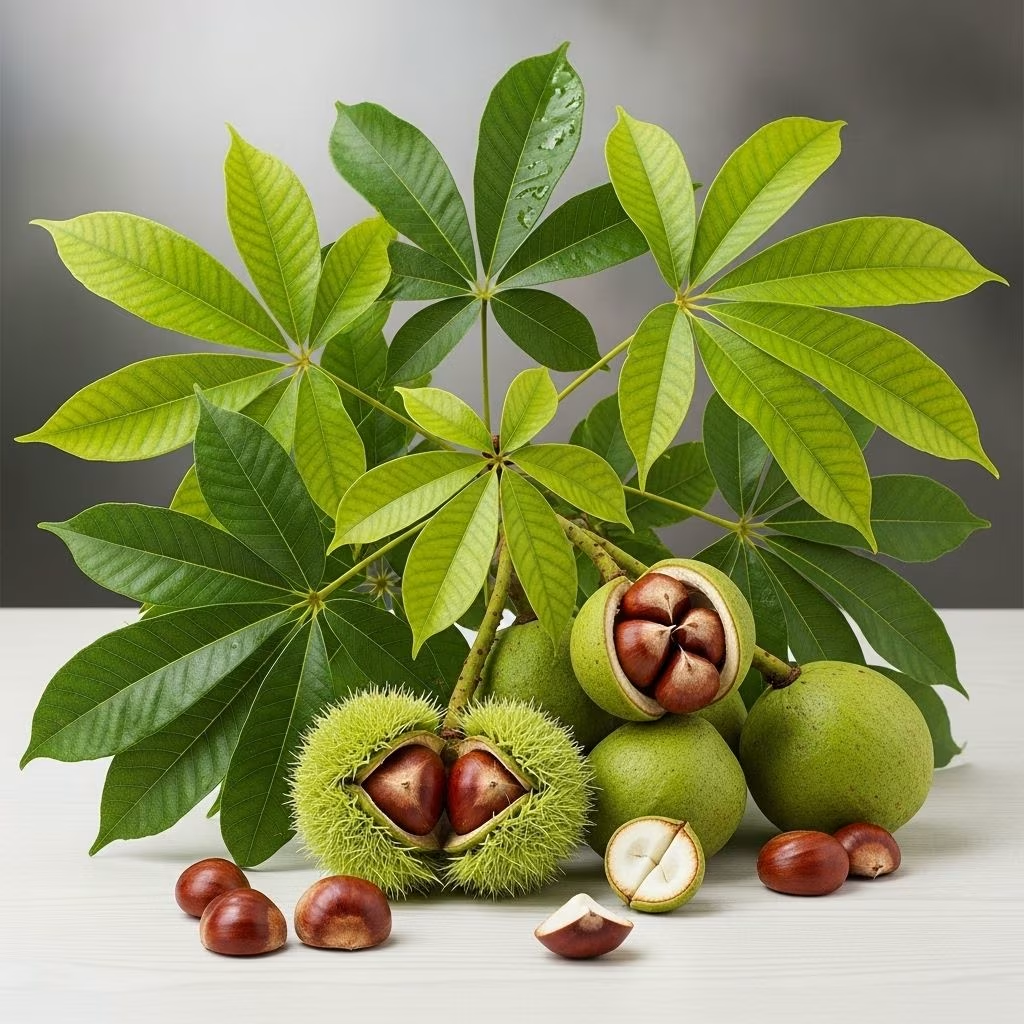
The Malabar chestnut (Pachira aquatica), also known as the Guiana chestnut, Money Tree, or Saba nut, is a versatile plant valued for its attractive appearance, edible seeds, and various uses in cuisine, traditional medicine, and horticulture. Native to Central and South America, particularly from southern Mexico to northern South America, this tree has become a global ornamental favorite and a topic of culinary and ethnobotanical interest.
Introduction to Malabar Chestnut
The Malabar chestnut (Pachira aquatica) is an evergreen tree that has woven itself into the fabric of both tropical landscapes and indoor horticulture across the world. Widely recognized in the West as the ‘Money Tree,’ it is prized for its braided trunk and lush foliage as much as for its edible seeds. The plant’s popularity extends from its native Americas to Asia, where it is now a staple in ornamental gardening and urban homes.
Botanical Background and Distribution
The Malabar chestnut belongs to the family Malvaceae and shares distant relations with species like the baobab and durian. Its native range extends from southern Mexico, through Central America, to northern South America—including Guyana and Brazil.
Common names include:
- Malabar chestnut
- Guiana chestnut
- Provision tree
- Saba nut
- Money tree
While indigenous to the humid estuaries and lowland rainforests of the Americas, Pachira aquatica has been introduced around the globe, thriving in tropical and subtropical climates, and increasingly as an indoor or patio plant in temperate regions.
Plant Morphology: Appearance and Growth
Growth habit: The Malabar chestnut is a showy, evergreen tree which can reach up to 60 feet (18 meters) in the tropics. In subtropical environments or as a potted plant, it often remains much smaller—usually 10-15 feet tall (3–4.5 meters) with a spreading canopy.
| Feature | Description |
|---|---|
| Trunk/Bark | Green, often braided when cultivated; relatively thin and smooth in youth. |
| Leaves | Palmately compound, shiny, bright green, up to 12 inches (30 cm) long, shed rapidly. |
| Flowers | Large, creamy white petals curl back, revealing clusters of long, showy stamens. |
| Fruit/Pods | Large, woody, ovoid pods (4–12 in. long) containing 10–25 tightly packed nuts. |
The flowers are visually striking, and the fruit pod—woody and football-shaped—splits upon maturity to release the edible nuts. The tree tolerates brief temperature drops to about 28° F (-2°C), though this may cause leaf loss.
Nut Characteristics and Taste Profile
The edible portion of the Malabar chestnut is the nut—the seed found within the mature pod. These nuts are usually 1–3 centimeters in diameter and are covered by a thin brown skin with faint white stripes, which should be removed prior to eating. The texture of the nut is semi-soft to crunchy, depending on how it is prepared.
Flavor Profile:
- Raw nuts: Mild, nutty taste reminiscent of peanuts and almonds.
- Cooked/roasted nuts: Develop a roasted, sweet, and nutty flavor with similarities to macadamia and chestnut.
Because of its adaptable flavor, the Malabar chestnut is sometimes referred to as a ‘provision nut’—it can be consumed raw, roasted, ground into flour, or incorporated into both sweet and savory dishes.
Health Benefits and Nutritional Value
Malabar chestnuts have drawn attention for their nutritional properties as sources of energy, and traditional medicinal uses. While specific nutritional analyses are less widely publicized than for common nuts, several key points are generally associated with these seeds:
- Rich in protein, healthy fats, and fiber, making them a potentially useful energy food.
- Contain various vitamins (notably B vitamins) and minerals (such as magnesium, potassium, and iron).
- Used traditionally as a tonic for digestive health, to treat ailments such as hepatitis, headaches, anemia, and hypertension.
- Seeds contain cyclopropenoid fatty acids; there is some debate over potential toxicity (see more below).
The leaves and flowers are also edible and traditionally consumed as vegetables, supplying additional micronutrients and fiber.
Traditional and Culinary Uses
Across its native and adopted regions, the Malabar chestnut plays multiple culinary roles:
- Raw or Roasted: The nuts are eaten directly. When raw, they taste like peanuts; when roasted, their flavor deepens and resembles chestnuts.
- Baked/Fried: Nuts can be ground into flour for use in pancakes, breads, or pastries.
- Vegetables: Young leaves and unopened flowers can be cooked and used as greens, similar to spinach or other leafy vegetables.
- Thickener/Filler: Roasted seeds sometimes used as thickeners in stewsand savory dishes.
In many cultures, the nuts are a seasonal treat, gathered from pods that burst open and drop from the tree at maturity. They are commonly found at fresh markets during the season and, in some parts of Asia, have become a gourmet specialty ingredient.
Potential Toxicity and Safety Considerations
While the Malabar chestnut is generally considered edible and has a long history of culinary use, there are important safety considerations:
- Cyclopropenoid fatty acids: Some literature notes the seeds may contain these compounds, which are associated with potential toxicity if consumed in large quantities over time.
- Conflicting data: Some sources caution that the seeds/nuts should not be consumed in excess or without proper preparation (such as roasting or cooking).
- Tolerated by most: In regions where Malabar chestnut is commonly eaten, there are few reports of acute toxicity, especially when nuts are prepared and consumed in moderation.
It is prudent to exercise caution, especially for children or individuals with nut sensitivities. Consumption of large amounts is not recommended without additional research or local guidance.
Horticultural and Ornamental Value
The Malabar chestnut is highly valued as both an ornamental and an indoor plant:
- Indoor cultivation: Known as the ‘Money Tree,’ it is grown extensively as a potted houseplant. The trunk is often braided for decorative appeal, and its resilience makes it suitable for urban environments.
- Lush appearance: Provides a tropical accent for gardens, patios, and interiors due to its large, attractive leaves and showy flowers.
- Environmental adaptability: Grows well in wet, subtropical, and tropical areas; also thrives in large containers. Tolerates standing water, making it suitable for water features and ponds.
In home gardening, it may produce nuts if conditions mirror its natural habitat—ample moisture, warmth, and occasional flooding.
Cultural and Economic Importance
Symbolism: In East Asia, particularly in China and Taiwan, the Malabar chestnut has become a symbol of prosperity—earning the name ‘Money Tree’ and being gifted at openings of homes and businesses.
Economic uses:
- Food security: In its native range, the tree is a valuable source of food—both from its nuts and edible foliage.
- Non-food uses: The fibrous bark and seed oil have been used to make soaps, caulking for boats, paper, and even as an insecticide.
- Nursery trade: Widely cultivated and sold as an ornamental plant globally, thanks to demands from the horticulture industry.
Frequently Asked Questions (FAQs)
Q: Is Malabar chestnut safe to eat?
Generally, the nuts are eaten safely in native regions, especially when roasted or cooked. Some references suggest limiting intake and always ensuring proper preparation due to potential natural toxins.
Q: What does Malabar chestnut taste like?
Raw nuts taste mildly nutty, much like peanuts or almonds. Once roasted, they develop a richer flavor reminiscent of chestnuts or macadamia nuts.
Q: Can Malabar chestnut grow indoors?
Yes. It is a popular houseplant—especially with a braided trunk—and can thrive with bright, indirect light and regular watering.
Q: Are all parts of the plant edible?
The nuts/seeds, young leaves, and unopened flowers are generally edible, but seeds should be consumed cooked and in moderation. Other plant parts, like wood and bark, are not typically eaten but are used for craft and utility purposes.
Q: What is its role in feng shui?
It is considered a symbol of wealth and good fortune in feng shui, often placed in homes and businesses to attract prosperity.
Conclusion: The Enduring Allure of the Malabar Chestnut
The Malabar chestnut stands out as a plant of many virtues—nutritious, versatile, visually appealing, and culturally significant. Its nuts provide food and nutrition, its foliage enhances landscapes, and its symbolism resonates across continents. Whether cultivated for its edible seeds or simply enjoyed as a lush centerpiece indoors, Pachira aquatica continues to captivate plant enthusiasts, gourmets, and cultural traditionalists alike—making it a remarkable example of botanical utility and beauty.
References
- https://crfg.org/homepage/library/fruitfacts/malabar/
- https://specialtyproduce.com/produce/Malabar_Chestnuts_14600.php
- https://plants.ces.ncsu.edu/plants/pachira-aquatica/
- https://pfaf.org/user/Plant.aspx?LatinName=Pachira+insignis
- https://en.wikipedia.org/wiki/Pachira_aquatica
- https://www.missouribotanicalgarden.org/plantfinder/plantfinderdetails.aspx?taxonid=277941
- https://www.nparks.gov.sg/florafaunaweb/flora/3/0/3045
- https://permies.com/t/234558/Experiences-Malabar-Chestnut-Zone


