


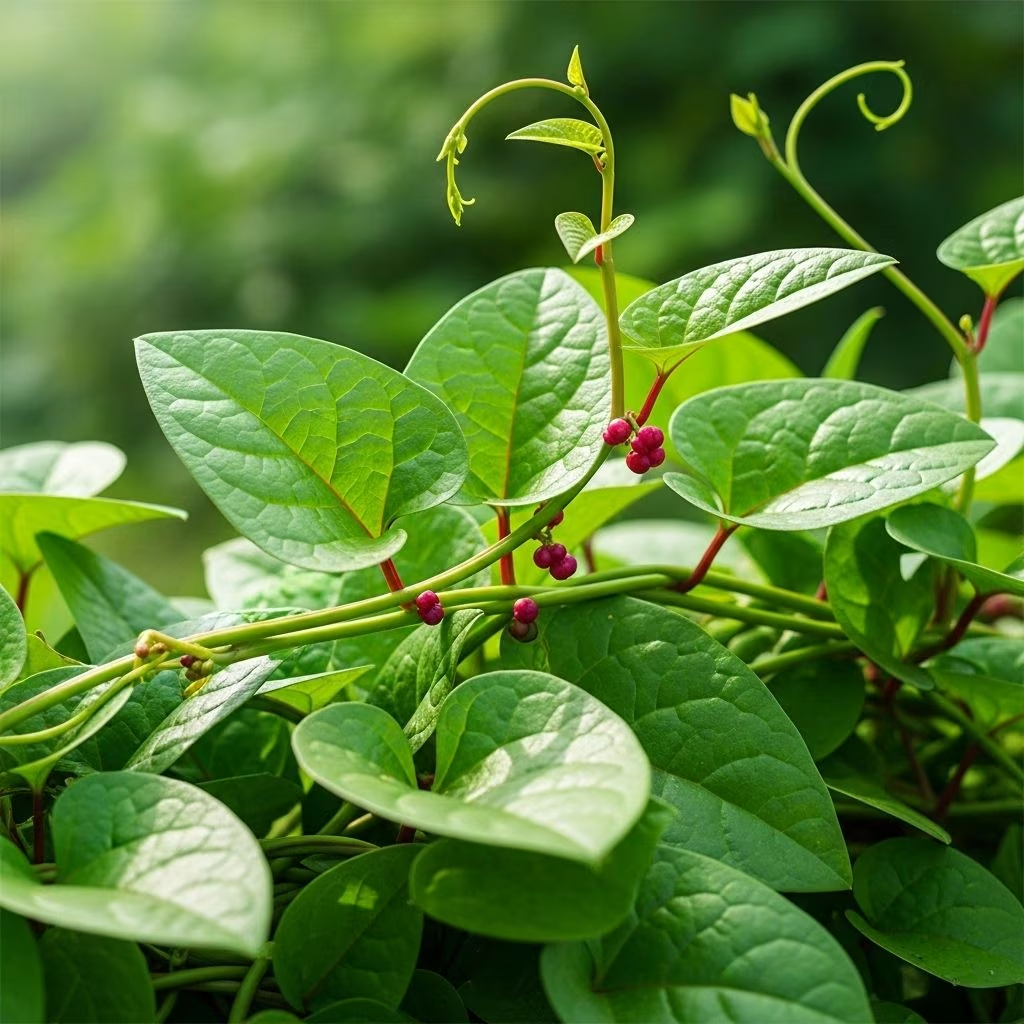
Vine spinach, commonly known as Malabar spinach (Basella alba or Basella rubra), is a tropical and subtropical leafy vegetable that is renowned for its nutritional richness, traditional uses, and unique taste profile. This article provides a comprehensive overview of what vine spinach is, its origins, health benefits backed by research, culinary applications, taste, and frequently asked questions for anyone considering adding this vibrant green to their diet.
What Is Vine Spinach (Malabar Spinach)?
Malabar spinach is not a true spinach but a vigorous, climbing, perennial vine that grows rapidly in warm and humid climates. Its glossy, thick, heart-shaped leaves and fleshy stems are succulent and are widely used as a leafy vegetable in Asia, Africa, and beyond. The botanical names for the two common varieties are:
- Basella alba: Green-stemmed variety
- Basella rubra: Reddish-stemmed variety
Locally, it is known by names such as Mayalu, Poi, Pui Shaak, Ceylon Spinach, or Indian Spinach depending on the region and language. Its widespread popularity owes to its resilience, rapid growth, and adaptability as both a garden vegetable and a potted plant. Its leaves and young shoots are harvested and consumed regularly.
Nutritional Profile
Malabar spinach is a nutrient-dense, low-calorie vegetable that is an excellent source of various essential vitamins, minerals, fiber, water, and potent antioxidants.
| Nutrient | Content (per 100g) | Main Benefits |
|---|---|---|
| Vitamin A (as beta-carotene) | 8000–11400 IU | Promotes vision, supports immunity |
| Vitamin C | 102 mg | Antioxidant, boosts immunity |
| Vitamin E | 1.12 mg | Promotes skin health, antioxidant |
| Calcium | 109 mg | Bone health, nerve function |
| Iron | 1.2–1.8 mg | Prevents anemia, vital for blood |
| Magnesium | 65 mg | Muscle & nerve health, hydration |
| Potassium | 510 mg | Heart health, regulates blood pressure |
| Protein | 2.0–3.0 g | Supports cell repair |
| Fiber | 2.1 g | Improves digestion |
| Water content | 90%+ | Hydration |
This impressive nutrient content explains why Malabar spinach is highly recommended as part of a healthy diet, especially for people looking for plant-based sources of vitamins, minerals, and hydration.
Sources:
Health Benefits of Malabar Spinach
Malabar spinach’s significant health benefits arise from its rich nutritional profile and phytochemical content. Its benefits are well-supported by traditional wisdom and modern research.
- Supports vision and eye health: High beta-carotene and lutein content reduce the risk of eye disorders such as macular degeneration and night blindness .
- Enhances immunity: Vitamin A, C, and E together fortify the immune system and reduce infection susceptibility .
- Promotes cardiovascular health: Potassium and magnesium lower blood pressure and improve heart function by relaxing blood vessels .
- Aids weight management: High fiber and water content keep you full for longer and aid digestion, helping with healthy weight regulation .
- Anti-inflammatory effects: Contains potent antioxidants (like lutein, zeaxanthin, and beta-carotene) that help fight cell damage, reduce the risk of chronic diseases, and alleviate inflammation in arthritis and related conditions .
- Improves digestion & gut health: Its mucilaginous texture aids digestion and prevents constipation, making it beneficial for children and pregnant women facing bowel issues .
- Reduces anemia risk: Good iron content helps build red blood cells and can help prevent iron-deficiency anemia .
- May help prevent osteoporosis: Rich in calcium and magnesium, malabar spinach can help maintain bone density .
- Anti-aging support: Antioxidants protect the body from oxidative stress, slowing cellular aging .
- May support kidney health: Traditional use and research indicate potential to help prevent or reduce kidney stones .
Traditional Uses and Home Remedies
Malabar spinach plays a significant role in various traditional medicine systems (especially Ayurveda). Its leaves, stems, and roots have been used for numerous home remedies and therapeutic purposes:
- Chewing raw leaves for mouth ulcers and oral inflammation .
- Applying leaf paste on burns, boils, and wounds to reduce inflammation and promote healing .
- Consuming juice or decoction to relieve constipation in children and pregnant women .
- Used as a natural coolant and blood purifier in Ayurvedic practices .
- Applied over the forehead for relief from headache, and to cracked feet or local inflammation .
- Combination with other herbs for fertility enhancement .
- Leaf juice to improve breast milk production in lactating mothers .
- Root decoction for relieving nausea, bilious vomiting, and diarrhea .
These uses are drawn from centuries of traditional practice and home-based remedies, reflecting the plant’s versatility for common health complaints alongside nutritional value.
Culinary Uses
Malabar spinach is highly regarded for its versatility in the kitchen. Its mildly tangy flavor and thick, mucilaginous texture make it a unique addition to both raw and cooked dishes around the world.
Common Culinary Applications:
- Salads: Tender leaves add crunch and nutrition to raw salads .
- Sautéed greens: Lightly sautée with garlic and oil for a quick, flavorful side dish .
- Soups and stews: Adds body, texture, and nutrition when stirred into broths .
- Curry dishes: Popular in Indian, Southeast Asian, and African curries (both vegetarian and non-vegetarian) .
- Pakodas and fritters: Batter-fried for crisp, nutritious snacks .
- Green smoothies: Blends well with fruits and other greens for refreshing, healthful drinks .
- Dals and legumes: Used to complement lentil dishes, as in traditional Indian ‘Mayalu bhaji’ .
The thick, mucilaginous consistency of the leaves is particularly valued in Asian and African stews, providing natural thickening and a smooth mouthfeel. Both the leaves and young stems are edible.
Sample Recipe: Mayalu Bhaji (Kokani Style)
- Malabar spinach leaves: 1 bunch
- Tur/Chana dal: 1/4–1/2 cup
- Onion (finely chopped): 1
- Fresh grated coconut: 3/4 cup
- Red Chili: 3–4, Coriander seeds: 1 tbsp, Turmeric: 1/2 tsp, Tamarind: small piece (to taste)
Combine the ingredients with basic tempering, simmer until the dal softens, and savor the bright, slightly tangy flavor balanced by coconut and spice .
Taste Profile
Fresh Malabar spinach leaves have a mild, slightly tangy, and subtly peppery flavor with a unique, succulent texture. When eaten raw, the leaves are crunchy and juicy. Upon cooking, the mucilage content provides a ‘silky’, almost slippery consistency, similar to cooked okra, which thickens soups and stews. The taste is often described as:
- Fresh and green, resembling but milder than regular spinach
- Slightly sour or tangy notes, especially in the young leaves and fruits
- Faint peppery undertone, setting it apart from classic spinach
- Smooth texture in cooked preparations, well-suited to both lightly-cooked and robust spice blends
Its texture may take some getting used to for those unfamiliar with mucilaginous greens, but it is prized in many traditional dishes for exactly this reason.
Precautions and Side Effects
- Malabar spinach is generally safe for most people when eaten in moderation .
- Excessive consumption may cause digestive discomfort due to high fiber and mucilage .
- Rare allergic reactions have been reported in sensitive individuals; try small portions first if unsure .
- Traditional wisdom suggests not to combine it with sesame seed paste, as this may cause diarrhea .
- The oxalate content is less than in true spinach, but people with kidney stone history should moderate intake .
Frequently Asked Questions (FAQs)
Q: Is Malabar spinach the same as regular spinach?
A: No. Although both have ‘spinach’ in their names, Malabar spinach is a climbing vine (Basellaceae family), while true spinach (Spinacia oleracea) is from the Amaranthaceae family. Their texture and taste are similar but distinct.
Q: Can Malabar spinach be eaten raw?
A: Yes, the tender leaves and shoots are deliciously crunchy raw and are often used in salads and wraps.
Q: Is it suitable for pregnant women?
A: Yes, given its iron, calcium, folate, and fiber, it is suitable for pregnant women and children, especially to ease constipation. However, as with any food, moderation is key.
Q: Are there medicinal uses of Malabar spinach?
A: Yes, it is documented in Ayurvedic traditions as a blood purifier, natural coolant, and remedy for ulcers, wounds, constipation, and for improving lactation and fertility .
Q: Can Malabar spinach aid in weight loss?
A: Yes. Its high fiber and water content support satiety and digestive regularity, making it excellent for weight management .
Q: How do I grow Malabar spinach at home?
A: Malabar spinach thrives in hot, humid climates, in well-drained soil with ample sunlight. Provide a trellis for the vines. It is a rewarding edible for kitchen gardens.
References: Compiled from credible nutritional, traditional, and culinary sources, with further details available in health science, food, and ethnobotanical literature.
References
- https://healthokglobal.com/blog/malabar-spinach
- https://www.easyayurveda.com/2019/12/05/malabar-spinach/
- https://www.aditiprabhu.com/all-about-malabar-spinachmayalu/
- https://diynatural.com/malabar-spinach/
- https://www.nutrition-and-you.com/basella.html
- https://alachuacounty.us/news/Article/pages/Malabar-Spinach-is-the-June-Plant-of-the-Month.aspx
- https://nation.africa/kenya/business/seeds-of-gold/vine-spinach-nutritionally-rich-vegetable-many-ignore-3951384


