


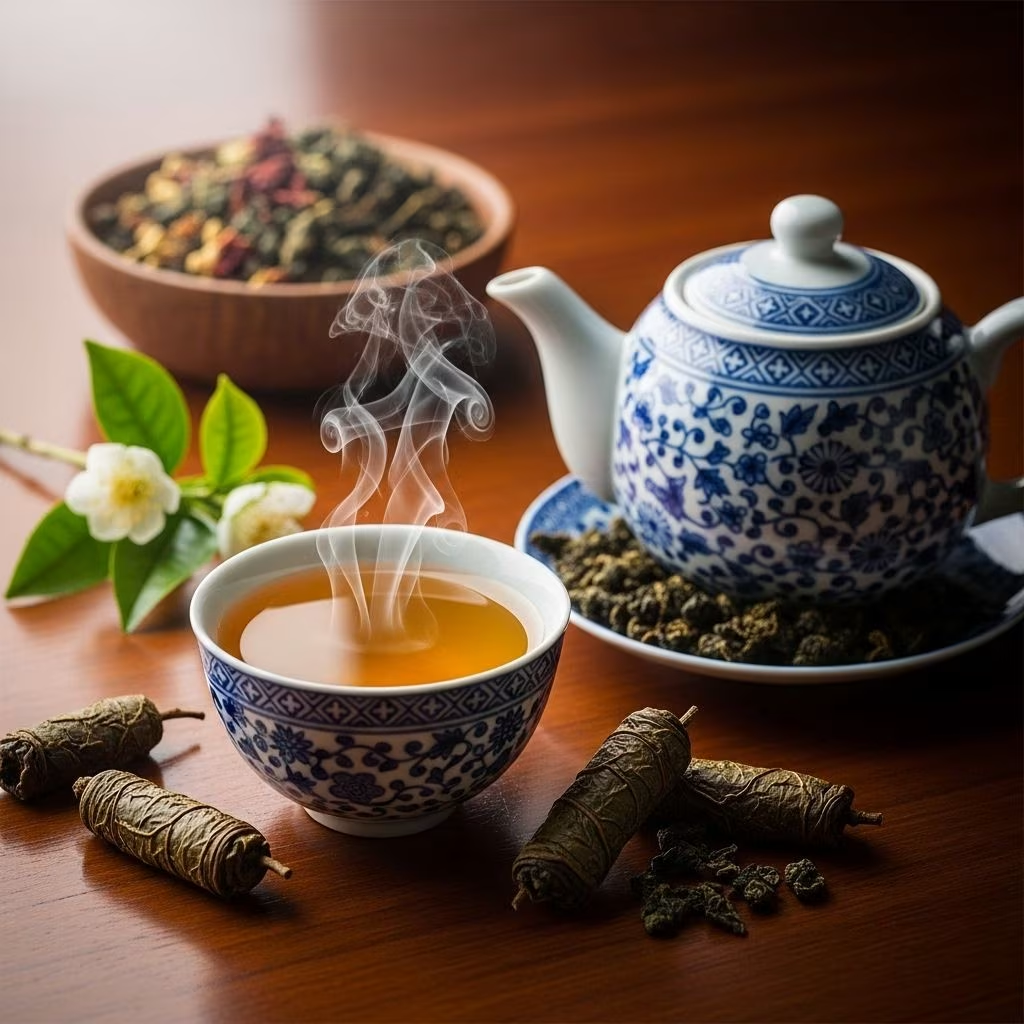
Among tea varieties cherished across the globe, oolong tea stands out for its complex production methods, deep-rooted history, nuanced flavors, and acclaimed health benefits. This article provides a comprehensive exploration of oolong tea—its origins, processing, benefits, applications, and a sensory guide to its unique taste. Whether you are a tea novice or an aficionado, understanding oolong tea enriches your appreciation for this “black dragon” brew.
Oolong Tea Overview
Oolong tea (wūlóngchá, meaning “black dragon tea”) is a traditional Chinese tea crafted through a partial oxidation process, which places it chemically and sensorially between green and black tea. The degree of oxidation in oolong teas can range broadly—from about 8% up to 85%—which dramatically impacts both flavor and aroma. Each batch of oolong, produced from the leaves of the Camellia sinensis plant, displays unique characteristics determined by its variety, terroir, and processing technique.
History and Origins of Oolong Tea
The roots of oolong tea are traced to southeastern China, specifically the Fujian and Guangdong provinces, as well as Taiwan. Oolong teas from famed regions such as the Wuyi Mountains (with legendary varieties like Da Hong Pao), Anxi, and Nantou in Taiwan have achieved global recognition and are considered among the finest teas produced. The name “oolong” is interpreted as a reference to the dark, curled shape of the processed leaves, likened to a black dragon.
- Fujian Province: Traditional home to classic oolongs like Tie Guan Yin and Da Hong Pao.
- Guangdong Province: Known for Dan Cong (single bush) oolongs with floral and fruity notes.
- Taiwan (Formosa): Celebrated for lightly oxidized, creamy oolongs like Dong Ding and Jin Xuan.
Beyond its ancient Chinese heritage, oolong production has expanded to countries like Thailand, India, and Vietnam, though China and Taiwan remain the epicenters of authentic oolong craftsmanship.
Production and Processing
What makes oolong tea distinct lies in its complex production process. Oolong is classified as a semi-oxidized tea—a step between green (unoxidized) and black (fully oxidized) teas. The process combines artful oxidation, controlled withering, rolling or twisting, and sometimes roasting, each contributing to the breadth of flavor and aroma found in oolongs.
Key Steps in Oolong Tea Processing
- Harvesting: Tender leaves and buds are hand-picked, usually from elite cultivars of Camellia sinensis.
- Withering: Leaves are spread under the sun to wilt, reducing moisture and starting chemical changes.
- Oxidation: Leaves are lightly bruised (by shaking or tossing), triggering oxidation. This stage is crucial and can range from minimal (8%) to substantial (up to 85%) depending on the oolong style.
- Rolling/Twisting: Leaves are rolled into curly strips or wrap-curled into small beads; this not only shapes the leaf but affects infusion.
- Roasting (optional): Some oolongs are roasted, adding layers of nutty, creamy, or caramelized notes.
- Final Drying and Sorting: Finished leaves are dried, graded, and packed.
Each harvest season, regional terroir, and specific cultivar impact the final tea’s quality, ageability, and taste subtleties. The combination of all these elements is why no two oolongs are ever precisely the same.
Taste Profile and Varieties
Oolong tea is celebrated for its diverse and layered taste profiles. Tasting oolong is a discovery; the flavor spectrum arises from the interplay of oxidation levels, roasting, leaf variety, and growing conditions.
| Oolong Type | Oxidation Level | Typical Flavor Profile | Common Aromas/Notes |
|---|---|---|---|
| Light Oolong | 8–30% | Fresh, floral, grassy, sometimes creamy | Orchid, lily, melon, butter |
| Medium Oolong | 30–60% | Balanced, fruity, honeyed, slight toastiness | Peach, apricot, honey, magnolia |
| Dark Oolong | 60–85% | Full-bodied, roasted, nutty, caramelized, occasionally chocolatey | Roasted nuts, cocoa, spices, mineral |
Some famous oolong varieties and their characteristics include:
- Tie Guan Yin (Iron Goddess of Mercy): Floral, creamy, orchid-like notes; famous in Anxi, China.
- Da Hong Pao (Big Red Robe): Legendary Wuyi oolong, delivers rock mineral, cocoa, spice, and a dramatic roasted complexity.
- Dong Ding (Frozen Summit): Iconic Taiwanese oolong with sweet, buttery, chestnut, and floral flavors.
- Milk Oolong (Jin Xuan): Naturally creamy and smooth, with distinctive milky and floral overtones.
- Dan Cong: Grown in Guangdong, known for remarkable floral and fruity notes resembling orchid, lychee, or honey.
Oolong’s color ranges from pale gold (lightly oxidized) to deep amber or even red (heavily oxidized), and its steeped aroma can evoke wildflowers, ripe fruit, toasted grains, or minerals, depending on the particular style.
Key Health Benefits of Oolong Tea
Oolong tea has attracted attention in scientific circles and traditional wellness for its prospective health-promoting properties. Regular consumption of oolong tea can offer various benefits thanks to its polyphenols, antioxidants, vitamins, and trace minerals.
- Metabolic Boost & Weight Management: Oolong may enhance metabolism and increase fat oxidation, supporting weight management and reduced fat accumulation.
- Heart Health: Regular oolong consumption may reduce bad cholesterol (LDL) levels, improve blood vessel function, and lower the risk of cardiovascular disease.
- Antioxidant Support: Rich in catechins and theaflavins, oolong has potent antioxidant properties that may help combat oxidative stress and promote cellular health.
- Mental Alertness & Relaxation: The mix of caffeine (less than black tea, more than green tea) and the amino acid L-theanine may improve alertness, cognitive function, and induce calm focus.
- Oral & Bone Health: Oolong’s polyphenols may support healthy teeth by inhibiting dental bacteria, and there is some evidence supporting improved bone density in regular tea drinkers.
- Blood Sugar Regulation: Early research suggests oolong tea can aid in stabilizing blood glucose and reducing risks for type 2 diabetes.
It’s important to note that these benefits are most pronounced as part of an overall healthy lifestyle and when oolong is consumed regularly, without excessive sweeteners or added dairy.
Uses and Applications of Oolong Tea
Oolong’s primary use is as a brewed beverage, savored plain or within traditional tea ceremonies (notably the gongfu style in China). Beyond simple enjoyment, oolong finds applications in culinary arts—infusing flavor in cocktails, baked goods, broths, and even ice cream. In beauty and wellness, oolong extracts and powdered tea are increasingly featured in skincare and haircare products for their antioxidant and soothing effects.
- Traditional Gongfu Tea Ceremony: This ritualized brewing approach maximizes oolong’s flavor complexity with short, repeated infusions using small vessels.
- Iced Oolong Tea: Cold brewed or served over ice for a refreshing and aromatic alternative to soda.
- Oolong in Cooking: Used as a marinade for meats, flavoring cakes or desserts, or as a creative base for salad dressings.
- Oolong Tea Extracts: Added to beauty products for hydration and antioxidant protection.
How to Brew Oolong Tea
Proper brewing is essential to unlock the full flavor of oolong tea. Here is a step-by-step guide for a classic steep:
- Water temperature: 85–95°C (185–203°F) is ideal. Lighter oolongs prefer lower temps; darker types handle higher heat.
- Tea amount: Use 1–2 teaspoons of leaves per 6–8 ounces of water, or adjust depending on tea strength and vessel size.
- Steeping time: 2–5 minutes for a standard infusion. Oolongs are suitable for multiple steepings, with flavor evolving in each round.
- Vessels: Porcelain, clay, or glass teapots are popular. The small gaiwan or yixing clay pot is traditional for the gongfu method.
Brew to taste preference. Light oolongs reveal floral sweetness with short steeps, while longer infusions of roasted oolongs deliver deeper, nutty characteristics. Quality oolong leaves can typically be steeped three to seven times, providing a journey through changing aromas and nuances.
Oolong Tea vs. Green and Black Tea
| Aspect | Oolong Tea | Green Tea | Black Tea |
|---|---|---|---|
| Oxidation Level | 8–85% (semi-oxidized) | 0–8% (unoxidized) | 85–100% (fully oxidized) |
| Flavor | Wide range: floral, fruity, creamy, roasted, nutty | Fresh, grassy, sometimes vegetal or sweet | Malty, robust, astringent, sometimes fruity/spicy |
| Caffeine Content | Moderate | Low to moderate | High |
| Leaf Appearance | Curled, twisted, or rolled; whole leaves | Flat, rolled, or twisted; whole/broken | Mostly rolled or broken |
| Color of Liquor | Gold, amber, reddish | Pale yellow-green | Deep brown-red |
Frequently Asked Questions (FAQs)
Q: Is oolong tea good for weight loss?
Research suggests that oolong tea may aid weight management by enhancing metabolism and fat oxidation; actual effects depend on the individual and overall lifestyle.
Q: Does oolong tea contain caffeine?
Yes, oolong tea contains caffeine, though typically less than black tea and slightly more than green tea. The amount can range from 30–70 mg per 8 oz cup, depending on the style and brewing method.
Q: How is oolong tea different from green and black tea?
Oolong tea is partially oxidized, making its flavor and color intermediate between green (unoxidized, grassy) and black (fully oxidized, robust) tea types.
Q: How should oolong tea be stored?
Store oolong tea in an airtight container, away from light, moisture, and strong odors to preserve its intricate aromas and flavors. Some roasted or aged oolongs may develop complexity over time.
Q: Are there any risks or side effects?
Oolong tea is generally safe when consumed in moderation. Its caffeine content may affect those sensitive to stimulants. Excessive consumption can lead to insomnia or digestive upset.
Conclusion
Oolong tea stands as a bridge between green and black tea, offering a universe of taste possibilities and wellness potential. Its story is woven through centuries of culture, expertise, and a respect for nature’s diversity. Whether enjoyed during a quiet moment or shared in ritual, a cup of oolong tea is an invitation to discover complexity, craftsmanship, and calm in every sip.
References
- https://en.wikipedia.org/wiki/Oolong
- https://www.1992sharetea.com/news/is-oolong-tea-black-tea
- https://tea-side.com/blog/what-is-oolong-tea/
- https://fullleafteacompany.com/pages/what-is-oolong-tea-health-benefits-characteristics-prep
- https://artfultea.com/blogs/tea-wisdom/oolong-tea
- https://www.teatulia.com/tea-varieties/what-is-oolong-tea.htm
- https://white2tea.com/blogs/blog/what-is-oolong
- https://pmc.ncbi.nlm.nih.gov/articles/PMC5821678/
- https://www.artoftea.com/blogs/tea-profiles/the-complete-guide-to-oolong-teas


