


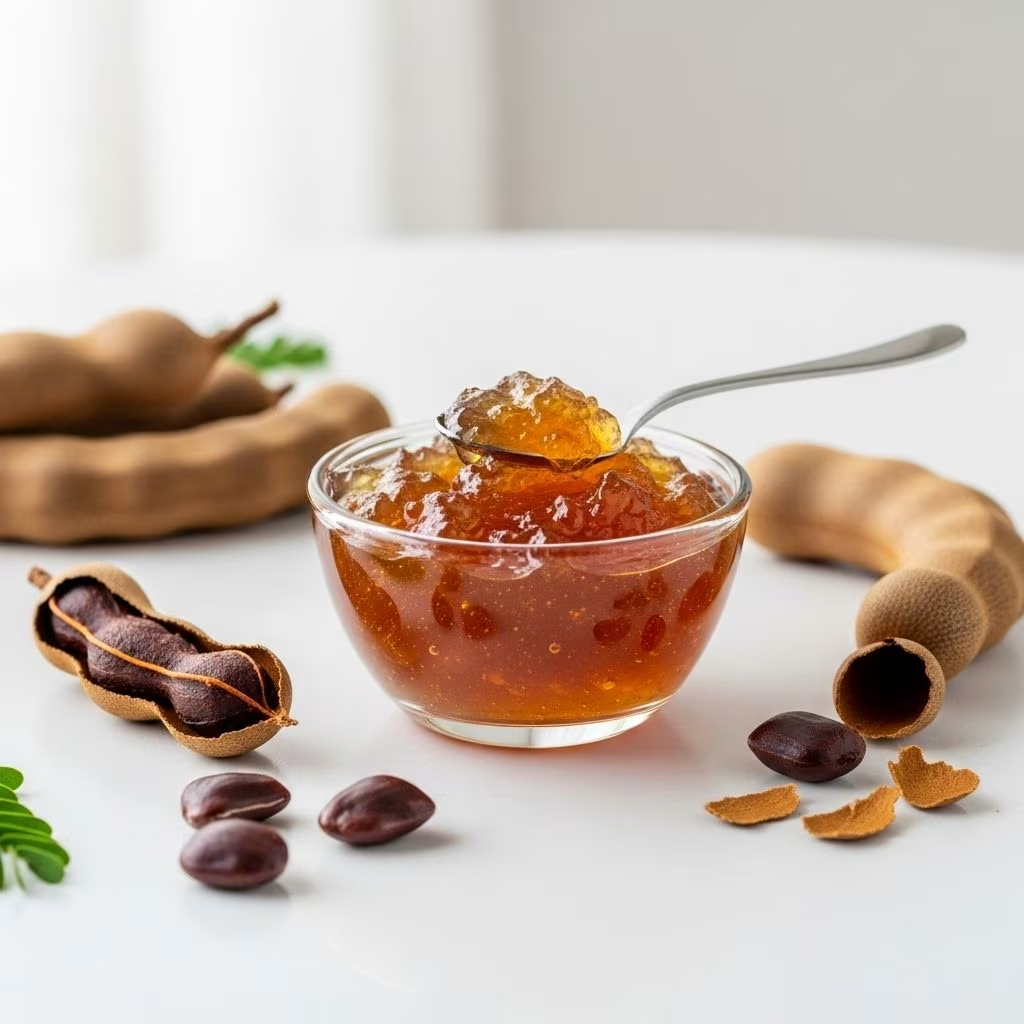
Tamarind seed gum, also known as tamarind kernel gum or tamarind seed polysaccharide (TSP), is a high-molecular-weight carbohydrate extracted from the seeds of the Tamarindus indica tree. Prized for its physicochemical properties and wide application in food, pharmaceutical, cosmetic, and industrial fields, tamarind seed gum is the subject of increasing scientific and commercial interest.
Introduction to Tamarind Seed Gum
The tamarind tree is native to tropical Africa and widely cultivated across Asia and South America. While the brown, tangy pulp is used as a culinary ingredient, the seeds—located inside hard pods—hold polysaccharides known as tamarind seed gum or tamarind kernel gum. Typically regarded as a byproduct, these seeds are increasingly valued for their thickening, gelling, and stabilizing capabilities in various industries.
Extraction and Manufacturing
The process of isolating tamarind seed gum involves:
- Seed Collection: Tamarind seeds are obtained from pod processing for culinary tamarind pulp.
- Decortication: Removal of tough outer seed coats, often by roasting or mechanical methods.
- Milling: The white or pale-yellow endosperm (kernel) is separated and ground into powder.
- Purification: The powder may be stirred in food-grade alcohol (commonly methyl alcohol), followed by the addition of sodium hydroxide and subsequent pH adjustment with citric acid, to remove proteins and fats.
- Drying and Sieving: The gum is dried and sieved to achieve a consistent, free-flowing fine powder.
This sequence yields tamarind gum powder for use as a hydrocolloid in a variety of applications.
Chemical Composition and Molecular Structure
Tamarind seed gum is a polysaccharide classified as xyloglucan. Key characteristics:
- Main chain consists of glucose units, resembling cellulose.
- Side chains of xylose and galactose are attached to the glucose backbone.
- High molecular weight (hundreds of thousands to millions of Daltons).
- Free-flowing, tasteless powder, typically white to pale beige in color.
This unique branching structure is responsible for its distinctive physicochemical behavior, including strong water holding and viscosity-enhancing characteristics.
Physical and Rheological Properties
Tamarind seed gum exhibits several noteworthy properties:
- Hydrophilicity: Highly water-loving, rapidly absorbs and retains water.
- Solubility: Most forms dissolve or swell in hot water (>80°C), while some variants are dispersible at lower temperatures.
- Viscosity: Imparts significant viscosity to aqueous solutions, displaying shear thinning behavior—viscosity decreases with stirring or increased temperature.
- Thermal Stability: Maintains viscosity and function at high temperatures (up to 120°C), showing better resistance than many other gums.
- Emulsification and Stabilization: Acts as a binder and stabilizer for oil-in-water emulsions and suspensions.
- Gelling: Forms gels in the presence of sugar or alcohol (does not gel in isolation); such gels show low syneresis (minimal water separation).
- pH and Ionic Stability: Remains functional across a range of pH levels, and is stable in the presence of salt and under freezing/thawing cycles.
- Insoluble in Organic Solvents: Will not dissolve in most organic liquids.
Functional Benefits of Tamarind Seed Gum
The unique molecular structure of tamarind seed gum yields functional benefits including:
- Neutral Taste and Color: Does not alter the taste or appearance of formulations, making it a preferred thickener and stabilizer.
- Antioxidant Properties: Demonstrates strong antioxidant activity, protects against lipid peroxidation, and helps prolong shelf life of food products.
- Anti-inflammatory Effects: Shown to inhibit certain inflammatory processes and possess bioactive benefits in processed or medicinal products.
- Non-allergenic and Gluten-free: Can serve as a gluten replacement for dough-binding in gluten-free baked goods.
- Fiber Content: As a polysaccharide, it may have prebiotic or fiber effects beneficial for gut health (though more studies are needed for clinical effects).
Industrial and Food Applications
Tamarind seed gum is valued for its versatility in several industries:
Food Industry
- Thickener: Used in soups, sauces, gravies, and salad dressings to provide body and texture.
- Gelling Agent: With sugar or alcohol, creates gels for jams, jellies, and fruit preserves; can substitute for pectin.
- Stabilizer and Emulsifier: Keeps ingredients evenly dispersed in dairy products such as ice cream, cheese, and mayonnaise.
- Dough Binder and Texture Modifier: Replaces gluten, improves crumb structure, and maintains moisture in gluten-free and low-fat baked goods.
- Fat Replacer: Adds creaminess and viscosity with minimal calories, suitable for low- or reduced-fat formulations.
- Starch Modifier: Enhances or stabilizes starchy foods for better shelf-life and resistance to retrogradation.
- Confectionery: Used in gummies and candies for consistent chew and mouthfeel.
Table: Comparison of Tamarind Seed Gum and Other Common Gums
| Property | Tamarind Seed Gum | Xanthan Gum | Guar Gum | Pectin |
|---|---|---|---|---|
| Primary Use | Thickener, gelling, stabilizer | Thickener, stabilizer | Thickener | Gelling agent (high sugar/acid) |
| Water Solubility | Hot or cold, depending on type | Cold and hot | Cold and hot | Hot (typically with sugar/acid) |
| Gel Formation | Gels with sugar or alcohol | No true gels | No true gels | Strong gels (with sugar/acid) |
| Taste/Color Impact | Neutral | Neutral | Slight beany flavor if overused | Neutral |
| Thermal Stability | Excellent | Excellent | Good | Good |
Uses Beyond Food Industry
- Pharmaceuticals: Used as a binder, disintegrant, or carrier in tablets, as well as in controlled drug release formulations owing to its biocompatibility and viscosity.
- Cosmetics: Adds texture and viscosity in lotions, creams, and gels for a smoother, more luxurious mouthfeel and stability.
- Textile Industry: Used in printing, sizing, and finishing due to strong binding and film-forming properties.
- Paper Industry: Enhances binding and surface quality in specialty papers.
- Adhesives and Glues: Base for natural glues, especially in eco-friendly or child-safe products.
Sensory Profile and Taste Characteristics
Taste: Pure tamarind seed gum is characterized as tasteless or virtually neutral. This makes it highly desirable in applications where other hydrocolloids may impart an off-flavor.
Texture: Provides a smooth, viscous texture, imitating the feeling of fat or gelatin in the mouth without any flavor masking or aftertaste.
Color and Aroma: Typically appears white to pale yellow. In finished products, it does not alter color or aroma, further supporting its suitability for diverse formulations.
Note: The seed coat (which is removed during processing) contains tannins and dyes and can impart undesirable tastes and colors if not carefully separated. Only the purified gum or powder is used for food and pharmaceutical purposes.
Comparison with Other Hydrocolloids
Tamarind seed gum shares similarities with xanthan gum, guar gum, and pectin, but stands out due to:
- Gel formation with sugars/alcohols (vs. non-gelling or different-gelling competitors).
- Greater heat and pH stability than many alternatives.
- Neutral sensory impact, suitable for subtle or sensitive formulations.
- Potential as a direct gluten replacement in specialty baked goods.
Frequently Asked Questions (FAQs)
Q: Is tamarind seed gum safe for human consumption?
A: Yes, tamarind seed gum is generally recognized as safe (GRAS) when manufactured and used according to food industry standards. It is used widely in food and pharmaceutical products as a thickener, binder, and stabilizer.
Q: Can people allergic to tamarind fruit also react to tamarind seed gum?
A: Most individuals with a tamarind fruit allergy react to proteins in the pulp, not the purified gum. However, for highly sensitive individuals, caution is advised since gum originates from the seed of the fruit. Consulting with a physician is recommended if there is any concern.
Q: What are the storage conditions for tamarind seed gum?
A: Store in a cool, dry place in a tightly sealed container. Avoid exposure to moisture and high humidity to prevent clumping and moisture uptake.
Q: Is tamarind seed gum suitable for vegans and vegetarians?
A: Yes, it is plant-derived and entirely suitable for vegan and vegetarian diets.
Q: Can tamarind seed gum be used as a replacement for gelatin?
A: Tamarind seed gum can replace gelatin in specific uses (like jams and gels with sugar/alcohol) but may not fully substitute for gelatin’s unique gelling profile in all recipes.
Conclusion
Tamarind seed gum is a prime example of a natural, sustainable ingredient emerging from food industry byproducts. Its distinctive polysaccharide structure imparts robust thickening, gelling, stabilizing, and binding properties—combined with neutral taste and excellent stability under various processing conditions. Widely used in foods, pharmaceuticals, cosmetics, and industrial applications, tamarind seed gum is ideal for modern formulations demanding clean labels, functional performance, and versatility.
References
- https://www.altrafine.com/blog/physical-biological-rheological-properties-of-tamarind-gum/
- https://www.ams.usda.gov/sites/default/files/media/HSTamarindSeedGumPetRecOct2018.pdf
- https://www.ams.usda.gov/sites/default/files/media/TamarindSeedGumTR2018221.pdf
- https://pmc.ncbi.nlm.nih.gov/articles/PMC6480175/
- https://www.chemimpex.com/products/32095
- https://www.paulaschoice.co.uk/tamarindus-indica-seed-gum-/ingredient-tamarindus-indica-seed-gum.html
- https://pmc.ncbi.nlm.nih.gov/articles/PMC7032201/


