


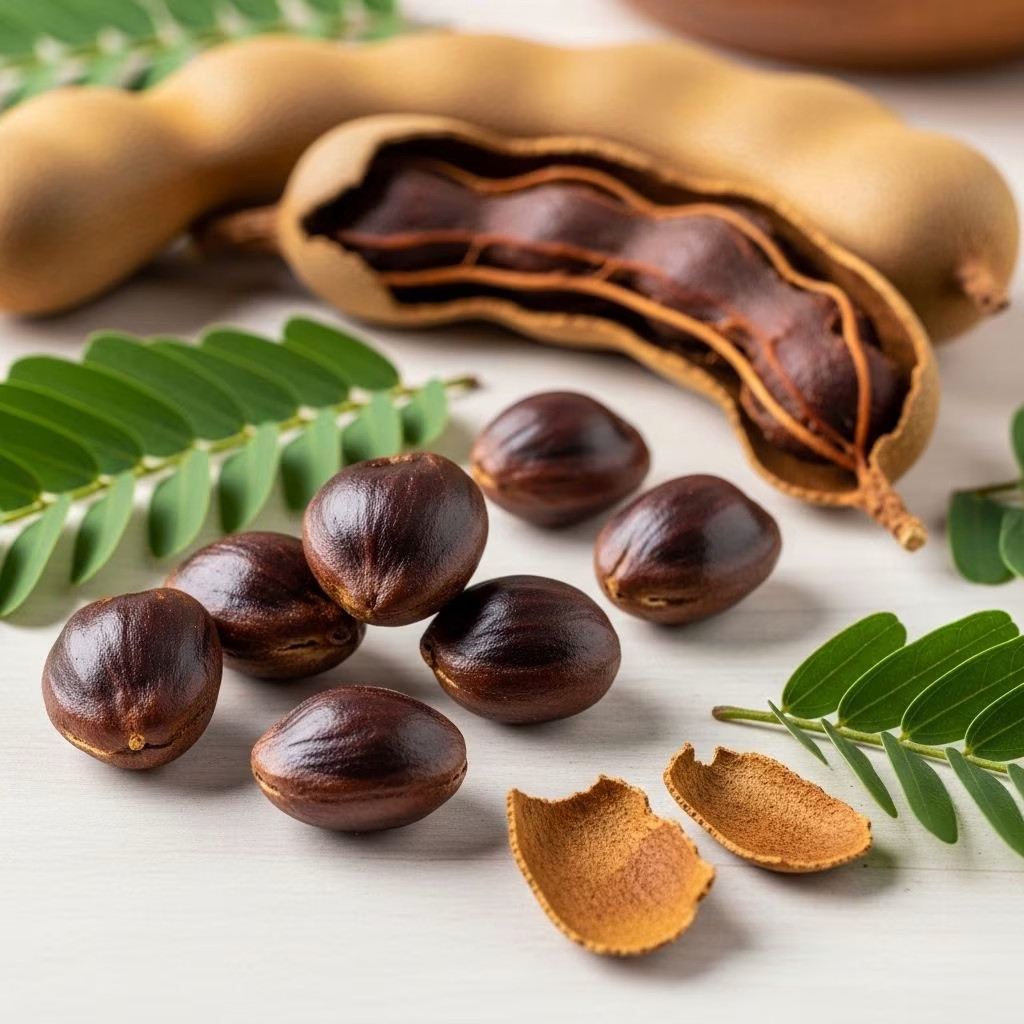
Tamarind seed, derived from the tropical tamarind tree (Tamarindus indica), has long been valued in food, health, and industry for its diverse properties. This comprehensive guide explores all aspects of tamarind seeds — from botanical background and nutritional composition to their health benefits, culinary uses, and industrial applications, concluding with their unique taste and practical tips for everyday use.
What Is Tamarind Seed?
Tamarind seeds are the glossy brown, somewhat flattened seeds found within the pod-like fruit of the tamarind tree (Tamarindus indica), a large tropical tree native to Africa but cultivated extensively across South Asia and other tropical regions. Each fruit pod contains 1–12 seeds embedded in tangy, brown pulp.
- Origin: Sourced from dried, ripe, and mature tamarind fruits.
- Appearance: Hard, oval, or flattened seeds with a shiny brown to black outer coat.
- Varieties: Seeds may be found in both their corticated (outer coat intact) or decorticated (outer coat removed, exposing white kernel) forms.
The seed is protected by a hard shell, making it resistant to moisture, pests, and spoilage. It is commonly a by-product in tamarind pulp processing, often discarded but increasingly recognized for its high nutritional and functional value.
Nutritional Profile of Tamarind Seeds
Tamarind seeds offer a concentrated source of nutrients, making them valuable in both human diets and as raw material for various industries. The main edible part of the seed is the kernel (the innermost part after removal of the hard outer coat).
| Nutrient | Typical Content (per 100g) | Key Function |
|---|---|---|
| Protein | 13–18g | Muscle repair, enzyme function |
| Carbohydrates (mainly polysaccharides) | 55–65g | Energy, digestion support |
| Fat | Lower than pulp | Energy reserve |
| Crude Fiber | 5–7g | Digestive health |
| Calcium | 100–130mg | Bone health |
| Phosphorus | 140–150mg | Energy production |
| Potassium | 350–420mg | Blood pressure regulation |
| Polyphenols, tannins | – | Antioxidant function |
Note: Exact values may vary depending on seed source and processing.
Tamarind seed kernels are especially rich in carbohydrates, including complex polysaccharides like tamarind seed polysaccharide (TSP), giving the seed unique gelling and stabilizing properties.
Health Benefits of Tamarind Seeds
Tamarind seeds are prized in traditional and emerging scientific research for their therapeutic properties and bioactive compounds. Here are the leading health benefits supported by current knowledge:
- Antioxidant Power: The seeds are high in polyphenols and tannins, which help scavenge free radicals and reduce oxidative stress in the body. This could help lower the risk of chronic diseases.
- Digestive Aid: Traditionally, roasted tamarind seed or seed powder is consumed to relieve stomach discomfort and as a mild laxative, due to its fiber content.
- Anti-inflammatory Effects: Compounds in tamarind seeds have shown potential in reducing inflammation, which may support joint and gut health.
- Antimicrobial Properties: Some studies indicate that tamarind seed extracts inhibit bacteria and fungi, lending credence to traditional uses in treating infections.
- Heart Health: The potassium content supports cardiovascular wellness by assisting in blood pressure regulation.
- BLOOD SUGAR REGULATION: Tamarin seed polysaccharides and protein fractions might help slow carbohydrate absorption, promoting more stable blood sugar levels after meals (though human studies are limited).
- Traditional Dental and Oral Health: Chewing tamarind seeds is believed to clean teeth and strengthen gums in some cultures.
Disclaimer: Many of these benefits are derived from traditional uses or preliminary studies. More robust clinical evidence is needed to confirm most therapeutic effects in humans.
Culinary and Traditional Uses
While tamarind pulp is well known for its tangy flavor in chutneys, curries, and sauces, the seeds themselves are also used in a variety of traditional and creative ways:
- Snack Food: Roasted tamarind seeds are eaten as a crunchy, nutty-flavored snack in India and parts of Africa.
- Flour and Thickening Agent: Finely ground seed kernels can be used as flour in bread and traditional cakes, or as a thickener in soups, sauces, and desserts due to their high polysaccharide content.
- Beverages: Roasted or boiled seeds may be sweetened and ground for use in traditional drinks.
- Resource in Food Scarcity: The seeds have been ground and mixed with other flours in times of famine or as a low-cost food supplement.
These uses demonstrate the seed’s culinary flexibility and value in food innovation.
Industrial and Modern Applications
The functional properties of tamarind seeds, especially their polysaccharide content (TSP), have made them a sought-after raw material beyond the kitchen:
- Food Industry: Tamarind seed polysaccharide (TSP) is used as a natural emulsifier, thickener, and stabilizer in ice creams, dairy products, sauces, and bakery goods, often as a substitute for guar gum or synthetic additives.
- Pharmaceuticals: TSP’s mucoadhesive and gel-forming properties are valuable in drug delivery systems (especially for controlled-release medications) and in oral and topical medicines.
- Cosmetics: Tamarind seed extract is incorporated in gels, lotions, and creams for its film-forming, moisturizing, and stabilizing benefits.
- Textiles and Paper: TSP is employed as a sizing agent to enhance the strength, finish, and ink-receptivity of paper and fabric.
- Adhesives: Traditional adhesives and pastes are made from tamarind seed powder blended with water and other ingredients.
These diverse uses underscore the industrial importance of tamarind seed beyond its traditional food role.
Taste and How to Consume Tamarind Seeds
Unlike the sour pulp, tamarind seeds have a mild, nutty, and earthy flavor when prepared. Raw seeds are extremely hard, tasteless, and inedible. With heat — via roasting or boiling — the seeds lose their hardness:
- Roasted Seeds: Possess a toasted, mildly nutty flavor reminiscent of chickpeas or peanuts, with a crunchy consistency.
- Boiled Seeds: Take on a softer, almost bean-like taste and can be seasoned for savory dishes.
The texture is comparable to roasted legumes — firm with a pleasant bite when roasted, or slightly chewy if boiled.
How to Prepare and Use Tamarind Seeds
- Harvesting: Collect seeds from fully ripe, dried tamarind pods. Discard any with visible mold or insect damage.
- Cleaning: Rinse seeds to remove pulp residue and dry thoroughly.
- Decorticating: Remove the hard outer shell using a mortar, rolling pin, or nutcracker to expose the white kernel inside if desired for edible uses.
- Roasting or Boiling: Roast cleaned seeds in a dry skillet for 10–15 minutes until they puff and darken. Alternatively, boil for 20–30 minutes to soften.
- Grinding: Cool and grind roasted or boiled seeds into flour for culinary uses, or consume whole as a snack.
Properly prepared seeds are free from impurities and safe for use in foods, beverages, and home remedies.
Safety, Storage, and Quality
Tamarind seeds have a long shelf life when stored in cool, dry, and insect-free conditions.
- Quality Standards: Seeds should be free from live insects, visible mold, musty odor, and contaminants such as stones or dirt.
- Grades: Commercial seeds may be classified into special, Grade A, and other grades based on purity, damage, discoloration, and moisture content.
- Moisture Content: Should not exceed 9–10% in shelled seeds for best shelf stability — excessive moisture promotes mold and spoilage.
- Shelf Life: Properly stored tamarind seeds remain usable for up to 12 months or longer.
- Safety: While traditionally consumed, tamarind seeds should be prepared properly (roasted/boiled) to ensure digestibility and avoid choking hazards. Excessive consumption is discouraged for those with nut or legume allergies.
To avoid spoilage:
- Store in airtight containers.
- Keep away from direct sunlight and humidity.
- Inspect periodically for signs of pests or rancidity.
Frequently Asked Questions (FAQs)
Q: Can you eat tamarind seeds raw?
A: No. Raw tamarind seeds are extremely hard and indigestible. They should be roasted or boiled before consumption, which makes them safe and palatable.
Q: What does tamarind seed taste like?
A: Roasted tamarind seeds have a nutty, earthy, and somewhat bland flavor, reminiscent of legumes. They lack the characteristic tanginess of tamarind pulp.
Q: Are tamarind seeds healthy?
A: Yes. Tamarind seeds are a good source of protein, dietary fiber, minerals, and antioxidants. Traditional uses suggest digestive and anti-inflammatory benefits, though more scientific research is needed.
Q: How are tamarind seeds used in the food industry?
A: The seeds yield tamarind seed polysaccharide (TSP), a natural thickening and stabilizing agent in processed foods, dairy, baked goods, and beverages.
Q: Can people with nut allergies eat tamarind seeds?
A: Tamarind seeds are not nuts but legumes. However, those with legume allergies (such as to soy or peanuts) should exercise caution. Always consult a healthcare professional first.
Q: How do you store tamarind seeds for long-term use?
A: Store seeds in an airtight container in a cool, dry place. Protect from moisture and insects. Properly stored, they last up to a year.
Q: Do tamarind seeds have any side effects?
A: Consumed in moderation and after proper preparation, tamarind seeds are safe for most people. Overconsumption can cause digestive discomfort or choking (if eaten whole).
Conclusion
Tamarind seeds, once discarded as waste, are gaining recognition for their diverse benefits and uses. From nutrition to medicine, snack food to industrial emulsifiers, these seeds are a valuable resource for healthy diets and numerous industries worldwide. Whether you seek an unconventional snack, a natural food stabilizer, or an ingredient for home remedies, the modest tamarind seed offers surprising potential worth exploring.
References
- https://wdra.gov.in/web/wdra/tamarind-seed
- https://en.wikipedia.org/wiki/Tamarind
- https://trifed.tribal.gov.in/sites/default/files/2020-05/Quality_specification_Vandhan.pdf
- https://pmc.ncbi.nlm.nih.gov/articles/PMC6274079/
- https://pmc.ncbi.nlm.nih.gov/articles/PMC5897252/
- https://ifst.onlinelibrary.wiley.com/doi/10.1111/jfpp.17208
- https://www.ams.usda.gov/sites/default/files/media/TamarindSeedGumTR2018221.pdf


