


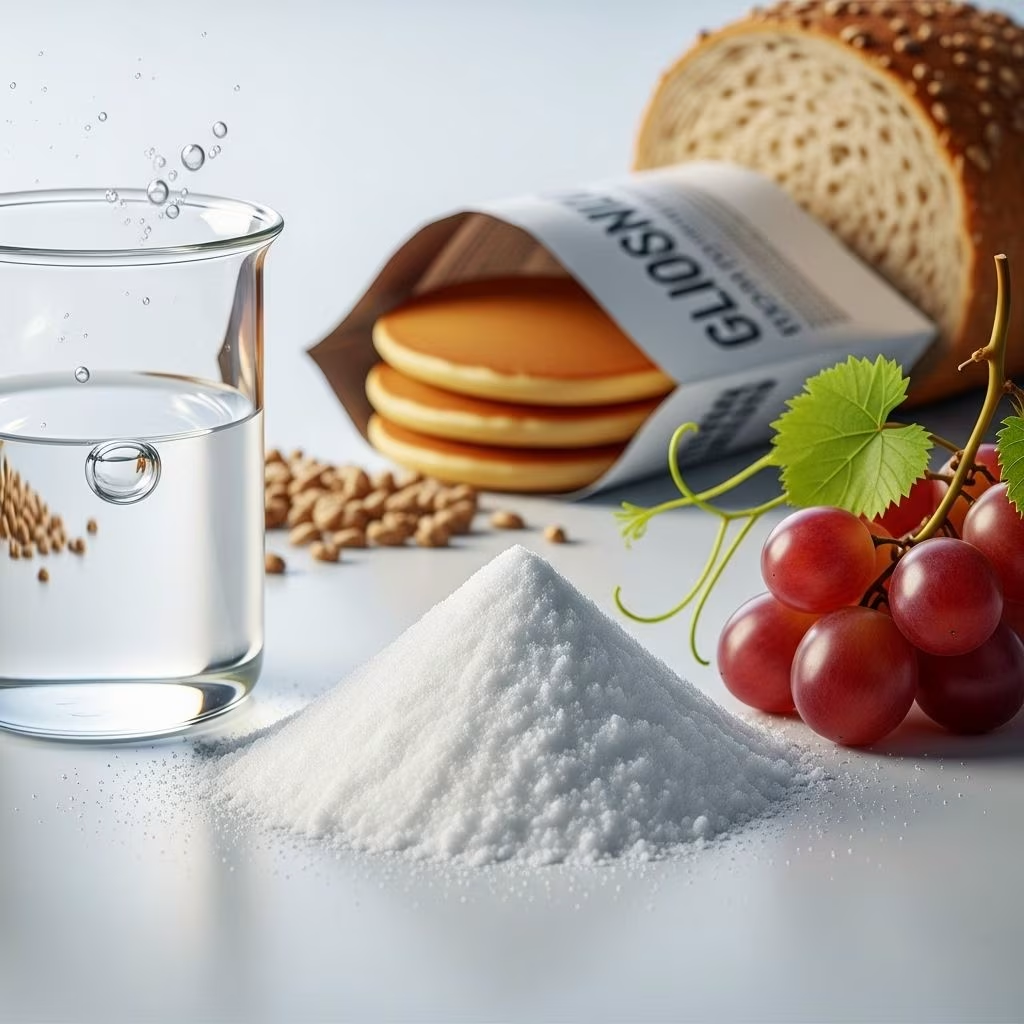
Glucose is one of the most fundamental molecules of life. Known as a simple sugar or monosaccharide, it plays an indispensable role in both plant and animal biology. This detailed article explores what glucose is, its chemistry, health benefits, diverse uses, and the characteristics that make it synonymous with sweetness.
Definition and Chemistry of Glucose
Glucose is a simple sugar (monosaccharide) and a fundamental carbohydrate. Its chemical formula is C6H12O6, which means it contains six carbon atoms, twelve hydrogens, and six oxygens arranged in a specific structure. It is also called dextrose, especially in medical and industrial contexts.
Glucose is synthesized by plants during photosynthesis, using sunlight to convert water and carbon dioxide into sugar and oxygen. Most carbohydrates in nature, such as starch and cellulose, are constructed from glucose units, making it the most abundant organic compound on Earth.
Nomenclature
- Other names: D-glucose, dextrose, blood sugar
- IUPAC Name: (2R,3S,4R,5R)-2,3,4,5,6-pentahydroxyhexanal
- Commonly referred to as an aldohexose due to its six carbons and an aldehyde group.
Structure and Forms of Glucose
Glucose exists in several structural forms or isomers. In its most common forms, the molecule is either an open-chain (acyclic) or a closed-ring (cyclic) structure. In crystalline or solid form, the cyclic pyranose ring is predominant.
- Acyclic (Open-Chain) Form: The linear form contains an aldehyde functional group at one end. This is a minor presence in solution.
- Cyclic (Ring) Forms: In aqueous solutions and biological contexts, glucose mostly forms a six-membered pyranose ring. There are two ring forms:
- α-D-glucopyranose
- β-D-glucopyranose
- Stereoisomers: Naturally occurring glucose is the D-isomer, not the L-isomer.
| Form | Description |
|---|---|
| Open-chain (acyclic) | Linear, minor component in solution |
| α-D-glucopyranose | Cyclic, majority in crystalline form |
| β-D-glucopyranose | Cyclic, predominant in solution |
The transformations between the alpha and beta forms in solution are called mutarotation.
Physical and Chemical Properties
- Molecular formula: C6H12O6
- Molar mass: 180.16 g/mol
- Density: 1.54 g/cm³
- Melting point: 146 °C (α) and 150 °C (β)
- Solubility: Highly soluble in water, slightly soluble in ethanol
- Appearance: Colorless or white crystalline, odorless
- Taste: Moderately sweet
Chemical Properties
- Acts as a reducing sugar due to its free aldehyde group in solution.
- Oxidizes to gluconic acid (with mild oxidizers) or saccharic acid (with strong oxidizers).
- Forms various esters and glycosides with acids and alcohols.
- Participates in essential biochemical pathways such as glycolysis and fermentation.
Biological Role of Glucose
Glucose is crucial for the survival of nearly all organisms, providing a primary source of energy at the cellular level.
- In humans and animals, glucose circulates in the blood as blood sugar, providing instant energy for all living cells, especially muscle and brain tissue.
- It forms the structural basis of many polysaccharides, such as starch (main energy storage in plants) and glycogen (energy storage in animals).
- Glucose is the initiating molecule in glycolysis, the base pathway for cellular respiration, yielding ATP for life processes.
Plants produce glucose during photosynthesis and use it to create cellulose for their cell walls, while animals either consume plant-derived carbohydrates or other animals and metabolize these carbohydrates back to glucose.
Health Benefits of Glucose
- Immediate Energy Source: Glucose is absorbed directly into the bloodstream, quickly raising blood sugar and providing fast fuel for muscles and the brain.
- Maintains Brain Function: The brain is highly dependent on glucose; even brief deficits can impair cognition and consciousness.
- Supports Athletic Performance: Rapidly digestible, glucose is crucial during intense exercise or during recovery after physical exertion.
- Essential for Cell Metabolism: Every cell in the human body uses glucose for energy production.
- Vital in Medical Settings: Glucose solutions are used in hospitals to treat hypoglycemia, dehydration, or as direct carbohydrate nutrition for patients who cannot eat.
Uses of Glucose
Glucose has extensive uses across food, healthcare, and industry.
- Medical Applications:
- Treatment of hypoglycemia (low blood sugar) via oral solution or intravenous infusions.
- Part of intravenous fluids (e.g., “dextrose saline”) for rehydration and calorie supply in intensive care.
- Used in oral glucose tolerance tests for diagnosing metabolic and endocrine disorders.
- Food Industry:
- Added to foods and beverages for sweetness and as a direct energy source.
- Used in making candies, baked goods, sports drinks, and as a fermentation substrate for alcohol and soda.
- Serves as the primary sugar in honey, alongside fructose.
- Industrial Uses:
- Raw material for the fermentation industry (ethanol, biofuels).
- Used in the synthesis of vitamin C and other industrial chemicals.
- Substrate for experimental microbiology and biotechnology applications.
Summary Table: Key Uses of Glucose
| Field | Example Applications |
|---|---|
| Medicine | Treating hypoglycemia, intravenous nutrition |
| Food Industry | Sweets, energy drinks, fermentation |
| Research/Industrial | Microbial media, vitamin production |
Glucose in Foods and the Human Diet
Glucose is both naturally occurring and widely added to processed foods. Common dietary sources include:
- Fruits such as grapes, cherries, oranges, and bananas
- Vegetables like carrots and sweet potatoes
- Honey and syrups (corn syrup, golden syrup)
- Baked goods and candies
- Dairy (as lactose, which contains glucose as a unit)
- Processed foods including energy bars, breakfast cereals, sweetened yogurts, and sports drinks
The majority of glucose in the human diet comes from the digestion of complex carbohydrates (such as starches in bread, rice, and potatoes), which are broken down enzymatically into individual glucose molecules before absorption in the intestine.
The Taste of Glucose
One of the most defining features of glucose is its sweet taste. It is less sweet than fructose (fruit sugar) but sweeter than galactose or lactose. On the human tongue, glucose registers a clean, mild sweetness often described as similar to table sugar (sucrose), which is a disaccharide consisting of glucose and fructose.
| Sugar | Relative Sweetness |
|---|---|
| Fructose | 1.7 |
| Sucrose (table sugar) | 1.0 |
| Glucose | 0.7 |
| Maltose | 0.4 |
| Lactose | 0.2 |
Glucose’s sweetness is quickly perceived but fades rapidly, making it especially pleasing in sports nutrition, confectionery, and beverage formulations. This quick flavor release is also responsible for the “instant energy boost” feeling when consuming glucose-rich foods.
Glucose Disorders and Health Concerns
While glucose is essential, imbalances can lead to serious health issues:
- Hypoglycemia: Abnormally low blood glucose, causing dizziness, weakness, and in severe cases, seizures or loss of consciousness. It can occur due to some medications, endocrine disorders, or prolonged fasting.
- Hyperglycemia and Diabetes: Chronic high glucose levels characterize diabetes mellitus, impairing organs, blood vessels, and nerves over time. Proper diet, medication, and lifestyle are crucial for glucose management.
- Metabolic Syndrome: A cluster of conditions (including high blood glucose, obesity, and high cholesterol) that increase the risk of heart disease and stroke.
- Glycation Damage: Excess glucose may modify proteins non-enzymatically, contributing to aging and complications in diabetes.
Blood glucose is tightly regulated by hormones, chiefly insulin and glucagon, to maintain optimal body function. Regular monitoring is crucial for people with metabolic diseases.
Frequently Asked Questions (FAQs)
Q: What is the main function of glucose in the human body?
A: Glucose is the body’s primary and most readily available source of energy. It fuels all major organs, especially the brain and muscles, and supports diverse metabolic activities.
Q: Why is glucose often called “blood sugar”?
A: After absorption, glucose circulates in the blood to supply energy to tissues. This circulating form is measured as blood sugar levels in health checks.
Q: How is glucose used in medicine?
A: Medical uses include oral and intravenous solutions to treat low blood sugar (hypoglycemia), dehydration, and as a caloric source for patients unable to eat normally.
Q: Can you get glucose from sources other than sugar?
A: Yes. Most dietary glucose comes from digestion of carbohydrates like bread, pasta, rice, and potatoes, which the body breaks down into glucose units.
Q: Is glucose harmful if consumed in excess?
A: Chronically high glucose intake, especially in combination with low physical activity, can lead to insulin resistance, obesity, type 2 diabetes, and increase the risk of cardiovascular diseases. Moderation and a balanced diet are key.
Q: What is the difference between glucose and dextrose?
A: They are essentially the same molecule. “Dextrose” refers to D-glucose, the naturally occurring form found in living organisms and used medicinally.
Q: Is glucose sweeter than table sugar?
A: Glucose is only about 70% as sweet as sucrose (table sugar) but is more rapidly absorbed, making it useful in energy products and for quick recovery.
Q: Why do athletes use glucose drinks?
A: Glucose is absorbed rapidly, providing immediate energy during or after intense exercise, helping to prevent fatigue and assist muscle recovery.
References
- https://byjus.com/chemistry/glucose/
- https://www.geeksforgeeks.org/chemistry/glucose-chemical-formula-structure-properties-uses-sample-questions/
- https://www.brainkart.com/article/Chemical-properties-of-glucose_27773/
- https://en.wikipedia.org/wiki/Glucose
- https://pubchem.ncbi.nlm.nih.gov/compound/D-Glucose
- https://testbook.com/chemistry/glucose
- https://chem.libretexts.org/Bookshelves/Biological_Chemistry/Supplemental_Modules_(Biological_Chemistry)/Carbohydrates/Monosaccharides/Glucose_(Dextrose)


