


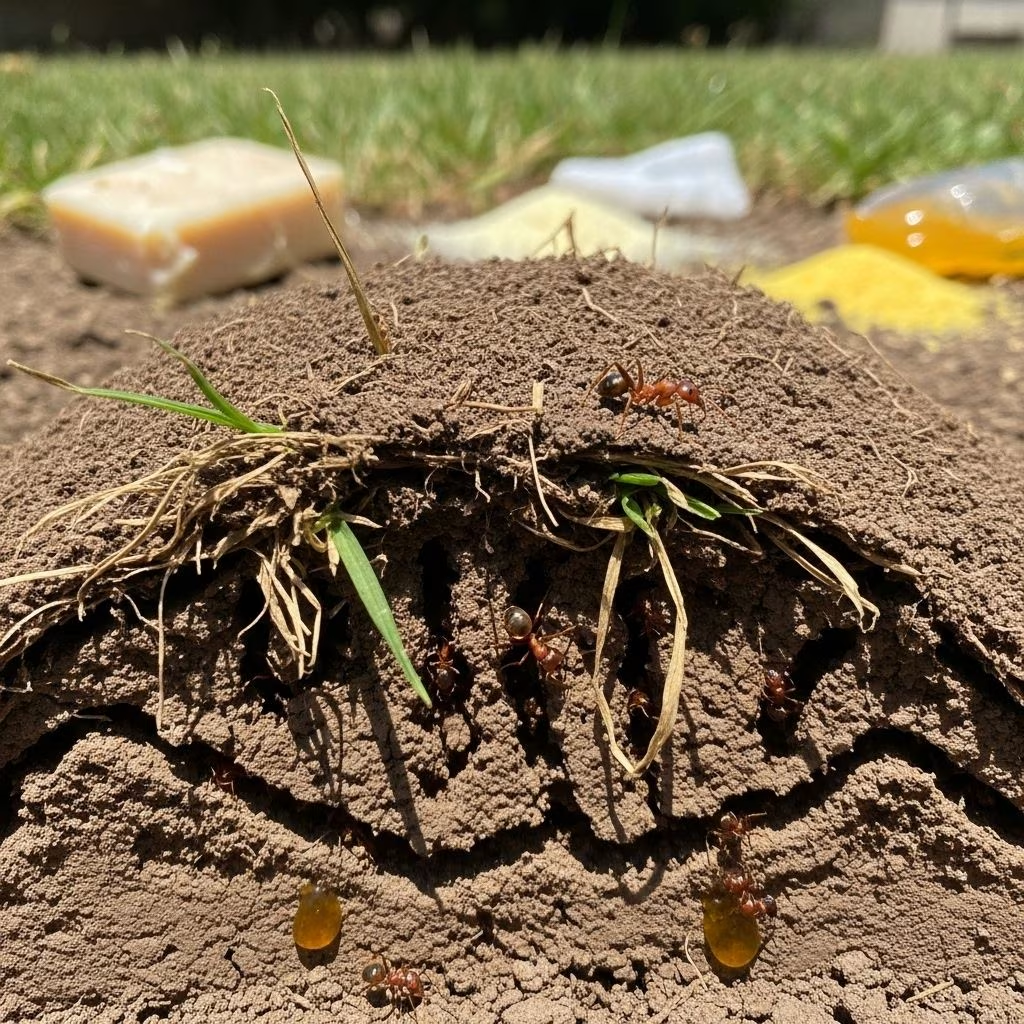
When fire ants invade your property, the temptation to reach for quick, cheap home remedies becomes overwhelming. After all, who wouldn’t want to eliminate these aggressive pests without spending money on professional treatments? Unfortunately, the reality is far more complex. Despite countless online claims and neighborhood folklore, most DIY fire ant remedies simply don’t work—and understanding why can save you time, money, and painful stings.
Fire ants pose a serious threat to families, pets, and property. These invasive pests are responsible for more than $6 billion annually in damage repair, medical care, and control costs. Their painful stings can cause severe allergic reactions in sensitive individuals, making effective control not just a matter of convenience but of safety. The key to truly eliminating fire ants lies in destroying the queen, something most home remedies fail to accomplish.
Understanding Why Home Remedies Fail
The fundamental problem with most home remedies is that they only address surface-level symptoms rather than the root cause of fire ant infestations. Fire ant colonies operate as complex social structures with queens deep underground, producing thousands of eggs daily. Unless the queen is eliminated, the colony will survive, rebuild, and often relocate to another area of your property.
Many DIY methods simply cause colonies to relocate within your yard or neighborhood. This creates a false sense of success—the mound disappears from one location, only to reappear elsewhere. Meanwhile, the colony continues to thrive and expand, potentially creating multiple satellite colonies throughout your property.
Club Soda: The Carbonation Myth
One of the most persistent myths in fire ant control involves pouring club soda over mounds. The theory suggests that carbon dioxide in the beverage suffocates entire colonies, including queens. It sounds scientifically plausible and offers an appealing solution using a common household item.
However, research definitively shows that club soda offers zero control for fire ants, mounds, or queens. Even though the bubbling action looks impressive and may give the appearance of working, it has no actual impact on colony survival. Field tests have shown identical results with other household substances like molasses, aspartame, baking soda, and plaster of Paris—none of them work.
Coffee Grounds and Instant Grits: Food-Based Failures
The instant grits myth represents one of the more creative home remedies. According to this folklore, fire ants consume the uncooked grits, which then expand in their stomachs, causing them to explode. It’s a dramatic mental image that has been passed down through generations.
The reality is far less dramatic. Fire ants do eat grits, but they don’t swell up and explode afterward. This method is completely ineffective at controlling fire ant populations. It’s best to leave the grits in the kitchen cabinet where they belong.
Similarly, coffee grounds are often recommended as both a repellent and killer. While some ants may avoid areas with strong coffee odors temporarily, this provides no meaningful population control and certainly doesn’t eliminate queens or destroy colonies.
Diatomaceous Earth: The Abrasive Approach
Diatomaceous earth is a powder made from fossilized algae that works by cutting through insect exoskeletons, causing them to dehydrate. While this substance can kill individual insects on contact, it faces significant limitations when applied to fire ant control.
The primary problem is coverage and penetration. Diatomaceous earth must make direct contact with fire ants to work, and it loses effectiveness when wet. Fire ant colonies extend deep underground, where queens remain protected from surface treatments. Additionally, worker ants can simply avoid treated areas, continuing to forage and support the colony through alternative routes.
Vinegar and Dish Soap Solutions: Temporary Deterrents
Vinegar-based solutions are commonly recommended for ant control, often mixed with dish soap for added effectiveness. While vinegar does have some merit as an ant repellent, it falls short as a fire ant killer.
Vinegar can disrupt ants’ sense of smell and their ability to detect pheromone trails that lead to food sources. Some people successfully use equal parts vinegar and water in spray bottles around entry points, or soak cotton balls in vinegar to place where ants are active. However, these methods only deter ants temporarily and don’t eliminate colonies.
Pouring vinegar directly on fire ant mounds might provide momentary satisfaction, but it typically just causes ants to relocate rather than killing significant numbers. Moreover, vinegar acts as a natural nonspecific herbicide that can kill plants on contact, potentially damaging your lawn and garden.
Dish soap solutions face similar limitations. While soapy water can kill individual ants on contact, drenching mounds with hot soapy water is only about 60 to 70 percent effective, and every mound would need individual treatment—an impractical solution for large infestations.
Ground Cinnamon and Orange Peels: Aromatic Ineffectiveness
Spices and citrus peels represent another category of popular home remedies based on the idea that strong scents repel or harm fire ants. Ground cinnamon is frequently recommended, with claims that it kills ants or prevents them from crossing treated barriers.
While some aromatic compounds can have repellent properties, ground cinnamon lacks the potency needed to eliminate fire ant colonies. Recent research has shown that certain essential oils, including thyme and turmeric oils, can effectively repel fire ants and show toxicity comparable to some synthetic insecticides. However, these are concentrated essential oils, not common household spices sprinkled on the ground.
Orange peels and citrus-based treatments similarly fail to provide meaningful control. While ants may temporarily avoid strongly scented areas, this doesn’t translate to colony elimination or queen mortality.
Mound Mixing: A Dangerous Misconception
The mound mixing method involves taking ants from one colony and placing them on another colony’s mound, with the expectation that the two colonies will fight and destroy each other. This approach is based on the fact that fire ants are territorial and will attack ants from competing colonies.
While it’s true that fire ants from different colonies will fight, this method is both dangerous and ineffective. It requires handling fire ants, significantly increasing your risk of painful stings. More importantly, even if some workers die in the conflict, queens remain protected deep in their respective nests, ensuring both colonies survive. You’ve essentially just angered two fire ant colonies without solving your problem.
Gasoline and Chemical Drenches: Hazardous and Harmful
Perhaps the most dangerous home remedy involves pouring gasoline or other flammable chemicals on fire ant mounds. This method is illegal in many areas, extremely hazardous to humans and the environment, and surprisingly ineffective.
Gasoline contaminates soil and groundwater, creates fire hazards, and can kill beneficial plants and organisms. It also rarely penetrates deep enough to reach queens, meaning the colony survives despite the environmental damage. There is absolutely no situation where using gasoline for fire ant control is advisable or justified.
Boiling Water: Partial Effectiveness with Limitations
Of all the home remedies, boiling water comes closest to actually working. Pouring extremely hot water directly on fire ant mounds can kill ants on contact and may eliminate some colonies. However, significant limitations prevent this from being a reliable solution.
Research shows that pouring about three gallons of extremely hot water on a single fire ant mound eliminates the mound about 60 percent of the time. This means 40 percent of treated mounds survive. For success, the water must be hot enough and in sufficient quantity to reach deep into the colony where queens reside.
This method works best when ants are near the surface, such as after heavy rainfall or during morning foraging times. Smaller amounts of boiling water may kill the fire ants they contact but won’t reach queens or significantly harm colonies. Additionally, boiling water will potentially kill all grasses and plants it contacts, creating dead spots in your lawn.
The practical challenges are equally significant. Handling multiple gallons of boiling water is extremely hazardous and can result in severe burns. With properties often containing dozens of mounds, treating each one individually becomes impractical and dangerous. Furthermore, this approach doesn’t prevent new colonies from establishing or existing colonies from relocating.
What Actually Works: Science-Based Fire Ant Control
Effective fire ant control requires targeting queens and using products specifically designed to eliminate entire colonies. Professional-grade fire ant treatments use active ingredients that worker ants carry back to the nest, eventually reaching and killing queens.
Experts recommend applying granular bait treatments over the entire property three times a year. These baits contain slow-acting active ingredients like hydramethylnon, methoprene, or indoxacarb that workers mistake for food and bring back to feed the colony, including queens. The slow-acting nature is crucial—it allows time for the bait to spread throughout the colony before ants die.
A helpful way to remember treatment timing is to use holidays as markers: Easter, Fourth of July, and Labor Day. This seasonal approach provides consistent control throughout the year when fire ants are most active.
For individual mounds that appear between broadcast treatments, dry mound treatments containing acephate, deltamethrin, or cyfluthrin offer targeted control. Each has advantages and disadvantages: acephate works fastest and most effectively but has a strong odor, while deltamethrin and cyfluthrin generally work slower and are less effective but don’t smell bad.
The Two-Step Approach
Professional pest control experts often recommend a two-step approach combining broadcast baits with individual mound treatments. First, apply a broadcast bait across the entire lawn to reduce overall fire ant populations. Then, treat any remaining or particularly problematic mounds with targeted mound drenches or dust treatments.
This combination approach provides both widespread population suppression and focused elimination of visible colonies. It’s more effective than either method alone and provides longer-lasting results than any home remedy.
Why Professional Products Outperform Home Remedies
Professional fire ant control products are specifically formulated based on fire ant biology and behavior. They contain active ingredients proven through extensive research to eliminate queens and destroy colonies. These products undergo rigorous testing to ensure both effectiveness and safety when used according to label directions.
The active ingredients in professional baits are attractive to fire ants and are carried deep into colonies where queens reside. The delayed-action formulas prevent workers from dying before they share the bait throughout the colony. This strategic approach exploits fire ant social structure to achieve complete colony elimination.
In contrast, home remedies are based on folklore, anecdotal evidence, and wishful thinking rather than scientific research. They may kill some worker ants or temporarily disrupt foraging activity, but they fail to address the fundamental requirement of fire ant control: eliminating queens.
Prevention and Long-Term Management
Beyond treating existing colonies, effective fire ant management includes prevention strategies. Maintaining healthy, thick turf makes it harder for fire ants to establish new colonies. Proper irrigation and fertilization support grass health while making your property less attractive to fire ants seeking nesting sites.
Regular monitoring helps catch new infestations early when they’re easier to control. Walk your property periodically, especially after rain when mounds are most visible. Early detection allows for prompt treatment before colonies grow large and produce satellite nests.
Coordinate with neighbors when possible. Fire ants don’t respect property boundaries, so community-wide management produces better results than individual efforts. When entire neighborhoods implement effective control programs, reinfestation rates drop dramatically.
Safety Considerations
While professional fire ant products are more effective than home remedies, they must be used responsibly. Always read and follow label directions carefully. These instructions aren’t suggestions—they’re legal requirements designed to ensure safe and effective use.
Keep children and pets away from treated areas as directed on product labels. Store pesticides in their original containers out of reach of children. Never transfer pesticides to unlabeled containers like drink bottles, which creates serious poisoning risks.
Consider environmental impacts when treating fire ants. Avoid applying treatments before rain, which can wash products into storm drains and waterways. Don’t treat areas where runoff might contaminate water sources. Follow all label restrictions regarding application near wells, streams, ponds, and other sensitive areas.
Frequently Asked Questions
Q: Why don’t home remedies kill fire ant queens?
A: Most home remedies only affect ants on or near the surface. Queens live deep underground, protected by thousands of worker ants. Only products specifically designed to be carried into the colony by workers can reach and eliminate queens, which is essential for destroying the entire colony.
Q: How long does it take for professional fire ant baits to work?
A: Professional baits typically take several days to weeks to eliminate colonies completely. The slow-acting formulas are intentional—they give workers time to distribute the bait throughout the colony and to the queen before dying, ensuring complete colony elimination.
Q: Can I use multiple fire ant treatments at the same time?
A: Generally, you should not apply broadcast baits and mound treatments simultaneously. Mound treatments can repel ants from the mound, preventing them from finding and taking broadcast baits back to the colony. Apply broadcast baits first, then treat any remaining mounds after a few weeks.
Q: How many fire ant mounds indicate a serious infestation?
A: Even one fire ant mound represents a complete colony with a queen capable of producing thousands of ants. Multiple mounds may indicate multiple colonies or satellite nests from a single large colony. Any fire ant presence warrants treatment to prevent population growth and spread.
Q: Are natural fire ant repellents effective?
A: Recent research shows that certain essential oils like thyme and turmeric can repel fire ants effectively. However, these are concentrated essential oils requiring specific formulations, not common household items. While they show promise, they work as repellents rather than colony eliminators.
Q: Why do fire ant mounds seem to disappear and reappear?
A: Fire ant colonies often relocate in response to disturbances, weather changes, or ineffective treatments. The mound is just the visible entrance to an extensive underground colony. When the surface is disturbed, ants may simply rebuild the mound entrance in a different location while the colony remains intact.
Q: Should I treat fire ants myself or hire a professional?
A: For small infestations, homeowners can often achieve good results using professional-grade products available at retail stores. Large infestations, sensitive properties, or situations where people have severe ant allergies may warrant professional pest control services with specialized equipment and expertise.
References
- https://www.amdro.com/learn/fire-ants/why-home-remedies-for-fire-ants-dont-work-and-what-does
- https://www.fireants.com/how-to/why-fire-ant-home-remedies-dont-work-and-what-does
- https://sfyl.ifas.ufl.edu/lawn-and-garden/sustainable-fire-ant-control/
- https://www.youtube.com/watch?v=rk9dnBv_yaA
- https://bootsonenterprises.com/boots-on-blog/homemade-fire-ant-killer
- https://www.healthline.com/health/how-to-kill-ants
- http://www.ext.msstate.edu/blog/debunking-fire-ant-control-home-remedies
- https://fireants.tennessee.edu/treatment-methods/
- https://olemiss.edu/news/2023/12/natural-fire-ant-repellents/index.html


