


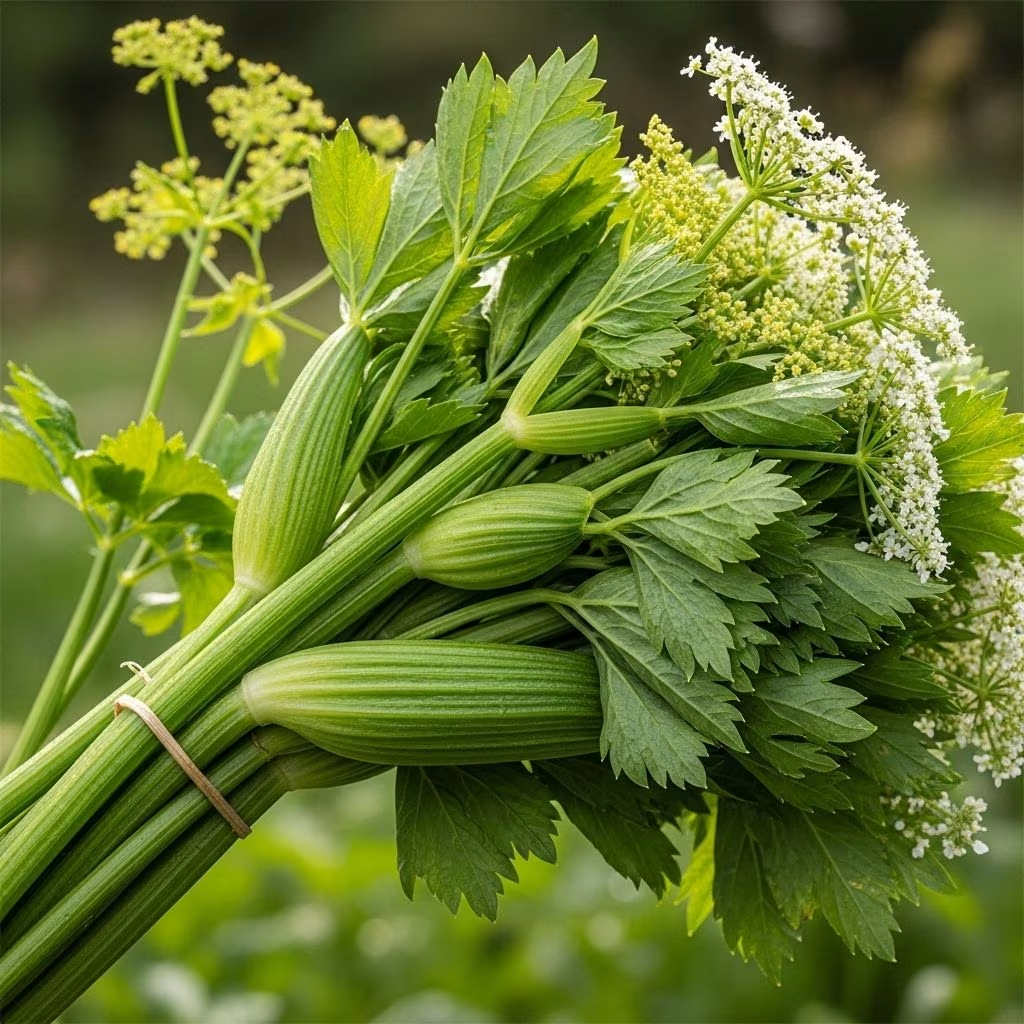
Wild celery and wild parsnip are sometimes confused due to similarities in leaf structure and growth patterns, but they are in fact distinct species. In North America and many parts of Europe, the plant commonly called wild celery often references Pastinaca sativa, better known as wild parsnip—a member of the carrot family (Apiaceae) . This comprehensive guide will help you understand the botanical features, health benefits, uses (from culinary to ecological), safety issues, and the taste profile of wild parsnip, as well as address common confusion with other “wild celery” species.
Overview and Identification
Wild parsnip (Pastinaca sativa) is a herbaceous biennial or monocarpic perennial plant best known for its edible root and phototoxic sap. It is characterized by:
- Height: Typically grows 1 to 1.5 meters (up to 5 feet), but can occasionally reach 2.5 meters (8 feet) .
- Stem: Erect, hollow, deeply grooved, and sometimes covered with fine hairs; color ranges from light green to yellow-green.
- Leaves: Pinnately compound with 5-15 ovate or oblong leaflets per leaf, each sharply toothed or lobed; leaves strongly resemble those of celery .
- Flowers: Flat-topped umbels (umbrella-like clusters) composed of many tiny yellow flowers that bloom from June to mid-summer .
- Root: Thick, long, cream-colored taproot, similar to cultivated parsnip; edible under certain conditions.
- Odor: The whole plant, especially when bruised, emits a distinct parsnip-like aroma .
Botanical Classification and Life Cycle
Wild parsnip belongs to the following classification:
- Kingdom: Plantae
- Order: Apiales
- Family: Apiaceae (formerly Umbelliferae)
- Genus: Pastinaca
- Species: Pastinaca sativa
The species’ biennial life cycle helps explain its prevalence and adaptability:
- Year 1: Grows as a low, leafy basal rosette, accumulating nutrients in the root.
- Year 2 (or later): Plants bolt, sending up a tall flowering stalk. This is followed by flowering, seed setting, and typically plant death after reproduction .
- Monocarpic perennial: Occasionally, wild parsnip may persist in the rosette stage for more than two years, waiting for optimal conditions to flower .
Geographical Distribution and Habitat
Native to Europe and parts of Asia, wild parsnip has spread broadly across North America and elsewhere as both an agricultural crop and, increasingly, a wild or invasive species.
- Found in temperate Europe, the Caucasus, Turkey, Iran, and some parts of the Himalayas .
- In North America, it is widespread: present in almost all U.S. states and Canadian provinces, particularly common in the northeast and midwest .
- Preferred habitats: Open disturbed areas—roadsides, meadows, pastures, old fields, ditches, railways, and edges of agricultural land .
- Tolerates a variety of soils but grows best in rich, calcareous, well-drained soils with full sunlight.
Wild Celery vs. Wild Parsnip: Clarifying the Confusion
The names wild celery and wild parsnip are often used interchangeably in common parlance, especially because of the celery-like appearance of Pastinaca sativa‘s leaves . However, they are distinct from the aquatic species “wild celery” (Vallisneria americana), which is unrelated and found in underwater environments. In the context of edible wild plants and foraging, “wild celery” generally refers to wild parsnip.
| Feature | Wild Parsnip (Pastinaca sativa) | Wild Celery (Vallisneria americana) |
|---|---|---|
| Family | Apiaceae (Carrot family) | Hydrocharitaceae (Water plant) |
| Habitat | Open, disturbed terrestrial land | Aquatic, freshwater ponds/rivers |
| Edible Part | Root (taproot, like parsnip) | Leaves (aquatic, used for waterfowl food) |
| Toxicity | Sap is phototoxic, root safe if properly prepared | Generally nontoxic |
For the rest of this article, “wild celery” refers to wild parsnip (Pastinaca sativa).
Culinary, Medicinal, and Traditional Uses
Culinary Uses
The main edible part of wild parsnip is the thick, cream-colored root. In flavor and texture, it closely resembles the cultivated parsnip, its domesticated descendant:
- Harvesting: Roots are best harvested in late autumn or early spring when the plant is in rosette stage and before flowering stalks appear. Roots become woody and bitter as the plant matures .
- Preparation: Thorough peeling is important because the sap and skin contain compounds that can cause skin reactions. Cooking (boiling, roasting) neutralizes the taste and any irritants.
- Uses: Eaten as a root vegetable (like carrot or turnip), added to soups, roasted, mashed, or fried.
- Other parts: Leaves and stems are NOT typically consumed due to their strong flavor, fibrous texture, and phototoxic sap. Seeds have been used in folk remedies, but with caution.
Traditional and Medicinal Uses
- Historical food: The wild root was a staple food in prehistoric Europe before being cultivated for greater size and sweetness post-Roman times .
- Folk medicine: Traditionally, wild parsnip root infusions were used as diuretics, to stimulate appetite, or for digestive ailments.
- Modern caution: Due to toxic compounds in leaves and stems, internal medicinal uses have largely been abandoned without processing and knowledge.
Nutritional Profile and Health Benefits
Wild parsnip root is similar to cultivated parsnip in its nutritional composition, offering:
- High dietary fiber – Aiding digestion and supporting gut health.
- Vitamin C – Supporting immune function, combating oxidative stress.
- Folate and B-vitamins – Essential for metabolic health and cellular function.
- Manganese, potassium, and magnesium – Beneficial for bone health, nerve conduction, and electrolyte balance.
- Low fat content – Makes it a healthy root vegetable choice.
Besides its vitamin and mineral content, wild parsnip is a source of antioxidants, especially polyacetylenes and flavonoids common to the carrot family.
Taste and Preparation
Wild parsnip roots have a creamy-white flesh and a taste reminiscent of domesticated parsnip, but with some distinct characteristics:
- Flavor: Earthy, sweet, slightly nutty, with subtle peppery or anise undertones. Roots harvested before flowering are milder and less fibrous.
- Texture: Firm but becomes soft and fluffy when cooked, similar to carrot or even sweet potato.
- Culinary tips: Pre-soaking and thorough cooking (boiling, roasting, or frying) helps mellow any strong flavors. Roots can be included in stews, soups, purees, or roasted root mixes.
Important: Peel and handle roots with gloves to avoid skin exposure to sap. Discard leaves and stems, which are not considered edible.
Safety Precautions and Toxicity
A major consideration when handling wild parsnip is its phototoxic sap containing furanocoumarins:
- Contact danger: Sap exposure, when combined with sunlight, can cause phytophotodermatitis, leading to blistering, rash, or severe sunburn-like reactions that may persist as pigmentation changes for months .
- Prevention: Always use protective gloves, long sleeves, and eye protection when harvesting or cutting wild plants.
- Children and pets: Keep away from large stands; animals can also suffer skin reactions on contact.
- First aid: If you get sap on your skin, immediately wash the area with soap and water, keep it out of sunlight, and monitor for reactions. Severe cases may require medical attention.
No significant toxicity is noted when cooked roots are eaten after proper preparation, but raw consumption and ingestion of aerial parts are not recommended. Never confuse wild parsnip with other Apiaceae family plants—some, such as poison hemlock and water hemlock, are extremely toxic.
Ecological Impact and Invasive Status
While valued as a food historically, wild parsnip displays invasive characteristics in many parts of North America, with significant implications for native ecosystems and agriculture :
- Forms dense stands that outcompete native flora and reduce plant biodiversity.
- Can lower the quality of forage in hay fields and pastures; sap can harm livestock.
- Spreads easily by seed; seeds remain viable for up to 4–5 years and can be moved long distances by mowing, water, or road maintenance equipment.
- Control is challenging: Small patches can be pulled by hand with protection; large infestations require mowing before flowering, herbicide application, or biological control.
Frequently Asked Questions (FAQs)
Q: Is wild parsnip poisonous to eat?
A: The root of wild parsnip is edible and similar to cultivated parsnip when properly cooked and prepared. Leaves, stems, and sap should not be ingested and can cause severe skin reactions on contact.
Q: How can I safely harvest wild parsnip?
A: Wear gloves, long sleeves, and eye protection when harvesting. Dig roots in late fall or early spring to avoid strong sap in green parts. Clean and peel thoroughly before consuming the root.
Q: Can wild parsnip be mistaken for other plants?
A: Yes, wild parsnip resembles other Apiaceae family members, some of which are deadly poisonous (e.g., poison hemlock, water hemlock, wild carrot). Proper identification is critical for safe foraging.
Q: What are symptoms of wild parsnip sap exposure?
A: Redness, burning, blisters, and long-term brown or purple discoloration appear after sunlight exposure. Wash affected skin and protect from sunlight; severe cases may need medical attention.
Q: Is wild parsnip dangerous for pets or livestock?
A: Yes, animals can develop skin blisters or rashes when sap contacts non-furry skin. Ingestion of roots is not commonly hazardous if cooked, but aerial parts and sap are dangerous.
Key Takeaways
- Wild parsnip (often called wild celery) is a widespread plant valued for its edible root but notable for the phototoxicity of its sap.
- Proper identification, careful handling, and thorough cooking are crucial for safe foraging and culinary enjoyment.
- It is a nutritious, versatile root but can present significant safety risks if not handled with caution.
- As an invasive species in many regions, wild parsnip demands careful management to protect ecosystems and agriculture.
References
- https://bygl.osu.edu/node/2114
- https://mnfi.anr.msu.edu/invasive-species/WildParsnipBCP.pdf
- https://totallywilduk.co.uk/2023/01/05/wild-parsnip/
- https://www.invasivespeciescentre.ca/invasive-species/meet-the-species/invasive-plants/wild-parsnip/
- https://foragerchef.com/wild-parsnip-harvesting-cooking-and-safety/
- https://www.mda.state.mn.us/plants/pestmanagement/weedcontrol/noxiouslist/wildparsnip
- https://www.summitlawnslincoln.com/blog/what-is-wild-parsnip
- https://extension.illinois.edu/news-releases/identify-avoid-and-manage-troublesome-wild-parsnip


