


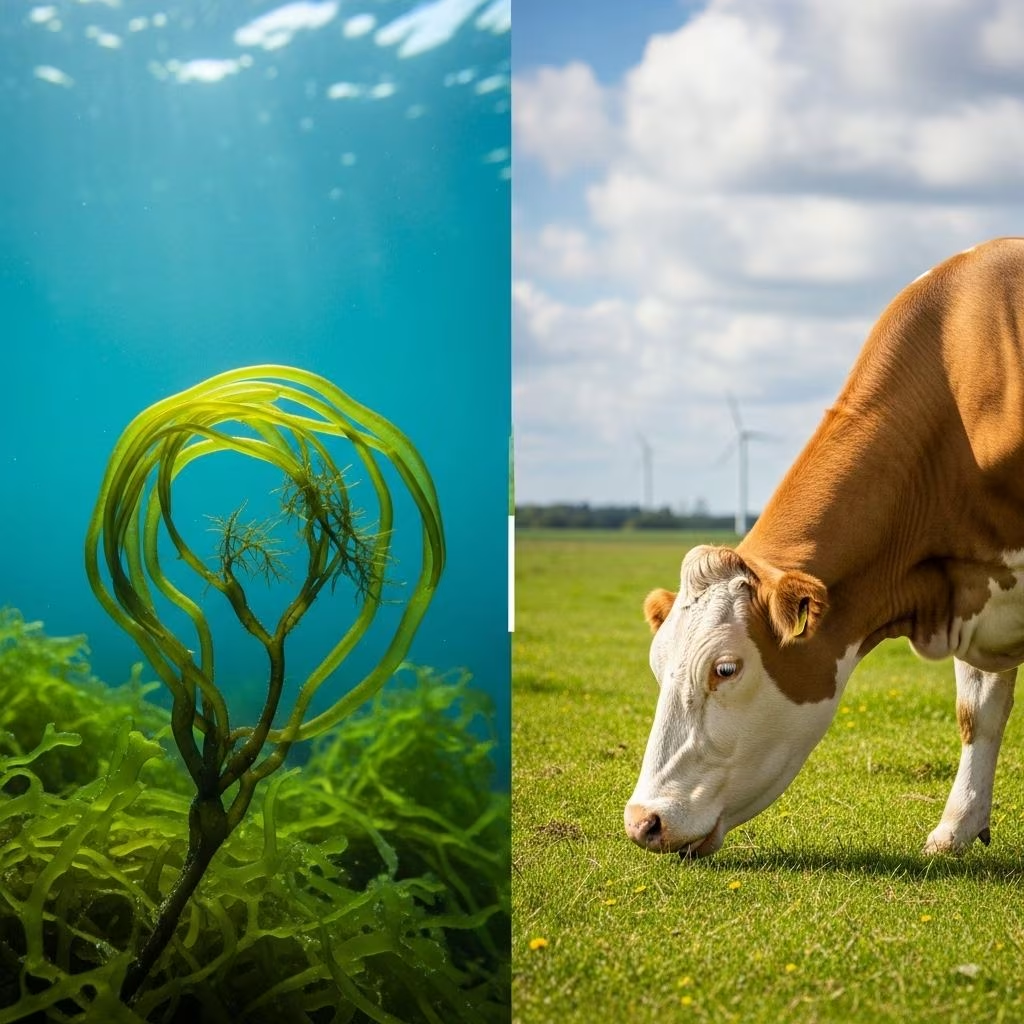
Seaweed: A Game-Changer for Methane Reduction in Cattle Farming
Methane emissions from cattle are a significant contributor to global greenhouse gases and climate change. Recent scientific breakthroughs show that incorporating seaweed into cow diets may drastically cut, by up to 80%, the methane burped from ruminants. This simple feed additive proposal opens new paths for sustainable agriculture and environmental stewardship.
Understanding Cattle Methane Emissions
Cattle, through their digestive process called enteric fermentation, release methane as a byproduct. This potent greenhouse gas is largely emitted when cows burp, forming a notable portion of agriculture-related emissions. According to the EPA, livestock contribute around 12% of global greenhouse gas emissions, and cattle are responsible for more than 25% of the agricultural sector’s total greenhouse impact, with grazing cattle producing higher methane because of their fiber-rich grass diets.
- Globally: Over 64 million beef cattle and 9 million dairy cows in the U.S. alone.
- Majority of Impact: Beef cattle spend most of their lives grazing, emitting methane continually.
The Seaweed Solution: Scientific Findings
Several scientific studies have demonstrated that adding certain types of red seaweed to cow diets causes a dramatic reduction in methane emissions. The most successful trials have focused on seaweeds from the Asparagopsis genus, which contain the active compound bromoform, directly inhibiting methane-producing microbes in the cow’s digestive system.
Key Research Insights
- UC Davis researchers found that seaweed supplements reduced methane emissions in grazing beef cattle by nearly 40% without affecting animal health or weight.
- Earlier controlled studies reported reductions up to 82% in feedlot cattle and over 50% in dairy cows using small doses (~80g) of seaweed daily.
- Other studies indicate methane reductions up to 97% under ideal laboratory conditions using bromoform-rich seaweed.
- Recent trials in Maine with locally harvested red seaweed showed a 13.9% methane reduction among dairy cows, revealing promise across variety and application methods.
| Seaweed Type | Application Context | Methane Reduction | Impact on Product Quality |
|---|---|---|---|
| Asparagopsis taxiformis | Feedlot beef cattle | Up to 82% | No change in beef flavor |
| Chondrus crispus | Dairy cows (field trial) | 13.9%-12% | No change in milk quality |
| Pacific dulse | Grazing cattle (ongoing research) | (Results pending) | (Unknown) |
How Seaweed Works to Cut Emissions
Red seaweed’s secret weapon against methane is bromoform. When processed and added to cattle feed, this compound disrupts the metabolic pathways of methanogenic archaea—the microbes in the rumen that produce methane. Even small amounts in feed (as little as 0.5% of the daily dry diet) can meaningfully reduce methane output.
- Direct inhibition: Bromoform blocks methane creation in the cow’s stomach.
- Long-term effect: Research confirms no decline in efficiency over several months.
- No side effects: Cattle maintained normal rates of weight gain; milk and beef flavor were unaffected.
Real-World Challenges and Implementation
While controlled trials validate the science, implementation on ranches and large-scale pasture settings presents practical hurdles:
- Feeding logistics: Grazing cattle roam freely and often feed far from handling points, making consistent supplement delivery complex.
- Supply chain: Current wild stocks of Asparagopsis are insufficient, requiring rapid expansion of commercial seaweed farming.
- Cost and farmer incentives: Surveys show farmers are willing to pay extra for seaweed feed additives only if they are cost-effective and offer tangible benefits, not just climate impact.
- Possible methods: Researchers are exploring new delivery systems like lick blocks for grazing cattle and pellet supplements for integration into winter or supplementary feeding.
Benefits Beyond Methane Reduction
Reducing methane emissions from cattle has multi-layered benefits:
- Climate Change Mitigation: Dramatic methane reductions help meet emissions targets and slow global warming.
- Farm Sustainability: Lower emissions support more sustainable livestock industries and may help farmers adapt to harsher, climate-affected environments.
- Product Quality: Consumer panels and lab testing confirm seaweed-fed beef and milk retain their normal flavor and quality.
- Economic Opportunity: New markets may emerge for domestic seaweed producers, especially in coastal areas.
Social and Economic Implications
- Worldwide reach: Pastoral systems support millions globally, especially in low- and middle-income regions vulnerable to climate stress.
- Accessible solutions: Improving livestock genetics, health, and feed (including seaweed) may be key to meeting meat demand while curbing emissions.
- Local opportunity: Areas like Maine, already home to seaweed farming, provide testbeds for combining coastal industries with cattle farming.
Research Partnerships and Progress
The research involves collaboration across continents and disciplines:
- UC Davis, James Cook University (Australia), Meat and Livestock Australia, Blue Ocean Barns (startup specializing in seaweed supplements), and federal agencies.
- Projects funded by private foundations, government grants (USDA), and local ranches.
- Oregon State University’s ongoing study on the use of Pacific dulse, funded by a $1 million USDA grant.
Limitations and Next Steps
Despite promising methane cuts, challenges for widespread adoption remain:
- Infrastructure: Scaling up seaweed farming to meet demand.
- Cost: Ensuring affordability and government or market incentives for farmers.
- Regulations: Navigating food safety, organic certification, and environmental protection for new feed additives.
- Delivery: Creating effective systems for providing supplements to free-ranging livestock.
Future research continues to:
- Assess which seaweed species and growing conditions yield the best results.
- Develop scalable aquaculture for sustainable seaweed cultivation.
- Test practical delivery methods for grazing herds and examine long-term effects on cattle health, productivity, and product quality.
Frequently Asked Questions (FAQs)
Q: How much methane do cattle emit, and why is it a concern?
A: Cattle contribute about 12% of global greenhouse gas emissions, mainly via methane released during digestion. Methane is a powerful greenhouse gas, trapping far more heat than CO2 and accelerating climate change.
Q: What kind of seaweed is most effective for reducing methane emissions?
A: Red seaweeds, particularly the Asparagopsis genus, containing bromoform, have shown the greatest methane reduction—up to 82% in some trials. Other types like Chondrus crispus and Pacific dulse are under study, delivering lower but still significant reductions.
Q: Does adding seaweed to cow diets affect the taste or quality of meat and milk?
A: No significant difference has been found in the taste of beef or milk from seaweed-fed cattle. Consumer taste tests and laboratory analyses confirm product quality is maintained.
Q: What barriers exist to using seaweed supplements in grazing and pasture-based systems?
A: The main barriers are delivery logistics (reaching free-ranging cattle), cost, farmer adoption, scaling up seaweed production, and regulatory approvals. Methods being explored include lick blocks, pellet feeding, and integrating seaweed farming with local agriculture.
Q: Is seaweed a solution for all types of cattle farming?
A: Seaweed supplements work across cattle types but have been most effective in controlled environments (feedlots). Ongoing research aims to make it practical for grazing and pasture-based herds worldwide.
Sustainable Cattle Farming: The Road Ahead
Feeding cows seaweed stands as a beacon for more climate-conscious livestock production. The method holds significant potential for reducing agriculture’s carbon footprint, safeguarding the planet, and meeting food security needs. Scientists, farmers, seaweed cultivators, and policymakers must now unite to overcome supply, economic, and practical hurdles—ensuring seaweed supplements become an accessible, effective tool for sustainable cattle management worldwide.
- Integrated approach: Combining better livestock genetics, health management, and seaweed feed could enable large, low-emission food systems.
- Policy and market support: Subsidies, research funding, and supply chain innovation will be critical for scaling this climate solution.
- Global impact: Potential benefits span continents, from small-scale ranches to massive meat producers, paving the way for a more resilient future.
References
- https://www.ucdavis.edu/food/news/feeding-grazing-cattle-seaweed-cuts-methane-emissions-almost-40
- https://www.unh.edu/unhtoday/news/release/2024/04/02/research-finds-dairy-farmers-receptive-methane-reducing-seaweed-feed
- https://caes.ucdavis.edu/news/feeding-cattle-seaweed-reduces-their-greenhouse-gas-emissions-82-percent
- https://news.oregonstate.edu/news/surf-and-turf-oregon-state-researchers-study-feeding-seaweed-cattle
- https://www.pnas.org/doi/10.1073/pnas.2410863121
- https://cals.cornell.edu/news/2024/08/diana-reyes-gomez-harnessing-red-seaweed-reduce-cow-methane-emissions
- https://colsa.unh.edu/resource/effects-red-seaweed-milk-production-methane-emissions
- https://pmc.ncbi.nlm.nih.gov/articles/PMC10190624/


