America’s Roads Least Taken: Journey into the Quiet Corners
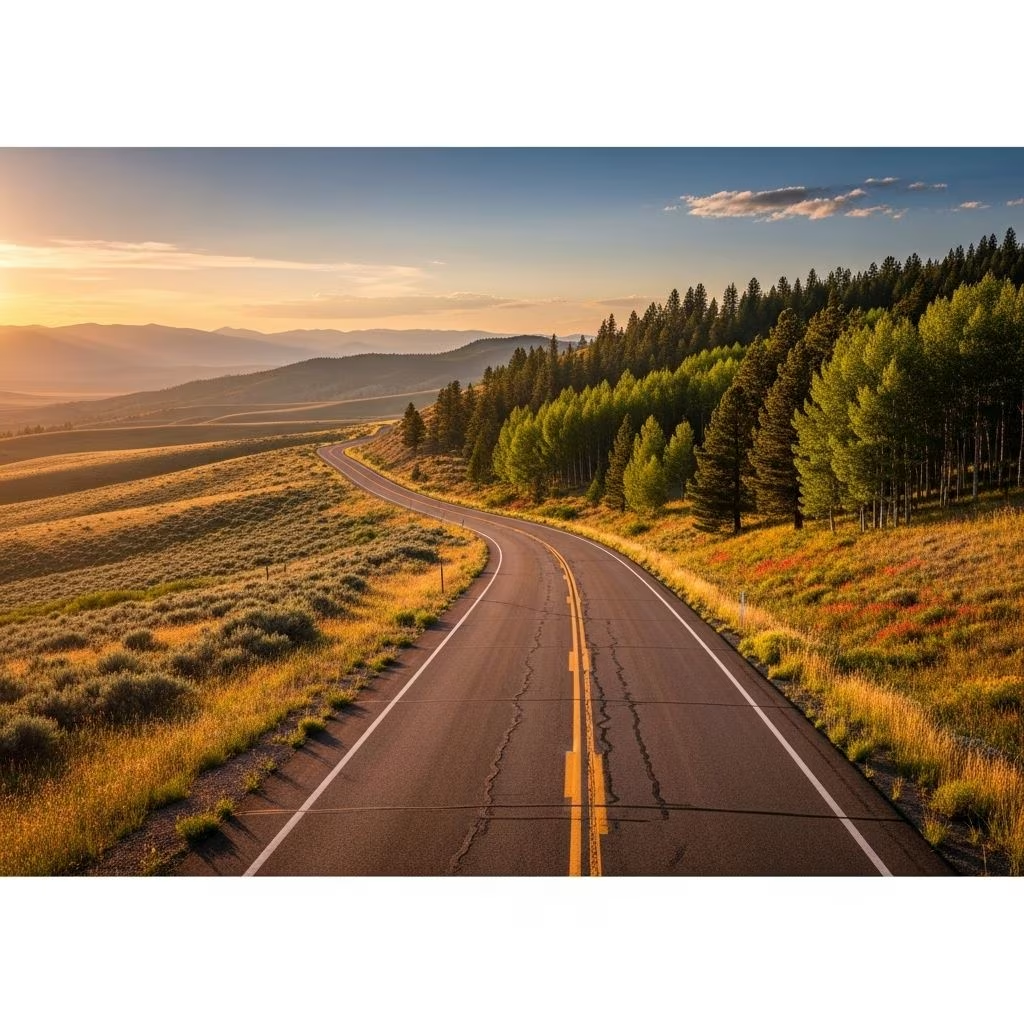
When most people imagine a classic American road trip, images of Route 66, the Pacific Coast Highway, and the Blue Ridge Parkway spring to mind. Yet, for those willing to veer off the beaten path, there is a quieter, often more profound America to discover—one found along the roads least traveled. This article invites you to explore the unique byways and remote highways winding through regions rich in history, natural splendor, and authentic charm, without the congestion of the country’s most famous routes.
Why Travel the Roads Less Taken?
There’s a growing appeal for seeking out less crowded destinations, especially as more travelers seek solace in nature, yearn for genuine cultural encounters, and prioritize sustainable tourism. The roads least traveled offer not only physical distance from bustling crowds but also:
- Peaceful scenery and abundant wildlife
- Local culture unfiltered by mass tourism
- Surprises around every curve—from hidden waterfalls to tiny art galleries and historic landmarks
- A chance to slow down and experience the landscape on its own terms
Choosing the Road Less Traveled
Before the Interstate Highway System, America’s landscape was stitched together by a patchwork of state and local roads, scenic byways, and forgotten turnpikes. These routes, often bypassed by travelers rushing to their destinations, invite a different style of travel: one not measured by miles per hour but by moments of wonder. Here, we highlight some of the most rewarding roads for an off-the-beaten-path American adventure.
A New Generation of Travelers
Millennial and Gen Z travelers are fueling a renaissance in road trip culture. Drawn to customizable journeys and the chance to unplug, they value unique experiences, eco-friendly travel, and supporting local communities. Their preferences have revitalized interest in obscure American byways, leading to more discovery and conservation efforts for less known routes.
Scenic Byways Across the Heartland
The American heartland is laced with quiet byways passing through prairie, forest, and farmland. Each has its own story. Some of the prime examples include:
- Flint Hills Scenic Byway (Kansas): Journey through tallgrass prairies dotted with wildflowers, ranches, and quaint towns like Cottonwood Falls. The 48-mile route showcases a rare landscape and hosts opportunities for hiking or birdwatching.
- Great River Road (Mississippi): Spanning over 2,000 miles along the Mississippi River’s length, lesser-known stretches in Minnesota, Illinois, and Mississippi offer peaceful river views and delta towns echoing with blues music and southern hospitality.
- Highway 2 (Nebraska’s Sandhills Journey): This lightly traveled highway rolls through the largest sand dune formation in the Western Hemisphere, dotted with windmills, ghostly towns, and meandering rivers.
- Blue Ridge Parkway (Hidden Stretches): While the southern sections near Asheville are busy, the parkway’s northern reaches in Virginia provide tranquil overlooks, pioneer cabins, and gently winding roads without the crowds.
Secluded Coastal Highways
Though the Pacific Coast Highway and Florida’s Overseas Highway draw many motorists, some waterfront roads remain surprisingly tranquil:
- Oregon Coast’s Three Capes Scenic Route: Just west of U.S. 101, drive through coastal rainforest and dramatic headlands, stopping at Capes Meares, Lookout, and Kiwanda. Explore tidal pools and windswept bluffs often undisturbed by mass tourism.
- Highway 15 (Outer Banks, North Carolina): Beyond popular beaches, the northern and southern stretches of the Outer Banks reveal quiet fishing villages, wild horses, and windswept dunes. In the shoulder seasons, you might drive for miles without passing another car.
- Old Florida’s A1A (Flagler Beach to St. Augustine): Wander past pastel cottages, live oak forests, and unspoiled beaches where sea turtles nest undisturbed. Stop for fresh seafood in family-run shacks along the way.
Mountain Byways Few Cross
Deep in the folds of the country’s mountain ranges are backroads offering jaw-dropping vistas and solitude:
- Beartooth Highway (Montana/Wyoming): With steep elevation gains, switchbacks, and panoramic views, this 68-mile road rivals world-famous alpine routes—yet sees only a fraction of their traffic. July and August are peak wildflower months.
- San Juan Skyway (Colorado): While the Million Dollar Highway section draws visitors, secluded legs near Dolores and Rico pass through aspen forests and mining ghost towns nearly forgotten by time.
- U.S. Route 12 (Idaho’s Northwest Passage Scenic Byway): In the footsteps of Lewis and Clark, this byway follows the Clearwater and Lochsa Rivers through dense forests, hot springs, and dramatic mountain corridors.
Deserts and Open Range
For those who crave bigger skies and endless horizons, America’s deserts offer sublime drives where civilization seems to disappear:
- Highway 50: The Loneliest Road in America (Nevada): The reputation is real—occasional mining towns, ancient petroglyphs, and huge stretches of empty basin and range terrain await those who drive this iconic route.
- Turquoise Trail (New Mexico): Connecting Santa Fe and Albuquerque, this atmospheric road meanders through old mining settlements, art enclaves, and piñon-dotted hills.
- Straight Creek Road (Utah): South of Capitol Reef National Park, this little-known road offers moonlike landscapes, hoodoo rock formations, and near total silence save for the wind.
Stories Found Only Off the Beaten Path
Traveling America’s least taken roads isn’t simply about scenery. It’s about serendipity—the unplanned discoveries and genuine moments only possible without a tightly-scripted itinerary:
- Stumbling on a centuries-old covered bridge in rural New England, intricately maintained by local craftspeople.
- Encountering a vintage-drive-in theater still in business in the Midwest, serving homemade root beer floats during summer nights.
- Joining an impromptu town festival, such as a bluegrass jam in the Appalachians or a regional pie bake-off in the Deep South, where visitors are instantly welcomed.
- Observing a herd of wild bison at dusk, crossing an old reservation road in the Dakotas.
Each of these experiences brings visitors closer to the landscapes, communities, and rhythms of rural America. The deliberate detour is rewarded by local flavor and memories as vivid as any landmark along the main highways.
Sustainable Travel and the Value of Slowing Down
Choosing less-traveled routes can also support sustainable tourism. These paths disperse visitor pressures, protect overvisited landmarks, and channel tourism dollars into rural economies. Responsible road-trippers can make a positive impact by:
- Patronizing local businesses—from farm stands and diners to craft shops and independent motels.
- Choosing eco-friendly transportation options such as carpooling or driving hybrids/electric vehicles.
- Following Leave No Trace principles, being mindful of waste, and respecting local traditions and wildlife.
Road Trip Planning Tips for the Unexplored
- Research in advance: While cell service can be patchy, preparing with offline maps and notes on possible stops, fuel, or lodging pays off.
- Pack for the unexpected: Bring extra water, snacks, and a roadside emergency kit, especially in remote areas.
- Stay flexible: The freedom of the open road means plans may change with weather, roadwork, or an intriguing hand-painted detour sign.
- Respect speed and conditions: Many scenic byways are narrow, winding, or have wildlife crossings—enjoy the drive safely.
When to Go: Embracing the Quiet
The least traveled roads reveal their character in different seasons:
- Spring: Rolling wildflowers in the prairies and fresh leaves in the mountains.
- Summer: Long daylight hours for extended drives and roadside picnics.
- Autumn: Vibrant foliage in New England, Appalachia, and the Ozarks.
- Winter: Frosted forests and snow-blanketed valleys in the northern reaches—perfect for those seeking solitude and stark beauty.
Table: Sample Least-Traveled Scenic Roads by Region
| Region | Road Name | Highlights |
|---|---|---|
| Northeast | Route 100 (Vermont) | Covered bridges, village greens, autumn leaves |
| Southeast | Natchez Trace Parkway | Historic sites, cypress swamps, abundant wildlife |
| Midwest | Great River Road (Illinois/Wisconsin) | Bluff views, river towns, migratory birds |
| Mountain West | San Juan Skyway | Peaks, aspen groves, mining history |
| Pacific | Three Capes Scenic Route (Oregon) | Sea cliffs, lighthouses, rainforests |
Frequently Asked Questions (FAQs)
Q: What is the main benefit of taking America’s less traveled roads?
A: The main benefit is the opportunity to experience quieter, more authentic destinations, connect with local communities, enjoy diverse scenery, and avoid the congestion and commercialization of major tourist routes.
Q: Are less traveled byways suitable for all vehicles?
A: Most are suitable for standard vehicles, but some mountain or desert roads may require higher clearance, especially after storms or in winter. Always check local advisories before departing.
Q: How can I find lesser-known scenic byways in my state?
A: State tourism websites, National Scenic Byways maps, and local visitor bureaus are great resources for discovering hidden-gem routes tailored to varied interests—nature, history, food, or art.
Q: Is it safe to take these less traveled roads solo?
A: Yes, with preparation: tell someone your route, keep your fuel tank topped up, carry basics like water and a spare tire, and use common sense. In remote stretches, cell service may be unreliable, so plan accordingly.
Q: What season is best for an off-the-beaten-path road trip?
A: While different regions shine at different times, late spring and early autumn typically offer the best weather, fewer crowds, and beautiful natural displays—like wildflowers or fall foliage.
Charting Your Own American Adventure
Exploring America’s roads least taken is more than a mode of travel; it’s an invitation to slow down, wonder, and rediscover a sense of possibility in a country that still harbors untold beauty around every subtle turn. Whether you’re a lifelong road warrior or a first-time explorer, set your sights beyond the highway blitz and ramble into the heart of the nation. The story of these quiet roads—and the people and places they reveal—is waiting to be written by you.
References
- https://www.debisimons.com/how-has-frosts-the-road-not-taken-been-misinterpreted/
- https://www.womanaroundtown.com/sections/living-around/a-new-hampshire-visit-inspired-by-robert-frosts-the-road-not-taken/
- https://www.nylon.com/articles/road-trip-comeback-millennials
- https://dynamicecology.wordpress.com/2013/01/16/the-road-not-taken-for-me-and-for-ecology/
- https://www.jstor.org/stable/41209926
- https://www.treehuggerpod.com/episodes/ecology-of-light