


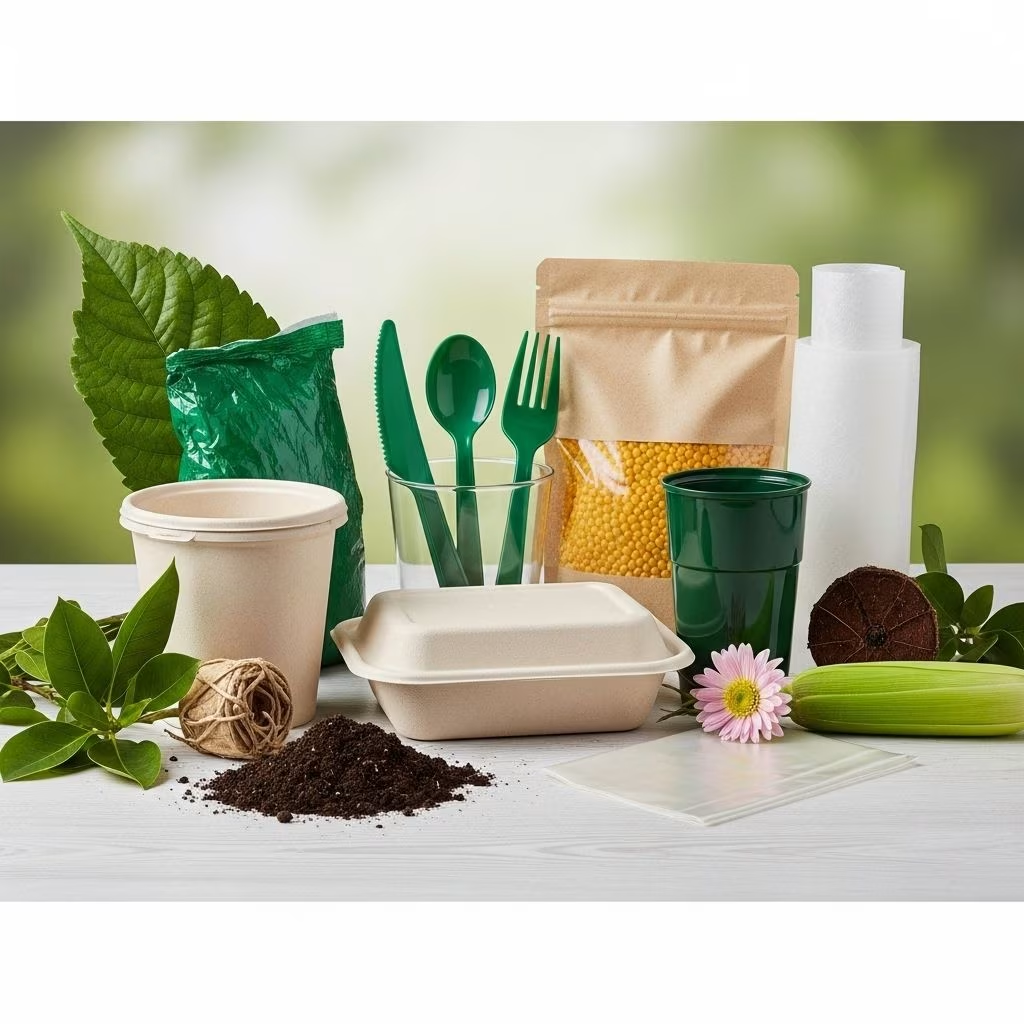
The mounting crisis of plastic pollution has sparked urgent conversations about sustainable alternatives to conventional petroleum-based plastics. Among the most promising solutions are biodegradable plastics, materials designed to break down naturally through biological processes. These innovative materials represent a significant shift in how we approach manufacturing, consumption, and waste management. Understanding what biodegradable plastics are, how they function, and their genuine environmental impact is crucial for making informed decisions about their use and implementation in our daily lives.
What Are Biodegradable Plastics?
Biodegradable plastics are materials specifically engineered to decompose through the action of living organisms, primarily microorganisms such as bacteria and fungi. Unlike traditional plastics that can persist in the environment for hundreds of years, biodegradable plastics break down into natural byproducts including water, carbon dioxide, and biomass. This fundamental difference positions them as a potentially transformative solution to the global plastic waste crisis that currently threatens ecosystems worldwide.
The key distinction lies in the material’s ability to be metabolized by microorganisms under specific environmental conditions. When biodegradable plastics are exposed to the right combination of temperature, moisture, and microbial activity, they undergo a process of decomposition that converts them back into natural elements. This process not only minimizes waste accumulation but also significantly reduces the long-term environmental impact associated with conventional plastic disposal.
These materials are commonly produced using renewable raw materials, microorganisms, petrochemicals, or various combinations of all three. The versatility in sourcing and production methods allows manufacturers to create biodegradable plastics suited for different applications, from food packaging and agricultural films to disposable cutlery and textile fibers.
The Manufacturing Process of Biodegradable Plastics
The production of biodegradable plastics involves sophisticated processes that transform natural materials into functional plastic alternatives. Understanding this manufacturing journey reveals the complexity and innovation behind these sustainable materials.
Raw Material Sourcing and Preparation
The journey of creating biodegradable plastics begins with sourcing renewable resources. Common raw materials include corn starch, sugarcane, cassava, and various vegetable fats and oils. These plant-based sources provide the essential sugars and starches required to build plastic-like polymers. Corn starch, in particular, has emerged as one of the most favored materials due to its high starch content and abundance in nature.
During the extraction process, manufacturers grind plant materials into fine powder, then mix them with water and enzymes. This combination breaks down the starch into simpler sugars such as glucose, which serves as the foundation for subsequent chemical transformations. The preparation stage also involves careful cleaning, drying, and processing to ensure the raw materials meet quality standards. This crucial purification step removes impurities that could interfere with the final bioplastic’s quality and performance characteristics.
Polymerization: Building the Polymer Chains
Once the raw materials are prepared, they undergo polymerization, a critical process where simple molecules are linked together to form long polymer chains. These chains serve as the fundamental building blocks of biodegradable plastic products. The fermentation process converts extracted sugars into lactic acid, a key precursor for many biodegradable plastics.
For polylactic acid (PLA), one of the most common biodegradable plastics, lactic acid molecules are combined through condensation polymerization. This process creates long chains of PLA through two primary methods: direct condensation and ring-opening polymerization. In direct condensation, water is removed as a byproduct during the molecular bonding process. This polymerization stage determines the fundamental properties of the resulting biodegradable plastic, including its strength, flexibility, and degradation characteristics.
Similarly, polyhydroxyalkanoates (PHAs) are created through biological reactions where microorganisms convert bio-based monomers into polymer chains. These naturally occurring polymers offer unique properties that make them suitable for various applications.
Blending and Additive Integration
To optimize performance characteristics, bio-based polymers are blended with other biodegradable additives during the third manufacturing stage. This critical step allows manufacturers to fine-tune the final plastic’s properties, ensuring it possesses the appropriate flexibility, strength, and shelf life for its intended application. Different combinations of additives can enhance specific characteristics such as heat resistance, durability, or transparency.
Advanced techniques and technologies are incorporated during this phase to ensure the production of high-quality materials that can compete with conventional plastics in terms of functionality. The blending process must be carefully controlled to maintain the biodegradable nature of the final product while achieving desired performance standards.
Shaping and Product Manufacturing
The finished biodegradable material is shaped into usable products using familiar manufacturing methods adapted from traditional plastic production. Common techniques include extrusion for creating films, sheets, and fibers, as well as injection molding and blow molding for producing containers, trays, utensils, and other three-dimensional objects.
The polymer can be formed into various shapes depending on its ultimate use, including pellets, films, or sheets. These same manufacturing techniques used in conventional plastic production are applied, but with cleaner and greener inputs. This compatibility with existing manufacturing infrastructure facilitates the transition from traditional plastics to biodegradable alternatives without requiring complete industrial overhauls.
Types of Biodegradable Plastics
Several distinct categories of biodegradable plastics have been developed, each with unique properties and optimal applications. Understanding these different types helps in selecting the most appropriate material for specific uses.
Polylactic Acid (PLA)
PLA stands as one of the most widely used biodegradable plastics in commercial applications. Derived primarily from fermented plant starches such as corn, cassava, or sugarcane, PLA exhibits properties remarkably similar to conventional plastics like polyethylene and polypropylene. This makes it particularly suitable for food packaging, disposable cutlery, textile applications, and agricultural films. Under appropriate composting conditions with adequate heat and moisture, PLA can fully decompose, making it an attractive option for single-use items that traditionally contribute to plastic waste.
Polyhydroxyalkanoates (PHAs)
PHAs represent a family of biopolymers produced naturally by microorganisms as energy storage compounds. These materials offer excellent biodegradability in various environments, including soil and marine settings, which sets them apart from many other bioplastics that require specific composting conditions. PHAs can be engineered to possess a wide range of properties, from rigid to flexible, making them versatile for applications in packaging, agriculture, and medical devices.
Polybutylene Adipate Terephthalate (PBAT)
PBAT is a biodegradable copolyester that can be produced from both bio-based and petroleum-based sources. While the monomer 1,4-butanediol for PBAT can be derived from petroleum, efforts are underway to produce it from glucose through microbial fermentation processes. PBAT is commonly used in combination with other bioplastics to enhance flexibility and processability, making it particularly useful for compostable bags, agricultural mulch films, and food packaging applications.
Starch-Based Plastics
These materials directly incorporate starch from corn, potatoes, or other plants, often blended with other biodegradable polymers to improve performance characteristics. Starch-based plastics are among the most cost-effective biodegradable options and find widespread use in packaging materials, disposable items, and agricultural applications.
Environmental Benefits and Advantages
The shift toward biodegradable plastics offers numerous environmental advantages that address critical sustainability challenges facing our planet.
Reduced Fossil Fuel Dependence: By utilizing renewable plant-based resources rather than petroleum, biodegradable plastics help decrease our reliance on finite fossil fuel reserves. This transition supports energy security and reduces the carbon footprint associated with plastic production.
Lower Greenhouse Gas Emissions: The production and decomposition of biodegradable plastics generally generate fewer greenhouse gas emissions compared to conventional plastics. When properly composted, these materials release carbon dioxide that was recently captured from the atmosphere by the plants used in their production, creating a more balanced carbon cycle.
Minimized Environmental Persistence: Perhaps the most significant advantage is the ability of biodegradable plastics to break down naturally within reasonable timeframes. This characteristic dramatically reduces the accumulation of plastic waste in landfills, oceans, and natural ecosystems, helping to protect wildlife and preserve environmental integrity.
Support for Circular Economy: Biodegradable plastics align with circular economy principles by enabling materials to return to nature as nutrients rather than persisting as waste. When properly managed through composting systems, these materials can contribute to soil health and agricultural productivity.
Reduction of Microplastic Pollution: Innovative production methods now exist that virtually eliminate microplastic formation during degradation. Recent technological advances allow up to 98% of certain biodegradable plastics to degrade into small molecules rather than fragmenting into persistent microplastics that contaminate ecosystems.
Challenges and Limitations
Despite their promise, biodegradable plastics face several significant challenges that must be addressed to maximize their environmental benefits.
Specific Degradation Requirements: Many biodegradable plastics require particular conditions to decompose effectively, including specific temperature ranges, moisture levels, and microbial populations found primarily in industrial composting facilities. Without access to these specialized facilities, biodegradable plastics may not break down as intended, potentially persisting in the environment similarly to conventional plastics.
Infrastructure Limitations: The lack of widespread composting infrastructure represents a major barrier to the effective disposal of biodegradable plastics. Many communities lack access to industrial composting facilities capable of processing these materials, leading to biodegradable plastics ending up in landfills where they may not decompose properly due to oxygen limitations.
Consumer Confusion: The terminology surrounding biodegradable and compostable plastics often confuses consumers, leading to improper disposal. Items labeled as biodegradable might be discarded as regular trash or placed in recycling bins where they can contaminate traditional plastic recycling streams.
Agricultural Resource Competition: Using food crops like corn and sugarcane for plastic production raises concerns about land use and potential competition with food production. This tension necessitates careful consideration of sustainable sourcing practices and the development of production methods using agricultural waste or non-food crops.
Cost Considerations: Biodegradable plastics typically cost more to produce than conventional petroleum-based plastics, which can limit their adoption, particularly in price-sensitive markets. Economic viability remains a significant factor in determining how quickly these materials can replace traditional plastics at scale.
Innovative Developments and Future Directions
The field of biodegradable plastics continues to evolve rapidly, with researchers and manufacturers developing increasingly sophisticated solutions to overcome current limitations.
Enzyme-Enhanced Degradation: Recent breakthroughs involve embedding polyester-eating enzymes directly into plastic during manufacturing. These enzymes are protected by simple polymer wrappings that prevent them from becoming inactive. When exposed to heat and water, the enzymes activate and begin breaking down the plastic polymer into its building blocks. This technology enables plastics to degrade nearly completely within 36 hours under appropriate conditions, representing a dramatic improvement over traditional biodegradable plastics.
Lignocellulosic Biomass Utilization: Advanced research focuses on using lignocellulosic waste materials—such as agricultural residues, forestry waste, and other plant materials—as feedstocks for biodegradable plastic production. This approach addresses concerns about food crop competition while creating value from waste streams. Through metabolic engineering and synthetic biology, microbial cell factories can process lignocellulosic biomass to create biodegradable plastics, building a truly circular production system.
Improved Material Properties: Ongoing development aims to enhance the performance characteristics of biodegradable plastics, making them suitable for a broader range of applications. Researchers work to improve heat resistance, mechanical strength, barrier properties, and shelf life while maintaining biodegradability.
Multi-Stage Development Framework: The advancement of bio-based synthesis technologies follows a progressive development pathway from laboratory research through commercial viability to mature industrial production using renewable waste substrates. This systematic approach ensures that new biodegradable plastic technologies can successfully transition from promising innovations to market-ready solutions.
What Consumers Need to Know
Making informed decisions about biodegradable plastics requires understanding several key considerations that affect their environmental impact and proper use.
Verify Certifications: Look for credible third-party certifications that verify biodegradability and compostability claims. Standards such as ASTM D6400 or EN 13432 indicate that products meet specific requirements for industrial composting. These certifications provide assurance that materials will degrade as advertised under appropriate conditions.
Understand Disposal Requirements: Learn about local waste management infrastructure and determine whether industrial composting facilities are available in your area. If such facilities exist, understand how to properly separate and dispose of biodegradable plastics. When industrial composting is unavailable, consider whether alternative disposal methods might be more environmentally sound than using biodegradable plastics that cannot properly decompose.
Avoid Contamination: Never place biodegradable plastics in traditional recycling bins unless specifically instructed by local recycling programs. Biodegradable plastics can contaminate conventional plastic recycling streams, reducing the quality and value of recycled materials. Proper separation is essential for both biodegradable and recyclable materials to achieve their intended environmental benefits.
Consider the Full Lifecycle: Evaluate the complete environmental impact of biodegradable plastics, including production resources, transportation, use phase, and end-of-life disposal. Sometimes, reusable alternatives or traditional recyclable materials may offer better overall environmental performance depending on specific circumstances and local infrastructure.
Prioritize Reduction: Remember that the most sustainable option is often to reduce overall plastic consumption rather than simply substituting one type of plastic for another. Use biodegradable plastics strategically for applications where single-use materials are necessary and proper composting infrastructure exists.
Applications Across Industries
Biodegradable plastics have found valuable applications across numerous sectors, each leveraging the unique properties of these materials to address specific needs while reducing environmental impact.
Food Service and Packaging: Restaurants, cafeterias, and food manufacturers increasingly use biodegradable plastics for containers, cutlery, straws, and packaging films. These applications benefit from the materials’ ability to safely contact food while offering end-of-life disposal options that align with organic waste streams.
Agriculture: Biodegradable mulch films and plant pots eliminate the need for removal and disposal after use. These materials can be tilled directly into soil where they decompose, saving labor and reducing plastic waste in agricultural settings.
Medical and Healthcare: The biocompatibility of certain biodegradable plastics makes them suitable for medical applications including sutures, drug delivery systems, and temporary implants that dissolve harmlessly in the body over time.
Consumer Products: From shopping bags and trash liners to personal care product packaging, biodegradable plastics serve numerous consumer applications where single-use items remain practical necessities.
Textiles: Biodegradable fibers made from PLA and other bioplastics offer sustainable alternatives for clothing, nonwoven fabrics, and other textile applications, reducing the environmental impact of the fashion and textile industries.
The Role of Policy and Industry Standards
Government regulations and industry standards play crucial roles in shaping the development, production, and use of biodegradable plastics. Many jurisdictions have implemented bans or restrictions on certain single-use plastics, creating market opportunities for biodegradable alternatives. However, effective policy must address not only material substitution but also the infrastructure needed for proper disposal and the prevention of misleading environmental claims.
Industry standards establish clear criteria for biodegradability and compostability, helping to prevent greenwashing and ensure that products deliver on their environmental promises. These standards also facilitate international trade by creating common benchmarks that manufacturers can design to and consumers can trust.
Frequently Asked Questions
Q: Will biodegradable plastics decompose in my backyard compost pile?
A: Most biodegradable plastics, particularly PLA, require the high temperatures found in industrial composting facilities to decompose effectively. Home composting systems typically do not reach the sustained temperatures of 140-160°F necessary for proper breakdown. However, some biodegradable plastics like certain PHAs may decompose in home composting environments. Always check product specifications and certifications to understand disposal requirements.
Q: Are biodegradable plastics the same as compostable plastics?
A: While related, these terms have distinct meanings. Biodegradable plastics break down through biological processes but may leave residues and require undefined timeframes. Compostable plastics must meet specific standards for breaking down in composting systems within set timeframes while leaving no toxic residue. All compostable plastics are biodegradable, but not all biodegradable plastics are compostable according to official standards.
Q: How long do biodegradable plastics take to decompose?
A: Decomposition time varies significantly based on the specific material, environmental conditions, and disposal method. In industrial composting facilities with optimal conditions, many biodegradable plastics can break down within 90-180 days. However, in landfills or natural environments without proper conditions, degradation may take much longer or not occur at all.
Q: Can biodegradable plastics be recycled with traditional plastics?
A: No, biodegradable plastics should not be placed in traditional recycling bins as they can contaminate recycling streams and reduce the quality of recycled materials. These materials have different chemical compositions that are incompatible with conventional plastic recycling processes. Always dispose of biodegradable plastics according to manufacturer instructions and local waste management guidelines.
Q: Are biodegradable plastics more expensive than conventional plastics?
A: Currently, biodegradable plastics typically cost more to produce than petroleum-based plastics due to factors including raw material costs, production scale, and technology maturity. However, prices continue to decrease as production scales up, technologies improve, and conventional plastic costs may increase with carbon pricing and environmental regulations. The total cost should also consider environmental externalities and end-of-life disposal expenses.
Q: Do biodegradable plastics contribute to microplastic pollution?
A: Traditional biodegradable plastics can fragment into microplastics during incomplete degradation, particularly when not disposed of properly. However, recent innovations have developed biodegradable plastics that degrade into small molecules rather than microplastic fragments, with some achieving up to 98% complete molecular degradation. The risk of microplastic formation depends on the specific material composition and degradation conditions.
References
- https://eupegypt.com/blog/biodegradable-plastics-manufacturing/
- https://plamfg.com/blog/how-biodegradable-plastic-is-made/
- https://www.youtube.com/watch?v=uddr5Ue96wo
- https://pmc.ncbi.nlm.nih.gov/articles/PMC9667314/
- https://news.berkeley.edu/2021/04/21/new-process-makes-biodegradable-plastics-truly-compostable/
- https://indpro.com/blog/biodegradable-plastic-manufacturing-process/
- https://en.wikipedia.org/wiki/Biodegradable_plastic
- https://europlas.com.vn/en-US/blog-1/how-are-bioplastics-made
- https://www.acs.org/content/dam/acsorg/education/resources/highschool/chemmatters/videos/chemmatters-april2010-bioplastics.pdf


