What Are Persistent Organic Pollutants (POPs)?
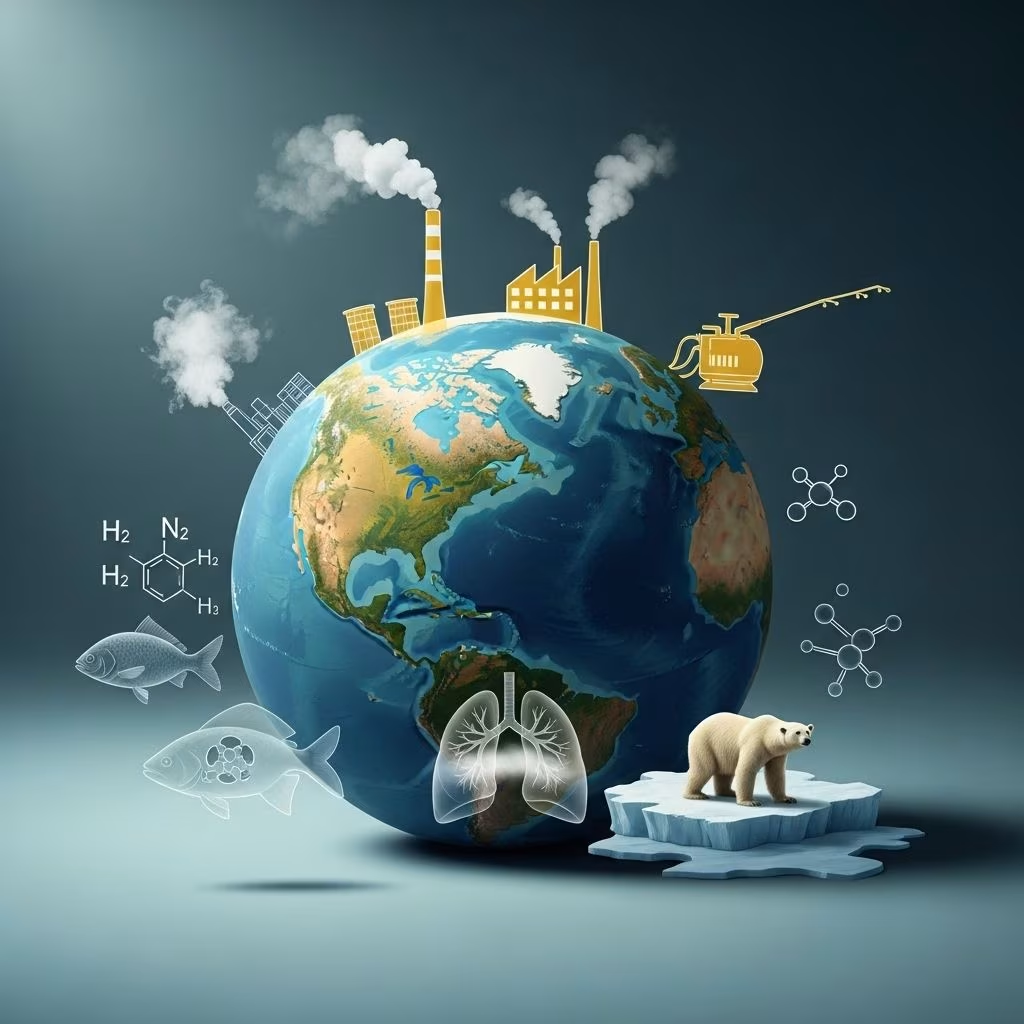
Persistent Organic Pollutants (POPs) are a group of synthetic chemicals known for their resistance to environmental degradation, ability to bioaccumulate in living organisms, and toxic effects on human health and ecosystems. POPs encompass a range of substances including industrial chemicals, pesticides, and unintentional by-products of manufacturing and combustion.
Key Characteristics of POPs
- Persistence: POPs can remain intact in the environment for decades, resisting breakdown by chemical, biological, or photolytic processes.
- Long-range transport: These chemicals can travel vast distances through air and water, contaminating even remote regions like the Arctic and high mountain lakes.
- Bioaccumulation: POPs are fat-soluble and accumulate in organisms, leading to higher concentrations at higher levels of the food chain through biomagnification.
- Toxicity: Many POPs are associated with carcinogenic, immunotoxic, reproductive, and developmental effects.
Major Types of POPs
POPs are divided into three main categories based on their origin and use:
- Industrial chemicals – e.g., polychlorinated biphenyls (PCBs), hexachlorobenzene (HCB).
- Pesticides – e.g., dichlorodiphenyltrichloroethane (DDT), lindane.
- Unintentionally produced by-products – e.g., dioxins (polychlorinated dibenzo-p-dioxins), furans (polychlorinated dibenzofurans), created during combustion or chemical production.
Table: Common Persistent Organic Pollutants and Their Uses
| Chemical | Type | Main Historical Uses | Known Effects |
|---|---|---|---|
| DDT | Pesticide | Insect control, malaria prevention | Cancer, reproductive harm, endocrine disruption |
| PCBs | Industrial chemical | Electrical equipment, hydraulic systems | Cancer, developmental effects, immune damage |
| Dioxins | By-product | Waste incineration, chemical production | Cancer, immune suppression, reproductive harm |
| Furans | By-product | Waste incineration, chemical reactions | Cancer, immune suppression, reproductive harm |
| Lindane | Pesticide | Seed treatment, topical medicines | Neurological effects, immune disruption |
How Do POPs Enter and Move Through the Environment?
POPs are released into the environment through various human activities, with sources including agricultural use, industrial processes, improper disposal of waste, and accidental spills. Once released, they display unique behaviors:
- Atmospheric transport: POPs volatilize and travel by wind currents, settling far from their point of origin. In a phenomenon known as the grasshopper effect, they repeatedly evaporate and condense, moving in stages across the globe until they accumulate in colder regions.
- Water distribution: These chemicals enter streams, lakes, and oceans, ultimately affecting aquatic life and biomagnifying up aquatic food chains.
- Soil contamination: POPs can bind to soil particles, remaining stable for extended periods and entering plants and animals through food webs.
Why Are POPs So Harmful?
The persistence, global mobility, and toxicity of POPs make them one of the most dangerous classes of pollutants. Their key hazards include:
- Bioaccumulation and Biomagnification: POPs are lipophilic, meaning they dissolve in fat rather than water. Once inside an organism, they accumulate in fatty tissues and are not easily excreted. As one animal preys upon another, higher concentrations move up the food chain, leading to toxic burdens in top predators – including humans.
- Health Effects:
- Cancer: Several POPs are classified as carcinogens by regulatory agencies.
- Endocrine disruption: POPs can mimic, block, or alter natural hormone functions, affecting growth, metabolism, and fertility.
- Developmental and reproductive harm: Exposure can result in birth defects, lowered IQ, or impaired reproductive function in both people and wildlife.
- Immune system suppression: Increased susceptibility to illness or infection can arise from higher POP exposures.
- Ecosystem Impact: POPs have resulted in decreased fertility in bird populations, eggshell thinning, developmental anomalies, and population drops in mammals and fish.
Where Are POPs Found?
POPs have been detected everywhere – from city centers to rural landscapes, tropical zones, and even the Arctic. Because of their persistence and ability to travel, they are especially concentrated in colder ecosystems such as Canada’s North, the Great Lakes, and polar regions. Background levels are measurable in human blood, fatty tissue, and breast milk worldwide.
Table: POP Hotspots & Vulnerable Populations
| Region | POP Sources | Why Vulnerable? |
|---|---|---|
| Arctic / Northern Canada | Long-range transport, atmospheric deposition | Cold climate limits degradation; traditional diets include fatty marine mammals, increasing human exposure |
| Great Lakes Basin | Historic industrial use, agricultural runoff | Population density, high position in global food web |
| Urban / Industrial zones | On-going chemical production, waste incineration | Direct exposure, proximity to emission sources |
How Do Humans Encounter POPs?
- Food Consumption: The primary route of human exposure is through eating contaminated animal products, especially fish, meat, and dairy – items high in fat where POPs concentrate.
- Inhalation: Breathing air contaminated with POPs, notably near waste incinerators or factories.
- Direct Contact: Occupational exposure (e.g., pesticide applicators, industrial workers), or contact with items containing flame retardants or other POP-infused compounds.
- Maternal Transfer: Some POPs pass from mother to child across the placenta during pregnancy or through breast milk.
- Traditional Diets: Indigenous communities depending on traditional foods (marine mammals, fish) are at higher risk.
The Global Response to POPs
Recognition of POPs as a grave global threat prompted international cooperation to limit and eliminate their production, use, and release.
The Stockholm Convention
The Stockholm Convention on Persistent Organic Pollutants is a landmark international treaty adopted in 2001 and activated in 2004, targeting a list of the world’s most dangerous POPs, often called the “Dirty Dozen”. The Convention aims to:
- Eliminate or restrict the production and use of target POP chemicals.
- Promote safe disposal and destruction of POP stockpiles.
- Encourage research into alternatives and comprehensive monitoring of environmental levels.
- Support public awareness and capacity building in developing regions.
Over time, the Stockholm Convention has expanded its list to include more chemicals as new hazards are identified. Each addition undergoes a scientific review for persistence, toxicity, long-range transport, and bioaccumulation potential.
Alternatives and Solutions to POPs
Effective management and reduction of POPs rely on several strategies:
- Regulation: Banning or restricting use of POP pesticides and industrial chemicals via national legislation and international treaties.
- Technology: Promoting non-POP alternatives, greener chemicals, and safer production processes.
- Monitoring: Ongoing tracking of POPs in air, water, soil, and living organisms.
- Cleanup: Safe destruction or storage of remaining stockpiles and contaminated sites.
- Education: Increasing awareness among affected communities and industries.
Frequently Asked Questions (FAQs)
Q: What are the key properties that make POPs so dangerous?
A: POPs resist degradation (persistence), are fat-soluble (bioaccumulate in living organisms), biomagnify through food chains, and cause toxic effects at even low concentrations.
Q: How do POPs travel such great distances?
A: POPs volatilize and hitch rides on atmospheric currents, precipitate, then evaporate again – a cyclical movement called the grasshopper effect. This explains their presence in remote regions like polar zones.
Q: Can POPs still affect humans if they are banned?
A: Yes. Because POPs persist for decades, historic releases continue to expose humans and wildlife worldwide through contaminated food and environments.
Q: What foods are most likely to contain POPs?
A: Foods high in animal fat, including certain fish, meat, and dairy products, tend to contain greater concentrations of POPs due to bioaccumulation.
Q: Are children and unborn babies at risk?
A: Yes. POPs can cross the placenta and enter breast milk, exposing fetuses and infants during vulnerable stages of development.
Q: What can individuals do to reduce exposure?
A: While global action is essential, individuals can limit consumption of high-fat animal products from high-risk areas and support policies that phase out POPs.
Conclusion: Toward a Safer Future
Persistent Organic Pollutants remain among the most challenging hazards of industrial society. Their resilience and far-reaching impact underline the need for sustained global cooperation, scientific innovation, and widespread education to protect both current and future generations from their toxic legacy.
References
- https://www.marinebio.org/persistent-organic-pollutants-pops-a-global-issue-a-global-response/
- https://fiveable.me/ap-enviro/unit-8/persistent-organic-pollutants/study-guide/NGJL9C6G0X404T0kBdaP
- https://ipen.org/toxic-priorities/what-are-pops
- https://www.who.int/news-room/questions-and-answers/item/food-safety-persistent-organic-pollutants-(pops)
- https://www.canada.ca/en/environment-climate-change/services/canadian-environmental-protection-act-registry/historical/plans-policies/statement-pops-negotiations/backgrounder-persistent-organic-pollutants.html
- https://www.epa.gov/international-cooperation/persistent-organic-pollutants-global-issue-global-response
- https://en.wikipedia.org/wiki/Persistent_organic_pollutant