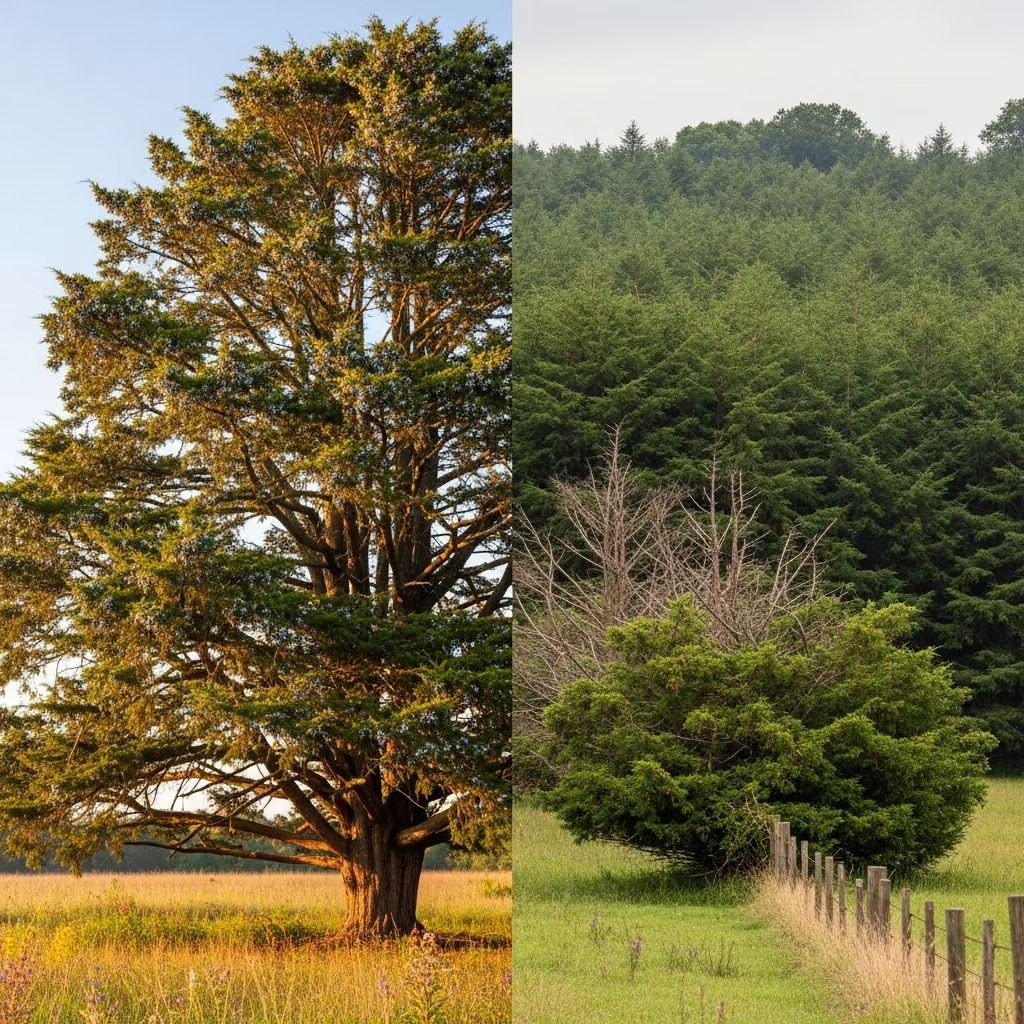
How the Dinosaur-Killing Asteroid Gave Rise to the World’s Rainforests
Around 66 million years ago, a catastrophic asteroid impact ended the reign of the dinosaurs and upended life on Earth. While this mass extinction claimed over 75% of all species—including all non-avian dinosaurs—it also set the stage for a dramatic transformation of our planet’s tropical rainforests. New research reveals that the origins of the humid, flowering, and dazzlingly diverse rainforests we see today can be traced directly to the aftermath of this global cataclysm.
The World Before the Impact: Ancient Rainforest Ecosystems
Prior to the asteroid’s impact, tropical forests in regions like what is now Colombia looked nothing like today’s dense rainforests. Fossil evidence, including over 50,000 pollen records and more than 6,000 fossilized leaves, paints a vivid picture:
- Open canopies: Trees were widely spaced, creating sunlit gaps on the forest floor.
- Dominance of conifers and ferns: Cone-bearing plants, towering conifers, and ferns were abundant, while flowering plants played a much smaller role.
- Sun-drenched undergrowth: Flowering shrubs basked in plentiful daylight, giving rise to a very different plant and insect community than exists today.
This environment was heavily influenced by large herbivorous dinosaurs, who browsed and trampled vegetation, likely helping to keep forests from growing too dense.
The Chicxulub Impact: Setting the Catastrophe in Motion
The Chicxulub asteroid, estimated at about 10 to 12 kilometers wide, slammed into the Earth near what is now the Yucatán Peninsula of Mexico. The ensuing explosion unleashed enormous wildfires, sent massive tsunamis across continents, and filled the sky with planet-darkening dust and soot.
- Immediate effects included devastating shockwaves, heat, and chemical changes in the atmosphere.
- The sky remained dark for an extended period, disrupting photosynthesis and triggering rapid temperature drops, killing off many forms of life.
- The event marks the boundary between the Cretaceous and Paleogene periods and is considered the most recent
mass extinction event in Earth’s history.
Initial Aftermath: The Collapse and Slow Recovery
The asteroid’s environmental impact unleashed a wave of extinctions that swept through terrestrial ecosystems:
- Loss of plant diversity: Within a short time, about 45% of tropical plant species vanished.
- Extinctions among key plant groups: Seed-bearing plants, particularly conifers, suffered disproportionately.
- Breakdown of existing ecosystems: The open, light-filled forests collapsed into ruined landscapes with far fewer species.
It would take nearly six million years for tropical forests to regain their previous levels of diversity. However, these post-recovery forests bore little resemblance to those that existed before.
Flowering plants (angiosperms) had begun to take over.
From Open Woodland to Closed-Canopy Rainforest
One of the most striking outcomes of the asteroid impact was the structural transformation of South America’s rainforests:
- From open to closed canopy: The ancient, widely spaced canopies gave way to lush, multilayered forests with tightly overlapping treetops.
- Dark forest floor: Dense upper layers allowed much less sunlight to reach the understory, driving a shift in the types of plants and animals that could survive below.
- Diversity boom for angiosperms: Flowering plants came to dominate, nurturing new ecological relationships with pollinators and herbivores.
These are the origins of today’s Amazon rainforest and other neotropical rainforests—lush, dripping, and dense with a mind-boggling diversity of plant and animal life.
Why Did Rainforests Change So Dramatically?
Researchers propose several, possibly interconnected, explanations for why such a profound transformation occurred following the asteroid impact:
- Loss of Dinosaur Influence: Large dinosaurs likely prevented forests from becoming too dense by knocking over or eating saplings. Their disappearance may have allowed forest canopies to grow thick and continuous.
- Soil Enrichment by Ash Fallout: Massive wildfires and falling ash would have supercharged tropical soils with nutrients.
Fast-growing flowering plants (angiosperms) thrive in such conditions, whereas conifers and ferns typically prefer less fertile, poorer soils. - Conifer Extinction Opens New Niches: The asteroid appears to have affected conifers more than flowering plants. The resulting empty ecological niches allowed flowering plants to expand and dominate.
It is likely that a combination of these causes—dinosaur removal, soil changes, and selective extinctions—drove the formation of the closed-canopy rainforests seen today.
Evidence from Fossils: Unlocking the Past
The conclusions about post-asteroid forest evolution rest on careful analysis of fossil evidence, including:
- Pollen Records: Tens of thousands of fossil pollen grains provide insight into changing plant communities across the extinction event.
- Leaf Impressions: Over 6,000 fossilize leaves capture changes in plant morphology and diversity.
- Wider Geographic Sampling: Fossil collections from dozens of sites across Colombia formed the core database for the analysis.
| Characteristic | Before Impact | After Impact |
|---|---|---|
| Canopy Structure | Open, sunlit spaces | Closed, dense canopy |
| Dominant Plant Groups | Conifers, ferns | Flowering plants (angiosperms) |
| Plant Diversity | High pre-extinction, sharp drop after | Gradual recovery, different species composition |
| Key Animal Influences | Large dinosaurs crushed/trampled saplings | Absence of dinosaurs allowed dense growth |
| Sunlight at Ground Level | Abundant | Much reduced |
A Timeline: From Catastrophe to Rainforest Birth
- ~72€“66 million years ago (Late Cretaceous): Open, conifer-rich forests dominated by large dinosaurs.
- 66 million years ago: Chicxulub asteroid strikes; mass extinction rapidly wipes out dinosaurs and many plants.
- 66€“60 million years ago: Forests devastated, open landscapes with drastically reduced plant diversity.
- ~60€“56 million years ago: Flowering plants rapidly expand, closed-canopy rainforests emerge.
- Present day: Amazon and other neotropical rainforests remain dominated by angiosperms, their structure and makeup a legacy of this ancient transition.
What This Means for Biodiversity and Climate Today
The rise of modern rainforests had enormous evolutionary consequences:
- Explosion of biodiversity: Over millions of years, closed-canopy rainforests provided unique ecological opportunities that spurred the diversity of plants, insects, amphibians, birds, and mammals.
- Novel ecological relationships: Pollination and dispersal innovations by animals and plants co-evolved, driving complex food webs.
- Carbon cycling and climate: Dense rainforests began to play a major global role in absorbing atmospheric carbon dioxide, helping regulate the Earth’s climate.
These factors combine to make rainforests crucial ecosystems for life on Earth. Understanding their origins offers lessons for conservation, as today’s forests face unprecedented threats.
Parallels with the Present: Lessons from Ancient Extinction
Many scientists draw a parallel between the ancient asteroid-induced extinction and the biodiversity crisis facing today’s rainforests:
- It took six to seven million years for rainforests to regain lost diversity after the asteroid impact.
- This lengthy timescale highlights the dire consequences of current mass extinctions driven by climate change, deforestation, and habitat loss.
- By studying the fossil record, we see that while ecosystems can recover, they may emerge in radically different forms—and that some losses are irreversible within any human-relevant timeframe.
Frequently Asked Questions (FAQs)
Q: What evidence do we have for these ancient forest changes?
A: Analysis of tens of thousands of fossilized pollen grains and over 6,000 fossil leaf specimens from dozens of Colombian sites has revealed dramatic shifts in plant types and diversity before and after the impact.
Q: Did dinosaurs live in environments like the modern Amazon rainforest?
A: No, before the asteroid impact, South American forests were open-canopied and dominated by conifers—not the dense, flowering-plant-rich jungles of today.
Q: How quickly did rainforests recover their diversity?
A: Plant diversity initially fell by about 45% after the impact and took approximately six million years to return to pre-impact levels—but with a different plant community structure.
Q: What triggered the dominance of flowering plants after the extinction?
A: The extinction of conifers and the fertilizing effects of post-impact ash helped flowering plants, which grow quickly in nutrient-rich soils, to become the dominant flora in new, dense-canopy rainforests.
Q: Why does this research matter for today’s environment?
A: Understanding how catastrophic events reset ecosystems helps scientists gauge the resilience of biodiversity and underscores the long-term risks posed by current biodiversity loss and climate change.
Key Points to Remember
- The asteroid that ended the dinosaurs paved the way for the evolution of dense, diverse rainforests.
- Modern rainforests owe their existence to extinctions and rapid changes triggered by this mass extinction event.
- Current threats to rainforests may pose similarly long-lasting impacts on Earth’s biodiversity.
References
- https://www.globe.gov/globe-community/blogs/community-blogs/-/blogs/80781585/maximized
- https://earth.org/study-shows-it-took-the-amazon-as-we-know-it-over-6-million-years-to-form/
- https://www.discovermagazine.com/dinosaur-destroying-asteroid-gave-rise-to-modern-rainforests-42576
- https://www.snexplores.org/article/dinosaur-extinction-asteroid-tropical-forest-fossil
- https://www.sciencenews.org/article/dinosaur-killing-asteroid-tropical-forest-fossil
- https://www.smithsonianmag.com/science-nature/how-dinosaur-killing-asteroid-spurred-evolution-modern-rainforest-180977390/
- https://en.wikipedia.org/wiki/Cretaceous%E2%80%93Paleogene_extinction_event
- https://www.smithsonianmag.com/science-nature/no-dinosaurs-did-not-trudge-through-thick-rainforests-180984730/