


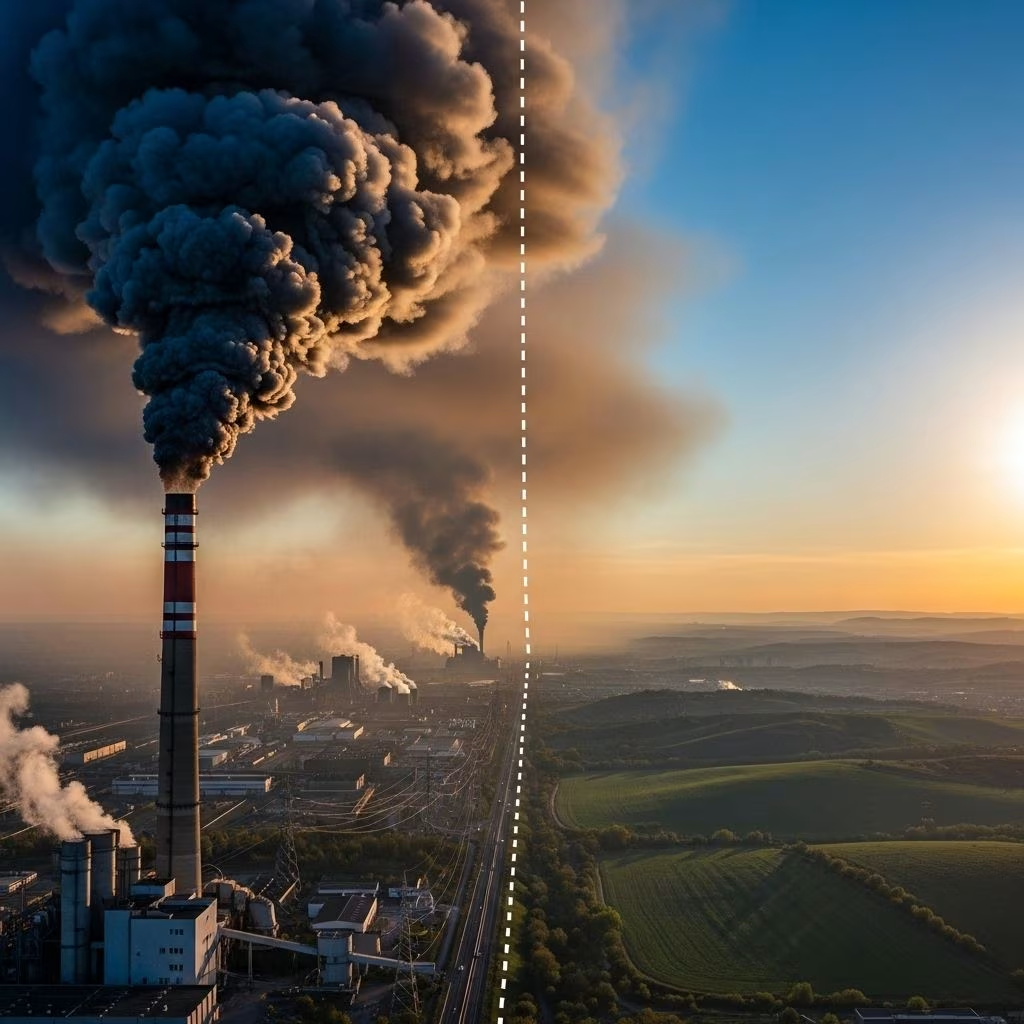
Cross-Border Pollution: Understanding a Global Challenge
Pollution is a global phenomenon that refuses to abide by human-imposed boundaries. Cross-border pollution (also known as transboundary pollution) is the movement of pollutants from one political or geographical region into another, impacting people, ecosystems, and entire nations far from the pollution’s origin. Because pollutants can travel through air, water, and even the food chain, this issue creates complex challenges for governments, industry, and communities worldwide.
What Is Cross-Border Pollution?
Cross-border pollution occurs when contaminants released in one country or locality travel across boundaries and cause environmental harm in another. These pollutants do not respect national, state, or county lines. Instead, they follow natural pathways—such as wind, water flow, and migratory patterns—often resulting in unintended consequences for neighboring regions. This phenomenon can happen at all scales:
- Local: Pollution moving from one city or county into another.
- National: Contaminants transferred between states or provinces within a single country.
- International: Pollutants originating in one country but affecting others, sometimes thousands of kilometers away.
This interconnectedness underscores the fundamental reality: the environment is a shared resource, and no border can prevent the spread of pollution once it enters the global system.
Key Pathways of Transboundary Pollution
Pollution can travel across borders through a variety of mechanisms. The main pathways include:
- Air: Wind currents can transport airborne pollutants—like smog, soot, and chemicals—over vast distances, often depositing harmful substances in downwind regions. Examples include acid rain originating from industrial emissions or haze caused by forest fires.
- Water: Rivers, lakes, and oceans carry pollutants such as chemicals, plastic debris, or pathogens downstream or across marine currents. These can contaminate drinking water supplies and aquatic life far from the pollution source.
- Land: Soil erosion and land runoff can move contaminated particles across boundaries, especially after heavy rains. Improper waste disposal or chemicals used in agriculture can seep into shared groundwater aquifers.
- Biological Pathways: Migratory species, such as birds or fish, can transfer pollutants accumulated in their bodies to distant locations, impacting new ecosystems and even human food chains.
Major Sources of Cross-Border Pollution
Human activities remain the chief contributors to transboundary pollution, often tied to economic development and urbanization. Below are the most significant sources:
- Industrial Emissions: Factories, power plants, and mining operations emit pollutants such as sulfur dioxide, nitrogen oxides, and volatile organic compounds. These airborne substances can travel hundreds or thousands of kilometers before being deposited, impacting air quality and contributing to acid rain or ground-level ozone formation.
- Agricultural Runoff: Fertilizers, pesticides, and animal waste from farms are significant sources of nitrogen and phosphorous in waterways. These substances can flow downstream or into international bodies of water, resulting in algal blooms, aquatic dead zones, and the degradation of fisheries.
- Waste Management Failures: Landfills, untreated sewage, and illegal dumping can allow hazardous substances to leach into soil and water. Discarded waste often ends up in international rivers or oceans, becoming plastic pollution or chemical contamination for distant communities.
- Transportation: Vehicles, ships, and planes emit exhaust full of harmful particles and gases. Ship emissions, in particular, contribute to air and water pollution along shared maritime borders, while highways near borders can spread contaminants to neighboring regions.
- Wildfires and Slash-and-Burn Agriculture: Fires set for agriculture or land clearing can release vast amounts of smoke and particulates, some of which travel across entire continents, degrading air quality and making international headlines (such as the Asian haze crisis).
Types of Cross-Border Pollution: Air, Water, and More
Understanding cross-border pollution requires recognizing its diverse forms, each with unique sources and impacts:
- Air Pollution: Includes particulate matter (PM2.5, PM10), nitrogen oxides (NOx), sulfur dioxide (SO2), ozone, and persistent organic pollutants (POPs). Air pollution carried by wind is often among the most visible—and contentious—forms.
- Water Pollution: Encompasses chemicals (fertilizers, heavy metals, industrial waste), plastic debris, and pathogens. Rivers are classic conduits for transferring pollution from upstream (often more economically developed) regions to downstream communities, including across international borders.
- Soil and Groundwater Pollution: Although less visible, contamination of shared aquifers, often through agricultural chemicals or industrial waste, can travel undetected beneath borders, only appearing when drinking water becomes unsafe.
- Marine Pollution: Ocean currents disperse oil spills, plastics, and chemical contaminants. Marine litter, such as plastic debris, can drift across thousands of kilometers, washing up on the shores of far-off countries.
- Biological Accumulation: Some pollutants, like mercury and POPs, can accumulate in animals that migrate or are eaten elsewhere, spreading contamination through the food web.
Real-World Examples of Transboundary Pollution
Several high-profile incidents have drawn global concern for cross-border pollution:
- Acid Rain in North America: Emissions from coal-burning power plants in the USA and Canada, rich in sulfur and nitrogen, result in acid rain that damages forests, lakes, and agriculture across the region—including in areas with few local emissions.
- Asian Haze: Vast smoke plumes from Indonesian fires (often from illegal slash-and-burn agriculture) have blanketed Malaysia, Singapore, and Thailand, leading to school closures, respiratory illness, and regional diplomatic tensions.
- Long-range Drift of Persistent Pollutants: Toxic chemicals such as PCBs and DDT, used or released in one country, have been detected in Arctic and Antarctic wildlife, having traveled thousands of kilometers via wind and ocean currents.
- Plastic Waste in Oceans: Discarded plastics from one country often wash up on distant shores, threatening marine ecosystems and economies whose tourism and fishing rely on clean coastlines.
- Danube and Rhine Rivers in Europe: Upstream industrial or agricultural pollution in one country can render water unsafe or trigger fish kills far downstream, fostering regional disputes and environmental cooperation.
| Pollutant Type | Primary Pathway | Main Impacted Regions | Typical Origin |
|---|---|---|---|
| Acid Rain Compounds (SO2, NOx) | Air | North America, Europe, East Asia | Industry, Power Generation |
| Plastic Debris | Water/Ocean | Oceans Worldwide | Waste Disposal, Urban Run-off |
| Haze/Smoke | Air | Southeast Asia, Western US | Slash-and-Burn, Wildfires |
| Persistent Organic Pollutants (POPs) | Air, Water, Biological | Polar regions, food webs | Agriculture, Industry |
| Heavy Metals (Mercury, Lead) | Air, Water | Global (esp. aquatic) | Mining, Industry |
Why Cross-Border Pollution Matters
- Public Health: Transboundary air pollution causes respiratory illness, heart disease, and premature deaths. Waterborne chemicals can lead to toxic exposures, unsafe drinking water, and food chain contamination.
- Ecological Damage: Entire ecosystems—forests, rivers, lakes, and marine environments—can degrade due to persistent pollution, causing species loss and ecological collapse.
- Economic Impacts: Pollution reduces agricultural yields, increases healthcare costs, and undermines sectors dependent on clean environments (such as fishing and tourism).
- Political Tensions: When pollution harm crosses borders, it often triggers disputes and strains between neighboring countries, requiring diplomatic and legal solutions.
Challenges in Managing Transboundary Pollution
Addressing cross-border pollution is uniquely challenging because:
- Lack of Sovereign Control: Nations may be affected by pollution they cannot directly regulate, leading to disagreements over responsibility and action.
- Enforcement Difficulties: Even where international agreements exist, enforcement is often weak due to limited monitoring and competing economic interests.
- Economic Pressures: Countries may prioritize economic development over environmental protection, especially where regulations are lax or poorly enforced.
- Complex Science: Pollution pathways are complex and can involve delayed or unpredictable effects, making it difficult to attribute harm and assign accountability.
- Inequities in Impact: Downstream or downwind nations, often with less pollution, may bear disproportionate health and environmental costs.
International Agreements and Cooperative Solutions
Because pollution is a shared challenge, international cooperation is essential. Notable initiatives include:
- United Nations Treaties: Agreements like the Stockholm Convention (restricting persistent organic pollutants) and the Convention on Long-Range Transboundary Air Pollution facilitate coordinated pollution control among many countries.
- Regional Protocols: Europe’s Helcom Convention reduces Baltic Sea pollution, while ASEAN countries collaborate to combat the Southeast Asian haze.
- Water Management Compacts: International river commissions (such as for the Rhine or Danube) coordinate pollution reduction and water quality improvement.
- Emissions Trading Schemes (ETS): Countries adopt market-based incentives, such as carbon markets, to reduce cross-border greenhouse gases.
- Technology Sharing & Capacity Building: Developed nations may support cleaner technologies, pollution monitoring, and enforcement mechanisms in partner countries.
The Way Forward: Addressing Cross-Border Pollution
Solving cross-border pollution demands commitment at all levels:
- International Law: Stronger agreements with robust enforcement and dispute resolution mechanisms.
- Shared Science: Open data, monitoring networks, and transparent environmental reporting.
- Public Engagement: Civic action can urge nations to prioritize health and sustainability over narrow economic interests.
- Equitable Solutions: Ensuring that polluted regions receive the support needed, while those responsible for pollution shoulder their fair share of costs.
Ultimately, cross-border pollution is not just an environmental problem—it is a test of the world’s ability to cooperate for the common good.
Frequently Asked Questions (FAQs) about Cross-Border Pollution
Q: What is cross-border pollution?
A: Cross-border (or transboundary) pollution refers to contaminants released in one region, country, or locality that travel to and impact another, often through air, water, or soil movement.
Q: What are the major sources of cross-border pollution?
A: Industrial emissions, agriculture runoff, waste mismanagement, transportation, and wildfires are the main human-related sources. Natural events, like dust storms or volcanic eruptions, can also contribute to cross-border pollution episodes.
Q: How does cross-border pollution impact health?
A: Transboundary air and water pollution cause respiratory illnesses, heart disease, increased mortality, unsafe drinking water, and can contaminate food supplies—leading to many preventable health issues worldwide.
Q: What international efforts exist to address cross-border pollution?
A: Key global treaties (e.g., Stockholm Convention, Convention on Long-Range Transboundary Air Pollution), regional cooperation agreements, and water management compacts aim to reduce pollution flows and promote sustainable management.
Q: Why is cross-border pollution so hard to control?
A: The complex, long-range movement of pollutants, alongside diverse legal and economic interests, makes coordinated control difficult. Enforcement is also challenging when pollution’s effects emerge far from its source.
References
- https://pollution.sustainability-directory.com/term/cross-border-pollution/
- https://www.safewater.org/fact-sheets-1/2017/1/23/transboundary-pollution
- https://legal-resources.uslegalforms.com/t/transboundary-pollution
- https://www.asiapacific.ca/sites/default/files/cross-border_pollution_v4.pdf
- https://fiveable.me/key-terms/introduction-environmental-science/transboundary-pollution
- https://www.epa.gov/international-cooperation/transboundary-air-pollution
- https://www.juscorpus.com/transboundary-pollution-pollution-across-borders/


