Baby corn is a familiar sight in stir-fries, curries, and salad bars, but few people know its true journey from field to plate. While it may seem like a curious novelty, baby corn has a fascinating backstory involving agricultural ingenuity, cross-continental trade, culinary creativity, and more than a few misconceptions. This article explores the origins, harvesting secrets, production challenges, and worldwide role of baby corn, revealing why it deserves attention as much more than just a cute vegetable garnish.
What Is Baby Corn?
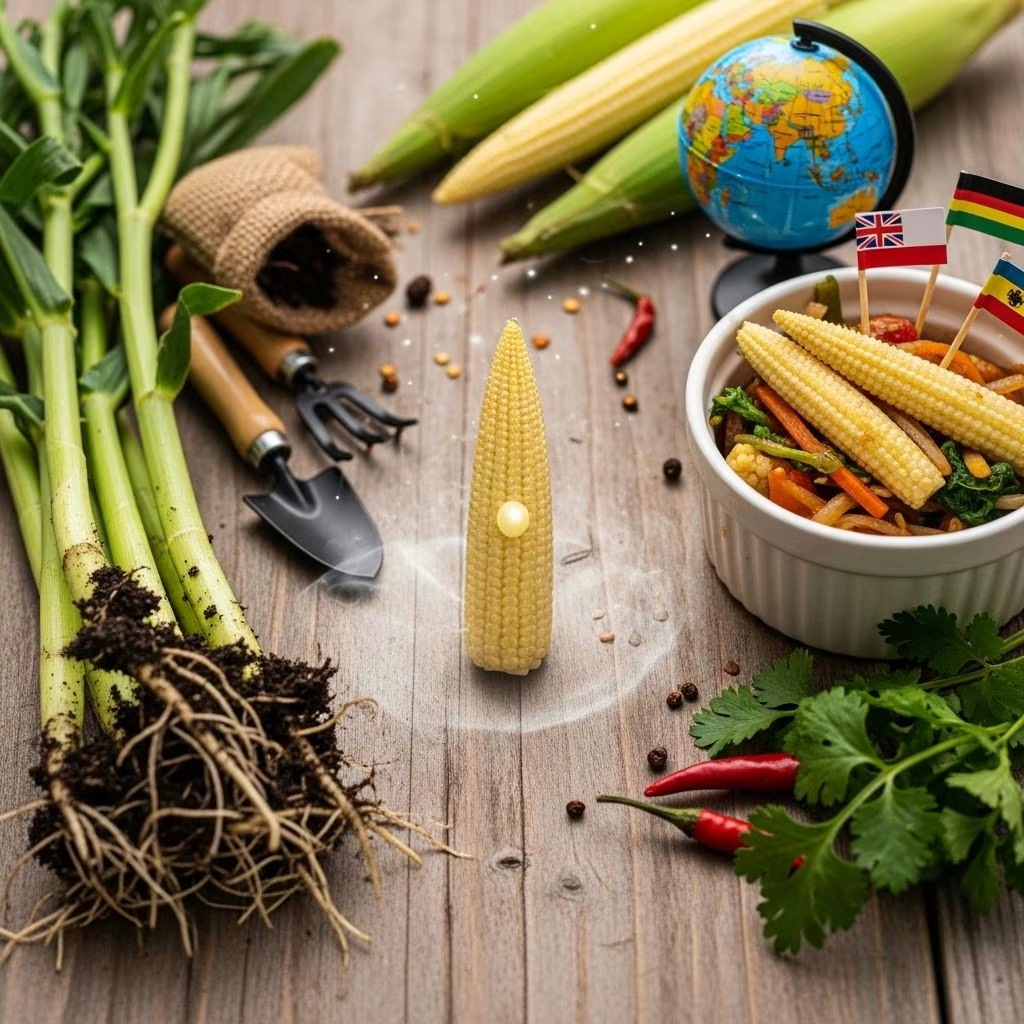
Many assume baby corn is a distinct species, but that is a myth. Baby corn is actually regular corn (Zea mays) harvested at an early, immature stage, usually when the ears are just a few days old and 2–4 inches long. Almost any corn variety can be used for baby corn, though some varieties are preferred for their tenderness and small size. The sweet flavor, pale yellow hue, and crisp-tender texture set baby corn apart from mature kernels.
- Appearance: Slender, pale ears with undeveloped kernels and a mild, slightly sweet taste.
- Texture: Crisp and tender, entirely edible – including the cob.
- Harvest: Picked before pollination occurs, usually 1–3 days after the silks emerge.
How Is Baby Corn Grown and Harvested?
Unlike the standard field corn, which is left in the field to ripen and dry, baby corn is selectively hand-harvested while the ears are extremely young. Timing and technique are crucial to its delicate texture and small size.
The Farming Process
- Field Selection: Most baby corn is grown on farms in Thailand, India, China, and a few other Asian countries, but it can be grown anywhere regular corn thrives.
- Planting: Farmers can grow baby corn either as a primary crop (solely for harvesting immature ears) or as a secondary crop (picked from plants grown for mature kernels, maximizing land use but with lower yields).
- Harvesting: Baby corn is typically picked by hand within 1–2 days of silk emergence, before fertilization. Once fertilized and kernels begin to swell, the texture becomes unappealing.
Because each corn plant produces a limited number of ears suitable for baby corn, labor costs and careful timing make production more challenging than for mature corn. Farmers often must visit fields daily to pick ears at their peak stage.
Harvest Table: Comparison Between Baby Corn and Mature Corn
| Aspect | Baby Corn | Mature Corn |
|---|---|---|
| Harvest Age | 1–3 days post-silk | several weeks |
| Size | 2–4 inches | 6–12 inches |
| Uses | Stir-fries, salads, pickles | Grain, livestock feed, sweet corn |
| Harvest Method | Hand-picked | Mostly mechanical |
Origins and History of Baby Corn
Baby corn’s association with Asian cuisine often leads people to believe it is native to Southeast Asia. In fact, since it comes from standard maize varieties, its origins trace back to Mesoamerica, where corn was first domesticated thousands of years ago.
It wasn’t until the late 20th century that baby corn was popularized as a separate commercial crop. Its rise is tied to global food trends that embraced Asian flavors and the demand for new vegetables by both chefs and industries worldwide. By the 1980s, large-scale production in Thailand and India fueled international exports.
Key Historical Facts
- Native Crop: Baby corn is a subset of regular corn, a plant native to the Americas.
- Commercialization: First commercialized heavily in Thailand for export in the late 20th century.
- Adoption: It adapted well into Asian cooking due to its texture and visual appeal.
Is Baby Corn a Waste Product?
One common myth is that baby corn is a byproduct of corn grown for other purposes. In reality, baby corn is intentionally planted and cultivated for its young ears.
Occasionally, farmers do harvest baby corn from crops primarily intended for regular corn, but this is generally less efficient. The best baby corn comes from fields designated specifically for that purpose, using certain corn varieties that produce tender, uniform ears suitable for early harvesting.
Production and Export: How Baby Corn Conquers the Globe
Thailand and India are the world’s leading exporters of baby corn, which has become a significant cash crop, especially in the tropics. Baby corn is available in supermarkets worldwide, though it’s most commonly found canned or jarred in Western countries, and fresh in Asian markets.
- Export Form: Most baby corn for export is canned or jarred due to its perishable nature.
- Fresh vs. Processed: In Asian markets and some specialty grocers, fresh baby corn is available, with a crisper texture than jarred styles.
- Quality: Freshly picked baby corn is prized for its snap and subtle sweetness.
China, Indonesia, and other countries have also increased production, but Thailand in particular has built an industry around exporting premium baby corn to markets in North America, Europe, and Australia. This commoditization has helped shape baby corn’s role in international cuisine.
Culinary Uses: More Than Just a Garnish
Baby corn’s appeal goes far beyond its visual novelty. It is a versatile ingredient embraced in cuisines worldwide:
- Asian Stir-Fries: The most iconic usage, adding crunch and sweetness to dishes like Thai green curry, Chinese chop suey, and Indian mixed vegetable curries.
- Pickles and Relishes: Its firm cob withstands pickling processes.
- Salads and Crudités: Adds crispness and color to raw preparations.
- Roasted or Grilled: Can be tossed with olive oil and roasted, or grilled whole and served with butter and spices for a smoky, sweet snack.
Because the entire ear is edible — cob and all — it finds a place in creative appetizers, sushi, and fusion-style dishes. Baby corn’s mild flavor pairs well with bold sauces, spices, and aromatics.
Cooking Tips for Fresh Baby Corn
- Cook briefly to maintain snap; avoid overcooking.
- For the best texture, steam, sauté, or stir-fry for just 2–3 minutes.
- Pair with soy sauce, garlic, ginger, chili, or fresh herbs.
Myths and Misconceptions About Baby Corn
Despite its growing popularity, several myths persist:
- Myth: Baby corn is genetically modified.
Correction: Most baby corn is not genetically modified; it’s harvested early from common varieties. - Myth: It’s a waste product.
Correction: Baby corn is usually a primary crop grown intentionally. - Myth: The cob is indigestible.
Correction: The cob is soft and edible at this young stage.
Baby Corn Versus Other Corn Varieties
| Feature | Baby Corn | Sweet Corn | Dent/Field Corn |
|---|---|---|---|
| Harvest Age | 2–4 inches, before pollination | 6–10 inches, full size | Fully mature, dried |
| Taste | Mild, slightly sweet | Sweet, juicy | Bland, starchy |
| Common Culinary Use | Stir-fries, salads, pickles | Boiled, roasted, grilled, canned | Animal feed, processed foods |
| Edible Parts | Whole ear | Kernels only | Kernels only |
Baby Corn and the Global Palate
Baby corn plays a unique role in global food systems:
- Asian Influence: Essential to Chinese, Thai, and Vietnamese dishes.
- Western Curiosity: Often viewed as a novelty, baby corn appears in salads, pizzas, and fusion cuisines.
- Export-Driven Production: Its journey from Asian farms to international plates demonstrates how interconnected and worldwide the modern food system has become.
Sustainability and Economic Impact
For farmers in Thailand, India, and parts of Africa, baby corn offers:
- Economic Value: A quick-growing, high-value export crop.
- Land Efficiency: Can be grown as part of crop rotation, sometimes on the same plants as other corn varieties.
- Environmental Considerations: Hand harvesting reduces machinery use, but high labor requirements can be a challenge.
How to Find and Store Baby Corn
- Fresh Baby Corn: Usually available at Asian markets or specialty grocers. Seek ears that are firm, pale yellow, and moist.
- If Buying Canned: Rinse to remove brine flavors. Canned baby corn tends to be softer; fresh has more snap.
- Storage: Store fresh ears in a plastic bag in the refrigerator, use within 3 days for best quality.
Fun Facts About Baby Corn
- Each ear of corn contains about 600 kernels when mature, but baby corn ears have underdeveloped kernels you can barely see.
- Fresh baby corn can be pickled, sautéed, grilled, or even eaten raw.
- In Thailand, some farmers use the same plant for both baby corn (from the first ear) and mature corn (from later, upper ears).
Frequently Asked Questions (FAQs)
Q: Is baby corn the same as regular corn?
A: Yes, baby corn is regular corn picked when the ears are immature and before fertilization. The entire tiny ear is edible, unlike mature corn where only the kernels are eaten.
Q: Where does most baby corn come from?
A: The majority of commercially available baby corn is grown and exported from Thailand and India, but it can be cultivated almost anywhere regular corn grows.
Q: Is baby corn genetically modified?
A: Most baby corn is not genetically modified; it is produced from standard hybrid or open-pollinated varieties, simply harvested very young.
Q: How should I cook baby corn?
A: Baby corn is best when cooked briefly—steam, sauté, stir-fry, or grill for just a few minutes to retain its crisp-tender texture and subtle sweetness.
Q: Are there nutritional benefits to eating baby corn?
A: Baby corn is low in calories and fat, and a source of fiber, vitamins, and minerals. Because the cob is eaten, it contains more fiber than just corn kernels.
Conclusion: Beyond the Can—A Vegetable Worth Celebrating
Despite its small stature and frequent mischaracterization as a mere garnish, baby corn represents a triumph of thoughtful agriculture, global exchange, and culinary adaptability. Whether enjoyed in Asian stir-fries or Western salads, baby corn deserves appreciation not only for its unique flavor and texture but also for the remarkable journey it takes from field to table. The next time you encounter those tiny ears, remember — you’re enjoying a vegetable whose story spans continents, centuries, and cultures.