


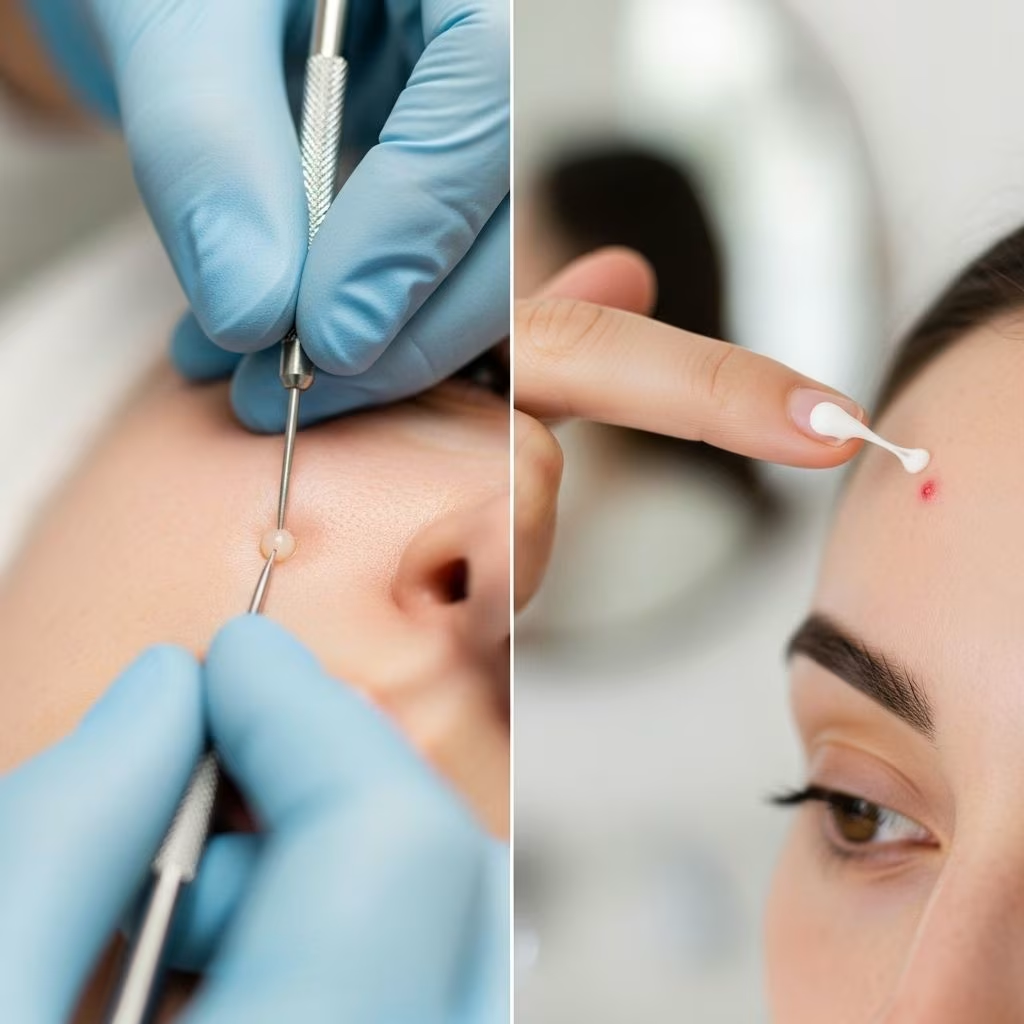
Effective acne management remains one of the most discussed and sometimes confusing subjects in skincare. With the rise of both professional procedures and advanced targeted products, the key decision facing individuals with acne-prone skin is often whether to pursue extraction by a professional or utilize spot treatments as part of a daily regimen. This article delivers a comprehensive analysis to help you make an informed, confident decision for your long-term skin health.
Introduction
Modern acne management comprises a variety of techniques, chief among them being professional extraction and spot treatment. While extraction clears blocked pores and provides quick results, spot treatments target individual blemishes with potent topical ingredients. Choosing the right strategy can have a significant impact not only on your immediate appearance but also on long-term skin health and confidence.
Understanding Acne Extraction
Acne extraction is a dermatologist- or esthetician-performed technique designed to remove clogged pores, primarily blackheads (open comedones), whiteheads (closed comedones), and microcomedones. This procedure involves:
- Cleansing and exfoliation: Prepares the skin to minimize infection risk.
- Application of sterile tools: Specialized needles or comedone extractors are used to gently open blocked pores and extract the contents.
- Aftercare: Includes application of soothing, anti-inflammatory, and antimicrobial agents to reduce risk of post-procedure irritation and infection.
Professional extractions are often recommended for:
- Mild to moderate comedonal acne (blackheads, whiteheads, some microcomedones)
- Individuals whose breakouts persist despite consistent topical therapy
- Periodic deep pore cleansing for those with highly congested or oily skin
Extractions are typically performed in medical or clinical settings to ensure a sterile environment and minimize potential side effects.
Role of Professionals in Extraction
Dermatologists and trained estheticians bring essential expertise to the procedure, greatly reducing risks and optimizing outcomes by:
- Judging which lesions are appropriate for extraction
- Preventing unnecessary skin trauma and scarring
- Providing guidance on post-extraction care
Understanding Spot Treatment
Spot treatments are highly targeted topical solutions applied directly to individual pimples, with the aim of reducing inflammation, killing bacteria, and speeding up the healing process. Types of spot treatments include:
- Salicylic acid: Helps unclog pores and exfoliate dead skin.
- Benzoyl peroxide: Kills acne bacteria (Propionibacterium acnes) and lowers inflammation.
- Sulfur-based treatments: Draws out impurities and dries up excess oil.
- Ice compress or hydrocolloid patches: For calming redness and absorbing pus or fluid.
Over-the-counter and prescription-strength options are widely available, and spot treatments are foundational to most at-home acne regimens.
How Spot Treatments Work
Spot treatments deliver potent concentrations of active ingredients precisely where needed, without exposing the rest of the face to potentially drying agents. They are optimal for:
- Isolated inflamed pimples or papules
- Quick intervention at the earliest signs of a breakout
- Preventing worsening or spreading of single blemishes
Extraction vs. Spot Treatment: Core Differences
| Feature | Extraction | Spot Treatment |
|---|---|---|
| Approach | Physical removal of blockage with instruments | Chemical/medicinal application to individual lesions |
| Performed By | Dermatologist/Esthetician (professional setting) | Self-applied, over-the-counter or prescribed at home |
| Ideal For | Blackheads, whiteheads, microcomedones | Pustules, papules, nodules, inflammatory acne |
| Duration of Results | Immediate, but requires maintenance | Gradual, varies by ingredient and lesion |
| Risks | Scarring, infection if improperly performed | Dryness, irritation, allergic reaction |
| Role in Long-Term Control | Adjunctive, not curative alone | Core maintenance, prevents proliferation |
Benefits and Limitations of Each Approach
Benefits of Extraction
- Immediate improvement in appearance: Provides rapid clearing of lesions, ideal for special events or stubborn outbreaks.
- Reduces risk of deeper skin trauma: Performed by trained professionals, minimizing scarring and post-inflammatory hyperpigmentation.
- Cleansing of multiple blocked pores: Useful for widespread congestion or when several comedones need simultaneous attention.
- Enables better product absorption: Cleaned pores increase efficacy of topical maintenance products going forward.
Limitations of Extraction
- Short-lived results if underlying causes persist: Acne may recur unless a continued regimen is maintained.
- Not suitable for all acne types: Ineffective or risky when used for cystic, nodular, or deep inflammatory acne.
- Requires professional skill and sterile conditions: DIY attempts can worsen acne or create scars.
- Cost and access: May involve clinic visits and professional fees.
Benefits of Spot Treatment
- Convenient and accessible: Can be self-applied at home, generally inexpensive and widely available.
- Targeted approach: Limits irritation to just the affected area, sparing healthy skin tissue.
- Diverse active ingredients: Different spot treatments suit different acne types and skin sensitivities.
- Prevents progression: Early application can limit an emerging blemish, shortening duration and severity.
Limitations of Spot Treatment
- Slower results: May take several days or weeks for full resolution of larger or particularly inflamed lesions.
- Poor efficacy for blocked pores: Struggles to resolve non-inflamed comedones (blackheads, whiteheads) unless used with appropriate exfoliators.
- Potential irritation: Overuse can result in dryness, redness, peeling, or sensitization of the skin.
- Possible resistance or tolerance: Some ingredients lose effectiveness with prolonged use or may not address root causes.
Risks and Considerations
Extraction Risks
- Scarring if performed on inappropriate lesions or with excessive force.
- Infection risk from unsterile instruments or post-procedure care lapses.
- Temporary redness or post-extraction marks that may take time to heal.
- Over-extraction can prompt further breakouts by irritating the skin barrier.
Spot Treatment Risks
- Contact dermatitis or allergic reaction, especially with harsh chemicals.
- Paradoxical skin dryness, flakiness, or redness, particularly with overuse.
- May not resolve underlying congestion, so recurrences are possible.
When to Choose Extraction or Spot Treatment?
The decision between extraction and spot treatment depends on:
- Acne type (comedonal vs. inflammatory)
- Severity and distribution of lesions
- Personal skincare goals (immediate visible improvement vs. gradual control)
- Risk tolerance and access to professional care
In many cases, dermatologists recommend initial reliance on topical spot treatment for routine mild breakouts or isolated blemishes, reserving extraction for:
- Persistent, multi-lesion comedonal acne not responding adequately to standard home treatment
- Occasions when immediate cosmetic improvement is needed (e.g., before a major event)
- Specific guidance from a licensed professional after a thorough skin assessment
Decision-Making Factors for Individuals
- Skin type: Oily and combination skins are more prone to blocked pores where extraction may be more helpful, while dry/sensitive skin may need gentle spot treatments.
- Acne history: Recurring congested pores might benefit from periodic professional extraction in conjunction with active spot regimens.
- Existing skincare routine: Consistent cleansing and product use are essential regardless of primary intervention chosen.
- Budget and time: Professional extractions tend to be more expensive and necessitate scheduled clinic visits, whereas spot treatments are cost-effective and immediate.
- Tolerance for downtime: Extraction can cause transient redness or scabbing that may require planning around social functions.
Combination Approaches: Can You Use Both?
Most dermatologists agree a personalized regimen often incorporates both modalities. The foundational strategy generally involves diligent daily cleansing, preventive topical therapies, and spot treatments for sudden breakouts. Periodic professional extractions can then be a valuable adjunct for hard-to-clear blackheads, whiteheads, and persistent congestion.
- Extraction can “clear the path” for cosmeceuticals to penetrate and perform more effectively.
- Post-extraction, spot treatments help quickly address any developing inflammation or new lesions.
- Always consult a licensed professional before combining procedures or introducing new agents to minimize the risk of irritation or overtreatment.
Post-Treatment Care and Maintenance
- Use mild cleansers and moisturizers to support healing post-extraction or after intensive spot treatment rounds.
- Avoid harsh scrubs and astringents that can damage the recovering skin barrier.
- Always apply broad-spectrum sunscreen, especially as many actives increase photosensitivity.
- Monitor skin closely and consult a provider if new or worsening symptoms occur.
- Follow up with recommended maintenance routines to preserve results and minimize recurrence.
Frequently Asked Questions (FAQs)
Q: Is it safe to perform extractions at home?
A: Self-extraction carries sizable risk of scarring, infection, and worsening breakouts, especially if performed without sterile instruments or on inappropriate lesions. Professional extraction is always preferred for optimal safety and outcome.
Q: How quickly will I see results from professional extraction or spot treatment?
A: Extraction provides near-immediate visual improvement, while most spot treatments deliver noticable reduction in redness and swelling within hours to days, with complete resolution often taking several days depending on severity.
Q: Should I use spot treatment after extraction?
A: Yes, targeted spot treatment of any inflamed or residual lesions can help speed healing following extraction, as long as the skin is not overly sensitized.
Q: When should I consult a dermatologist?
A: If acne is persistent, recurrent, severe, cystic, or you notice frequent scarring and pigmentation changes, consult a board-certified specialist for a tailored management plan.
Extraction vs. Spot Treatment Comparison Table
| Criteria | Extraction | Spot Treatment |
|---|---|---|
| Best For | Comedonal acne, blackheads, whiteheads | Individual inflamed blemishes |
| Setting | Clinical/professional | At home |
| Time to Results | Immediate | Gradual (hours–days) |
| Maintenance Required | Yes | Yes |
| Major Risks | Scarring, infection, temporary marks | Dryness, irritation, allergy |
| Professional Oversight Needed | Yes | Not required (but beneficial for persistent cases) |
If you’re unsure which solution is right for you, start by thoughtfully assessing your skin type, acne characteristics, and treatment history. For recurring, stubborn, or severe cases, a board-certified dermatologist can customize a plan integrating both extraction and targeted treatment to restore clarity and confidence while protecting your skin for the future.
References
- https://cliffordclinic.com/the-lowdown-on-acne-extraction-and-all-of-its-pros-and-cons/
- https://skinspanewyork.com/blogs/news/extraction-facials-what-are-they-and-why-you-should-get-one
- https://www.signalskinscience.com/acne-treatment-the-importance-of-professional-extractions
- https://www.skincare.com/skin-concerns/all-skin-concerns/what-are-facial-extractions
- https://www.usdermatologypartners.com/blog/acne-extractions-dermatologist/
- https://cleanskinclub.com/blogs/the-scoop/at-home-extractions-yay-or-nay
- https://curology.com/blog/dermatologist-extraction-of-acne-what-to-know-and-what-you-should-expect/
- https://www.aad.org/public/diseases/acne/derm-treat/treat
- https://miiskin.com/acne/acne-spot-treatment/


