


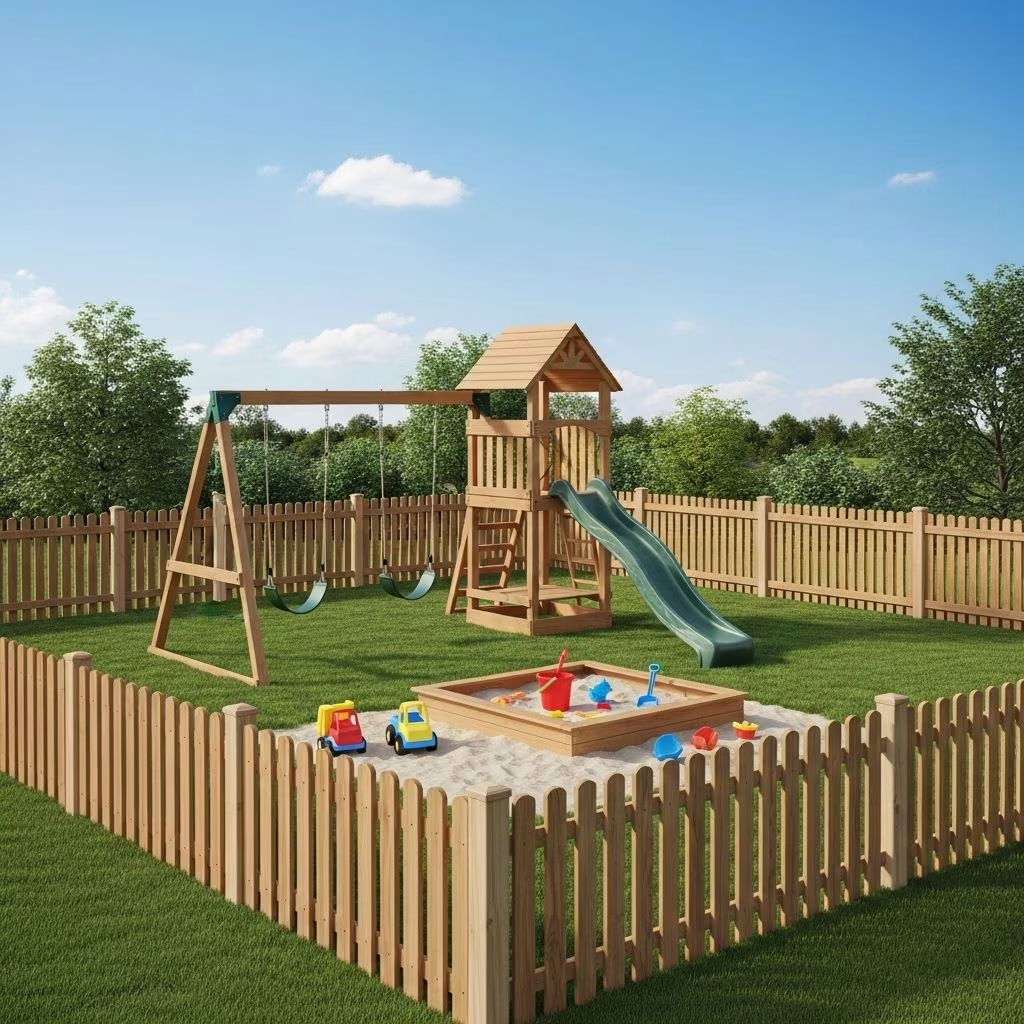
Creating a safe backyard play area for children requires careful consideration of fencing options that balance security, visibility, durability, and budget. The right fence not only protects children from potential hazards but also provides parents with peace of mind while allowing kids to play freely. This comprehensive guide explores various backyard play fencing options, focusing on critical safety standards and cost considerations to help you make an informed decision.
Understanding Play Area Safety Standards
Before selecting fencing for your backyard play area, understanding established safety standards is crucial. The ASTM F2049-11 standard provides comprehensive guidelines for fences and barriers at play areas designed for children aged 6 months to 12 years. These standards establish minimum requirements that prioritize child safety while considering practical functionality for families.
The primary purpose of playground fencing extends beyond simply marking boundaries. A properly designed fence system prevents children from wandering into hazardous areas such as streets, driveways, pools, or utility installations while creating a defined supervision zone for parents and caregivers. The standard recognizes that while a fence alone cannot guarantee a child will remain within the play area, it significantly reduces risks by presenting a physical barrier and enabling effective supervision within a contained space.
Critical Height and Gap Requirements
Safety standards mandate specific measurements that directly impact fence effectiveness. The minimum fence height must be 4 feet above grade level, which provides sufficient barrier height to discourage climbing attempts by young children. This height requirement applies consistently around the entire perimeter of the play area, ensuring no weak points exist in the protective barrier.
Gap specifications are equally important for preventing injuries and escapes. The bottom clearance between ground level and the fence should not exceed 4 inches, though many safety experts recommend an even smaller 2-inch gap. This narrow spacing prevents children from crawling underneath, blocks large animals from entering the play area, stops toys from rolling out, and reduces the risk of entrapment injuries where a child’s body or limb could become stuck.
Panel openings within the fence itself require careful attention. Openings should not exceed 3.5 inches in width to prevent head entrapment, a serious safety concern that has led to tragic accidents. For chain link fencing specifically, mesh openings must measure no more than 1.25 inches between parallel sides and 1.75 inches diagonally between corners unless privacy slats are properly installed and fastened at both top and bottom.
Proximity to Hazards: Three-Level Assessment
The ASTM F2049-11 standard introduces a three-level vulnerability assessment based on the distance between play equipment and potential hazards. This framework helps homeowners determine fencing urgency and design requirements for their specific situation.
Level I represents the highest risk, where hazards exist within 30 feet of play equipment or its use zone. In these situations, installing a compliant fence system is strongly recommended and may be required by local jurisdictions. Hazards include bodies of water, streets, highways, parking areas, electrical fixtures, steep drops, and similar life-threatening features.
Level II applies when hazards are located between 30 and 100 feet from the play area. While the immediate danger is reduced, best practices still recommend installing a barrier or fence system to provide an additional layer of protection, especially for younger children who may wander farther from equipment.
Level III encompasses hazards positioned 100 to 200 feet away from play equipment. This represents the lowest vulnerability level but still warrants significant consideration when deciding on fencing installation. Any hazard beyond 200 feet generally falls outside the vulnerable play zone unless the property owner determines additional protection is necessary based on specific circumstances.
Popular Backyard Play Fencing Materials
Selecting the appropriate fencing material involves balancing safety features, aesthetic preferences, maintenance requirements, and budget constraints. Each material offers distinct advantages and potential drawbacks that should align with your family’s specific needs and your property’s characteristics.
Chain Link Fencing
Chain link remains one of the most popular choices for backyard play areas due to its combination of affordability, durability, and visibility. The open weave design allows parents to maintain visual supervision from anywhere on the property while providing substantial security. Modern chain link fencing comes in various coatings including galvanized steel, vinyl-coated options in multiple colors, and powder-coated finishes that resist rust and corrosion.
When selecting chain link for play areas, mesh size becomes critical for safety compliance. The diamond-shaped openings must adhere to the 1.25-inch by 1.75-inch maximum dimensions to prevent entrapment. Many manufacturers now produce chain link specifically designed for playground applications with tighter mesh patterns that exceed standard safety requirements.
Privacy slats can be woven through chain link fencing to reduce visibility from outside while maintaining some transparency from within the play area. These slats also prevent climbing by eliminating toe-holds that horizontal wires might otherwise provide. When installing privacy slats, ensure they are fastened securely at both top and bottom to prevent gaps from opening over time.
Wood Fencing
Wood fencing offers natural aesthetics that complement most landscape designs while providing excellent privacy and wind protection. For play areas, smooth surfaces and rounded edges are essential to prevent splinters and impact injuries. Quality construction requires properly sanded boards with no protruding nails, screws, or rough patches where children might sustain injuries during active play.
The most suitable wood fence styles for play areas include board-on-board designs, shadowbox patterns, and solid privacy panels. These styles eliminate large gaps while providing adequate air circulation. Post tops should be rounded or capped rather than pointed to reduce injury risk if children climb near fence corners.
Wood fencing requires regular maintenance including annual inspections for splinters, rot, loose boards, and hardware issues. Applying weather-resistant stain or sealant every two to three years protects the wood from moisture damage and extends fence lifespan. Despite higher maintenance demands, many families prefer wood for its warm appearance and ability to be customized with decorative elements.
Vinyl and PVC Fencing
Vinyl fencing has gained popularity for play areas due to its low maintenance requirements and smooth, splinter-free surface. Modern vinyl products closely mimic the appearance of painted wood while offering superior durability against moisture, insects, and UV damage. The material never requires painting or staining, and cleaning typically involves only occasional washing with soap and water.
Safety advantages of vinyl fencing include the absence of sharp edges, splinters, and protruding hardware. The smooth surface remains consistent throughout the fence’s lifespan without developing rough patches or deterioration that could injure children. Vinyl fences are also available in various colors and styles, from traditional picket designs to solid privacy panels.
Quality varies significantly among vinyl fencing products. Premium options include reinforced panels, virgin vinyl composition, and UV-resistant formulations that prevent yellowing and brittleness over time. While initial costs are higher than chain link or basic wood, the virtually maintenance-free nature of quality vinyl often results in lower lifetime expenses.
Aluminum and Ornamental Metal Fencing
Aluminum fencing provides an elegant appearance with excellent durability and minimal maintenance needs. Unlike iron, aluminum resists rust naturally, making it suitable for various climates including humid or coastal environments. The material is lightweight yet surprisingly strong, and powder-coated finishes are available in numerous colors that maintain their appearance for decades.
For play areas, aluminum fencing requires specific design considerations. Picket-style aluminum fences must have no protrusions less than 54 inches above grade level to prevent impalement injuries. Spacing between vertical pickets should not exceed 4 inches to prevent head entrapment. Many manufacturers offer child-safe designs with spear points removed or replaced with decorative finials positioned well above climbing height.
The open design of aluminum fencing maximizes visibility for supervision purposes while creating clear boundaries that are difficult to breach. Gates can be equipped with self-closing hinges and child-resistant latches positioned at regulation height. While aluminum typically costs more than chain link, it offers superior aesthetics that may enhance property value.
Composite Fencing
Composite fencing combines wood fibers with plastic polymers to create a material that mimics wood’s appearance while offering vinyl’s low maintenance characteristics. This hybrid option resists rot, insects, warping, and splintering while providing the natural texture many homeowners prefer over purely synthetic materials.
For play applications, composite fencing offers smooth surfaces that remain consistent through temperature fluctuations and weather exposure. The material does not crack or splinter, eliminating common wood fence hazards. Composite products are available in various wood-grain patterns and colors that complement different architectural styles.
Installation and structural requirements for composite fencing closely parallel wood fence construction, making it familiar territory for most contractors. While costs typically fall between mid-grade wood and premium vinyl, the extended lifespan and minimal maintenance often justify the investment for families planning long-term property occupancy.
Cost Analysis: Investment Breakdown by Material
Understanding the complete cost picture requires examining both initial installation expenses and long-term maintenance investments. Prices vary considerably based on material choice, fence height, linear footage, terrain challenges, and regional labor rates.
| Fencing Material | Cost Per Linear Foot (Installed) | Lifespan (Years) | Annual Maintenance Cost | Total 15-Year Cost |
|---|---|---|---|---|
| Chain Link | $12-$25 | 15-20 | $50-$100 | $2,650-$4,000 |
| Wood (Cedar/Pine) | $18-$40 | 10-15 | $150-$300 | $5,100-$8,500 |
| Vinyl/PVC | $30-$55 | 20-30 | $25-$50 | $4,375-$7,250 |
| Aluminum | $35-$65 | 25-30 | $25-$75 | $5,375-$9,625 |
| Composite | $40-$70 | 20-25 | $50-$100 | $6,750-$11,000 |
These figures represent typical ranges for standard 4-foot fencing in moderate climates. Actual costs vary based on numerous factors including property accessibility, soil conditions, permit requirements, and special features like gates or decorative elements. Urban areas generally command higher labor rates than rural locations, and complex terrain requiring additional post supports or grading work increases installation expenses.
Hidden Costs and Additional Considerations
Beyond material and labor, several additional expenses impact total project costs. Gate installation typically adds $300 to $800 per opening depending on width, material, and hardware specifications. Self-closing hinges and child-resistant latches required for playground safety add $50 to $150 per gate but represent essential safety investments.
Permit fees vary by jurisdiction but commonly range from $50 to $300 for residential fencing projects. Some municipalities require engineered drawings or inspections that introduce additional expenses. Checking local regulations before beginning installation prevents costly corrections or fines.
Ground preparation costs can be substantial if the fence line crosses uneven terrain, includes buried utilities, or requires tree or shrub removal. Professional grading services typically charge $500 to $2,000 depending on project scope. Underground utility location services, often available free through local 811 services, prevent dangerous and expensive utility strikes during post-hole digging.
Essential Safety Features for Play Area Fencing
Beyond basic height and gap requirements, several additional safety features enhance the protective function of backyard play fencing while improving usability for families.
Gate Design and Hardware
Gate design significantly impacts both safety and family functionality. Self-closing hinges ensure gates automatically return to the closed position after use, eliminating the risk that a distracted parent might accidentally leave an opening. Quality self-closing mechanisms maintain consistent performance through thousands of cycles and various weather conditions.
Child-resistant latches should be positioned at least 54 inches above ground level, placing them beyond the reach of young children while remaining accessible to adults and older children. Many modern latches incorporate key-operated locks for additional security when the play area is unsupervised. Magnetic latches offer quiet operation while providing reliable security.
Gates should open outward, away from the play area, to prevent children from being struck if someone enters while they are playing near the entrance. Double gates provide convenient access for moving large items like play structures, furniture, or maintenance equipment. Ensure all gate hardware is rated for outdoor use and resistant to corrosion.
Visibility Considerations
Maintaining clear sight lines into the play area allows parents to supervise children effectively from various locations around the property. Chain link and aluminum fencing naturally provide excellent visibility, while wood and vinyl fences can incorporate window panels or decorative cutouts that preserve privacy while enabling supervision.
Strategic placement of gates and viewing areas relative to common parent locations like kitchen windows, patios, or home offices optimizes supervision capability. Some families install small observation windows at adult eye level in solid privacy fences, allowing visual checks without requiring constant physical presence in the play area.
Climb-Resistant Design
Preventing climbing attempts reduces fall injury risks and keeps children within supervised boundaries. Smooth surfaces without horizontal rails or decorative elements that could serve as toe-holds discourage climbing behavior. If the fence design includes horizontal components, positioning them on the exterior side eliminates easy climbing access from within the play area.
For fences with horizontal elements spaced less than 45 inches apart, installation should orient these components facing outward. When horizontal spacing exceeds 45 inches, vertical element spacing should not exceed 4 inches to prevent climbing while maintaining entrapment safety.
Non-Toxic Materials and Finishes
Children frequently touch, lean against, and sometimes mouth fence surfaces during play. Selecting non-toxic materials and finishes protects children from harmful chemical exposure. Pressure-treated lumber designed for play structures uses newer, safer preservatives that replaced older arsenic-based treatments. Verify that wood treatments, stains, and sealants are specifically rated as child-safe and non-toxic when dry.
Vinyl and composite materials should be verified as free from lead and other heavy metals. Powder-coated metal finishes provide durable, non-toxic surfaces that resist chipping and flaking. Avoid painting play area fences with standard exterior paints unless they are specifically certified as lead-free and safe for child contact.
Installation Considerations and Professional vs DIY
Installation approach significantly impacts both project costs and long-term fence performance. While experienced DIY enthusiasts can successfully install certain fence types, playground fencing demands precise adherence to safety standards that may warrant professional installation.
Professional Installation Benefits
Licensed fencing contractors bring expertise in proper post spacing, depth requirements, and alignment that ensures structural integrity and longevity. Professional installers understand local building codes, obtain necessary permits, and arrange utility location services as part of their standard process. They also carry liability insurance protecting homeowners from accidents during installation.
For playground fencing specifically, professional installers ensure compliance with ASTM F2049-11 standards including precise gap measurements, proper latch positioning, and appropriate hardware selection. The investment in professional installation typically adds 40% to 60% to material costs but provides assurance that safety requirements are met correctly.
DIY Installation Feasibility
Homeowners with construction experience and appropriate tools can successfully install certain fence types as DIY projects. Chain link and some wood fence styles are most accessible to DIY installation, while vinyl, composite, and aluminum often require specialized tools and techniques best left to professionals.
Critical DIY considerations include accurately marking fence lines, ensuring posts are set at proper depth (typically one-third of the above-ground height plus 6 inches), maintaining consistent post spacing, and achieving level panel installation. Concrete post setting provides the most stable foundation but requires proper mixing and curing knowledge.
DIY installers must independently research and comply with all safety standards including gap measurements, latch positioning, and panel specifications. Mistakes in playground fencing can compromise child safety, so conservative assessment of personal skill levels is essential before choosing the DIY path.
Maintenance Requirements and Long-Term Costs
Ongoing maintenance significantly impacts the true cost of playground fencing over its lifetime. Understanding material-specific maintenance needs helps families budget appropriately and maintain safety standards as fences age.
Inspection and Routine Maintenance
Daily visual inspections before children use the play area identify emerging hazards before they cause injuries. Check for loose boards or panels, protruding hardware, rust spots on metal components, splintering wood, and gaps that have widened beyond safety specifications. Immediate repairs prevent minor issues from escalating into major problems requiring complete sections to be replaced.
Seasonal deep inspections should examine structural integrity including post stability, gate function, latch operation, and overall fence alignment. Posts set in concrete occasionally loosen due to freeze-thaw cycles or soil settling. Addressing these issues promptly maintains fence effectiveness and extends overall lifespan.
Material-Specific Maintenance
Wood fences require the most intensive maintenance including annual inspections for rot, insect damage, and splinters. Sanding rough spots, replacing damaged boards, and applying protective finishes every two to three years preserve appearance and safety. Budget $150 to $300 annually for wood fence maintenance including materials and labor if hiring professionals.
Chain link fencing needs periodic checks for rust development, especially around joints and cut wire ends. Vinyl-coated chain link resists corrosion better than galvanized steel but may require coating repairs if the vinyl surface is damaged. Tightening loose chain link fabric and repairing bent sections maintains fence integrity with minimal expense.
Vinyl and composite fencing require minimal maintenance beyond occasional washing with soap and water to remove dirt and mildew. Annual inspections should verify that panels remain securely attached to posts and that no cracks have developed. Quality vinyl typically requires no maintenance expenditure for many years.
Aluminum fencing is virtually maintenance-free beyond periodic cleaning and occasional lubrication of gate hardware. Powder-coated finishes maintain their appearance for decades without repainting. Annual costs typically remain under $75 for basic cleaning supplies and hardware lubrication.
Maximizing Value: Making the Right Choice for Your Family
Selecting optimal playground fencing requires balancing multiple factors including budget limitations, aesthetic preferences, property characteristics, children’s ages, and long-term occupancy plans. No single material suits every situation perfectly, but systematic evaluation of priorities guides families toward the best choice for their specific circumstances.
Families on tight budgets with short-term property occupancy plans often find chain link fencing provides adequate safety at minimal initial investment. The visibility advantages benefit parents who value constant visual supervision, though aesthetic appeal may be limited compared to other options.
Long-term homeowners prioritizing aesthetics and willing to invest in low-maintenance solutions often prefer vinyl or composite fencing despite higher initial costs. The combination of attractive appearance, durability, and minimal maintenance delivers excellent value over extended ownership periods.
Properties in harsh weather climates benefit from aluminum fencing’s corrosion resistance and structural stability through extreme temperature ranges. The material’s strength-to-weight ratio makes it suitable for areas with high winds while maintaining elegant appearance.
Families valuing natural materials and traditional aesthetics may accept wood fencing’s higher maintenance demands in exchange for its warm appearance and customization potential. Cedar and redwood offer superior rot resistance compared to pressure-treated pine and maintain beautiful color with proper care.
Frequently Asked Questions
Q: What is the minimum safe height for backyard play area fencing?
A: The minimum safe height for playground fencing is 4 feet above ground level according to ASTM F2049-11 standards. This height provides adequate barrier protection for children ages 6 months to 12 years while discouraging climbing attempts. Some families choose taller fencing for added security, particularly in areas adjacent to busy streets or other serious hazards.
Q: How much does it cost to fence a typical backyard play area?
A: Costs vary widely based on material choice, fence perimeter, and installation complexity. For a typical 50-foot perimeter play area, expect to invest between $600 and $3,500 for materials and installation. Chain link represents the budget option at $600 to $1,250, while premium materials like composite or aluminum may cost $2,000 to $3,500 for the same area.
Q: Can I install playground fencing myself to save money?
A: Experienced DIY enthusiasts can successfully install certain fence types, particularly chain link and basic wood panels. However, playground fencing demands strict adherence to safety standards including precise gap measurements and proper hardware installation. Professional installation ensures compliance with safety requirements and typically adds 40% to 60% to material costs. Consider your skill level carefully, as mistakes in playground fencing can compromise child safety.
Q: What type of gate latch is safest for play area fencing?
A: The safest gate latches for play areas are self-latching mechanisms positioned at least 54 inches above ground level, beyond young children’s reach. Self-closing hinges ensure gates automatically return to the closed position. For maximum security, choose latches with key-operated locks that can secure the area when unsupervised. Magnetic latches offer reliable security with quiet operation.
Q: How often should I inspect my backyard play area fence?
A: Daily visual inspections before children use the play area help identify immediate hazards like loose boards, protruding hardware, or widened gaps. Conduct more thorough seasonal inspections examining structural integrity, post stability, gate function, and overall alignment. This inspection schedule allows you to address minor issues before they become significant safety concerns or require expensive repairs.
Q: Do I need a fence if my play area is far from streets or other hazards?
A: According to ASTM F2049-11 standards, fencing urgency depends on proximity to hazards. Play areas within 30 feet of hazards (Level I) should definitely have fencing. Areas 30 to 100 feet away (Level II) benefit from fencing as best practice. For areas 100 to 200 feet from hazards (Level III), fencing remains advisable but less critical. Beyond 200 feet, fencing may not be necessary unless specific circumstances warrant additional protection.
Q: What fence materials require the least maintenance?
A: Vinyl and aluminum fencing require the least maintenance, typically needing only occasional washing and periodic hardware lubrication. Annual maintenance costs usually remain under $75 for basic supplies. These materials resist rot, rust, insects, and weather damage while maintaining their appearance for decades without painting or staining. While initial costs are higher, the virtually maintenance-free nature often results in lower lifetime expenses compared to wood or chain link.
References
- https://fsilv.com/wp-content/uploads/2024/12/FS-ASTM-F2049-11-2010-v3-BROCHURE-FOR-MAILIN.pdf
- https://palmshieldlouvers.com/everything-to-know-about-playground-fencing/
- https://www.decal.ga.gov/documents/attachments/PlaygroundFencingTips.pdf
- https://classicfenceco.com/creating-safe-play-spaces-a-parents-guide-to-backyard-fencing/
- https://www.cpsc.gov/s3fs-public/324.pdf
- https://law.lis.virginia.gov/admincode/title8/agency20/chapter800/section500/
- https://www.diversifiedfence.com/blog/commercial/nc-state-laws-regarding-child-safety-fencing-for-day-care-facilities.aspx
- https://bjspark.com/USCPSC/6/
- https://pleasantrunstructures.com/safe-backyard-play-structures-a-parents-guide-to-fun-and-security/


