


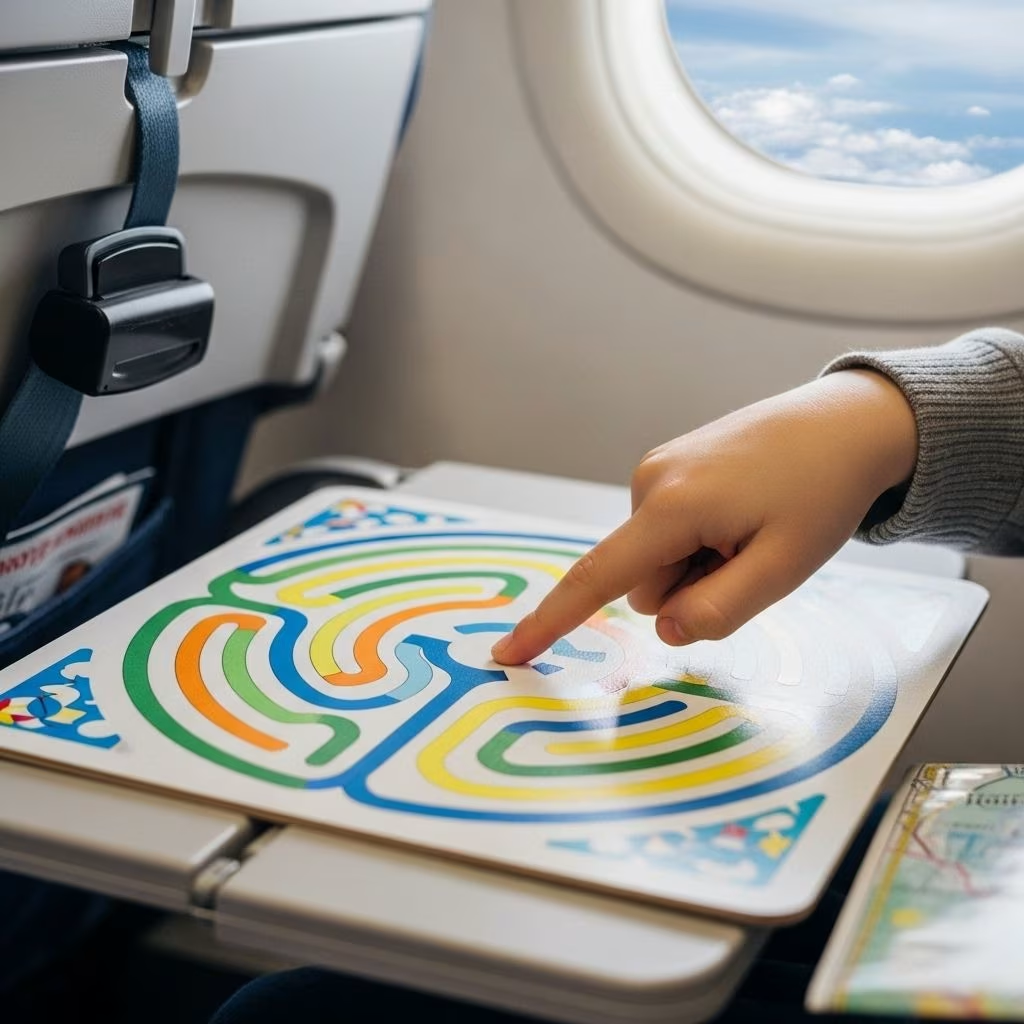
As families increasingly seek ways to nurture emotional well-being and resilience in children, especially during the sometimes hectic periods of travel, finger labyrinths have emerged as a simple, portable, and profoundly effective mindfulness tool. Rooted in ancient contemplative practices and now adapted for modern life, finger labyrinths offer a quiet retreat for young travelers, allowing them to self-regulate stress, improve focus, and find comfort in uncertain or overstimulating surroundings. This comprehensive guide unpacks the science, history, and practical application of finger labyrinths for kids’ travel, offering creative ideas and insights for parents and educators eager to equip children with lifelong mindfulness habits.
What Are Finger Labyrinths?
A finger labyrinth is a small, transportable version of the ancient labyrinth, designed for tactile, contemplative tracing with one’s finger. Unlike a maze, labyrinths have a single, unbroken path that winds towards a center, facilitating focused movement and rhythmic breathing. Portable labyrinths come in paper, wood, plastic, or sand forms—many fit into a pocket, backpack, or travel bag, making them ideal companions for journeys.
Main Features
- Single path with no dead ends
- Compact, flat, or multi-sensory (such as grooved boards or sand trays)
- Engages touch, vision, and, for some designs, hearing (e.g., beads, sand movement)
Ancient Origins, Modern Benefits
Labyrinths have deep roots in human culture, symbolizing journey, contemplation, and transformation for millennia—from Bronze Age stones to the intricate floor patterns of medieval cathedrals. Today, finger labyrinths bring the benefits of this ancient practice to modern life, offering children a tangible way to practice mindfulness anywhere, anytime.
Unlike digital distractions, the labyrinth’s physicality and simplicity encourage kids to slow down and notice their present thoughts and feelings—a counterbalance to the overstimulation of travel and daily routines.
Why Mindfulness Matters for Kids’ Travel
Travel often brings excitement, but for many children, it can also spark anxiety, impatience, or sensory overload. Changing environments, long waits, crowds, and unfamiliar foods or routines may lead to stress or behavioral outbursts. Mindfulness—the practice of focusing on the present moment without judgment—can equip kids to self-soothe, adjust to transitions, and even enjoy the richness of new experiences more deeply.
- Reduces travel-related stress and anxiety
- Helps kids handle boredom, impatience, or disappointment (e.g., delayed flights)
- Encourages positive engagement with new environments
- Fosters emotional resilience and regulation
How Finger Labyrinths Work for Mindfulness
In finger labyrinth practice, a child uses their finger to slowly follow the path from the entrance to the center, then back out again, all while breathing naturally. This repetitive, gentle motion focuses the mind and body. The sense of touch grounds the experience, while the visual element helps guide attention. The unbroken path leaves no decision-making or competition, inviting calm and curiosity instead.
Steps for Mindful Use
- Invite the child to place their finger at the labyrinth’s entrance.
- Encourage slow, steady tracing along the path while taking deep breaths.
- Suggest pausing at the center to notice thoughts, feelings, or bodily sensations.
- Return along the path, allowing time for reflection or gentle affirmation.
- Repeat as needed, adapting pace and duration to the moment.
Research-Backed Benefits
| Benefit | Evidence/Findings |
|---|---|
| Reduced Anxiety | Studies found 40%–72% of students reported noticeable anxiety reduction after brief sessions using finger labyrinths. |
| Improved Focus | Students demonstrated better recall and concept application after using finger labyrinths before classwork. |
| Calming Effect | Children reported feeling “calmer” and “more present” after tracing a labyrinth, with educators observing increased serenity. |
| Emotional Regulation | Finger labyrinths supported children (including those with autism or high sensory needs) in self-soothing and focusing during stressful events or transitions. |
| Creativity and Reflection | Youth noted enhancements in creativity and the ability to “hear what’s being said” or reflect more deeply during labyrinth use. |
Incorporating Finger Labyrinths in Travel Routines
Integrating finger labyrinths into travel is simple and highly adaptable. Whether navigating airports, long car rides, hotel stays, or waiting areas, children can benefit from scheduled or spontaneous labyrinth sessions to ease transitions or downtime.
Practical Tips for Families
- Introduce the labyrinth at home before travel to establish comfort and familiarity.
- Pack a labyrinth in a child’s carry-on or “calm down kit” alongside sensory toys, snacks, or headphones.
- Set aside a few minutes before boarding, after check-ins, or during layovers for a quiet mindfulness session.
- Model the practice by participating with your child.
- Encourage use when your child expresses restlessness, anxiety, or boredom.
- Use as part of bedtime routines in new surroundings to promote peaceful sleep.
Types of Portable Finger Labyrinths
Finger labyrinths can be DIY projects or professionally crafted, designed for portability and a sensory-friendly experience. Consider these popular options:
- Printed Labyrinth Cards: Laminated or cardstock labyrinths, easily stowed in a travel pouch.
- Wooden or Plastic Tracers: Grooved boards allow tactile tracing with a finger or stylus; some designs are themed for added kid appeal.
- Sand or Clay Labyrinth Trays: Portable containers filled with sand or clay, imprinted with labyrinth paths, encourage both visual and tactile engagement.
- Fabric or Felt Labyrinths: Soft, foldable mats with stitched paths, which are washable and travel-friendly.
- Digital Labyrinth Apps: For tech-friendly families, apps simulate finger labyrinth tracing with touchscreen devices. (Balance screen-based versions with physical tools for best results.)
Choosing the Right Labyrinth for Your Child
- Consider sensory preferences: Some children prefer tactile, textured surfaces, while others may find flat images less overwhelming.
- For young children, select simple labyrinth shapes with broad paths; older children might enjoy more intricate patterns.
- Allow children to decorate or personalize their labyrinth for a sense of ownership and attachment.
Creative Activities for Traveling Kids
Beyond simple tracing, finger labyrinths can inspire a variety of kid-friendly mindfulness and creative exercises, perfect for travel downtime:
- Story Time Labyrinth: Before or after tracing, invite the child to share a story about their “journey” through the labyrinth.
- Feelings Check-In: During tracing, encourage your child to name feelings or thoughts at the start, center, and finish.
- Breathing Games: Guide children to synchronize deep, slow breaths with their finger’s movement along the path.
- Labyrinth Drawing: Bring blank paper and markers so kids can design and color their own labyrinths, then use them for practice.
- Travel Diary Reflections: Prompt older children to write or sketch about their day after a labyrinth session—helping transition from external stimulation to inner calm.
- Sand or Nature Labyrinths: If stopped at a beach or park, create a labyrinth in sand, dirt, or with stones for a grounding, outdoor mindfulness break.
Parent and Educator Tips
- Discuss with children that labyrinths are tools, not tests—there’s no “wrong way.” Every experience is valid.
- Introduce meditation or prayer as part of labyrinth use, for families with a spiritual tradition.
- Observe which times of day or types of travel triggers are best calmed by labyrinth use.
- Integrate labyrinth practice into school, camp, or group travel settings, encouraging peer modeling and sharing.
- Acknowledge and celebrate children when they independently choose to use their labyrinth to self-soothe.
Supporting Diverse Needs
- Labyrinths can be especially powerful for children with autism, ADHD, sensory processing issues, or anxiety. The predictable structure and soothing movements provide a sense of agency and comfort.
- For children with limited fine motor skills, offer larger, more accessible labyrinth designs or encourage group tracing with a stylus or pencil.
Frequently Asked Questions (FAQs)
Q: At what age can children start using finger labyrinths during travel?
A: Children as young as preschool age can benefit, particularly if introduced gently and with adult modeling. Simpler labyrinths and sensory-friendly materials are best for younger ages. Older children appreciate more complex designs and may use the practice independently.
Q: How long should a child trace the labyrinth for mindfulness benefits?
A: Even 1–2 minutes per session, a few times a week or during travel breaks, has been shown to reduce stress and foster focus. Let the child set the pace, and repeat as needed to match their attention span.
Q: What’s the difference between a labyrinth and a maze?
A: Mazes are puzzles with multiple paths and dead ends, designed to challenge or confuse, while labyrinths offer a single, unbroken path to the center and back. The goal is peaceful movement and reflection, not problem-solving.
Q: Can finger labyrinths help children with special emotional or sensory needs?
A: Yes. Many parents and educators use labyrinths with children on the autism spectrum, with anxiety, or with attention challenges as a way to support transitions, reduce sensory overload, and encourage self-regulation.
Q: Are digital labyrinths as effective as physical ones?
A: Physical labyrinths engage touch, which deepens mindfulness and grounding. Digital labyrinths can be a helpful supplement, particularly for tech-savvy kids, but using tangible materials often yields greater calming and focus effects.
Q: Can families create DIY labyrinths for travel?
A: Absolutely. Simple printed labyrinths, sand trays in small containers, or hand-drawn designs on sturdy paper can all offer rich opportunities for portable practice. Involvement in DIY creation also helps children invest in their tool’s significance.
Conclusion: Making Mindful Memories on the Move
As mindfulness tools continue to gain recognition for supporting child mental health, the humble finger labyrinth stands out as uniquely accessible, effective, and travel-friendly. For families who want to equip children with practical ways to manage emotions, reduce stress, and enjoy their journeys, the finger labyrinth is more than a diversion—it’s a lifelong gift of self-reflection and peace, ready to be traced wherever the road leads.
References
- https://bccampus.ca/2015/01/06/labyrinths-for-learning/
- https://www.growchristians.org/2019/07/17/labyrinths-as-formation-making-finger-sand-labyrinths/
- https://educationsvoice.wordpress.com/2016/03/26/mindfulness-in-the-classroom-finger-labyrinth-meditation/
- https://therapyshoppe.com/product/finger-mazes-labyrinth-mandala-tracing-cards-discs-calming-sensory-tool-fidget-figit/


