


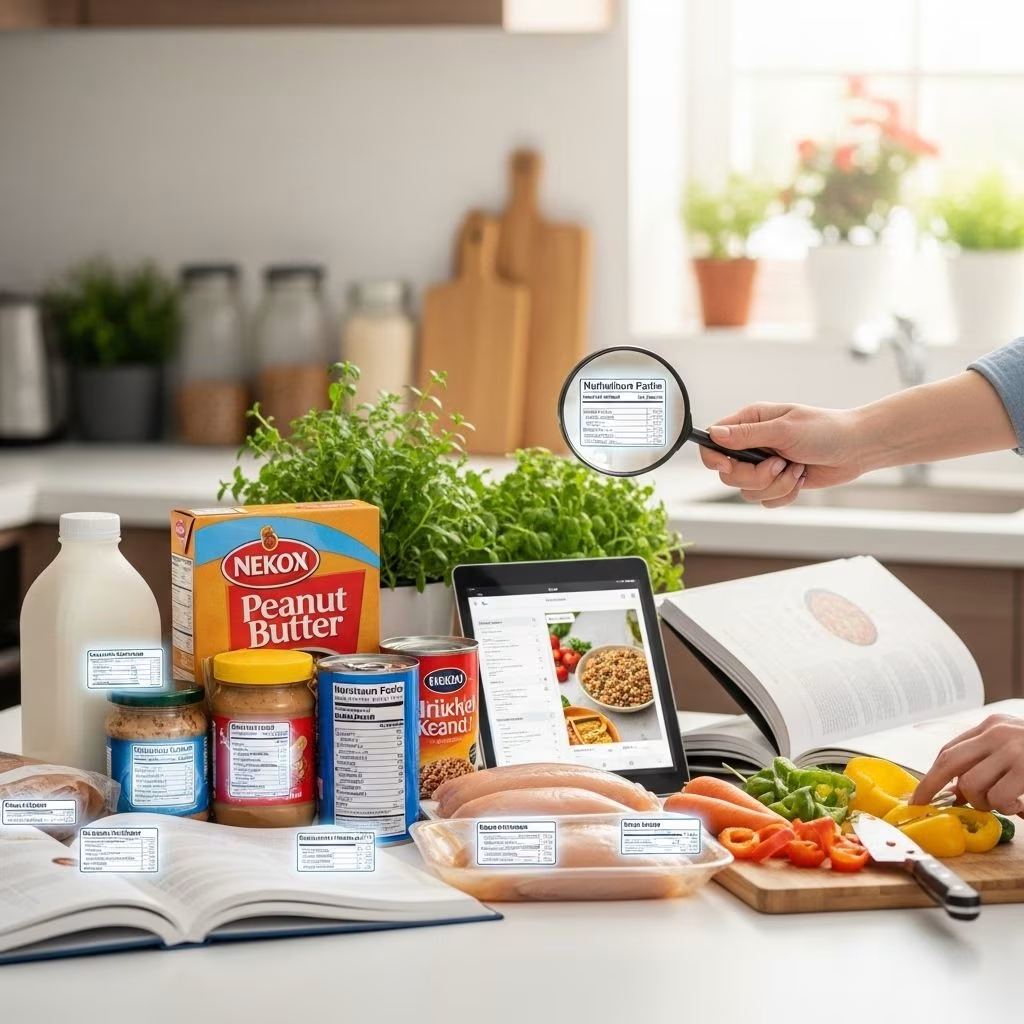
Introduction to Decoding Food Labels
Understanding food labels is crucial for maintaining a healthy diet. With the vast array of products available in the market, knowing how to read and interpret the nutrition facts can significantly impact your family’s health. In this article, we will delve into the world of food labels, exploring what they contain, how to read them effectively, and how this knowledge can help you cook healthier meals for your family.
Components of a Nutrition Facts Label
A typical Nutrition Facts label includes several key sections designed to provide consumers with essential information about the nutritional content of a product. These sections include the serving size, total servings per container, calories, nutrients like fat and carbohydrates, and the Percent Daily Value (%DV) for various nutrients.
Understanding the Components
- Serving Size and Servings per Container: These are crucial for understanding the nutritional value of a product. The serving size reflects the amount typically consumed, and servings per container tells you how many servings are in the package.
- Calories: Indicates the energy provided by the food, based on a standard 2,000 calorie diet.
- Nutrients: Lists specific nutrients such as total fat, saturated fat, carbohydrates, and sodium.
- Percent Daily Value (%DV): Helps determine if a nutrient is a little or a lot of what you need daily.
How to Read Food Labels Effectively
Reading food labels effectively requires attention to several key details:
- Check the Serving Size: This is the foundation of all nutritional information on the label. If you consume more than the serving size, you will ingest more calories and nutrients.
- Look at the %DV: Nutrients with a %DV of 5% or less are considered low, while those with 20% or more are high.
- Focus on Essential Nutrients: Prioritize food rich in vitamins, minerals, and fiber.
Front-of-Pack Labels
Many foods now include front-of-pack labels that provide quick insights into the product’s nutritional content. These labels often use color coding (red, amber, green) to indicate whether a product is high, medium, or low in fat, saturated fat, sugars, and salt.
Guidelines for Major Nutrients
Here are general guidelines for determining if a food is high or low in major nutrients:
| Nutrient | High | Low |
|---|---|---|
| Total Fat | More than 17.5g per 100g | 3g or less per 100g |
| Saturated Fat | More than 5g per 100g | 1.5g or less per 100g |
| Sugars | More than 22.5g per 100g | 5g or less per 100g |
| Salt | More than 1.5g per 100g | 0.3g or less per 100g |
Using Nutrition Labels to Cook Healthier Meals
By understanding and using nutrition labels effectively, you can make informed decisions about the foods you purchase and prepare for your family. Here are some tips:
- Prioritize Whole Foods: Often, whole foods like fruits, vegetables, and whole grains do not have labels, but they are naturally rich in nutrients.
- Limit Processed Foods: Processed foods often have higher amounts of unhealthy fats, sugars, and sodium.
- Read Labels When Buying Packaged Foods: Choose products that are low in added sugars, saturated fats, and sodium, and high in fiber and vitamins.
Frequently Asked Questions (FAQs)
Q: What is the serving size on food labels based on?
A: The serving size is based on the amount of food that people typically eat or drink, not a recommendation of how much you should eat.
Q: How does the Percent Daily Value (%DV) help in choosing healthy foods?
A: The %DV helps determine if a nutrient is a little or a lot of what you need daily. It is based on a standard 2,000 calorie diet.
Q: What is meant by high and low in terms of nutrients like fat, sugar, and salt?
A: High and low are defined by specific thresholds for each nutrient. For example, a food is considered high in fat if it contains more than 17.5g per 100g.
Conclusion
Decoding food labels is a crucial step in adopting a healthier lifestyle, especially when cooking for your family. By understanding and applying the information found on these labels, you can make informed choices that support a balanced diet and improve overall health.
References
- https://www.fda.gov/food/nutrition-facts-label/how-understand-and-use-nutrition-facts-label
- https://www.nhs.uk/live-well/eat-well/food-guidelines-and-food-labels/how-to-read-food-labels/
- https://www.nia.nih.gov/health/healthy-eating-nutrition-and-diet/how-read-food-and-beverage-labels
- https://diabetes.org/food-nutrition/reading-food-labels/making-sense-food-labels
- https://www.youtube.com/watch?v=BdSIDv5egzY
- https://www.fda.gov/media/131162/download
- https://www.cdc.gov/healthy-weight-growth/healthy-eating/nutrition-label.html
- https://medlineplus.gov/ency/patientinstructions/000107.htm
- https://www.healthline.com/nutrition/how-to-read-food-labels


