


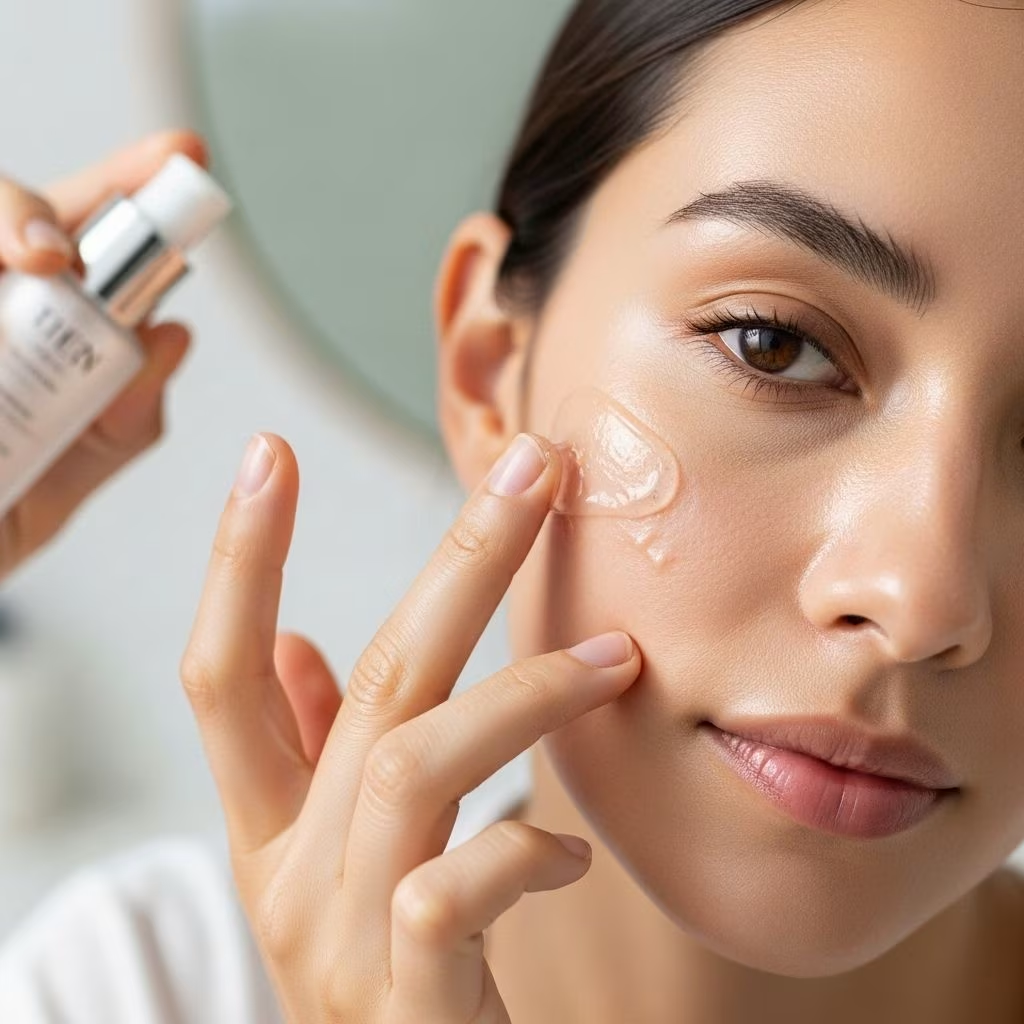
Korean beauty routines are celebrated worldwide for their transformative results and meticulous multi-step approaches. However, one frustrating phenomenon can derail even the most carefully curated K-beauty routine: pilling. Those annoying little balls of product that form on your skin can waste precious skincare investments and prevent your products from delivering their promised benefits. Understanding the specific ingredients that cause pilling in K-beauty formulations is essential for achieving that coveted glass skin finish without the frustration of product clumping.
Pilling occurs when skincare products refuse to absorb properly into the skin, instead forming small clumps or flakes that roll off the surface. This phenomenon becomes particularly problematic in K-beauty routines, which typically involve multiple product layers including essences, serums, ampoules, and creams. The interaction between different formulation bases and specific ingredients creates the perfect storm for pilling, turning your carefully planned skincare ritual into a disappointing experience.
Understanding Pilling in K-Beauty
The science behind skincare pilling revolves around how different product formulations interact with each other on the skin’s surface. Korean skincare products are predominantly formulated as emulsions, which combine oil-like ingredients such as plant oils, silicones, fatty acids, and butters with water-based components including hydrosols, botanical extracts, and water itself. These two ingredient families naturally resist mixing, requiring emulsifiers to create stable formulations.
When you layer multiple K-beauty products, the oil and water bases from different cosmetic layers can react with one another, causing separation and clumping. This interaction becomes particularly pronounced when products contain film-forming ingredients or silicones, which are specifically designed to spread across the skin’s surface rather than penetrate deeply. When the emulsion structure breaks down during layering, these ingredients bind together in visible clumps that roll off the skin.
The multi-step nature of K-beauty routines amplifies pilling risks. A typical Korean skincare regimen might include ten or more steps, from cleansing and toning through essence, serum, ampoule, eye cream, moisturizer, and sunscreen applications. Each additional layer increases the potential for ingredient conflicts, especially when products with incompatible bases are layered without adequate absorption time between applications.
Primary Ingredient Culprits
Certain ingredients consistently emerge as pilling culprits in K-beauty formulations. Identifying these components on product labels empowers you to make informed decisions about product selection and layering order. The most problematic ingredients fall into several distinct categories, each contributing to pilling through different mechanisms.
Niacinamide stands as one of the most beloved yet potentially problematic ingredients in Korean skincare. This vitamin B3 derivative exists as a powder in its pure form before being blended into liquid formulations. When niacinamide-rich products are layered with certain other ingredients, particularly those with different pH levels or incompatible bases, the niacinamide can precipitate out of solution and form visible clumps on the skin’s surface. Despite this tendency, niacinamide remains a K-beauty staple due to its remarkable brightening, pore-refining, and barrier-strengthening benefits.
Ascorbic Acid, the pure form of vitamin C, presents similar challenges. Like niacinamide, ascorbic acid begins as a dry powder that manufacturers must suspend in liquid carriers. The acidic nature of vitamin C products can clash with alkaline or neutral pH formulations, causing destabilization and pilling when layered incorrectly. Korean brands have developed various vitamin C derivatives to address this issue, but pure ascorbic acid formulations remain popular for their potency despite their layering challenges.
The Silicone Family
Silicones represent perhaps the most significant category of pilling culprits in K-beauty products. These synthetic polymers create smooth, velvety textures and provide occlusive benefits that help seal moisture into the skin. However, their unique properties also make them prone to interaction issues when layered with incompatible products.
Dimethicone appears as the primary silicone in countless K-beauty formulations, from primers and moisturizers to sunscreens and makeup bases. This ingredient creates a smooth, silky film on the skin’s surface that blurs imperfections and provides a matte finish. When you identify dimethicone or other silicones like cyclomethicone, cyclopentasiloxane, or dimethicone crosspolymer high on an ingredient list, you’re dealing with a silicone-heavy product that demands careful layering consideration.
The fundamental issue with silicones stems from their hydrophobic nature. They repel water-based products, creating an immediate conflict when water-based serums or essences are applied over silicone-rich bases. The water-based product cannot penetrate the silicone barrier, instead sliding across the surface and balling up into visible clumps. Similarly, applying silicone products over incompletely absorbed water-based layers causes the silicones to catch on the wet surface, rolling into pills as you spread the product.
Korean cushion foundations, BB creams, and sunscreens frequently utilize silicones to achieve that signature smooth, poreless finish. While these silicones deliver excellent cosmetic elegance, they require strategic placement in your routine. Applying them as final steps after all water-based products have fully absorbed minimizes pilling risks while maintaining their beneficial properties.
Film-Forming Ingredients
Film-forming ingredients create continuous layers on the skin’s surface, providing benefits like improved product wear time, enhanced moisture retention, and better cosmetic appearance. However, these same properties that make them valuable also contribute significantly to pilling when products are layered improperly.
Carbomer and its variations appear frequently in K-beauty gel formulations, serving as thickening agents and stabilizers. These synthetic polymers form gel-like networks that give products their characteristic bouncy, cushiony textures. When carbomer-based products encounter incompatible ingredients or excessive friction during application, the polymer network can break down and roll into visible balls. Many popular Korean gel moisturizers and sleeping masks rely on carbomer for their satisfying textures, making proper application technique essential.
Xanthan Gum represents a natural alternative to synthetic thickeners, derived from bacterial fermentation. This polysaccharide creates viscous, stable formulations and appears prominently in many natural or clean K-beauty products. Despite its natural origin, xanthan gum shares the same pilling tendencies as synthetic film-formers when over-applied or layered incorrectly. The ingredient works best when given adequate time to settle into the skin before additional layers are applied.
Polyvinyl Alcohol (PVA) and similar polymers function as film-formers in peel-off masks, certain essences, and makeup-setting products. These ingredients deliberately create films on the skin’s surface, which explains why they can cause dramatic pilling when combined with other products. Korean wash-off masks and certain primer formulations utilize these polymers extensively, requiring careful timing and product selection in multi-step routines.
Emulsion Conflicts
Understanding emulsion types proves crucial for preventing pilling in K-beauty routines. Most skincare products fall into two primary emulsion categories: oil-in-water and water-in-oil formulations. The emulsion type determines how products interact with each other and with your skin.
Oil-in-Water Emulsions suspend oil droplets within a water-based continuous phase. These formulations feel lightweight and absorb quickly, characteristics highly prized in Korean skincare. Most K-beauty essences, serums, and light moisturizers utilize oil-in-water emulsions. When you see water or aqua listed as the first ingredient, you’re typically dealing with an oil-in-water product. These formulations should generally be applied before water-in-oil products to prevent pilling.
Water-in-Oil Emulsions reverse the structure, suspending water droplets within an oil-based continuous phase. These richer formulations provide intense moisturization and create protective barriers on the skin. Korean sleeping packs, rich creams, and certain sunscreens employ water-in-oil emulsions. Products listing oils or silicones as primary ingredients typically follow this structure. Applying these after lighter, water-based products minimizes interaction issues.
The critical mistake many K-beauty enthusiasts make involves alternating between these emulsion types without consideration for compatibility. Layering water-in-oil products under oil-in-water formulations creates immediate conflicts, as the oil-based layer prevents proper absorption of subsequent water-based products. The result manifests as frustrating pilling that wastes product and compromises skincare efficacy.
K-Beauty Specific Ingredients
Korean skincare formulations incorporate unique ingredients that, while delivering exceptional benefits, can contribute to pilling under certain circumstances. Understanding these K-beauty specific components helps you navigate potential issues while enjoying their remarkable effects.
Snail Mucin has become synonymous with K-beauty innovation, offering intensive hydration, wound healing, and skin regeneration benefits. This viscous ingredient creates slightly tacky textures that require complete absorption before additional layers. When snail mucin products remain tacky on the skin’s surface during subsequent product application, the stickiness can grab onto newer layers, causing them to roll and pill. High-concentration snail essences and serums need extra patience and possibly gentle pressing motions rather than rubbing to prevent this issue.
Fermented Ingredients like galactomyces, bifida ferment lysate, and saccharomyces fermentation filtrate dominate Korean first treatment essences and anti-aging serums. These ingredients deliver powerful brightening and barrier-strengthening benefits but can interact unpredictably with certain other components. The complex mixture of amino acids, peptides, and organic acids in fermented ingredients sometimes conflicts with formulations containing high concentrations of acids or retinoids, potentially leading to precipitation and pilling.
Hyaluronic Acid in various molecular weights appears in virtually every K-beauty routine. While generally well-tolerated, extremely high concentrations or multiple molecular weight combinations can create sticky, gel-like layers that resist subsequent product absorption. Korean ampoules containing 90 percent or higher hyaluronic acid concentrations deliver intense hydration but require thorough absorption before layering additional products to prevent the tacky surface from causing pilling.
Centella Asiatica Extract and its derivatives including madecassoside, asiaticoside, and asiatic acid provide soothing, healing benefits central to many K-beauty routines. These botanical extracts typically pose minimal pilling risks themselves but appear in formulations alongside other potentially problematic ingredients. Products combining centella with film-formers or silicones may exhibit pilling tendencies inherited from these companion ingredients rather than the centella itself.
Prevention Strategies
Preventing pilling requires a multifaceted approach combining ingredient awareness, application technique refinement, and strategic product selection. Implementing these evidence-based strategies transforms frustrating pilling experiences into smooth, efficient K-beauty routines.
Ingredient Investigation forms the foundation of pilling prevention. Examine product labels carefully, noting whether water or aqua appears first, indicating a water-based formulation, or whether silicones and oils dominate the ingredient list. Identify film-forming ingredients like carbomer, xanthan gum, or polyvinyl alcohol that require special handling. Creating a simple spreadsheet or notebook tracking your products’ primary ingredients and emulsion types enables you to spot problematic combinations before they cause issues on your face.
Application Technique dramatically influences pilling outcomes. Replace vigorous rubbing motions with gentle patting or pressing movements that encourage absorption without creating friction. Friction causes film-forming ingredients to ball up and silicones to roll across the skin’s surface. Press products into the skin using your palms or fingertips, allowing warmth and gentle pressure to facilitate absorption rather than mechanical spreading that disturbs partially absorbed layers.
Absorption Time represents perhaps the most critical yet overlooked pilling prevention factor. Each product layer requires adequate time to absorb before the next application. Water-based essences and serums typically need 30 to 60 seconds to sink into the skin fully. Heavier products containing silicones or oils may require two to three minutes. Resist the temptation to rush through your routine. The Korean skincare philosophy emphasizes mindful, deliberate application, and this patience pays dividends in preventing pilling while enhancing product efficacy.
Product Quantity management prevents overloading the skin with more product than it can absorb. Korean skincare emphasizes multiple thin layers rather than single thick applications. Use smaller amounts of each product, applying additional layers only if needed after the first has fully absorbed. This approach proves particularly important for products containing film-formers or silicones, where excess product directly correlates with increased pilling risk.
K-Beauty Layering Guide
Mastering the optimal layering sequence prevents pilling while maximizing the benefits of each product in your K-beauty routine. The fundamental principle follows a progression from thinnest to thickest consistency, with the crucial refinement of layering water-based products before oil-based or silicone-heavy formulations.
Step One: Double Cleansing – Begin with an oil-based cleanser to remove makeup and sunscreen, followed by a water-based cleanser to eliminate remaining impurities. Starting with completely clean skin prevents residual products from interfering with subsequent layers.
Step Two: pH Adjusting Toner – Apply a pH-balancing toner immediately after cleansing to optimize skin conditions for active ingredient absorption. These watery products absorb within seconds and create an ideal foundation for layering.
Step Three: Essence – Korean first treatment essences deliver fermented ingredients and hydration in ultra-lightweight formulations. Pat these watery products into the skin and wait 30 seconds for complete absorption.
Step Four: Treatment Serums and Ampoules – Layer water-based treatment products in order of increasing viscosity. Apply vitamin C, niacinamide, or other active serums with 60-second intervals between each. If using multiple serums, wait longer between applications to ensure complete absorption and prevent ingredient conflicts.
Step Five: Eye Cream – The delicate eye area requires specialized treatment. Apply eye cream using gentle tapping motions with your ring finger, allowing 30 seconds for absorption.
Step Six: Moisturizer – Apply your moisturizer, whether water-based gel or silicone-rich cream. If using silicone-heavy products, ensure all previous water-based layers have completely absorbed. Wait two to three minutes before proceeding.
Step Seven: Face Oil (Optional) – If incorporating facial oils, always apply them after moisturizer but before sunscreen. Oils create occlusive barriers that prevent subsequent water-based product absorption.
Step Eight: Sunscreen – Finish morning routines with broad-spectrum sunscreen. Mineral sunscreens containing zinc oxide or titanium dioxide pose higher pilling risks than chemical sunscreens. Apply sunscreen with gentle pressing motions, avoiding rubbing that could disturb underlying layers.
Frequently Asked Questions
Q: Why does my Korean sunscreen pill over my moisturizer?
A: Sunscreen pilling typically occurs when silicone-heavy or mineral sunscreens are applied over incompletely absorbed water-based moisturizers. Allow your moisturizer to fully absorb for two to three minutes before sunscreen application, and use pressing motions rather than rubbing to apply the sunscreen. Mineral sunscreens containing zinc oxide or titanium dioxide are more prone to pilling than chemical sunscreens due to their physical particle structure.
Q: Can I use niacinamide and vitamin C together without pilling?
A: Yes, you can use niacinamide and vitamin C together despite outdated concerns about their compatibility. To prevent pilling, apply the thinner product first, wait 60 seconds for complete absorption, then apply the second product. If both products have similar consistencies, apply the more acidic vitamin C product first, followed by the neutral-pH niacinamide serum after full absorption.
Q: How do I know if a K-beauty product is water-based or silicone-based?
A: Check the first three to five ingredients on the product label. If water or aqua appears first, the product is water-based. If dimethicone, cyclomethicone, cyclopentasiloxane, or other silicones appear in the first five ingredients, particularly in positions one through three, the product is silicone-heavy. This information determines the product’s optimal position in your layering sequence.
Q: Does snail mucin cause pilling in K-beauty routines?
A: Snail mucin itself does not inherently cause pilling, but its naturally tacky texture requires complete absorption before layering additional products. High-concentration snail essences and serums need extra time to dry down, typically 90 seconds to two minutes. Apply subsequent products using gentle pressing motions once the tackiness completely disappears to prevent the sticky surface from grabbing and rolling newer layers.
Q: Why do my products pill only when I apply makeup?
A: Makeup pilling over skincare occurs when incompatible product bases interact. Water-based foundations applied over silicone-heavy primers or moisturizers will pill because water cannot penetrate the silicone barrier. Similarly, silicone-based makeup applied over tacky, incompletely absorbed water-based skincare will roll and clump. Match your primer and foundation bases, ensuring both are either water-based or silicone-based for seamless application.
Q: Should I avoid all silicones to prevent pilling?
A: Avoiding silicones entirely is unnecessary and eliminates many beneficial products from your routine. Silicones provide excellent occlusive benefits, smooth texture, and enhanced product wear. Instead of avoiding them, position silicone-heavy products correctly in your routine as final steps after all water-based products have fully absorbed. Use appropriate amounts and application techniques to prevent pilling while enjoying silicone benefits.
Q: How long should I wait between K-beauty routine steps?
A: Watery products like toners and essences require 30 to 60 seconds for complete absorption. Serums and ampoules need 60 to 90 seconds, while moisturizers demand two to three minutes, especially if they contain silicones. Heavier products like sleeping masks may need three to five minutes. Your skin should feel dry and non-tacky before proceeding to the next step. This patience prevents pilling and maximizes product efficacy.
Q: Can hard water cause my K-beauty products to pill?
A: Hard water containing high mineral concentrations can leave invisible residue on your skin after cleansing. This mineral film interferes with product absorption and creates an unstable surface that contributes to pilling. If you live in a hard water area and experience persistent pilling despite following all other prevention strategies, consider using filtered water for your final cleansing rinse or installing a water-softening showerhead.


