


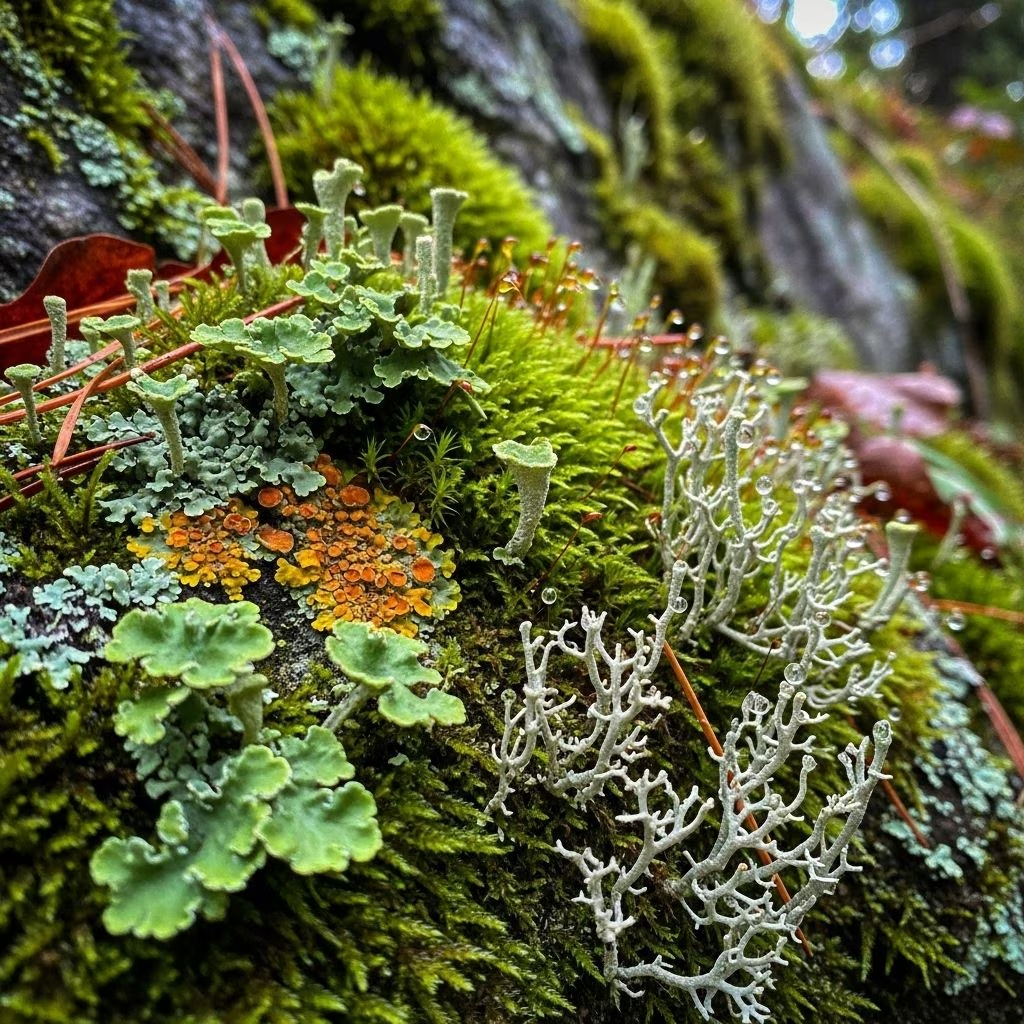
Lichens and mosses are more than inconspicuous patches clinging to rocks and trees. Serving as ecological sentinels, cultural touchstones, and living archives of environmental change, these remarkable organisms offer powerful pathways for individuals and communities to develop a deeper awareness of place. This article explores their biology, ecological significance, roles as bioindicators, and their capacity to enrich our relationship with the landscapes we inhabit.
Introduction
When we think of vibrant meadows, ancient forests, or even urban green spaces, lichens and mosses rarely command the spotlight. Yet, in their quiet persistence, these organisms play vital roles in ecosystem health and help us attune to subtle environmental changes. By learning to observe and understand lichens and mosses, we engage more deeply with the world around us, fostering a sense of place awareness that integrates scientific understanding, ecological mindfulness, and cultural connection.
Biology of Lichens and Mosses
What Are Lichens?
Lichens are composite organisms formed by a symbiotic relationship between a fungus (usually an ascomycete) and one or more photosynthetic partners (algae and/or cyanobacteria). The mycobiont (fungal partner) provides structure, moisture retention, and protection, while the photobiont (alga or cyanobacterium) photosynthesizes, providing essential nutrients.
- Lichens display diverse morphologies, such as crustose (crusty, flat), foliose (leafy), and fruticose (shrubby or stringy) forms.
- Unlike most plants, they lack roots, stems, and leaves as traditionally defined.
- They reproduce via sexual or asexual spores and sometimes by dispersing small fragments containing both partners.
What Are Mosses?
Mosses belong to the plant division Bryophyta. They are small, non-vascular plants with simple leaf and stem structures. Mosses reproduce by spores and need moist environments to complete part of their lifecycle.
- Mosses form dense green mats or tufts, often cushioning forest floors, rocks, and streamsides.
- Being non-vascular, mosses absorb water and nutrients directly through their surfaces, making them highly susceptible to environmental changes.
Ecological Functions and Environmental Roles
Nutrient Cycling and Soil Formation
- Lichens and mosses contribute to soil formation by gradually breaking down rocks through both physical and chemical processes.
- Cyanobacterial lichens fix atmospheric nitrogen, transforming it into nutrients available to plants and other organisms, enhancing ecosystem productivity.
- Mosses and lichens capture dust, rain, fog, and airborne particulates, slowly releasing nutrients into their environments.
Moisture Regulation and Microclimate Stabilization
- Mosses and lichens can absorb and retain large amounts of water, helping to moderate humidity and temperature fluctuations within forest canopies and on exposed surfaces.
- They play a critical role in preventing soil erosion by intercepting runoff and stabilizing the surface crusts, particularly in arid environments.
Biodiversity and Habitat Creation
- Lichens and mosses provide microhabitats for invertebrates, microorganisms, and even amphibians.
- Their presence enhances biological diversity, especially in forest canopies, rocky outcrops, and tundra ecosystems.
Lichens and Mosses as Bioindicators of Environmental Health
Why Are They Used as Environmental Indicators?
Lichens and mosses are exceptionally sensitive to atmospheric conditions, especially levels of pollutants such as sulfur dioxide, nitrogen compounds, and heavy metals. They absorb water and nutrients directly from air and precipitation, making them true sentinels of environmental quality.
- Lichen communities change in response to shifts in air quality, making their composition and abundance reliable indicators for long-term environmental monitoring.
- Mosses and lichens accumulate airborne pollutants (including metals) in their tissues, reflecting local atmospheric conditions over time.
- Declines or changes in lichen species diversity are often linked to increased pollution or habitat disturbance, serving as early warning signs of ecological stress.
Modern Biomonitoring Approaches
- Indices like the Lichens Epiphytes Biological Index (IBLE) use lichen diversity, coverage, and frequency to assess air quality across regions.
- Complementary moss and lichen studies provide robust monitoring because of their differing pollutant accumulation and ecological behaviors.
- Both groups are also now used to detect indoor air pollution in museums, homes, and workplaces, further broadening their utility.
| Feature | Lichens | Mosses |
|---|---|---|
| Sensitivity | Very high (especially to SO2, NOx, metals) | High (to various airborne pollutants, heavy metals) |
| Habitat | Trees, rocks, soil, concrete | Soil, rocks, trees (prefer moist places) |
| Indicator Use | Air quality, forest continuity | Air/soil quality |
| Accumulation Mechanism | Surface absorption, symbiotic metabolism | Direct absorption through leaf surfaces |
Climate Change, Biodiversity, and Community Shifts
Lichen and moss communities are highly responsive to long-term climate variations. Even small changes in mean temperature and humidity can radically shift the distribution of lichen and moss species.
- For example, in regions where mean temperatures have risen by 1°C, sensitive lichen species may decline, while more tolerant types spread into new ranges.
- Tracking these shifts provides data not only on environmental health, but on the impacts of global climate change at a local scale.
Indicators of Biodiversity Hotspots and Successional Change
Lichens and mosses map microhabitats and landscape continuity. Their presence and diversity can indicate areas of old-growth forests or highlight zones experiencing ecological disturbance. Conservationists and land managers use their study to:
- Identify forest stands with long ecological continuity (often home to rare species).
- Assess effectiveness of habitat restoration efforts.
- Flag sites valuable for conservation due to their community diversity.
Deepening Place Awareness: Cultural and Educational Perspectives
Beyond scientific insight, lichens and mosses act as catalysts for cultural narratives, environmental education, and a richer sense of place. Their slow growth and patient endurance have inspired metaphors for resilience, interdependence, and renewal across many cultures.
- Indigenous Knowledge: Indigenous and local communities have long recognized certain lichens and mosses as indicators of harvesting times, animal migrations, or seasonal changes.
- Educational Value: Teaching about these organisms encourages careful observation, patience, and curiosity—traits essential to developing ecological literacy and attachment to a specific place.
- Artistic and Symbolic Roles: Lichens in particular feature in visual arts, traditional medicine, folklore, and poetry, further rooting them into cultural landscapes.
Fostering Environmental Ethics and Stewardship
Learning to see lichens and mosses shifts attention from grand vistas to the minute details of place, cultivating what environmental philosopher David Abram calls “the practice of perception.” This opens pathways for:
- Deep ecological awareness
- Personal attachment to local landscapes
- Active participation in conservation
Practical Applications: Monitoring and Stewardship
- Community Science Projects: Urban lichen and moss surveys, using standardized protocols, allow local communities to monitor environmental shifts and contribute data to scientific efforts.
- Restoration Ecology: Lichens and mosses are used in rewilding degraded sites, stabilizing soil, and establishing ecological connectivity.
- Air Quality Campaigns: Citizens can identify pollution spikes or recovery trends by monitoring visible changes in lichen cover and diversity.
Collaboration between scientists, educators, and laypeople ensures that the knowledge and relevance of these species are integrated into practical place-based stewardship strategies.
Case Studies: Lichens, Mosses, and Local Landscapes
Urban Lichen Mapping in Western Europe
In major European cities, surveys of epiphytic (tree-dwelling) lichens have revealed shifting air quality patterns. Reduction in industrial sulfur dioxide has led to a return of more sensitive species, mapping the success of pollution controls.
Restoration Success in Reclaimed Quarries
Mosses and pioneer lichens are among the first colonizers on restored land, reducing erosion and creating habitats for succession by larger plants.
Traditional Use in Arctic Communities
Reindeer-herding societies in the circumpolar north base migration decisions and grazing patterns on the abundance and health of specific lichen types, such as Cladonia (reindeer moss).
Frequently Asked Questions
Q: What is the difference between lichens and mosses?
A: Lichens are not plants but symbiotic partnerships between fungi and photosynthetic organisms (algae or cyanobacteria). Mosses are simple, non-vascular plants. The two groups often inhabit similar places but are unrelated genetically.
Q: How do lichens and mosses indicate air quality?
A: Both absorb moisture and nutrients directly from their surroundings, but lichens are especially sensitive to airborne pollutants. Sharp declines or the disappearance of sensitive lichen species signal poor air quality, particularly sulfur dioxide, nitrogen oxides, or heavy metals.
Q: Where can I observe lichens and mosses locally?
A: Look for lichens on rocks, old fences, and tree trunks in forests, parks, and even city streets. Mosses tend to form carpets on soil, rocks, or moist wood, favoring shady, damp areas. Field guides can help with identification.
Q: Can loss of lichens and mosses be reversed?
A: Recovery can be slow. Lichen recolonization can take years to decades, especially if pollution is still present or habitat continuity is lost. Mosses often recover faster, especially in moist environments restored to natural conditions.
Q: How do lichens and mosses enhance my own place awareness?
A: Observing these organisms fosters patience, hones perception, and reveals hidden ecological connections. Learning their names, watching their seasonal changes, and understanding their vulnerabilities foster a deeper attentiveness and sense of responsibility to place.
Conclusion
Lichens and mosses, modest in form yet mighty in function, act as living bridges between scientific inquiry and personal, cultural, and ecological understanding. By attuning ourselves to their presences and absences, we deepen our sense of place, become more aware of environmental changes, and strengthen our capacity for stewardship. In an era of rapid environmental transformation, these ancient and persistent organisms invite us to notice more closely, cherish our local landscapes, and act wisely for their protection.
References
- https://nadp2.slh.wisc.edu/conf/2016/pptpdf/159_geiser.pdf
- https://pubmed.ncbi.nlm.nih.gov/14615231/
- https://www.encyclopedie-environnement.org/en/air-en/plants-lichens-sentinels-air-quality-2/
- https://pmc.ncbi.nlm.nih.gov/articles/PMC10525784/
- https://esajournals.onlinelibrary.wiley.com/doi/10.1002/fee.2836
- https://botanicgardens.uw.edu/wp-content/uploads/sites/7/2021/03/Jovan_Lichen-Moss-Air-Quality_WABotSymp_03.04.2021.pdf


