


Introduction
The widespread use of smartphones and ubiquitous access to social media platforms have dramatically changed the way we experience and record our lives. Whether at a scenic location, a family dinner, or an artistic event, many find themselves compelled to take photos primarily for the sake of sharing them online. This habit, known as the social sharing urge, often shifts our focus from direct experience to curating images for others. In recent years, mindful photography has emerged as a powerful self-care practice, offering a meaningful alternative. Mindful photography encourages us to savor the present and deepen personal growth through authentic engagement rather than seeking external validation.
The Social Sharing Urge: Modern Habits and Challenges
Social networks are designed to maximize user engagement through likes, comments, and followers. This design fosters the following behaviors and outcomes:
- Instant Gratification: Posting images delivers instant feedback, often in the form of likes or positive comments.
- External Validation: Sharing for approval can shape self-esteem and self-worth based on others’ reactions.
- Reduced Presence: Focusing on curating shareable images distracts from direct experience, reducing present-moment awareness.
- Comparison Trap: Visibility of others’ curated lives can contribute to dissatisfaction and social anxiety.
The social sharing urge is not inherently negative; connecting with others and sharing life’s moments can be fulfilling. However, excessive reliance on external validation can diminish personal satisfaction, creativity, and emotional well-being.
Mindful Photography Defined
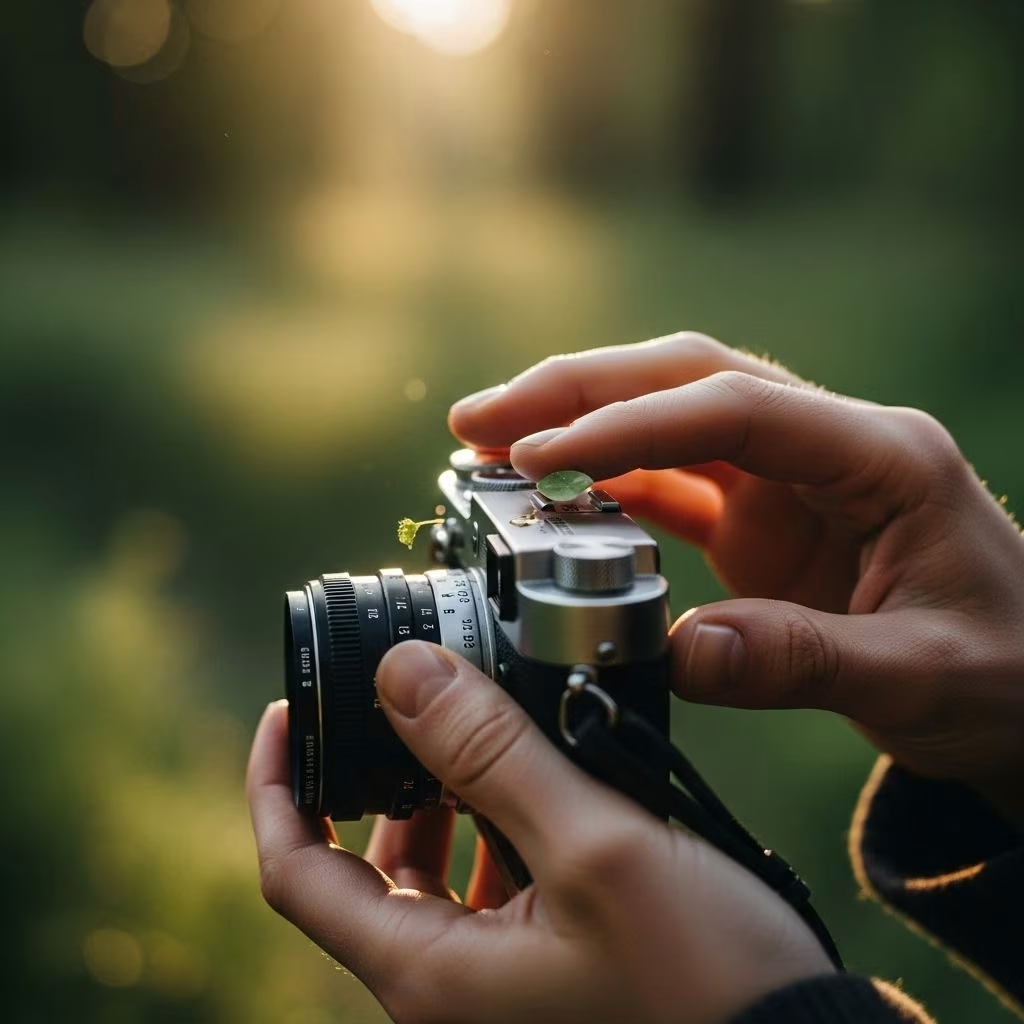
Mindful photography is the practice of using a camera (or phone) to observe and capture images with full attention to the present moment. Unlike traditional photography focused on technical perfection or social approval, mindful photography emphasizes:
- Awareness: Seeing and appreciating what is here and now, without judgment.
- Presence: Immersing oneself in the process, noticing sights, sounds, and emotions.
- Personal Discovery: Exploring what visually resonates with you, contributing to self-discovery and personal meaning.
- Reflection: Using photography and journaling as tools to deepen understanding of experiences and emotions.
Mindful photography is accessible to all—as a daily self-care ritual, a creative outlet, and a form of meditation that can be practiced anywhere, indoors or outdoors.
Key Benefits of Mindful Photography
- Cultivates Mindfulness: Redirects attention to present moment, increasing engagement with surroundings.
- Promotes Gratitude: Encourages appreciation of beauty and ordinary moments, fostering thankfulness.
- Boosts Creativity: Expands visual perspective, inspires experimental and authentic expression.
- Supports Mental Health: Helps reduce anxiety, stress, and rumination by breaking habitual thought cycles.
- Encourages Self-Discovery: Provides insights into personal preferences, emotions, and worldview.
- Connects with Nature: Deepens appreciation for the natural world, promoting relaxation and awe.
- Improves Physical Well-Being: Motivates gentle outdoor activity, walking, and movement.
- Slows Down Experience: Relieves pressure for perfection, enabling thoughtful observation and savoring.
- Facilitates Reflection: Supports reflective decision-making and emotional exploration, enriching meaning.
Mindful Photography vs. Social Sharing: A Comparison
| Aspect | Social Sharing Urge | Mindful Photography |
|---|---|---|
| Motivation | External validation, instant feedback | Self-discovery, personal growth |
| Emotional Impact | Short-lived satisfaction, anxiety from comparison | Lasting calm, gratitude, satisfaction |
| Creativity | Conformity, trend-following | Experimentation, authenticity |
| Presence | Distraction, reduced awareness | Heightened mindfulness and savoring |
| Purpose | To share and impress others | To reflect and enrich the self |
Practical Strategies for Embracing Mindful Photography
- Leave Social Media Behind: Challenge yourself to take photos without the intention to post or share immediately. Focus on your experience.
- Slow Down and Observe: Walk without destination. Notice colors, shapes, and light. Let images find you, rather than seeking them.
- Breathe and Pause: Before taking each photo, pause for a moment, breathe deeply, and reflect on what draws you to the subject.
- Limit Equipment: Use a single camera or phone and avoid overthinking technical details. Let your eye lead the process.
- Reflect and Journal: After each session, write about your experience. What did you notice? What feelings emerged?
- Create for Yourself: Make private albums or prints. Set aside image reviewing for personal reflection rather than public validation.
Mindful Photography in Action: Everyday Applications
- Take a daily mindful photo walk: Choose a setting—nature, urban, home—and dedicate 20 minutes to intentional observation and photography.
- Practice gratitude photography: Capture images of people, places, or objects that evoke thankfulness. Review these for mood enhancement.
- Use visual meditation: Sit quietly, holding your camera, and let your attention wander. Photograph only what sparks your genuine curiosity.
- Engage in nature connection: Visit parks or gardens and focus on micro-details—leaf veins, bark texture, dew on petals.
- Reflect on ordinary beauty: Photograph everyday moments or objects that might otherwise go unnoticed. Look for meaning in simplicity.
These practices deepen self-awareness, encourage physical movement, and foster emotional resilience.
Overcoming Barriers to Mindful Practice
Transitioning from habitual social sharing to mindful photography can be challenging. Common obstacles include:
- Fear of Missing Out (FOMO): Recognize the value in unshared moments. Stay focused on personal fulfillment, not external approval.
- Performance Pressure: Release the need for perfect images; embrace imperfection and experimentation.
- Comparison with Others: Move away from competitive mindsets; enjoy your unique perspective and visual voice.
- Time Constraints: Use short, regular sessions. Even five-minute mindful walks can benefit well-being.
- Attachment to Likes and Comments: Gradually detach from social media feedback by focusing on journaling and self-reflection.
Small steps—such as withholding from posting photos immediately, or dedicating one day per week to mindful photography—can foster lasting changes in approach and attitude.
Frequently Asked Questions (FAQs)
Q: How is mindful photography different from regular photography?
A: Mindful photography emphasizes present-moment awareness and personal resonance, rather than technical perfection or social approval. It focuses on savoring the process and finding meaning, instead of producing images for external validation.
Q: Do I need special equipment to practice mindful photography?
A: No. A smartphone or any camera will suffice. The most important tools are attention, curiosity, and willingness to be present.
Q: Can mindful photography help with stress and anxiety?
A: Yes. Research and personal accounts suggest that mindful photography can reduce anxiety and stress by fostering engagement, reflection, and gratitude, breaking cycles of negative rumination.
Q: Is mindful photography only for nature or travel?
A: While photographing nature can be powerful, mindful photography can be practiced anywhere: at home, in cities, or during daily routines.
Q: How can I integrate mindful photography into my routine?
A: Set aside time for intentional photo walks, reflect on images before capturing them, and create private albums or journals that emphasize personal growth over public display.
Conclusion: A New Way to Capture Life
Mindful photography offers a transformative alternative to the compulsive social sharing that often characterizes digital life. By prioritizing self-reflection, gratitude, and authentic creative expression, individuals can foster deeper well-being, sharpen creativity, and connect more richly with the present. Whether practiced alone, in nature, or alongside journaling, mindful photography has the power to shift our relationship with technology and with ourselves—one present-moment image at a time.
References
- https://traveltowellbeing.com/mindful-photography/
- https://www.wildwillowways.com/post/10-benefits-of-taking-a-mindful-approach-to-photography
- https://benjaminstevens.com.au/on-mindfulness-photography-and-how-it-positively-impacts-your-mental-health/
- https://positivepsychology.com/mindful-photography/
- https://alexandriaarttherapy.com/blog/mindful-photography
- https://photovoice.org/mindful-photography-for-improved-wellbeing-see-your-life-work-and-world-with-fresh-eyes/
- https://pmc.ncbi.nlm.nih.gov/articles/PMC6745599/


