


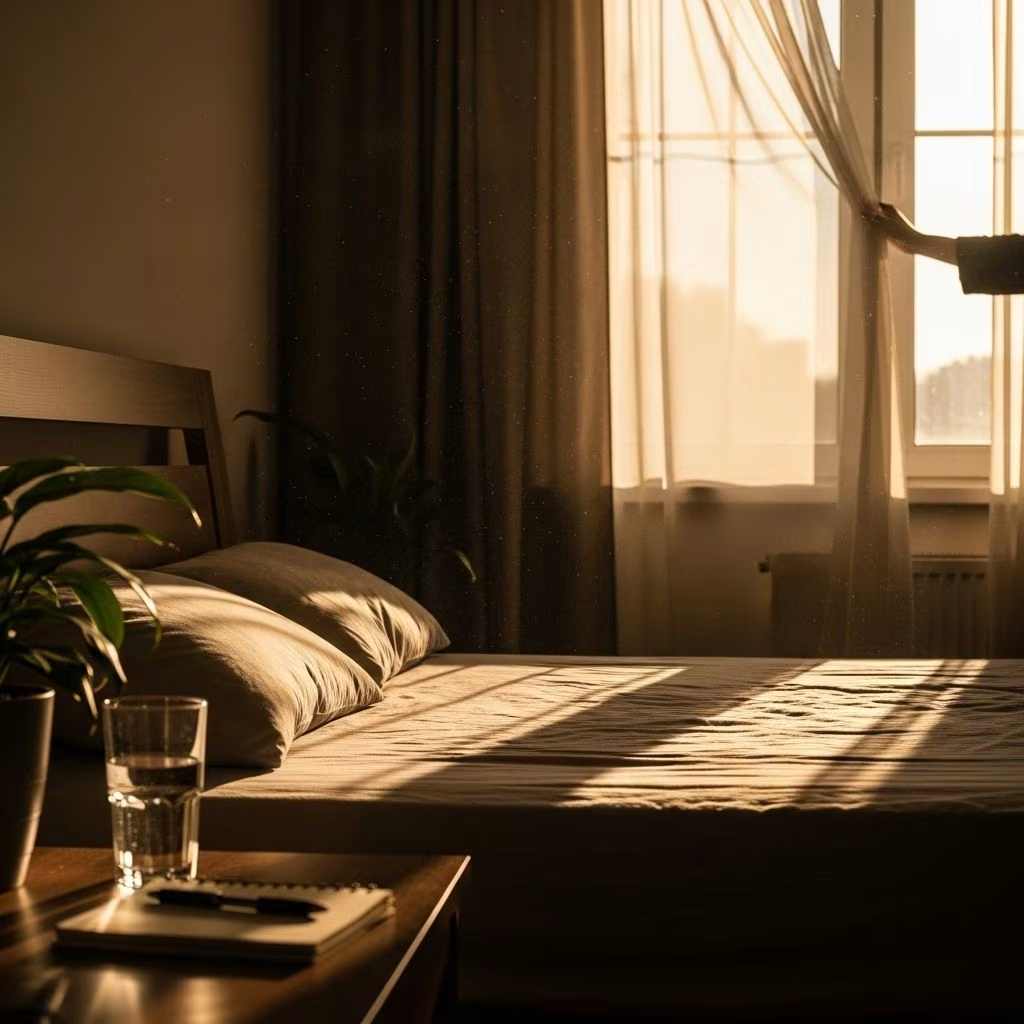
The interplay between morning sunlight and cortisol levels represents one of the most elegant mechanisms of human biology, orchestrating our alertness, mood, sleep, and overall well-being. This article explores the intricate science behind how early light exposure shapes our daily rhythms, with a critical role for the hormone cortisol, often misunderstood yet fundamental for optimal health.
Introduction to Cortisol and Circadian Rhythm
Our bodies operate on an intrinsic 24-hour cycle known as the circadian rhythm. This internal clock regulates many biological processes, including hormone secretion, body temperature, sleep-wake cycles, and metabolism. One of the most significant hormones involved in this system is cortisol—often referred to as the “stress hormone,” but equally vital for driving alertness and synchronizing your biological rhythms with the day-night cycle.
What is Cortisol?
Cortisol is a steroid hormone produced by the adrenal glands, primarily in response to signals from the hypothalamus and pituitary gland. Its key roles include:
- Regulating metabolism and blood sugar
- Supporting cardiovascular function
- Modulating immune responses
- Facilitating the body’s response to stress
- Promoting wakefulness and alertness in the morning
Although cortisol is commonly associated with stress, it is crucial for waking up and feeling energized in the early hours of the day. Very low morning cortisol is linked with persistent fatigue, whereas an appropriately timed cortisol rise sets the stage for optimal daily functioning.
The Circadian Rhythm and its Regulation
The circadian rhythm is managed by a cluster of neurons in the hypothalamus called the suprachiasmatic nucleus (SCN). The SCN acts as the master clock, adjusting numerous secondary clocks throughout the body. The most powerful external cue for resetting this clock is light—especially the blue wavelengths found in natural morning sunlight. Exposure to bright morning light directly signals the SCN to orchestrate hormonal and behavioral rhythms, most notably cortisol and melatonin release.
Key Features of Circadian Regulation
- Entrained by Light: Sunlight is the dominant zeitgeber (time setter) for circadian rhythms.
- Cortisol Peak: Cortisol naturally rises in the early morning, reaching its highest point (the “cortisol awakening response”) about 20-45 minutes after waking.
- Melatonin Secretion: The sleep hormone melatonin is suppressed by light and secreted in darkness, peaking in the middle of the night.
How Morning Sunlight Affects Cortisol Levels
Exposure to natural or artificial light in the morning has pronounced effects on cortisol secretion. Multiple studies have shown:
- Increased Cortisol with Morning Light: Light exposure in the early morning (e.g., 800 lux) causes a significant increase—about 35% higher—compared to darkness.
- Timing Matters: Light exposure in the evening does not increase cortisol, highlighting the importance of circadian phase sensitivity.
- Cortisol Suppression After Peak: Following the morning peak, continued exposure to very bright light (e.g., 10,000 lux) may actually reduce cortisol levels as the day progresses, marking a transition from activation to stabilization.
This dynamic response is known as the cortisol awakening response (CAR), a critical physiological event shaped by light cues that prepare you for the mental and physical demands of the day.
Table 1: Effects of Light Exposure on Cortisol at Different Times
| Time of Day | Type of Light Exposure | Cortisol Response |
|---|---|---|
| Early morning (20-40 min after waking) | Bright light (800–10,000 lux) | Significant increase (+35% vs. darkness) |
| Late morning/afternoon | Continued bright light | Gradual reduction after peak |
| Evening | Bright light | No significant increase |
Role of Melatonin and Alertness
While cortisol provides the “go” signal, melatonin acts as the “stop” signal, promoting sleepiness as light diminishes. In the morning:
- Sunlight suppresses melatonin, ensuring alertness and a seamless transition out of sleep.
- This suppression allows cortisol to exert its full effect on promoting wakefulness, cognitive sharpness, and physical energy.
People who miss morning light—such as shift workers or individuals in northern latitudes during winter—may experience excessive morning melatonin, residual sleepiness, and blunted morning cortisol (linked to fatigue and poor mood).
Physiological Pathways: From Light to Cortisol
The pathway from sunlight to cortisol is both direct and indirect:
- Light is received by retinal ganglion cells in the eye and transmitted to the SCN (suprachiasmatic nucleus).
- The SCN synchronizes the body’s clock and governs the hypothalamic-pituitary-adrenal (HPA) axis, which controls cortisol production.
- Some research suggests there may also be a multisynaptic neural pathway from the retina to the adrenal glands, bypassing classic endocrine routes, but this is still under investigation.
The overall effect is a rapid and coordinated signal to raise cortisol in the morning, then gradually decrease it, facilitating transition from sleep to wake and, later, from high activation to daytime stability.
The Morning Cortisol Awakening Response
The Cortisol Awakening Response (CAR) is a vital physiological surge that occurs within the first 20–45 minutes after waking. Key features include:
- Magnitude: Typically, a 50–100% increase in circulating cortisol levels compared to pre-awakening baseline.
- Light Dependence: Bright morning light amplifies the CAR by up to 35% compared to dim or no light.
- Timing: The most robust CAR occurs when exposure to light happens close to awakening; late-morning or evening exposures are less effective.
- Function: The CAR supports the rapid transition from sleep to alertness and primes the body for physical and mental activity, immune defense, and metabolic readiness.
Benefits of Exposure to Morning Sunlight
Seasoned health researchers and clinicians increasingly advocate for deliberate morning sunlight exposure, highlighting benefits across several domains:
- Heightened alertness and faster decline in morning grogginess
- Improved mood, including lower risk of depression and seasonal affective disorder
- Enhanced sleep quality—well-timed light in the morning helps set melatonin release for the subsequent night, supporting early sleep and deeper rest
- Stronger immune function, since optimally timed cortisol can help regulate inflammation
- Increased energy and cognitive clarity throughout the day
These benefits are not limited to those with sleep trouble; even healthy individuals gain more stable moods and energy with ample morning light exposure.
Individual and Environmental Variability
While most people respond robustly to morning light, a few variables affect the magnitude and character of the response:
- Chronotype: Early risers (“larks”) may have an earlier CAR, while night owls (“owls”) may experience a delayed peak.
- Latitude/Season: In winter or in far-northern regions, natural morning light is reduced, potentially blunting CAR and affecting mood; light therapy can compensate.
- Age: Older adults may show a dampened CAR and require brighter or longer light exposure.
- Sleep disorders or stress: Chronic insomnia or stress can both enhance or blunt the CAR.
Practical Guidelines for Morning Light Exposure
On the basis of current evidence, here are practical tips for optimizing your morning sunlight exposure and cortisol rhythm:
- Get outside soon after waking: Spend at least 10–30 minutes in natural daylight within an hour of awakening.
- Seek bright, unobstructed light: Sit near an east-facing window or, better yet, step outdoors; light intensity is far higher outside than indoors.
- Open your eyes (without sunglasses): Direct light through the eyes is essential, but never stare at the sun.
- If natural light is unavailable: Consider a 5,000–10,000 lux light therapy box, especially in winter or for shift workers.
- Repeat daily: Consistency is crucial to maintain circadian alignment.
Adherence to these tips enhances your daily energy, mood, and long-term health outcomes.
Frequently Asked Questions (FAQs)
Does all morning light have the same effect on cortisol?
No, intensity and timing matter. Exposure to brighter light (above 800 lux) within 20–40 minutes of waking is most effective for stimulating the cortisol awakening response, while later or dimmer exposure has less impact.
Can artificial light replace sunlight for cortisol regulation?
Artificial light—especially from high-quality light therapy boxes emitting 5,000–10,000 lux—can mimic morning sunlight’s effect on cortisol, especially in winter or for those who wake in darkness.
Is a higher morning cortisol level always better?
Not necessarily. An appropriate rise—in line with your natural circadian rhythm—is beneficial for alertness, but excessively high or prolonged cortisol is linked to stress and health risks. The goal is a pronounced but controlled early-morning peak with rapid stabilization during the day.
What if I miss my morning sunlight window?
You may feel sluggish or have reduced energy. Try to compensate the next day by prioritizing natural light exposure early, or use a light box if sunlight is unavailable.
Does using electronic screens in the morning trigger the same effect?
Phone or computer screens emit relatively low-intensity light (usually 50–300 lux), which is too weak to significantly stimulate the cortisol awakening response. Go outside for optimal results.
References
- Acute Effects of Bright Light Exposure on Cortisol Levels
- Light affects morning salivary cortisol in humans
- The Benefits of Morning Sunlight
- Awakening effects of blue-enriched morning light exposure
- Wake Up and Smell—the Cortisol?
- Setting your biological clock
References
- https://pmc.ncbi.nlm.nih.gov/articles/PMC3686562/
- https://pubmed.ncbi.nlm.nih.gov/10487717/
- https://ouraring.com/blog/benefits-of-morning-sunlight/
- https://www.nature.com/articles/s41598-018-36791-5
- https://academic.oup.com/jcem/advance-article/doi/10.1210/clinem/dgaf197/8103700
- https://med.stanford.edu/news/insights/2020/06/setting-your-biological-clock-reducing-stress-while-sheltering-in-place.html


