


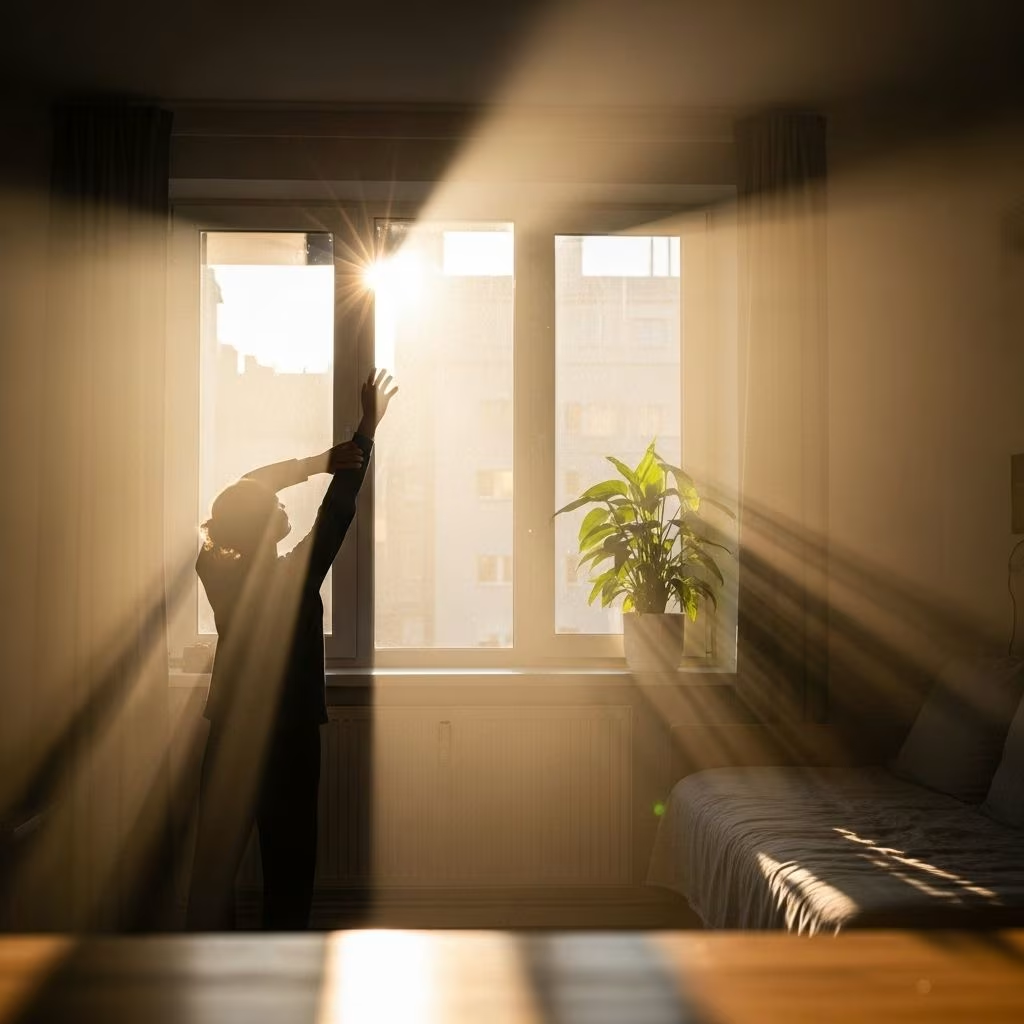
Morning sunlight is not only essential for starting our day, but it also plays a crucial biological role in regulating mood, energy, and overall health. Exposure to the right light wavelengths at the start of the day triggers powerful biochemical cascades—chief among them, the boost in our body’s serotonin, also known as the ‘feel-good hormone.’ This article explores the science, mechanisms, and practical strategies to maximize morning light’s serotonin-boosting effects for mental and physical well-being.
Introduction: Serotonin, Mood, and Morning Light
Serotonin is a neurotransmitter involved in regulating mood, sleep, appetite, and a range of physiological processes. It acts as a precursor for melatonin, which governs our sleep-wake cycles. Distinctly, the production and regulation of serotonin are closely linked to our exposure to natural light, especially during the morning hours.
In modern society, time spent outdoors has dramatically decreased. Research indicates adults spend less than 2% of their week outside, and children just four hours weekly, leading to increased rates of depression, sleep disorders, and other health issues frequently associated with low serotonin levels.
How Morning Light Sets the Body’s Biological Clock
Our circadian rhythm—the internal 24-hour cycle regulating sleep, hormone release, and bodily functions—depends heavily on exposure to environmental light cues. Specialized photoreceptors in the eyes transmit information about ambient light directly to the brain’s master clock (the suprachiasmatic nucleus in the hypothalamus).
- Morning light exposure signals the brain to suppress melatonin (the sleep hormone) and stimulates production of wake-promoting hormones such as cortisol and serotonin.
- Bright morning light forms a “reset” button for the body’s various clocks in tissues and organs, synchronizing them to the natural day-night cycle.
If this synchronization is disrupted (for instance, by insufficient morning light), a person’s biological clock drifts out of sync with the external world, leading to sleep disturbances, low energy, and mood disorders.
How Morning Light Affects Hormone Production
- Suppresses melatonin: Tells the body it’s time to be alert by reducing levels of the sleep hormone.
- Increases cortisol and serotonin: Helps you feel awake, improves focus, and enhances mood.
- Triggers a timer: Instructs the body to begin melatonin production about 14 hours after morning light exposure, promoting better sleep at night.
Mechanisms of Serotonin Production by Morning Light
Serotonin production is tightly regulated by light-dependent mechanisms operating via both the eyes and the skin.
1. The Retino-Raphe Tract (Eye-Mediated Pathway)
When bright sunlight enters the eyes, special retinal ganglion cells send signals through the retino-raphe tract to the brainstem’s raphe nuclei, the main producers of serotonin in the brain.
- This pathway increases serotonin levels as soon as natural light is detected by the eyes.
- The effect is specific to full-spectrum, bright outdoor light; indoor or artificial light is far less effective.
2. Skin’s Role in Serotonin Synthesis
Recent research shows that human skin can synthesize serotonin upon exposure to sunlight. In a study where participants’ eyes were shielded, just 15-20 minutes of UVA radiation increased blood serotonin levels, indicating skin-based photostimulation.
- Skin-based serotonin may help regulate local immune and vascular systems, and also contribute to circulating serotonin for systemic benefits.
3. Melatonin-Serotonin Cycle
Serotonin produced during the day is converted into melatonin when darkness falls. A robust morning surge in serotonin ensures a healthy supply for melatonin production at night, supporting restful sleep and stable circadian rhythms.
Key Morning Light Wavelengths for Maximum Serotonin Release
The specific qualities of sunlight during the morning—its spectrum and intensity—play a crucial role in serotonin production. Here’s what matters most:
| Light Characteristic | Type or Range | Role in Serotonin Boost |
|---|---|---|
| Wavelength | Blue light (450-495 nm); full spectrum (including visible & UVA) | Blue wavelengths are most influential in signaling wakefulness and promoting serotonin release. Full-spectrum sunlight offers additional benefits via skin exposure. |
| Intensity | Typically 10,000–100,000 lux outdoors vs. 100–1,000 lux indoors | Outdoor sunlight intensity is hundreds of times greater than artificial indoor lighting, making morning sunlight far more effective for neurotransmitter regulation. |
| Timing | First 1–2 hours after sunrise | Light exposure soon after waking has the most significant effect on serotonin and circadian rhythm alignment. |
Blue and visible wavelengths in morning sunlight are crucial for sending strong signals through the retinal pathway, which impacts serotonin levels, mood, and alertness. UVA wavelengths, prominent after sunrise and before late morning, activate skin-based serotonin production.
Note: Evening exposure to blue light (e.g., from screens) can delay melatonin onset and disrupt sleep, but in the morning, blue light is beneficial.
Why Boosting Serotonin in the Morning Benefits Mood and Health
Serotonin is involved in a wide range of physiological and psychological processes:
- Mood elevation and emotional stability: Higher morning serotonin is correlated with improved mood, calmness, and mental focus.
- Prevention of Seasonal Affective Disorder (SAD): Exposure to morning light is a front-line intervention for SAD, which is linked to low serotonin and reduced daylight in winter.
- Sleep quality: Daytime serotonin is later converted to melatonin, helping regulate sleep-wake cycles and combat insomnia.
- General health: Proper serotonin-melatonin cycling impacts immunity, cardiovascular health, stress response, and inflammation regulation.
Insufficient exposure to morning sunlight can lead to low serotonin, increased rates of depression, anxiety, disrupted sleep, and chronic health conditions.
Additional Health Benefits of Natural Morning Light
- Improved alertness and energy: Increased cortisol released with morning light energizes the brain for the day ahead.
- Synchronizes over 100 body systems: Proper alignment of physiological systems to the day-night cycle enhances metabolic, reproductive, and cognitive function.
- Supports healthy immune response: Light-driven regulation of hormones and neurotransmitters boosts immune health and resilience.
Practical Tips for Morning Light Exposure
Integrating natural light into your morning routine doesn’t require complicated equipment—just a few intentional practices:
- Step outside within 30–60 minutes after waking: Aim for 15–30 minutes of direct sunlight exposure per day.
- Face the sun: Don’t look directly at the sun, but allow indirect sunlight to reach your eyes and, when possible, your skin (without sunglasses or glass barriers).
- Maximize skin exposure: Short sleeves, open neckline, and uncovered arms/legs will boost the skin’s serotonin production.
- Weather matters less than brightness: Even on cloudy or winter days, outdoor light is far more intense than indoor fluorescent lighting.
- Create a routine: Combine your morning light exposure with positive habits—walking, stretching, or mindful breathing.
- Use bright light therapy if natural light isn’t available: Light therapy boxes emitting 10,000 lux can substitute for outdoor sunlight in some situations. Always consult a healthcare provider before starting light therapy.
- Avoid sunglasses during morning light exposure unless medically necessary, as they filter out crucial wavelengths.
Frequently Asked Questions (FAQs)
Q: Which wavelengths in morning sunlight are most important for boosting serotonin?
A: Blue and full-spectrum visible light (roughly 450-495 nm for blue) are most effective at signaling the brain via the retina. UVA light aids skin-based serotonin production. Maximum benefit occurs with exposure to the fullest natural spectrum in the first hours after sunrise.
Q: Can you get the serotonin boost from artificial indoor lighting?
A: Indoor light, even at its brightest, is much weaker than sunlight (typically 1/10th to 1/100th the intensity) and lacks important wavelengths. Special bright light therapy lamps (10,000 lux) can partially compensate, but natural sunlight is best for whole-body benefits.
Q: How much sunlight is needed for optimal serotonin and sleep benefits?
A: Most adults benefit from at least 15–30 minutes of direct morning sun exposure daily, but up to an hour provides additional advantages, especially in winter or cloudier conditions.
Q: Does window glass block beneficial wavelengths?
A: Yes. Standard window glass filters out nearly all UVA and much of the blue spectrum, significantly reducing the effectiveness of indoor sunlight. For maximum benefit, step outside rather than relying on light through glass.
Q: What are some signs of low morning light exposure?
A: Common signs include low mood, sluggishness, insomnia, difficulty waking, and poor concentration. Chronic insufficient light exposure has also been linked to depression and higher risk of seasonal affective disorder (SAD).
References & Further Reading
- “Benefits of Sunlight: A Bright Spot for Human Health” – PMC
- “Exposure to Morning Sunlight Profoundly Affects Mood, Health, and Sleep” – 1000 Hours Outside Blog
- “Get Morning Light, Sleep Better at Night” – WebMD
- “Boost Your Serotonin and Melatonin Naturally” – Somatic Movement Center
- “Effects of Light on Human Circadian Rhythms, Sleep and Mood” – PMC
- “Using Light for Health” – Huberman Lab
- “5 Natural Ways to Book Serotonin: Morning Light” – Godaelli Mental Health
- “Blue Light Has a Dark Side” – Harvard Health
References
- https://pmc.ncbi.nlm.nih.gov/articles/PMC2290997/
- https://www.1000hoursoutside.com/blog/exposure-to-morning-sunlight
- https://www.webmd.com/sleep-disorders/features/morning-light-better-sleep
- https://somaticmovementcenter.com/serotonin-melatonin/
- https://pmc.ncbi.nlm.nih.gov/articles/PMC6751071/
- https://www.hubermanlab.com/newsletter/using-light-for-health
- https://godaellimentalhealth.com/5-natural-ways-to-book-serotonin-align-with-summers-positive-energy/
- https://www.health.harvard.edu/staying-healthy/blue-light-has-a-dark-side


