


Introduction
The human skin acts as both a protective barrier and as a dynamic interface between the body and environment. Among its most critical features are skin thickness, its barrier function, and its ability for active absorption of substances, all of which vary across different ethnic populations. Understanding these differences is vital both for optimizing dermatological care and for unraveling the biological diversity of human skin. This article addresses the complex relationships between skin thickness, ethnicity, and active absorption, synthesizing the most current research and perspectives in dermatology.
Understanding Skin Thickness
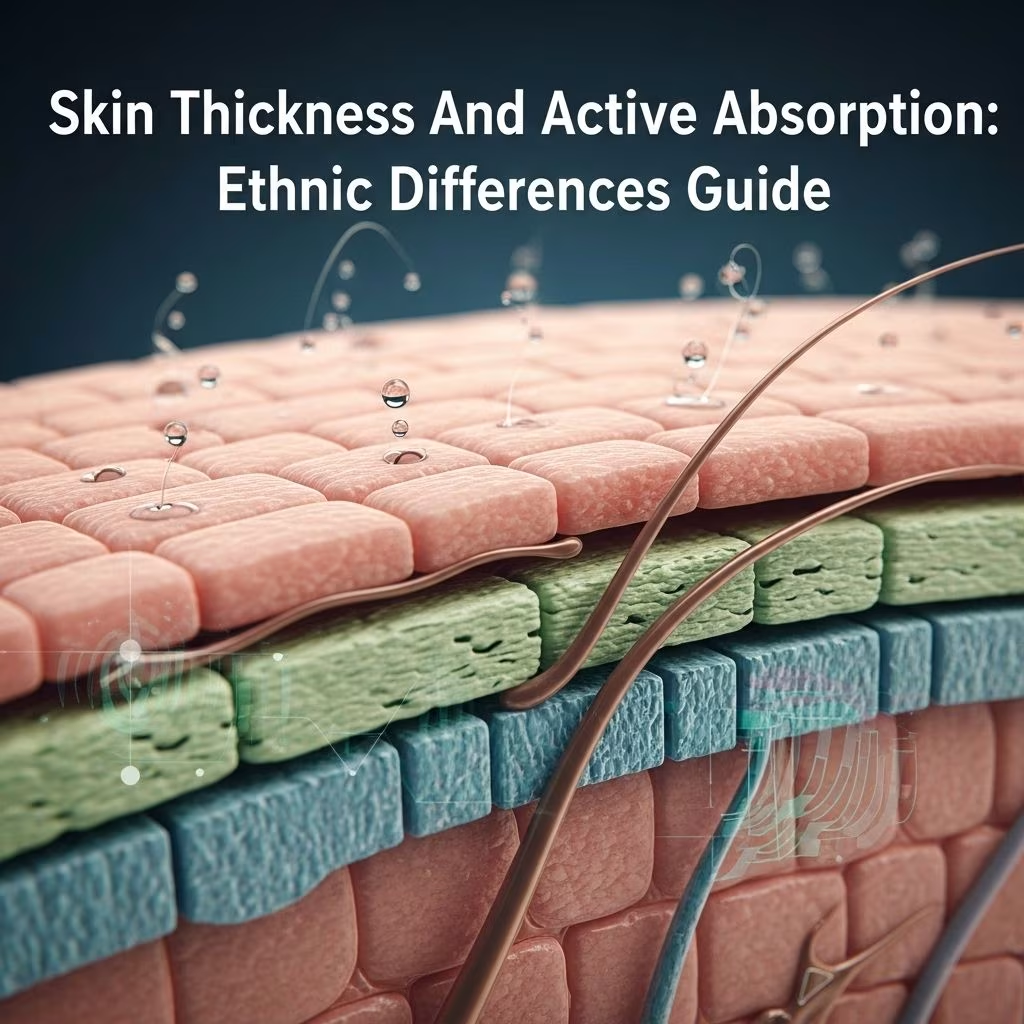
Skin thickness refers to the combined measurable depth of the epidermis, dermis, and sometimes the subcutaneous tissue. While thickness can be influenced by factors including age, anatomical location, and gender, ethnicity has emerged as a significant variable in comparative research. Skin thickness contributes to several essential functions, such as protection from injury, regulation of water loss, and sensitivity to external agents.
- Epidermis: Outermost layer, primarily acts as the first line of defense.
- Dermis: Middle layer, rich in collagen and elastin fibers that provide strength and elasticity.
- Subcutaneous tissue: Internal layer, mainly fat and connective tissue, offers insulation and cushioning.
Variation in skin thickness affects permeability, resistance to trauma, and the ability to absorb topical or environmental substances, setting the stage for ethnic and individual differences in skin function.
Ethnic Variation in Skin Structure
The differences in skin structure and function among ethnic groups are multifactorial, involving complex interactions between genetics, environmental exposures, and behavioral factors. Although studies often show skin color as the most apparent difference—mainly due to variable melanin levels—other structural differences are also significant and have important clinical implications.
Key Ethnic Differences in Skin Structure
- Melanin: Higher concentrations and different dispersion patterns in darkly pigmented skin; melanosomes are larger and singly dispersed in darker skin, while aggregated and smaller in lighter skin.
- Stratum Corneum (SC) Thickness: Studies suggest a more compact and thicker SC in darkly pigmented individuals, which influences barrier function and absorption.
- Dermal Structure: Thicker and more compact dermis observed in some ethnic groups contributes to differences in skin aging and resilience.
- Sebum Production: Increased pore size and sebum secretion are noted in individuals of African descent, affecting skin surface properties and absorption.
- Mast Cell Granules: Larger mast cell granules prevalent in certain populations, potentially contributing to distinctive responses to irritants.
Historical Perspectives and Scientific Evolution
Notably, much of the early scientific literature regarding racial differences in skin thickness was colored by sociocultural biases. By the 18th and 19th centuries, erroneous beliefs about Black individuals having inherently thicker skin led to harmful misconceptions within medicine. Modern research, however, strives for rigor by focusing on device-measured skin thickness and accounting for genetic and phenotypic variance, with current data suggesting nuanced, not absolute, differences between groups.
- Earlier statements oversimplified ethnic skin differences and are no longer supported by leading dermatological societies.
- Present research emphasizes the need for large-scale, multidisciplinary studies involving objective measurements like confocal microscopy, TEWL, capacitance, and conductance.
Active Absorption and Barrier Function
Active absorption involves the passage of molecules—water, chemicals, drugs—across the skin’s barrier, influenced by structural properties such as skin thickness, lipid composition, and integrity of the SC. Barrier function, most commonly evaluated via transepidermal water loss (TEWL), determines how effectively the skin prevents external substances from penetrating and internal moisture from escaping.
| Ethnic Group | Stratum Corneum Thickness | Melanin Content | Barrier Function | Active Absorption |
|---|---|---|---|---|
| African Descent | Thicker, more compact | High | Stronger after challenge; higher TEWL | Varies; robust against chemicals, more spontaneous desquamation |
| Caucasian | Thinner, less cohesive | Low | Less resilient; lower TEWL | More permeable; higher rates of earlier photoaging |
| Asian | Intermediate, thin SC | Moderate | Weakest after mechanical challenge | Possibly higher sensitivity to chemicals due to thinness |
| Hispanic/Latino | Variable; often more sebaceous | Variable | Enhanced protection, mottling spots | Distinct facial distribution, higher sebaceous activity |
Key concepts in active absorption and barrier function include:
- TEWL: Higher values suggest greater water loss through the skin, typically indicating a weaker barrier.
- Lipid Composition: Ceramides and other lipids determine SC cohesion and water-retention properties.
- Desquamation Rate: The rate at which corneocytes shed; reported to be higher in individuals of African descent.
Conflicting evidence exists regarding absolute differences in TEWL and barrier function among ethnic groups. While six out of eight studies report higher TEWL in Black skin, results for Asian skin and water content are inconclusive, underscoring the need for further large-scale investigations.
Comparative Analysis of Skin Properties by Ethnicity
Objective methods such as pH gradients, lipid content analysis, and confocal microscopy have enabled robust comparison of skin characteristics among ethnicities. The following features highlight observed trends and important differences:
- Corneocyte Desquamation: Black skin demonstrates a 2.5-fold higher rate compared to Caucasian and Asian skin, possibly contributing to increased xerosis (dryness).
- Sebaceous Activity: Greater pore size and oil production are common in Black and Latino skin.
- pH Gradient: Subtle differences observed, impacting skin’s microbiome and reactivity to topical treatments.
- Mast Cell Granule Size: Increased in Negroid skin types, with possible implications for skin reactivity and immune response.
- Microflora Diversity: Variations in surface bacteria community structure between ethnic groups, affecting susceptibility to dermatological conditions.
It is important to acknowledge that interindividual differences sometimes overshadow group-level ethnic differences. Environmental factors, skin care practices, and genetics all modulate these observed characteristics.
Clinical and Health Implications
Ethnic diversity in skin thickness and active absorption leads to notable variance in the prevalence, presentation, and severity of dermatological conditions. Understanding these differences is crucial for clinicians managing skin disorders, designing clinical trials, and tailoring skin care products.
Key Clinical Implications
- Atopic Dermatitis: Barrier differences may explain disparities in prevalence and response to treatment between ethnic groups.
- Xerosis (Dry Skin): Higher desquamation and TEWL in some populations predispose to more frequent and severe cases of dry skin.
- Contact Sensitivity: Asian skin demonstrates increased sensitivity to chemicals due to thinner SC and higher eccrine gland density.
- Dyspigmentation: Variations in melanin content and dispersal make darkly pigmented skin more prone to hyperpigmentation and hypopigmentation disorders.
- Photoaging: Differences in melanin and dermal structure alter susceptibility to aging; Caucasian skin develops wrinkles and sagging earlier, while darkly pigmented skin is more likely to show uneven pigmentation.
In research and product development, acknowledging these variations ensures more effective therapies and better targeted skin care strategies, reducing health disparities.
Aging and Photoaging Across Ethnicities
Aging processes in skin are strongly influenced by intrinsic factors (genetic, hormonal) and extrinsic factors (UV exposure, environment), with ethnicity playing a mediating role.
- Melanin’s Role: High melanin content in dark skin offers photoprotection, reducing risk for skin cancers and slowing the appearance of age-related changes.
- Photoaging Patterns: Caucasians experience earlier onset of wrinkling, sagging, and collagen loss; persons with skin of color are more prone to pigmentary changes.
- Dermal Changes: Loss of elasticity and collagen fragmentation seen with aging occurs more rapidly in lighter skin, making features like thinness, fragility, and vessel prominence more likely.
The heterogeneity of aging across ethnicities calls for tailored preventive strategies, emphasizing sun protection, barrier repair, and management of pigmentary disorders.
Frequently Asked Questions (FAQs)
Is Black skin thicker than White skin?
The belief that Black skin is inherently thicker than White skin is rooted in historical misconception rather than objective measurement. Modern dermatological studies indicate nuanced structural differences, such as more compact stratum corneum, but do not universally confirm greater overall thickness for any particular group.
Does skin thickness impact the absorption of topical medications?
Yes, skin thickness, together with lipid content and barrier integrity, influences rate and extent of active absorption. Thicker or more cohesive layers may impede or enhance absorption depending on chemical properties and method of delivery.
Are all ethnicities equally prone to skin disorders?
No, prevalence and severity of dermatological disorders vary based on ethnic structural properties. For example, atopic dermatitis may be more pronounced in groups with compromised barrier function, and pigmentary disorders are more frequent in darkly pigmented skin.
Which factors influence skin barrier function besides ethnicity?
Factors include age, anatomical site, genetics, climate, lifestyle, and exposure to irritants. Ethnicity is an important but not exclusive determinant.
Can skin care products be formulated for specific ethnic groups?
Effective skin care often requires formulation tailored to the distinctive features—barrier integrity, sebum production, sensitivity—of different ethnicities, enhancing outcomes and reducing adverse effects.
Conclusion
Research into skin thickness, ethnicity, and active absorption reveals substantial diversity in human physiology. These variations impact barrier function, absorption dynamics, aging, and disease prevalence. Continued efforts to reconcile conflicting evidence and expand objective research will improve clinical care and enhance understanding of the rich mosaic of human skin. The field increasingly recognizes not only the biological significance of ethnic differences but also the broader context of health equity and individualized dermatology.
References
- https://pubmed.ncbi.nlm.nih.gov/18492142/
- https://pubmed.ncbi.nlm.nih.gov/14640777/
- https://jcadonline.com/aging-differences-in-ethnic-skin/
- https://jamanetwork.com/journals/jamadermatology/article-abstract/2812439
- https://jddonline.com/wp-content/themes/jdd-salient-child/download.php?pii=S1545961621P0932X&download=1
- https://tidsskriftet.no/en/2021/02/fra-redaktoren/black-skin-thicker-white


