


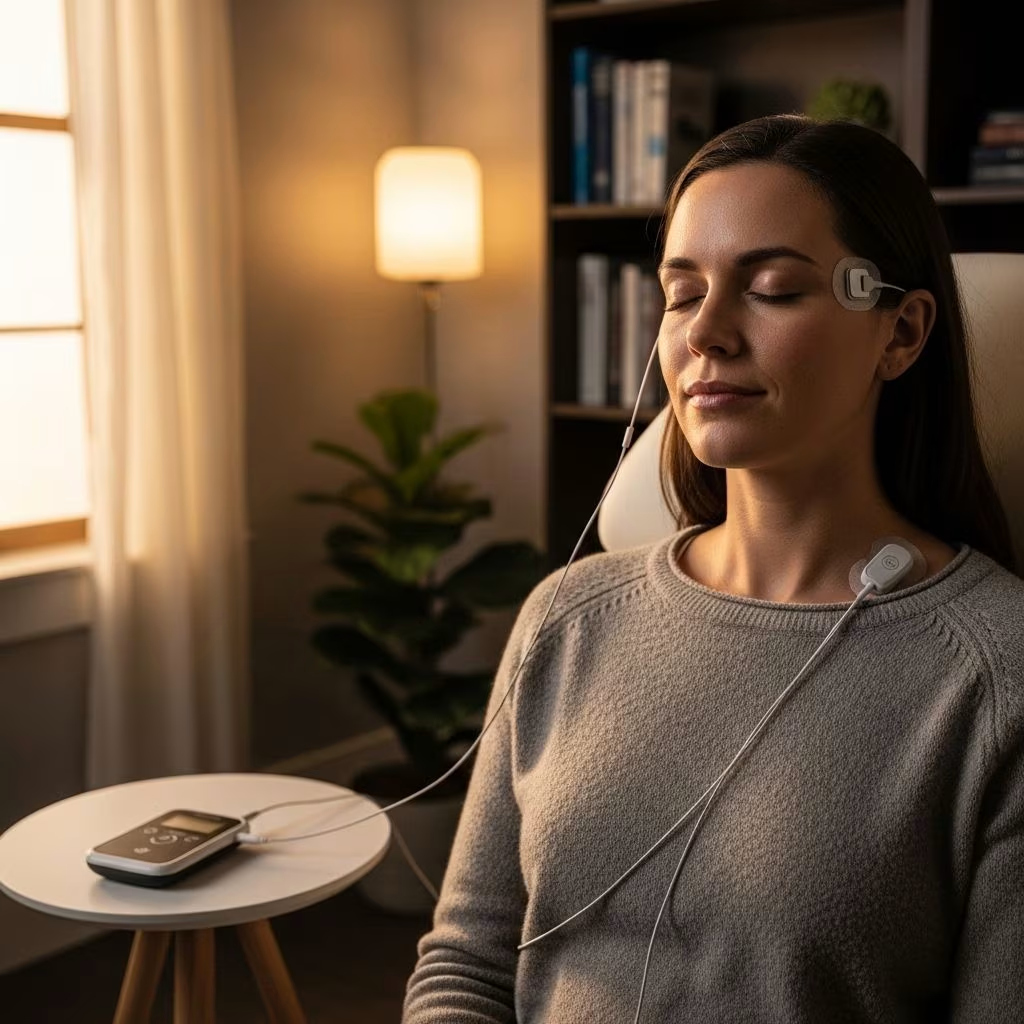
Anxiety disorders affect millions of people worldwide, prompting the search for effective, non-pharmacological treatment options. Transcutaneous Electrical Nerve Stimulation (TENS) units and Vagus Nerve Stimulation (VNS) have emerged as promising therapeutic modalities for anxiety relief. These neurostimulation techniques offer drug-free alternatives that can complement or serve as standalone treatments for various anxiety conditions.
Understanding TENS & VNS for Anxiety
Both TENS and VNS operate on the principle of electrical stimulation to modulate nerve activity and influence the body’s stress response systems. These therapies work by targeting specific neural pathways that regulate mood, stress, and anxiety responses.
Mechanism of Action
TENS therapy delivers low-voltage electrical currents through electrodes placed on the skin, stimulating peripheral nerves to interrupt pain signals and promote the release of endorphins. When applied to specific acupoints or nerve pathways, TENS can influence the autonomic nervous system and reduce anxiety symptoms.
VNS, particularly transcutaneous VNS (tVNS), stimulates the vagus nerve through the auricular branch located in the ear. This stimulation activates the parasympathetic nervous system, promoting relaxation and reducing the fight-or-flight response associated with anxiety.
Neurophysiological Basis
The therapeutic effects of both modalities are rooted in neuroplasticity and the modulation of neurotransmitter systems. Electrical stimulation can influence gamma-aminobutyric acid (GABA) levels, serotonin production, and norepinephrine activity, all of which play crucial roles in anxiety regulation.
TENS Unit Protocols for Anxiety Relief
Effective TENS protocols for anxiety relief require specific parameter settings and electrode placement strategies based on current research and clinical experience.
Standard TENS Parameters for Anxiety
| Parameter | Recommended Range | Clinical Application |
|---|---|---|
| Frequency | 10-100 Hz | Low frequencies (10-20 Hz) for relaxation, higher frequencies (50-100 Hz) for acute anxiety |
| Pulse Width | 50-250 microseconds | Adjust based on patient comfort and response |
| Intensity | Threshold of Perception (ToP) | Just below discomfort level, typically 4-5 on 0-10 scale |
| Duration | 20-30 minutes | Standard session length for optimal therapeutic effect |
| Frequency of Treatment | 2-3 times daily | Can be adjusted based on symptom severity |
Electrode Placement Strategies
Auricular TENS Protocol: Electrodes are placed on specific ear acupoints, particularly targeting areas innervated by the auricular branch of the vagus nerve. The tragus and concha cavum are primary targets for anxiety-related treatments.
Acupoint-Based Protocols: Traditional acupuncture points such as PC6 (Neiguan) on the wrist and various auricular points have shown effectiveness in anxiety management. The PC6 point, located on the median nerve pathway, is particularly effective when stimulated at 12 Hz for 20 minutes.
Cranial Electrotherapy Stimulation (CES): A specialized form of TENS that delivers microcurrent electrical stimulation to the brain through electrodes placed on the earlobes or mastoid processes. CES protocols typically use frequencies between 0.5-4 Hz with very low current intensities.
Treatment Progression
Initial sessions should begin with conservative parameters to assess patient tolerance. Gradually increase intensity while monitoring for therapeutic response and adverse effects. Most patients require 8-16 sessions over 4-8 weeks to achieve optimal results.
VNS Treatment Protocols
VNS protocols for anxiety relief have been refined through clinical research and practice, with specific parameters shown to be most effective for anxiety disorders.
Transcutaneous VNS (tVNS) Parameters
Research indicates that tVNS protocols should utilize specific stimulation parameters for optimal anxiety relief. The most effective protocols involve stimulation at 20-25 Hz with pulse widths of 250-500 microseconds.
Electrode Placement for tVNS
Auricular Branch Stimulation: The primary target for tVNS is the cymba concha of the ear, where the auricular branch of the vagus nerve has the highest density of nerve endings. Alternative placement sites include the tragus and antihelix regions.
Cervical VNS Considerations: While invasive cervical VNS requires surgical implantation, non-invasive cervical stimulation techniques are being explored for anxiety treatment, though these require specialized equipment and trained practitioners.
tVNS Treatment Schedule
- Session duration: 20-30 minutes
- Frequency: Daily to twice daily
- Treatment period: 4-12 weeks
- Stimulus parameters: 20-25 Hz, continuous stimulation
- Intensity: Set to sensory threshold without discomfort
Electroacupuncture-Enhanced VNS
Recent research has explored combining traditional electroacupuncture with VNS protocols. The TF4 acupoint (ear apex) has shown particular promise when stimulated at 100 Hz for 20 minutes in combination with other anxiety-focused acupoints.
Clinical Evidence and Effectiveness
Multiple studies have demonstrated the efficacy of both TENS and VNS protocols for anxiety relief, with varying degrees of success across different anxiety disorders.
TENS Efficacy Studies
Clinical research has shown that TENS therapy can produce significant reductions in anxiety symptoms across various populations. Studies utilizing CES have demonstrated large effect sizes (SMD: -0.96) in reducing anxiety severity compared to control groups.
Meta-analyses reveal that Alpha-Stim devices, a specific type of CES unit, show particularly strong evidence for anxiety relief with standardized mean differences of -1.05, indicating large clinical effects. These studies consistently show no heterogeneity in results, suggesting robust and reliable therapeutic outcomes.
VNS Clinical Outcomes
Research on tVNS for anxiety has shown promising results, with patients reporting statistically significant decreases in perceived anxiety levels after 10-15 treatment sessions. Studies indicate that anxiety scores can decrease significantly (p = 0.002) following tVNS protocols.
The effectiveness of tVNS appears to be sustainable, with benefits often persisting beyond the active treatment period. Patients typically report improvements in overall quality of life measures in addition to anxiety reduction.
Comparative Effectiveness
Direct comparison studies suggest that both TENS and VNS can be effective for anxiety relief, with the choice between modalities often depending on patient preferences, specific anxiety disorders, and treatment accessibility.
Safety Considerations and Contraindications
While generally safe, both TENS and VNS therapies require careful consideration of contraindications and potential adverse effects.
TENS Safety Profile
Contraindications:
- Cardiac pacemakers or other implanted electrical devices
- Pregnancy (avoid abdominal placement)
- Epilepsy or seizure disorders
- Areas of decreased skin sensation
- Malignant tissue
Potential Side Effects:
- Skin irritation at electrode sites
- Muscle twitching or spasms
- Temporary tingling sensations
- Headache (with CES applications)
VNS Safety Considerations
Contraindications:
- Cardiac arrhythmias
- Active ear infections
- Pregnancy
- History of seizures
Monitoring Requirements:
- Regular assessment of stimulation sites
- Blood pressure monitoring in hypertensive patients
- Cardiac rhythm assessment in at-risk patients
General Safety Guidelines
Both therapies require proper training for practitioners and clear patient education regarding device operation, maintenance, and recognition of adverse effects. Regular follow-up appointments should be scheduled to monitor treatment progress and adjust parameters as needed.
TENS vs VNS: Comparative Analysis
Understanding the differences between TENS and VNS protocols helps practitioners and patients make informed treatment decisions.
| Aspect | TENS Therapy | VNS Therapy |
|---|---|---|
| Mechanism | Peripheral nerve stimulation | Vagus nerve stimulation |
| Electrode Placement | Various body locations | Primarily auricular |
| Treatment Duration | 20-30 minutes | 20-30 minutes |
| Frequency Range | 10-100 Hz | 20-25 Hz |
| Evidence Level | Moderate to strong | Emerging evidence |
| Cost | Lower initial investment | Moderate cost |
| Accessibility | Widely available | Specialized equipment |
Clinical Decision Making
The choice between TENS and VNS should be individualized based on patient factors, anxiety type, comorbid conditions, and treatment goals. Some patients may benefit from combination approaches using both modalities.
Implementation Guidelines for Practitioners
Successful implementation of TENS and VNS protocols requires systematic approaches to patient assessment, treatment planning, and outcome monitoring.
Patient Assessment Protocol
Initial evaluation should include comprehensive anxiety assessment using validated instruments such as the Hamilton Anxiety Rating Scale (HAM-A), Beck Anxiety Inventory (BAI), and condition-specific measures for panic disorder, social anxiety, or generalized anxiety disorder.
Treatment Planning
Phase 1: Initial Assessment (Weeks 1-2)
- Baseline anxiety measurements
- Medical history and contraindication screening
- Initial parameter testing and tolerance assessment
- Patient education and device training
Phase 2: Active Treatment (Weeks 3-10)
- Regular treatment sessions as per protocol
- Weekly progress monitoring
- Parameter adjustments based on response
- Adverse event monitoring
Phase 3: Consolidation (Weeks 11-12)
- Final outcome assessments
- Treatment response evaluation
- Long-term management planning
- Patient self-management training
Quality Assurance
Regular equipment calibration, standardized protocols, and consistent outcome measurement are essential for maintaining treatment quality and optimizing patient outcomes.
Frequently Asked Questions (FAQs)
Q: How long does it take to see results from TENS or VNS therapy for anxiety?
A: Most patients begin experiencing anxiety relief within 2-4 weeks of consistent treatment. Significant improvements are typically observed after 8-12 sessions, with optimal results achieved after 12-16 treatments over 6-8 weeks.
Q: Can TENS and VNS be used together for anxiety treatment?
A: Yes, combination approaches using both TENS and VNS can be effective. However, this should be done under professional supervision with careful monitoring of parameters and patient response to avoid overstimulation.
Q: Are there any long-term side effects of electrical stimulation for anxiety?
A: Long-term adverse effects are rare when treatments are administered according to established protocols. The most common issues are temporary skin irritation and occasional headaches, which typically resolve with parameter adjustments.
Q: How do I choose between TENS and VNS for anxiety treatment?
A: The choice depends on several factors including anxiety type, patient preferences, contraindications, and accessibility. TENS offers more versatility in electrode placement, while VNS specifically targets the parasympathetic nervous system. Consultation with a qualified healthcare provider is recommended.
Q: Can I use a home TENS unit for anxiety without medical supervision?
A: While home TENS units are available, initial assessment and protocol establishment should be done under professional guidance. Once properly trained, many patients can safely self-administer treatments at home with periodic professional monitoring.
Q: What should I expect during my first anxiety treatment session?
A: The first session involves parameter testing to determine optimal settings, electrode placement instruction, and tolerance assessment. You may feel mild tingling sensations during treatment. Sessions typically last 20-30 minutes and should be comfortable throughout.
Q: Are these treatments covered by insurance?
A: Insurance coverage varies by provider and specific treatment indication. Some policies may cover TENS units for chronic pain but not specifically for anxiety. Check with your insurance provider and healthcare team about coverage options and potential alternatives.
References
- https://www.researchprotocols.org/2025/1/e68166/
- https://scholarship.claremont.edu/cgi/viewcontent.cgi?article=4577&context=cmc_theses
- https://www.frontiersin.org/journals/psychiatry/articles/10.3389/fpsyt.2023.1157473/full
- https://pmc.ncbi.nlm.nih.gov/articles/PMC7871430/
- https://pmc.ncbi.nlm.nih.gov/articles/PMC5083940/
- https://www.jneurology.com/articles/transcutaneous-vagus-nerve-stimulation-in-private-healthcare-center-a-small-scale-investigation-targeting-anxiety-irritable-bowel-syndrome-and-chronic-pain.html
- https://www.bluecrossma.org/medical-policies/sites/g/files/csphws2091/files/acquiadam-assets/362%20Cranial%20Electrotherapy%20Stimulation%20and%20Auricular%20Electrostimulation%20prn.pdf


