


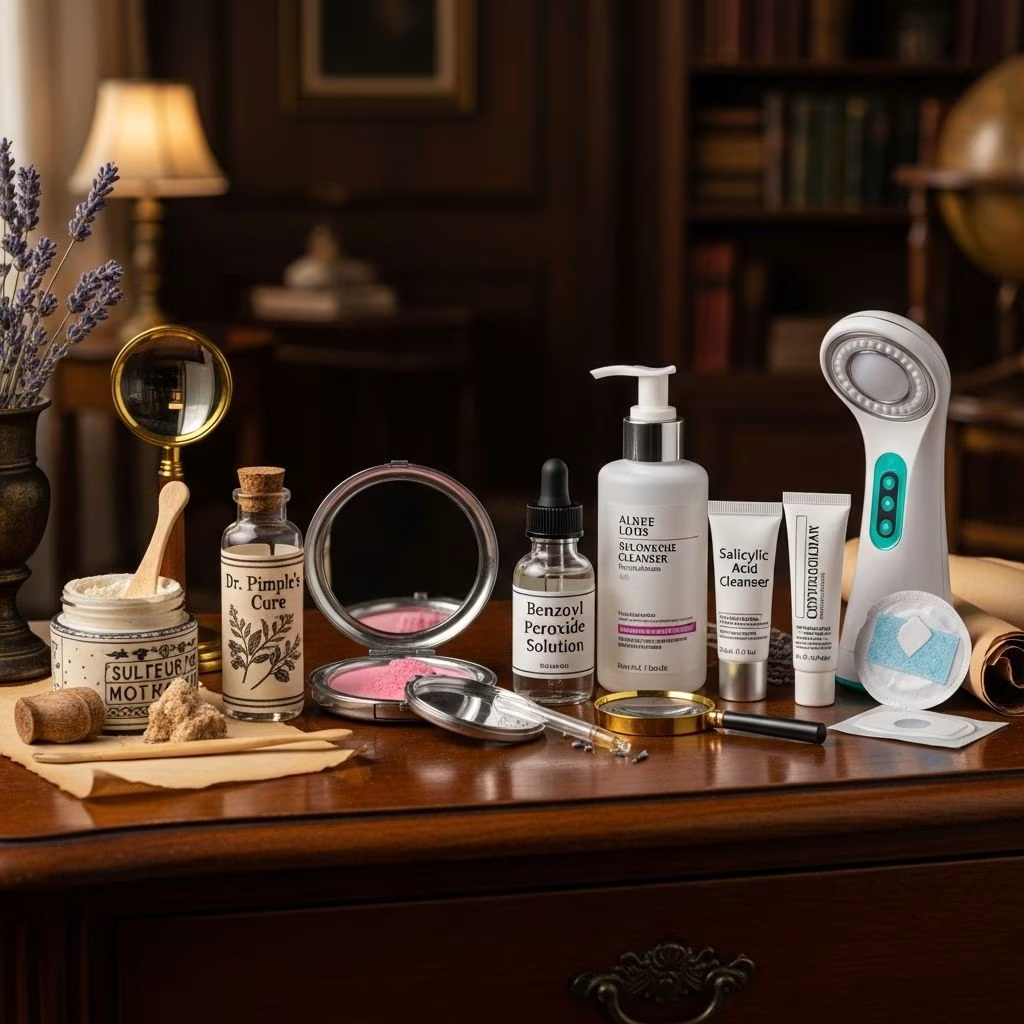
Throughout history, acne has been a common concern for people of all ages and backgrounds. The relentless search for clearer skin has driven the development of various acne spot treatments, evolving from mystical rituals and herbal concoctions to the rigorously-tested pharmaceutical and technological solutions available today. This article offers a comprehensive exploration of the timeline, innovations, and key figures that have shaped the management of acne, with a special focus on spot treatments—those targeted interventions applied directly to blemishes.
Ancient and Early Remedies
Acne may be considered a modern nuisance, but evidence of breakouts and their attempted treatments dates back thousands of years. Ancient civilizations approached skin blemishes through the lens of medicinal herbs, natural minerals, and sometimes spiritual beliefs.
- Ancient Egypt: Egyptians valued clear, glowing skin; remedies included patchouli oil to soothe skin tissue, and sour milk—used as an exfoliant due to its lactic acid—to minimize blemishes.
- Ancient Greece: Famous for using mixtures of honey (antibacterial) and sulfur (keratolytic properties) to treat pimples and other skin conditions.
- Traditional Chinese Medicine (TCM): Practitioners prescribed temperature-lowering herbs such as echinacea and burdock, believing acne to be a sign of excess “heat” in the bloodstream. Peach blossoms were also used to heal acne-damaged skin.
- Ancient Rome: Romans favored sulfur baths to open pores and combat blemishes.
These remedies were often integrated into broader routines of body care, ritual purification, or even religious practice. While some ingredients—such as sulfur and lactic acid—are recognized today for their therapeutic properties, the empirical understanding of acne’s biology was still centuries away.
Medieval, Renaissance, and Early Modern Approaches
The Middle Ages and Renaissance periods continued traditional herbal and mineral-based approaches, often paired with superstitions or humoral theories of disease. Pale skin was a beauty ideal in 16th-century Europe, and ironically, cosmetics like lead-based face paint (which contributed to breakouts) became popular among the elite.
- Despite poor hygiene contributing to skin irritations, medieval remedies included herbal compresses, vinegar washes, and various astringents.
- Occasionally, bloodletting or leeches were used for skin ailments, including chronic blemishes, under the belief that “bad humors” could be drained from the body.
Yet, the prevailing medical understanding tied acne to imbalances within the body rather than infections or glands, leading to a host of dietary and lifestyle recommendations, often with little effect on breakouts.
19th Century Experiments and Emerging Theories
The 1800s witnessed the beginnings of dermatology as a scientific discipline, and with it, increased interest in skin diseases including acne. However, treatments were far from precise.
- X-Ray Therapy: Following Roentgen’s discovery of X-rays in 1895, concentrated X-ray treatments were used in the early 20th century to manage bacteria and oily skin believed to contribute to acne.
- Laxatives: In the early 20th century, some doctors prescribed laxatives for teens, theorizing that acne resulted from bodily “toxins” (sometimes attributed to sexual ‘chastity’), and that purging these toxins would clear skin.
- Topical Solutions: Home remedies and over-the-counter formulas with sulfur or resorcinol became popular.
While some spot treatments began to resemble modern creams, others were risky or outright dangerous, such as X-ray exposure—which was later linked to higher rates of skin cancer and ultimately abandoned.
20th Century Breakthroughs in Acne Spot Treatments
The modern age brought dramatic advances in the understanding and management of acne. The explosion of pharmaceutical research yielded new classes of medication, dramatically shifting the effectiveness and safety profile of spot treatments.
Early 20th Century Developments
- 1930s: X-ray therapy and laxative treatments were prominent, stemming from prevailing (and incorrect) beliefs about acne’s causes.
Antibiotics Era (1950s Onwards)
- With the recognition that bacteria play a role in acne, oral and topical antibiotics like tetracycline (approved 1953), doxycycline (1967), and other family members revolutionized acne therapy. Topical antibiotics (such as erythromycin and clindamycin) soon followed, though spot treatments with topical forms had to be used cautiously to avoid resistance.
The Rise of Retinoids (1970s-1980s)
- 1971: Dr. Albert Kligman’s work led to the FDA approval of tretinoin (Retin-A), the first topical retinoid. Retinoids are vitamin A derivatives that normalize shedding of dead skin cells, preventing pores from becoming clogged and promoting cell turnover.
- Retinoids became mainstays of spot treatment, both for active breakouts and post-acne marks, due to their ability to address multiple causes of acne at the site of application.
Isotretinoin (Accutane) and Severe Acne
- 1982: The FDA approved oral isotretinoin (Accutane), a retinoid for severe or persistent acne. Isotretinoin shrinks oil glands and alters skin cell turnover, often producing long-term remission but with risks of serious side effects. Patients, especially women of childbearing age, must adhere to strict precautions to avoid pregnancies due to risk of birth defects.
- The introduction of generic versions after the patent’s expiration in 2002 increased access to this potent drug.
Other Topical Agents (1970s-1990s)
- Benzoyl Peroxide: Early forms of benzoyl peroxide cream became a gold standard spot treatment. Its antibacterial and keratolytic properties led to widespread use, often combined with topical antibiotics to reduce resistance.
- Salicylic Acid: An over-the-counter beta hydroxy acid that unclogs pores. Old herbal preparations gave way to concentrated, targeted products used directly on pimples.
Modern Innovations: 21st Century and Beyond
Spanning the turn of the millennium, acne spot treatments have continued to evolve in efficacy, safety, and sophistication. Fewer treatments rely on harsh substances, while evidence-based, multi-targeted combinations are now common.
Contemporary Topical Treatments
- Combination Therapies: Many spot treatments combine retinoids, benzoyl peroxide, and topical antibiotics to address multiple mechanisms of acne.
- Azelaic Acid: Known for its anti-inflammatory and antibacterial properties; useful in spot-fading and treating post-inflammatory hyperpigmentation.
- Modern Retinoids: Newer formulations like adapalene and tazarotene offer strong results with reduced irritation.
Light-Based and Laser Therapies
- Blue and Red Light Therapy: These modalities target bacteria and inflammation with minimal side effects, suitable for spot or full-face use. Home devices offer increased accessibility for mild breakouts.
- Laser Treatments: Fractional and ablative laser technologies minimize moderate to severe inflammatory acne (and even acne scars) with impressive results, particularly when combined with conventional treatments.
Other Emerging and Alternative Options
- Microneedling: Targets acne scars and stubborn blemishes by stimulating collagen production at the spot level.
- Botanical and Clean Formulations: As consumer demand for natural ingredients grows, spot treatments with tea tree oil, green tea extract, and niacinamide have entered the mainstream.
- Personalized Medicine: Advances in genetic research and skin microbiome studies will likely usher in a new era of customized acne therapies tailored to each individual’s biology.
Comparison Table: Key Spot Treatments Through History
| Era | Main Spot Treatments | Key Ingredient/Method | Effectiveness | Risks/Drawbacks |
|---|---|---|---|---|
| Ancient | Herbal & Mineral Pastes | Sulfur, Honey, Patchouli, Vinegar | Variable/Low | Minimal, except irritation |
| Medieval-Renaissance | Lead Paint, Bloodletting | Lead, Leeches | Harmful/Ineffective | Toxicity, Infection, Scarring |
| 19th-Early 20th Century | X-ray, Laxatives, Sulfur Creams | X-ray, Laxatives | Short-term/Cosmetic only | Skin Cancer, GI Issues |
| Mid-Late 20th Century | Antibiotics, Retinoids, Benzoyl Peroxide | Tetracycline, Tretinoin, Benzoyl Peroxide | High | Resistance, Irritation, Birth Defects (for oral retinoids) |
| Modern | Light/Laser, Combo Gels, Botanicals | LED, Retinoids, Plant Extracts | Very High | Cost, Sensitivity |
Frequently Asked Questions
Q: What is the most effective single-ingredient acne spot treatment today?
A: Benzoyl peroxide and topical retinoids (like adapalene) are widely recognized for their fast, effective action against localized breakouts. For severe acne, prescription treatments such as topical antibiotics or even oral isotretinoin may be necessary.
Q: Are ancient remedies like honey and sulfur still used in modern acne spot treatments?
A: Yes. Sulfur is still present in some over-the-counter products due to its ability to dry out pimples and reduce inflammation, while honey (especially Manuka) is occasionally used for its antibacterial properties.
Q: When should prescription spot treatments like retinoids be used?
A: Prescription retinoids (e.g., tretinoin, tazarotene) are typically used when over-the-counter treatments prove insufficient. Dermatologists may also prescribe them to treat persistent, cystic, or nodular acne.
Q: Are light and laser therapies suitable for all skin types?
A: Most modern blue and red light therapies are safe for a range of skin tones, but clinical lasers may be tailored by skin type and require specialist guidance to avoid hyperpigmentation or burns.
Q: Isotretinoin (Accutane) is famous for clearing acne—can it be used as a spot treatment?
A: No. Isotretinoin is only available as an oral medication and is reserved for severe, resistant cases of acne. Topical retinoids, not oral isotretinoin, are used for spot treatment of individual blemishes.
References
- SLMD Skincare: The Bumpy History of Acne Treatments
- Altaire Clinic: The Evolution of Acne Therapy
- NIH Catalyst: From the Annals of NIH History
- Best Skin Center: The History of Acne Treatments – Adult Acne: Then & Now
- Exposed Skincare: History Of Acne Treatments
- PubMed Central: The age-old problem of acne
References
- https://slmdskincare.com/blogs/learn/the-bumpy-history-of-acne-treatments
- https://altaireclinic.com/the-evolution-of-acne-therapy-innovative-treatments-and-lasting-results/
- https://irp.nih.gov/catalyst/30/1/from-the-annals-of-nih-history
- https://bestskincenter.com/the-evolution-of-beauty-treatments-part-iv-acne-treatments-throughout-the-ages/
- https://scholarlycommons.henryford.com/cgi/viewcontent.cgi?article=1566&context=dermatology_articles
- https://www.exposedskincare.com/blogs/blog/history-of-acne
- https://www.refinedmd.com/the-evolution-of-acne-treatment-from-ancient-remedies-to-modern-solutions/
- https://www.rosacea.org/blog/2017/june/rosacea-through-the-ages-a-timeline
- https://pmc.ncbi.nlm.nih.gov/articles/PMC5440448/


