


Introduction to Retinoids
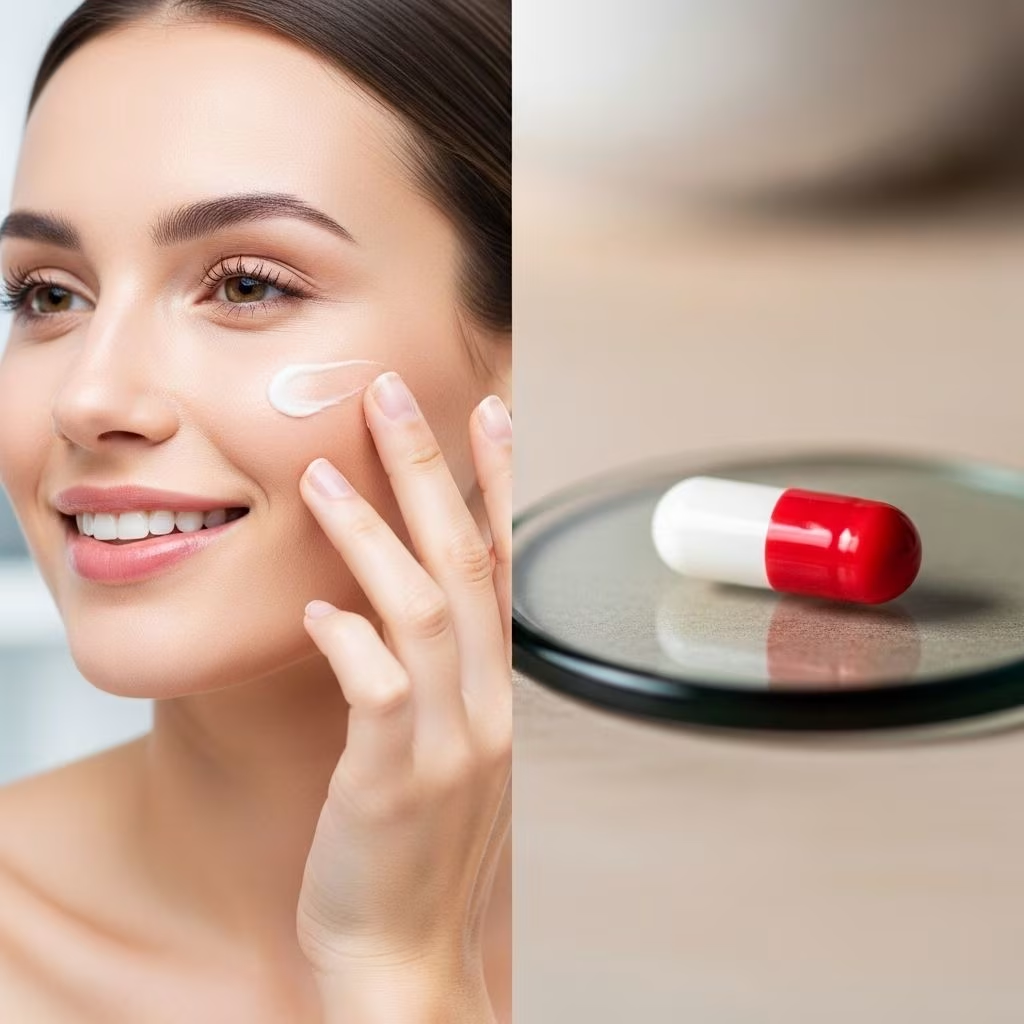
Retinoids, derived from vitamin A, are among the most researched and recommended ingredients for treating wrinkles and signs of skin aging. They have a profound effect on skin cell turnover, collagen production, and the appearance of fine lines, but they come in a variety of forms—most notably topical (applied to the skin) and oral (taken as a pill). This article explores the science, efficacy, safety, and best practices for using oral versus topical retinoids to achieve younger-looking skin.
How Retinoids Work in the Skin
Retinoids act by binding to retinoic acid receptors (RARs) in the skin, which regulate cell growth, differentiation, and inflammation. This interaction accelerates the turnover of skin cells, reduces the buildup of dead skin cells, stimulates collagen and elastin production, and diminishes the appearance of wrinkles, uneven texture, and pigmentation.
- Collagen Boost: Retinoids increase collagen synthesis, which plumps the skin and reduces fine lines.
- Exfoliation: They promote the shedding of dead skin cells, revealing smoother, fresher skin underneath.
- Pigmentation: Retinoids help fade dark spots and even out skin tone over time.
Types of Retinoids
| Type | Where Found | Potency | Common Uses |
|---|---|---|---|
| Cosmetic Retinol | Over-the-counter skincare | Low | Mild anti-aging |
| Retinaldehyde | OTC skincare | Moderate | Anti-aging, sensitive skin |
| Prescription Tretinoin | Prescription cream/gel | High | Acne, wrinkles, photoaging |
| Adapalene | OTC and prescription | Moderate-high | Acne, mild wrinkles |
| Oral Isotretinoin | Prescription pill | Very High (systemic) | Severe acne, not typically for wrinkles |
Retinoids exist on a spectrum from mild (cosmetic retinol) to potent (prescription tretinoin, oral isotretinoin). Over-the-counter (OTC) retinoids are generally less irritating but also less effective than prescription-strength options.
Topical Retinoids for Wrinkles and Anti-Aging
Topical retinoids—including retinol, retinaldehyde, tretinoin, and adapalene—are applied directly to the skin and work locally with minimal systemic absorption.
Benefits
- Reduced Wrinkles: Clinical studies show topical tretinoin improves fine lines, wrinkles, and skin texture more effectively than lower-potency retinoids, but with increased risk of irritation.
- Gentle Options: OTC retinol and retinaldehyde offer milder anti-aging benefits with less irritation, making them suitable for sensitive skin or beginners.
- Customizable: Dermatologists can tailor the strength and formulation to individual skin types and concerns.
Drawbacks
- Side Effects: Redness, peeling, dryness, and sun sensitivity are common, especially with higher strengths.
- Gradual Results: Improvements can take weeks to months of consistent use.
Oral Retinoids for Skin Anti-Aging
Oral retinoids, such as isotretinoin (Accutane), acitretin, and alitretinoin, are systemic medications prescribed for severe skin conditions. Their use in anti-aging is limited due to significant risks.
Mechanism & Efficacy
Oral retinoids circulate throughout the body, reaching the skin and other organs, and can dramatically improve severe acne and certain skin disorders. However, there is no substantial evidence that oral retinoids are effective or safe for routine anti-aging or wrinkle reduction.
Risks & Limitations
- Severe Side Effects: Oral retinoids can cause serious systemic effects, including liver toxicity, elevated triglycerides, and teratogenicity (birth defects). Women of childbearing age must use contraception due to the high risk of fetal harm.
- Not for Cosmetic Use: Oral retinoids are not indicated for cosmetic improvement of wrinkles and are reserved for medically necessary conditions.
Comparison of Oral and Topical Retinoids
| Feature | Topical Retinoids | Oral Retinoids |
|---|---|---|
| Application | Applied directly to skin | Ingested as a pill |
| Main Uses | Wrinkles, acne, photoaging, texture | Severe acne, psoriasis, cutaneous T-cell lymphoma |
| Systemic Effects | Minimal | Significant (affects entire body) |
| Side Effects | Localized (redness, peeling, dryness) | Systemic (liver toxicity, birth defects, mood changes) |
| Evidence for Anti-Aging | Strong for wrinkles and photoaging | Limited; not indicated for cosmetic anti-aging |
| Availability | OTC and prescription | Prescription only |
| Safety Profile | Generally safe with gradual use; sun protection essential | High-risk; requires medical supervision |
Side Effects and Safety Considerations
Both oral and topical retinoids require careful use and medical supervision, but the risks are very different.
Topical Retinoids
- Common: Redness, irritation, dryness, peeling, and increased sun sensitivity.
- Management: Start with lower concentrations, use moisturizer, and apply sunscreen daily.
- Best for: Most adults seeking anti-aging benefits, including those with sensitive skin using milder forms.
Oral Retinoids
- Risks: Birth defects (teratogenicity), elevated lipids, liver damage, mood changes, and mucocutaneous dryness.
- Management: Strict medical supervision, regular blood tests, and contraception for women of childbearing age.
- Not for: Cosmetic anti-aging; reserved for severe, recalcitrant dermatologic conditions.
Pregnant or breastfeeding women should avoid retinoids entirely, especially oral forms, due to the risk of fetal harm.
Choosing the Right Retinoid for Your Skin
Selecting a retinoid depends on your skin type, concerns, and tolerance for side effects.
- Mild Concerns: Start with OTC retinol or retinaldehyde, especially if you have sensitive skin.
- Moderate to Severe Aging: Consult a dermatologist for prescription-strength tretinoin or adapalene for more pronounced results.
- Acne-Prone Skin: Adapalene (OTC or prescription) is well-tolerated and effective for both acne and mild wrinkles.
- Never Self-Prescribe Oral Retinoids: These are not appropriate for cosmetic anti-aging and pose serious health risks.
How to Use Retinoids for Best Results
- Start Slow: Begin with low concentrations and use every other night to acclimate your skin.
- Moisturize: Apply a gentle moisturizer before or after retinoid application to minimize dryness and irritation.
- Sun Protection: Use broad-spectrum SPF 30+ sunscreen daily, as retinoids increase sun sensitivity.
- Patience: Visible improvements in wrinkles and texture may take 3–6 months of consistent use.
- Consult a Professional: A dermatologist can customize your regimen and monitor for side effects.
FAQs on Retinoids for Wrinkles and Anti-Aging
Are retinoids the best treatment for wrinkles?
Topical retinoids are among the most evidence-based treatments for reducing fine lines and wrinkles, with prescription formulas like tretinoin showing the strongest results. OTC retinol is a good option for milder concerns or sensitive skin.
Can I use oral retinoids for wrinkles?
Oral retinoids are not indicated for cosmetic anti-aging and are prescribed only for severe skin conditions due to serious systemic risks.
How long does it take to see results from topical retinoids?
Improvements in fine lines and texture may take 3–6 months of consistent use, with gradual progress over time.
Can retinoids cause skin irritation?
Yes, especially with higher concentrations. Redness, dryness, and peeling are common but often subside with continued use. Start slowly and moisturize to minimize irritation.
Are there alternatives to retinoids for anti-aging?
Other options include vitamin C, peptides, niacinamide, and alpha hydroxy acids (AHAs), but none are as comprehensively studied for wrinkle reduction as retinoids.
Conclusion
For wrinkles and anti-aging, topical retinoids—ranging from gentle OTC retinol to potent prescription tretinoin—are the gold standard, offering proven benefits with manageable side effects for most users. Oral retinoids, while powerful for certain skin diseases, are not appropriate for cosmetic anti-aging due to their significant risks and lack of evidence for wrinkle reduction. The best approach is to start with a mild topical retinoid, use sun protection, and consult a dermatologist to tailor your skincare regimen for optimal safety and results.
References
- https://www.dermstore.com/blog/types-of-retinoids-benefits/
- https://quickrxspecialty.pharmacy/tretinoin-oral-vs-tretinoin-topical-differences-similarities-and-side-effects/
- https://www.infantrisk.com/content/retinoid-skincare-and-nursing-what-new-moms-should-know
- https://www.lesielle.com/us/blog/types-of-retinoids-which-is-the-strongest-pros-and-cons-104
- https://pmc.ncbi.nlm.nih.gov/articles/PMC8750127/
- https://www.aad.org/public/everyday-care/skin-care-secrets/anti-aging/retinoid-retinol
- https://www.medicalnewstoday.com/articles/retinoids
- https://www.goodrx.com/health-topic/dermatology/retinol-vs-retinoid
- https://my.clevelandclinic.org/health/treatments/23293-retinol


