


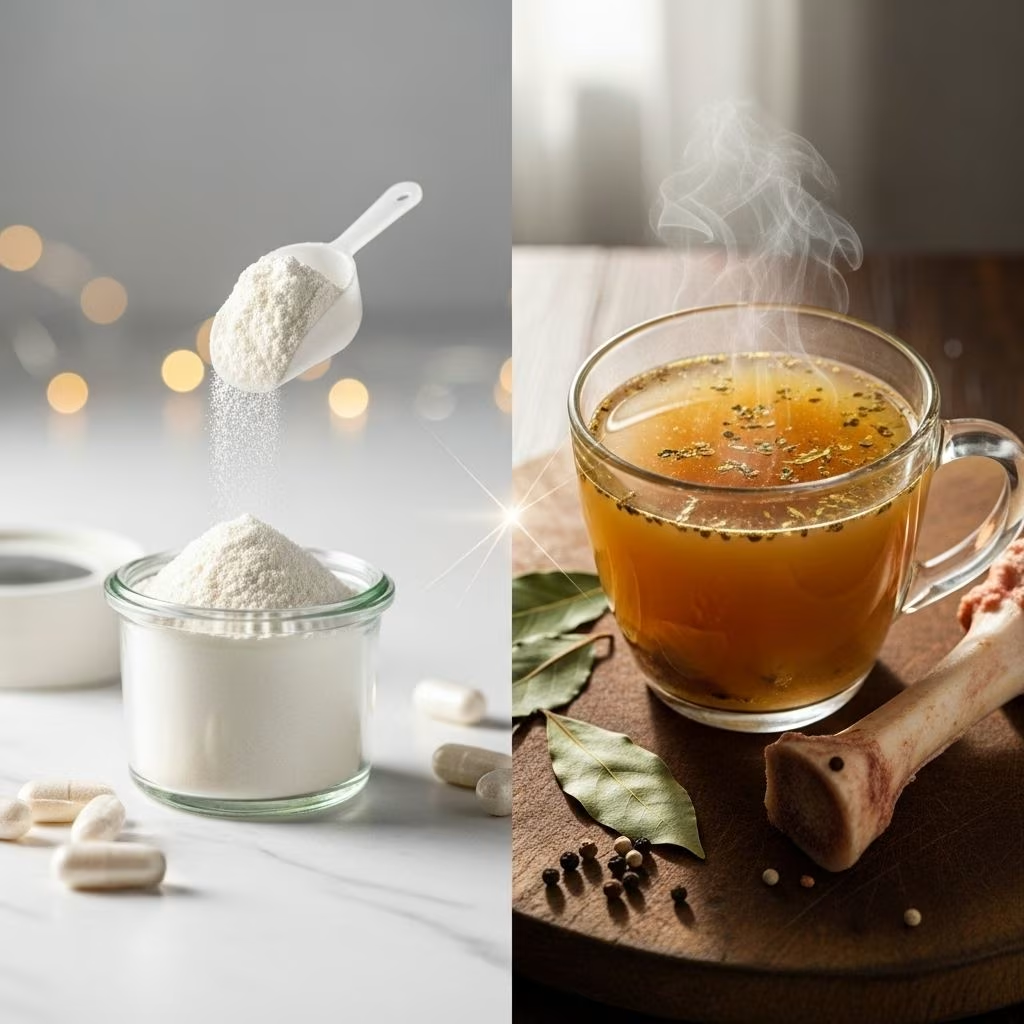
The skin health and beauty sector is saturated with supplements and superfoods, but few have garnered as much debate as collagen peptides and bone broth. Proponents of both claim smoother, more hydrated, and younger-looking skin, but does science back these assertions? This comprehensive guide examines the evidence behind each, delving into their molecular makeup, clinical studies, and dermatological insights to determine which delivers the greatest benefit for your skin.
Understanding Collagen and Its Importance
Collagen is the most abundant protein in the human body, comprising roughly a third of all protein content. It is a structural protein that forms the connective tissue, skin, bones, cartilage, and ligaments. With age, the body’s natural collagen production declines, causing skin to lose elasticity, moisture, and firmness, which results in visible signs of aging like wrinkles and dryness.
Why Collagen Declines with Age
- Natural aging leads to reduced collagen synthesis.
- Environmental factors such as UV exposure, pollution, smoking, and high sugar intake accelerate collagen breakdown.
- Diminished collagen causes the skin to lose structure, leading to sagging and increased wrinkle formation.
Given its key role in maintaining skin structure and resilience, replenishing collagen has become a central focus in anti-aging and wellness circles.
Collagen Peptides: What Are They?
Collagen peptides, also called hydrolyzed collagen, are short-chain amino acids obtained by enzymatically breaking down full-length collagen proteins, typically sourced from bovine, porcine, or marine (fish) sources. Hydrolyzation makes these peptides highly dissolvable and easily absorbed by the body.
Main Features of Collagen Peptides
- Highly bioavailable due to enzymatic hydrolysis.
- Usually tasteless and odorless powdered form—ideal for supplementing in smoothies or beverages.
- Contains key amino acids like glycine, proline, and hydroxyproline essential for skin regeneration.
Claims of skin improvement stem from the fact that these peptides are rapidly absorbed, circulate in the bloodstream, and can stimulate fibroblast activity—the cells in skin responsible for synthesizing new collagen.
Bone Broth: What Does It Offer?
Bone broth is an ancient, slow-cooked stock made by simmering animal bones (often with connective tissue, cartilage, and marrow) in water. The long cooking process extracts gelatin, minerals, amino acids, and some vitamins from the animal parts, resulting in a nutrient-rich liquid.
Main Components of Bone Broth
- Gelatin (partially hydrolyzed collagen) forms when collagen breaks down during cooking.
- Contains amino acids like glycine and glutamine.
- Provides minerals such as calcium, magnesium, and phosphorus.
- May also contain trace amounts of other nutrients (depending on added vegetables/herbs).
Bone broth, hailed in traditional medicine for its healing properties, is believed to support skin and joint health due to its natural collagen and amino acid content.
Collagen Peptides vs. Bone Broth: Comparison Table
| Feature | Collagen Peptides | Bone Broth |
|---|---|---|
| Source | Hydrolyzed from bovine, marine, or porcine collagen | Animal bones, cartilage, and connective tissues |
| Collagen Type | Mostly type I and III (depending on source) | Type I, II, and III plus gelatin |
| Form | Powder, capsules, drinks | Liquid (broth), gels, or soup bases |
| Bioavailability | High—hydrolyzed for rapid absorption | Moderate—gelatin needs further digestion |
| Concentration of Collagen | Standardized and concentrated per serving | Variable; depends on recipe and cook time |
| Flavor and Use | Neutral—easy to add to foods/beverages | Savory flavor, consumed as soup/drink |
| Other Nutrients | Primarily collagen and amino acids | Vitamins, minerals, glucosamine, chondroitin |
| Supported by Scientific Studies | Yes—multiple RCTs available | Limited—mostly anecdotal or extrapolated data |
How Collagen Peptides and Bone Broth Work on Skin
The skin’s appearance, texture, and elasticity are influenced by its collagen content. Here’s how these products interact:
Collagen Peptides
- Once ingested, peptides are absorbed in the gut and appear in the bloodstream as di- and tripeptides.
- These peptides stimulate fibroblasts to synthesize new collagen, elastin, and hyaluronic acid, resulting in firmer, more hydrated skin.
- Hydrolyzed peptides have demonstrated ability to increase skin moisture and density, and reduce fragmentation of the dermal collagen network.
Bone Broth
- Gelatin in bone broth is a partially hydrolyzed form of collagen, needing further digestion before absorption.
- Provides key amino acids that serve as building blocks for collagen synthesis.
- Minerals and co-factors in bone broth may indirectly support skin health by promoting overall nutrition.
Scientific Evidence: What Does Research Say?
Collagen Peptides: Backed by Clinical Trials
- Multiple randomized controlled trials (RCTs) and meta-analyses show that oral collagen peptide supplementation improves skin hydration, elasticity, and reduces wrinkles.
- A systematic review of 26 RCTs found significant improvements in skin moisture and elasticity after 8–12 weeks of use.
- Hydrolyzed marine collagen has shown benefits in older women, including increased skin density and decreased collagen fragmentation.
- Additional benefits include enhanced wound healing and strengthening of the skin barrier.
Experts emphasize that high-quality, hydrolyzed collagen peptides offer a level of absorption and clinical validation lacking in most other natural protein supplements.
Bone Broth: Largely Traditional, Few Human Studies
- Most support for bone broth’s skin benefits is anecdotal or inferred from its nutrient profile.
- The collagen in bone broth is less concentrated and its absorption is less efficient compared to hydrolyzed peptides.
- No large, direct clinical trials specifically link bone broth consumption to measurable improvements in skin elasticity, hydration, or wrinkle reduction.
- However, bone broth is nutritious, offering a broad array of minerals and co-factors that may support overall health, including the skin.
While many people anecdotally report improved skin after regular bone broth consumption, robust scientific trials specifically validating these claims are lacking as of now.
Key Skin Benefits: Hydration, Elasticity, Wrinkle Reduction
Collagen Peptides
- Skin Hydration: Clinical studies consistently show increased skin moisture, with some reporting up to a 12% improvement.
- Elasticity & Firmness: Supplementation boosts elasticity through fibroblast activation and increased dermal collagen density.
- Wrinkle Reduction: Several studies demonstrate statistically significant decreases in wrinkle depth and number after 8–12 weeks of use.
- Barrier & Healing: Supports epidermal barrier function and may speed wound healing and scar reduction.
Bone Broth
- Skin Hydration: Supplies amino acids needed for collagen synthesis, but less directly linked to increased hydration in controlled studies.
- Elasticity & Firmness: May help support these aspects when consumed regularly, especially as part of a nutritious, whole-food diet.
- Wrinkle Reduction: No direct evidence, but proponents report subjective improvements.
- General Health: The minerals, glucosamine, and chondroitin may indirectly support skin, joints, and gut health.
Quality, Sourcing, and Bioavailability
Collagen Peptides
- Bioavailability: Hydrolyzed for rapid absorption; evidenced plasma increase of collagen peptides after intake.
- Sourcing: Bovine and marine sources are most studied; look for products third-party tested for purity.
- Complements: Pairing with vitamin C supports collagen synthesis in the skin.
Bone Broth
- Quality varies: Collagen content depends on the parts used, simmer time, and preparation technique.
- Homemade vs. Store-bought: Homemade usually contains higher gelatin content; shelf-stable store broths may be diluted or contain additives.
- Bioavailability: Gelatin is less efficiently absorbed compared to hydrolyzed peptides.
Potential Limitations and Safety
- Both supplements are generally well-tolerated for most people; however, those with allergies to source materials should exercise caution.
- Collagen supplements are considered safe with rare reports of digestive discomfort.
- Bone broth can be high in sodium or contain contaminants if prepared from non-organic animal parts.
- There is insufficient research to confirm long-term safety of high-dose, daily collagen supplementation, though current studies up to 12 weeks show no adverse effects.
- Always consult a healthcare provider before starting new supplementation, especially if you have a medical condition or are pregnant.
Frequently Asked Questions (FAQs)
Q: Do collagen supplements actually improve skin appearance?
A: Yes, multiple controlled trials suggest hydrolyzed collagen peptides improve skin hydration, elasticity, and may reduce wrinkle depth when taken daily for at least 8–12 weeks.
Q: Is bone broth as effective as collagen peptides for skin?
A: Bone broth is nutritious and supplies gelatin, but lacks the concentration and clinical evidence supporting hydrolyzed collagen peptides for measurable skin improvements.
Q: How long before I see results from collagen supplements?
A: Most studies report visible and measurable effects after 8–12 weeks of consistent supplementation.
Q: Can diet and lifestyle impact collagen’s effectiveness?
A: Yes. A balanced diet, limiting sun exposure, quitting smoking, and increasing vitamin C intake can all boost the effectiveness of collagen supplements.
Q: Who should avoid collagen supplementation?
A: Those with allergies to fish, bovine, or porcine products should be cautious and consult with a physician before use.
Conclusion: Which Is Better for Skin Health?
While both collagen peptides and bone broth are rich sources of skin-supporting amino acids, collagen peptides are the clear frontrunner for skin rejuvenation based on current scientific evidence. Clinical studies consistently show improvements in skin hydration, elasticity, and wrinkle reduction with daily supplementation of hydrolyzed collagen peptides for at least 8–12 weeks. Bone broth is a nourishing addition to the diet, particularly for general wellness, but it has not matched collagen peptides’ efficacy in medical studies.
Ultimately, those seeking targeted skin benefits—especially as part of an anti-aging strategy—may see the best results by choosing high-quality, hydrolyzed collagen peptides, paired with a nutrient-rich diet and protective lifestyle habits.
References
- https://www.westdermatology.com/2025/03/06/does-collagen-powder-actually-improve-skin-health/
- https://pmc.ncbi.nlm.nih.gov/articles/PMC8620403/
- https://pmc.ncbi.nlm.nih.gov/articles/PMC10180699/
- https://www.health.harvard.edu/blog/considering-collagen-drinks-and-supplements-202304122911
- https://my.clevelandclinic.org/health/articles/23089-collagen
- https://onlinelibrary.wiley.com/doi/10.1155/2024/8752787
- https://www.hackensackmeridianhealth.org/en/healthu/2022/07/26/dermatologist-weighs-in-on-collagen-peptide-treatments


