


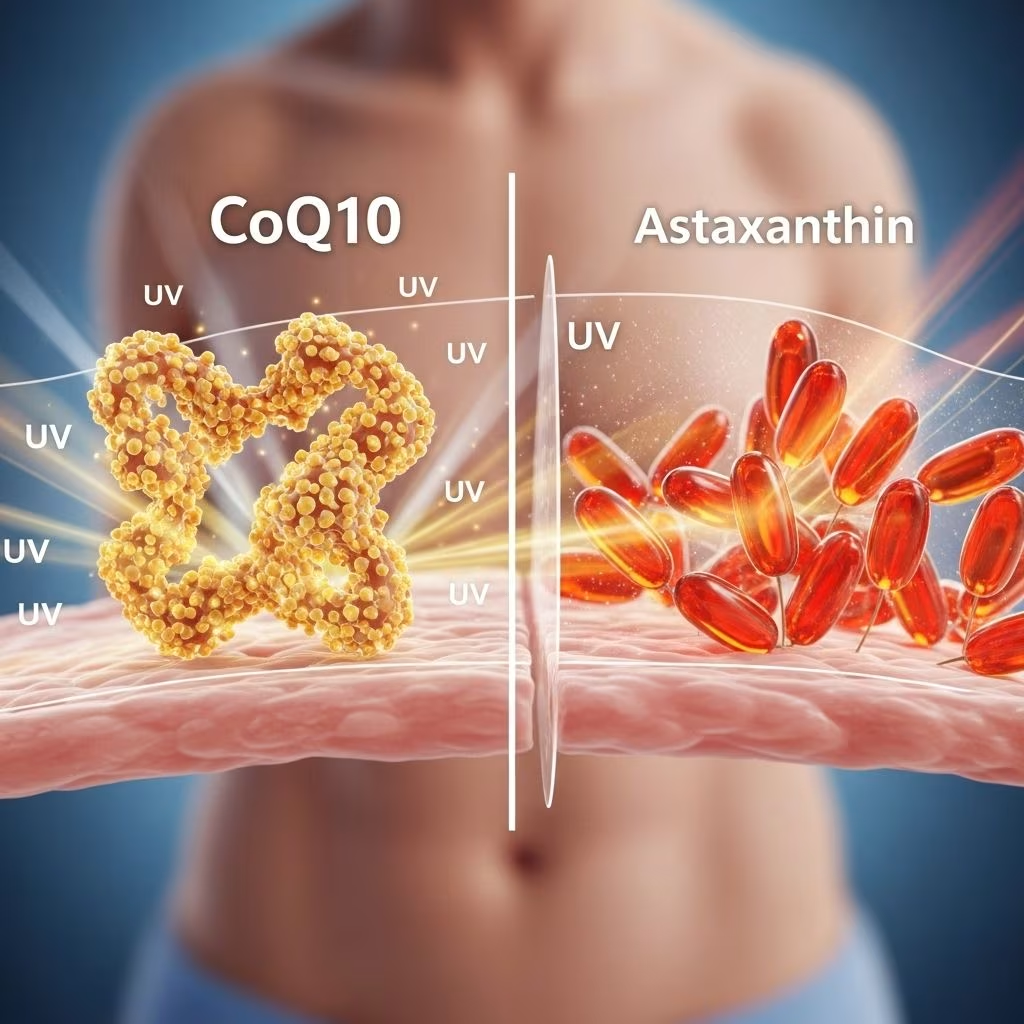
CoQ10 vs. Astaxanthin: Best Internal UV Protection
Ultra-violet (UV) rays represent one of the most persistent environmental challenges to skin health, driving the search for effective internal protection strategies. Among nutritional interventions, Coenzyme Q10 (CoQ10) and Astaxanthin stand out for their antioxidant properties and their reputed benefits in supporting the skin against UV-related damage. This article critically compares these two molecules, examines scientific findings on their internal UV-protective effects, and offers practical guidance for health-conscious consumers.
Introduction to Internal UV Protection
While sunscreens offer topical defense, they are limited by application frequency, coverage, and individual compliance. To address the biological deterioration caused by UV—such as oxidative stress, inflammation, and photoaging—many turn to internal antioxidants as adjunct protection. Supplements like CoQ10 and Astaxanthin are promoted for supporting the skin’s ability to withstand UV exposure from within, aiming to reduce damage, prolong skin health, and mitigate visual effects of aging.
Mechanisms of UV Damage: Why Antioxidants Matter
UV rays penetrate the skin and generate reactive oxygen species (ROS) and singlet oxygen, damaging cell components, DNA, and structural proteins. This oxidative stress disrupts the biological barrier of the skin and accelerates:
- Collagen breakdown and loss of elasticity
- Inflammation and erythema (redness)
- Increased transepidermal water loss (TEWL) and impaired moisture
- Cumulative photoaging and increased risk of skin cancers
By neutralizing ROS and preventing oxidative chain reactions, antioxidants are crucial for both short-term protection and long-term skin resilience.
CoQ10: Chemistry, Mechanism, and UV Protection Profile
What is CoQ10?
Coenzyme Q10 (ubiquinone) is a lipid-soluble, redox-active quinone found naturally in all cell membranes. It is essential for mitochondrial energy production and acts directly as an antioxidant by scavenging free radicals.
- Facilitates ATP production in cells
- Protects lipids, proteins, and DNA from oxidation
- Levels decline with age and stress, including UV exposure
Scientific Evidence for CoQ10’s UV Protection
Experimental studies indicate that CoQ10 supplementation helps mitigate oxidative damage in skin cells, supporting repair and reducing some markers of inflammation and photoaging. However, when compared to specialized carotenoids, its direct UV-protective effect—especially against singlet oxygen—is moderate.
| Aspect | CoQ10 |
|---|---|
| Antioxidant Potency | Strong, but weaker than astaxanthin |
| UV Defense Mechanisms | Protects against ROS, supports repair |
| Skin Health Benefits | Improves energy, may decrease wrinkles mildly |
| Supplement Forms | Capsules, tablets, topical creams |
Overall, CoQ10 offers supportive antioxidant effects but does not have potent internal UV shielding on par with carotenoids.
Astaxanthin: Chemistry, Mechanism, and Superior UV Defense
What is Astaxanthin?
Astaxanthin is a keto-carotenoid pigment, naturally found in microalgae and responsible for the pink color in salmon and flamingos. It is recognized as one of the strongest natural antioxidants, being:
- 800–1000 times more effective than CoQ10 at scavenging singlet oxygen
- Able to cross cell membranes and protect all skin layers
- Unique in stabilizing cell membranes and neutralizing ROS
Clinical Evidence of Astaxanthin’s UV Protection
Human trials and animal studies demonstrate astaxanthin supplementation’s significant role in supporting skin against UV-induced deterioration. Key findings include:
- Increased Minimal Erythema Dose (MED): Oral astaxanthin raised MED—the amount of UV required to cause sunburn—after 9 weeks, in a placebo-controlled trial, indicating increased skin resistance to UV.
- Preserved Moisture and Reduced Inflammation: Astaxanthin supplementation counteracted UV-induced loss of skin moisture, greatly reducing post-irradiation dryness compared to placebo.
- Improved Texture and Reduced Roughness: Subjective evaluations showed enhancements in skin texture and roughness, contributing to healthier appearance under UV exposure.
- Cell-Level Protection: In vitro testing found astaxanthin limited keratinocyte damage and redness caused by UVB, reducing inflammatory cascade and tissue destruction.
- Photoprotection in All Skin Layers: Unlike many antioxidants, astaxanthin passes between hydrophilic and lipophilic environments, safeguarding the entire epidermis from UV-induced ROS.
| Aspect | Astaxanthin |
|---|---|
| Antioxidant Potency | 1000x stronger than CoQ10 for singlet oxygen |
| UV Defense Mechanisms | Direct ROS scavenging, DNA and membrane stabilization |
| Skin Health Benefits | Protects moisture, elasticity, reduces redness, strengthens collagen |
| Supplement Forms | Capsules, tablets, topical creams |
Astaxanthin does not act as an SPF blocker but provides cellular resistance to UV. Its non-phototoxic nature makes it safe for ingestion and for topical use, with no reported adverse events even in long-term studies.
Direct Comparison: CoQ10 vs. Astaxanthin for Internal UV Protection
| Feature | CoQ10 | Astaxanthin |
|---|---|---|
| UV-Protection Potency | Moderate | Exceptional |
| Singlet Oxygen Quenching | Baseline | 1000x higher than CoQ10 |
| Skin Benefits | Energizing, mild anti-aging | Improves elasticity, texture, hydration; protects against redness |
| Clinical Evidence | Supports general skin health | Demonstrated increase in UV resistance, reduced skin moisture loss |
| Safety | Generally safe | Generally safe, nonphototoxic |
The balance of scientific evidence indicates that astaxanthin is the superior choice for internal UV protection, offering greater potency, direct mitigation of UV-induced cellular damage, and broader skin health benefits than CoQ10.
Beyond UV: Effects on Skin Health and Anti-Aging
Both CoQ10 and astaxanthin support overall skin health and combat visible signs of aging, but their mechanisms and outcomes differ:
- Astaxanthin improves elasticity by strengthening collagen, reduces age spots, improves dermal texture, and revitalizes photoaged tissue.
- CoQ10 aids in cellular energy production, contributing to the repair and rejuvenation processes that may reduce fine lines, though generally to a lesser extent.
The multitarget effects of astaxanthin make it an attractive option for holistic anti-aging and skin resilience, especially for those frequently exposed to UV rays.
Safety and Clinical Use
- Astaxanthin has been studied in human trials up to 9 weeks with no observed adverse effects or abnormal clinical findings in blood work.
- It is considered nonphototoxic and suitable for long-term supplementation and topical use.
- CoQ10 is well-tolerated in recommended oral doses.
- No significant drug interactions have been noted for either compound at standard doses, though medical supervision is recommended for chronic use or high dosages.
Recommended Usage and Practical Tips
- Astaxanthin: Typical oral doses range from 4 to 12 mg daily; clinical trials have used 4 mg for UV protection. It is best absorbed with fat-containing meals.
- CoQ10: Doses for skin health generally span 30 to 100 mg per day as part of general antioxidant support.
- Topical formulations of both are available, but only astaxanthin has demonstrated direct skin barrier protection in human and in vitro UV studies.
- Supplements should be sourced from reputable manufacturers, be standardized, and taken as part of a broader skin health and sun protection regimen.
While supplements are valuable, they do not replace physical barrier protections such as sunscreen, clothing, and sun avoidance during peak hours.
Frequently Asked Questions (FAQs)
Q: Can astaxanthin replace sunscreen?
No. Astaxanthin supports the skin’s ability to defend against UV-induced oxidative damage, but it does not block UV rays or provide direct SPF. It is best used as an adjunct to traditional sun protection methods.
Q: Are there side effects to long-term astaxanthin use?
In clinical studies, astaxanthin has demonstrated excellent safety, with no significant side effects or blood chemistry changes over periods up to 9 weeks. Occasional mild changes in stool color or skin pigment may occur at high doses, but these are not harmful.
Q: Is CoQ10 effective for UV protection?
CoQ10 provides general antioxidant benefits that can help the skin repair oxidative damage, but its UV-defensive capacity is not nearly as pronounced as astaxanthin, especially for singlet oxygen and photodamage.
Q: Who should consider astaxanthin supplementation?
Those seeking additional protection against UV-induced skin aging, especially frequent outdoor enthusiasts, individuals with fair or sensitive skin, and anyone interested in holistic skin health may benefit from astaxanthin as part of a broader regimen.
Q: Are these antioxidants beneficial for athletes?
Astaxanthin is increasingly used by athletes for its capacity to defend skin and muscle cells against oxidative stress, including sun exposure during prolonged outdoor exercise. CoQ10 is favored for energy and recovery but less so for direct UV defense.
Conclusion
Between CoQ10 and astaxanthin, the latter emerges as the scientifically validated choice for internal UV protection. Astaxanthin’s profound singlet oxygen quenching, cellular barrier stabilization, and multi-layer skin benefits set it apart as a unique shield against environmental stressors, notably UV rays. Those striving for robust skin health and resilience to sun-induced aging should consider quality astaxanthin supplementation alongside conventional sun safety practices.
References
- https://pmc.ncbi.nlm.nih.gov/articles/PMC6073124/
- https://www.bdi-biolifescience.com/de/kosmetik/natural-astaxanthin-the-red-diamond-amongst-antioxidants/
- https://www.lifeextension.com/wellness/antioxidants/astaxanthin-vs-coq10
- https://www.cactusbotanics.com/faq/2830.html
- https://instrength.org/blogs/blogs-instrength-blogs/astaxanthin-the-super-antioxidant-you-need-to-know-about
- https://www.ncbi.nlm.nih.gov/books/NBK299046/
- https://www.metagenics.co.uk/news/6-best-antioxidants-to-protect-your-youthful-skin/
- https://microphyt.eu/astaxanthin-focus-on-one-of-the-most-potent-natural-antioxidants/


