


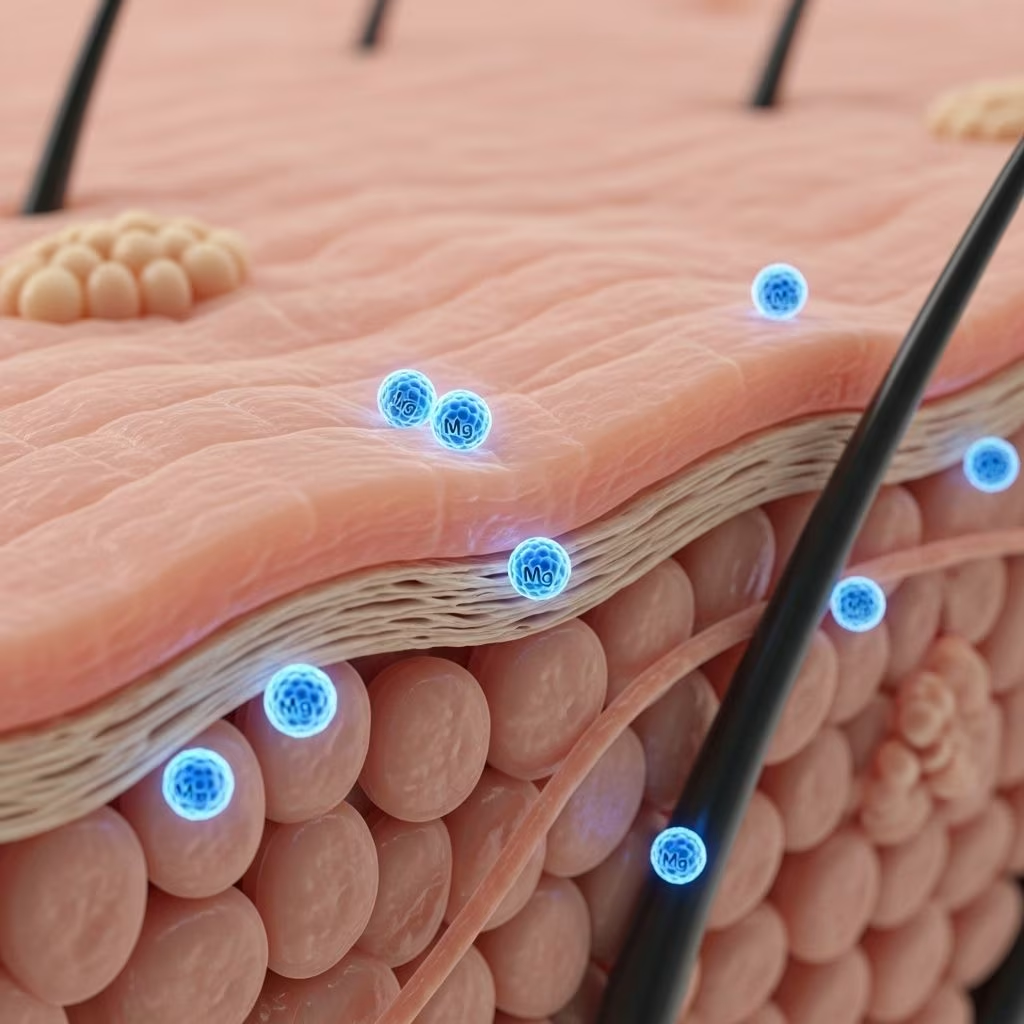
Understanding Magnesium and Its Importance
Magnesium is an essential mineral involved in over 300 biochemical reactions in the human body, crucial for muscle and nerve function, energy production, DNA synthesis, and maintaining healthy bones and skin. Despite its importance, many people do not meet daily magnesium needs through diet alone, leading to a growing interest in supplementation—not only orally but also through topical applications, especially for skin health and systemic absorption.
Bioavailability Basics and Why It Matters
Bioavailability describes the rate and extent to which an active ingredient is absorbed and available at the site of physiological activity. For magnesium, high bioavailability means your body can utilize more of the ingested or applied magnesium, reducing waste and potential side effects. Oral forms of magnesium can vary widely in bioavailability, with some forms (like citrate) being more efficiently absorbed than others (like oxide). The concept of bioavailability is equally important for topical applications, though the mechanisms are different.
Chemical Forms of Magnesium and Their Common Uses
Magnesium exists in several chemical forms, each with unique properties influencing absorption and bioavailability. Here’s an overview:
| Form | Common Uses | Oral Bioavailability | Topical Bioavailability |
|---|---|---|---|
| Magnesium Chloride | Oils, creams, baths | Moderate (oral absorption not primary use) | Good (best-studied for topical use) |
| Magnesium Sulfate | Epsom salts (baths), some creams | Low (oral absorption not primary use) | Moderate (less data than chloride) |
| Magnesium Citrate | Supplements | High (well-absorbed orally) | Not commonly used topically |
| Magnesium Malate | Supplements | Good (less laxative effect) | Not commonly used topically |
| Magnesium Oxide | Supplements | Low | Not used topically |
| Sustained-release Patches | Medical, therapeutic use | N/A (transdermal delivery) | Emerging (limited research) |
While oral forms are widely used for supplementation, topical forms—especially magnesium chloride and sulfate—have gained attention for direct skin delivery.
Skin Absorption of Magnesium: What Does the Science Say?
The skin is the body’s largest organ, acting as a protective barrier against environmental threats. Its primary function is to limit the penetration of substances, including nutrients and minerals, into the body. This barrier is composed of the stratum corneum, a water-repellent layer of dead cells embedded in a lipid matrix. Overcoming this layer is challenging, especially for ions like magnesium, which are typically large, water-soluble, and thus poorly absorbed through intact skin.
However, the skin is not completely impermeable. Some absorption can occur through sweat glands, hair follicles, or areas where the skin barrier is compromised. Studies on human cadaver skin have shown that magnesium from creams (primarily magnesium chloride) can indeed penetrate the skin, though the amounts observed were relatively low compared to oral supplementation. The cumulative magnesium permeation from creams was measured in the micrograms, not milligrams, suggesting limited systemic uptake.
The radius of the hydrated magnesium ion is much larger than its dehydrated form, making passive diffusion across the skin highly unlikely for naked ions. Most available research suggests that if transdermal absorption occurs, it is likely through appendages rather than directly across the stratum corneum.
Transdermal Magnesium Delivery Methods
- Magnesium Oil (Chloride): A highly concentrated solution of magnesium chloride in water. Applied as a spray or massage oil, it can cause a tingling sensation—sometimes interpreted as a sign of absorption, though this may simply be skin irritation.
- Magnesium Creams: Magnesium chloride or sulfate blended into a cream base. These formulations are often marketed as gentler alternatives to oils and may contain additional moisturizing ingredients.
- Magnesium Bath Salts (Sulfate): Epsom salt baths are a popular way to deliver magnesium, though evidence for significant absorption is limited.
- Magnesium Patches: Emerging patches designed for sustained release. Clinical evidence for these is currently minimal.
Clinical Evidence: Assessing Transdermal Bioavailability
There is limited human clinical research on transdermal magnesium absorption. The most cited in vitro study used magnesium chloride creams and found statistically significant, albeit modest, magnesium penetration through human skin compared to saline controls. However, the absolute quantities were much lower than would be required for significant systemic effects.
A small pilot study in humans (n=25) applied a low-dose magnesium cream (56 mg/day) for two weeks and observed a small increase in serum magnesium in the treatment group compared to placebo, though the effect was statistically significant only in non-athletes. Urinary excretion also increased slightly, further suggesting some systemic uptake. However, the study was underpowered and used a low dose compared to typical transdermal products, and the clinical relevance of the changes remains uncertain.
Factors Affecting Magnesium Absorption Through Skin
- Formulation: Creams appear to facilitate better penetration than aqueous solutions, likely due to their carrier ingredients.
- Skin Integrity: Broken or compromised skin may allow for greater absorption, though this can also increase the risk of irritation or infection.
- Application Area and Duration: Larger application areas and longer contact times may increase absorption, but this has not been thoroughly studied.
- Ionic Form and Molecular Size: The hydrated magnesium ion is large, limiting passive diffusion. Penetration may occur mainly through skin appendages with limited surface area.
Comparing Oral vs. Topical Magnesium for Bioavailability
Oral magnesium supplements, especially citrate and malate, have well-documented bioavailability and are the primary method for addressing magnesium deficiency. However, they can cause gastrointestinal side effects such as diarrhea and may not be suitable for everyone.
Topical applications, particularly magnesium chloride creams, show some evidence of transdermal absorption, but the amounts absorbed are likely much lower than with oral supplements. The main advantage of topical use may be for localized benefits—such as soothing sore muscles or supporting skin health—or for individuals who cannot tolerate oral magnesium.
Which Form of Magnesium is Best for Skin Absorption?
Based on current evidence, magnesium chloride creams appear to offer the best transdermal bioavailability among the available topical forms, though the actual systemic uptake remains modest. Magnesium oil (magnesium chloride in water) is also popular, but its absorption may be limited by irritation and a lack of penetration-enhancing ingredients.
Sustained-release patches and magnesium sulfate baths remain under-investigated, with little credible evidence to support their claims of high bioavailability.
For those seeking systemic magnesium repletion, oral forms (e.g., citrate, malate) are better supported by evidence. For localized skin benefits or for those who cannot tolerate oral supplements, magnesium chloride creams may offer some benefits, but expectations for significant systemic absorption should be realistic.
Potential Benefits and Risks of Transdermal Magnesium Use
Benefits
- Localized Skin Effects: May help with dryness, itchiness, or minor irritation.
- Possible Systemic Absorption: Minimal but measurable increases in blood and urine magnesium have been reported with creams.
- Avoid Gastrointestinal Side Effects: Topical use bypasses the gut, reducing risk of diarrhea.
Risks
- Limited Absorption: Most people will not absorb enough magnesium through the skin to correct a deficiency.
- Skin Irritation: Magnesium salts can cause stinging, tingling, or dryness, especially with oils or on sensitive skin.
- Lack of Robust Evidence: The clinical relevance of transdermal magnesium for systemic health is still unclear.
Frequently Asked Questions (FAQs)
Q: Can magnesium be absorbed through the skin?
Yes, some absorption can occur, especially with magnesium chloride creams, but the amounts are generally much lower than with oral supplements.
Q: Which form of magnesium is best absorbed through the skin?
Magnesium chloride, especially in a cream base, appears to have the best evidence for skin absorption. Other forms, like sulfate, have less data, and citrate/malate are not commonly used topically.
Q: Is topical magnesium effective for magnesium deficiency?
Most evidence suggests topical absorption is insufficient to correct a significant deficiency, though there may be minor increases in serum magnesium with regular use of creams. Oral supplements are more reliable for deficiency.
Q: Does magnesium oil or cream cause skin irritation?
Magnesium oil can cause stinging, tingling, or dryness, especially on sensitive or broken skin. Creams may be gentler, as they often contain moisturizing ingredients.
Q: Are magnesium baths effective for absorption?
Epsom salt (magnesium sulfate) baths are popular, but there is little evidence that they significantly raise blood magnesium levels. Any absorption is likely minimal.
Conclusion
Magnesium is essential for skin health and overall wellbeing, but its absorption through the skin is limited by the skin’s natural barrier. Magnesium chloride creams currently have the most evidence for transdermal absorption, though the amounts absorbed are small compared to oral supplements. Topical magnesium may offer localized skin benefits and a modest increase in systemic levels for some individuals, but it is not a substitute for oral supplementation when addressing deficiency. Further research is needed to clarify the clinical relevance of transdermal magnesium and to optimize formulations for better bioavailability.
For most people seeking to improve magnesium status, oral supplements—such as citrate or malate—remain the gold standard. For those interested in topical use, magnesium chloride creams are the best-studied option, but expectations for significant systemic effects should be realistic.
References
- https://pmc.ncbi.nlm.nih.gov/articles/PMC5579607/
- https://pmc.ncbi.nlm.nih.gov/articles/PMC5389641/
- https://us.betteryou.com/blogs/product-guides/transdermal-magnesium-explained
- https://www.healthline.com/nutrition/magnesium-types
- https://spriggsnutrition.co.uk/nutrition/magnesium-types-the-same-but-different
- https://nutraceuticalbusinessreview.com/gadot-magnesium-for-beauty-from-within-applications
- https://www.ancient-minerals.com/transdermal-magnesium/absorption/
- https://napiers.net/blogs/news/the-best-way-to-take-magnesium-spray-supplement-or-cream


