


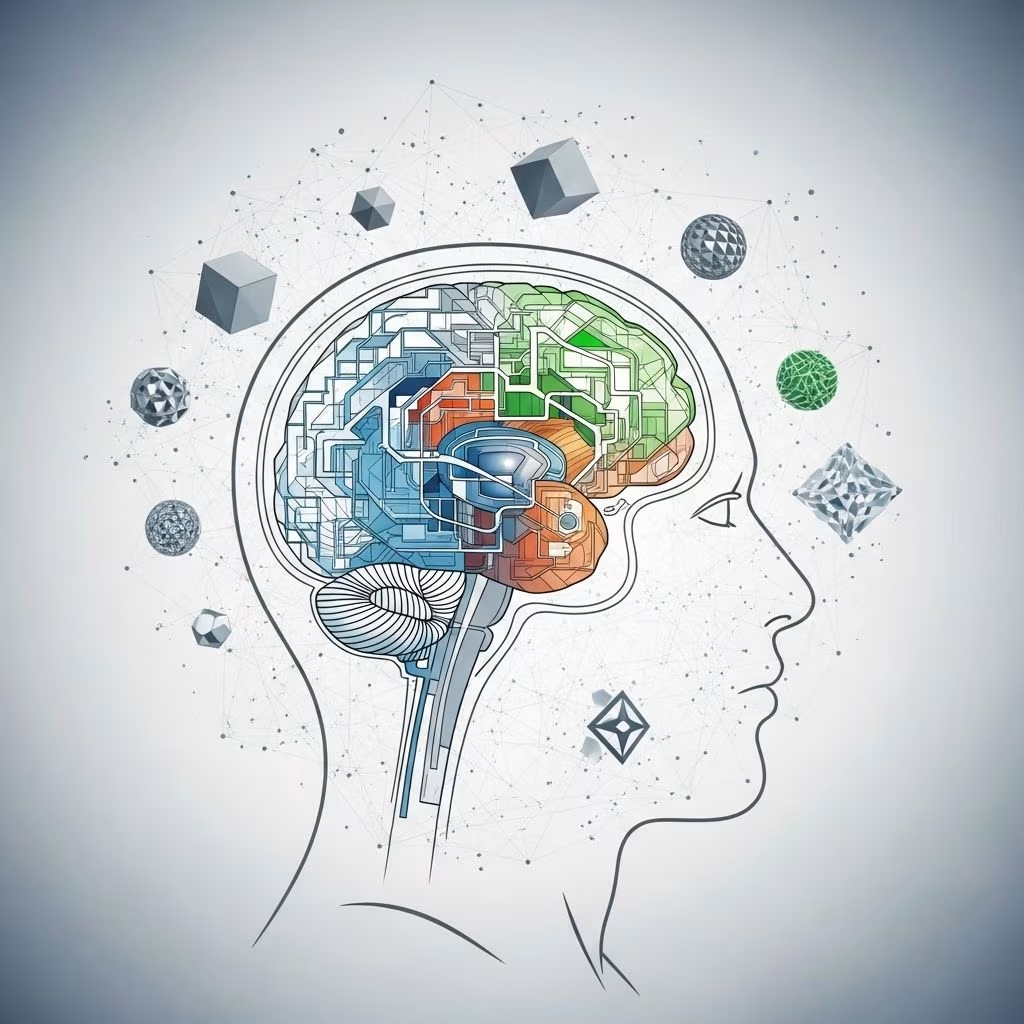
What Is Cognitive Bias?
Cognitive bias refers to systematic errors in thinking that influence how people receive, interpret, process, and remember information. Rather than processing information in a completely rational and objective manner, our brains rely on mental shortcuts, or heuristics, to help us make sense of the world more efficiently. However, these shortcuts can lead to distortions, misinterpretations, and irrational judgments, often without our conscious awareness.
Key Takeaways
- Cognitive biases are unconscious patterns of thought that can affect our perception, memory, judgment, and decision-making.
- These biases stem from the brain’s attempt to simplify information processing, often at the expense of accuracy and objectivity.
- Cognitive biases are both universal and highly individual, shaped by personal experiences, context, and culture.
Why Do Cognitive Biases Happen?
Our mental resources are limited. Given the constant influx of information in our environment, the brain uses cognitive shortcuts to process data quickly and efficiently. But this reliance on heuristics can come at the cost of precision. Factors that contribute to cognitive bias include:
- Information overload: The brain cannot attend to every piece of data, so it filters and prioritizes.
- Need for quick judgments: Rapid decisions are sometimes necessary for survival, even if accuracy suffers.
- Emotional influences: Feelings can override rational analysis, shaping choices in subtle ways.
- Social pressure: Group norms and cultural backgrounds mold our expectations and perceptions.
- Memory limitations: Our recall is imperfect, often reconstructing events based on beliefs or expectations.
How Biases Affect You
Cognitive biases can shape virtually every aspect of daily life, from trivial choices to critical decisions. For example, they influence how medical professionals diagnose patients, how jurors interpret evidence, and even how we assess risk in our personal lives.
Types of Cognitive Bias
Psychologists have identified dozens of cognitive biases, with some being more prevalent or influential than others. Below are some of the most studied and common types:
Anchoring Bias
Anchoring bias is the tendency to rely too heavily on the first piece of information encountered (the “anchor”) when making decisions. For example, in negotiations, the initial offer often sets the stage for all subsequent discussions, even if the starting point is arbitrary.
Availability Heuristic
This occurs when we estimate the likelihood of events based on how easily examples come to mind. For instance, people may fear plane crashes more than car accidents after seeing frequent media coverage, despite cars being statistically riskier.
Confirmation Bias
Confirmation bias leads us to seek out, interpret, and remember information that confirms our existing beliefs, while ignoring or discounting evidence to the contrary. This can reinforce stereotypes, misconceptions, and poor decision-making.
Framing Effect
The framing effect describes how the way choices are presented—whether as a loss or a gain—influences the decision made. For example, people are more likely to opt for medical procedures with a “90% survival rate” than those with a “10% mortality rate,” even though both statements convey the same information.
Actor–Observer Bias
This bias involves attributing our own actions to external factors (like luck or the environment) while explaining others’ actions by their internal characteristics. For example, if a person cuts you off in traffic, you may think they’re rude; if you do it, you blame being late for an appointment.
Halo Effect
The halo effect is the tendency for a positive impression in one area (such as physical attractiveness) to influence overall judgments about a person, including unrelated traits like intelligence or moral character.
Representativeness Heuristic
This heuristic involves comparing the current situation to a mental prototype. For example, someone might incorrectly believe that a slim, quiet person is more likely to be a librarian than a salesperson, relying on stereotypes rather than actual probability.
Belief Bias
Belief bias is the tendency to judge the strength of an argument based on how believable its conclusion is, rather than how logically sound it is. This can lead to dismissing valid arguments and accepting invalid reasoning if it fits personal beliefs.
Affect Heuristic
The affect heuristic occurs when emotional responses drive decisions rather than objective analysis. For example, a person’s fear of flying—driven by emotion rather than statistics about safety—may prevent them from traveling by air.
Baader–Meinhof Phenomenon (Frequency Illusion)
After learning about something new, we notice it everywhere. This cognitive bias can make new information or patterns seem more common than they actually are.
Inattentional Blindness
Inattentional blindness is the failure to notice visible but unexpected objects or events due to focusing attention elsewhere. Classic demonstrations include missing a cyclist while looking for traffic in the opposite direction, or not noticing unusual elements in complex scenarios due to cognitive overload.
Other Common Cognitive Biases
| Bias | Description | Example |
|---|---|---|
| Outcome Bias | Judging a decision based on the result rather than the quality of the decision itself | Blaming a doctor for a negative outcome even if the correct process was followed |
| Planning Fallacy | Underestimating the time needed to complete tasks | Believing a complex home renovation will take one week, despite past delays |
| Illusion of Control | Overestimating one’s ability to control events | Gambling under the belief that skill, not chance, influences the outcome |
| False Consensus Effect | Overestimating how many people share your beliefs | Assuming everyone enjoys the same television shows as you |
| Just-World Hypothesis | Believing the world is fundamentally fair, so people get what they deserve | Assuming someone facing hardship must have caused it themselves |
| Illusory Correlation | Perceiving a relationship where none exists | Linking unrelated behaviors and outcomes, such as “lucky socks” and winning games |
| Conservatism Bias | Insufficiently revising beliefs with new evidence | Ignoring recent research that contradicts longstanding practices |
Real-Life Effects of Cognitive Bias
Cognitive biases are not just theoretical—they have practical implications in fields such as medicine, law, business, and everyday life.
- Medicine: Biases can contribute to misdiagnoses and inappropriate treatments, as doctors may focus too much on initial information (anchoring) or ignore evidence that conflicts with their hypothesis (confirmation bias).
- Law enforcement: Eyewitnesses may remember details that fit their expectations, not what actually occurred—a byproduct of memory biases.
- Business: Leaders might continue investing in a failing project due to sunk cost fallacy or resist new evidence that suggests a change is needed.
How to Recognize and Reduce Cognitive Bias
Although cognitive biases operate automatically and unconsciously, awareness and critical thinking can help reduce their impact. Strategies include:
- Slow down decision-making: Take time to reflect on choices and consider alternative viewpoints.
- Seek out diverse perspectives: Consulting others can help identify blind spots and question assumptions.
- Question first impressions: Be wary of snap judgments and revisit initial thoughts as new information becomes available.
- Use data and evidence: Rely on objective, empirical information rather than personal stories, feelings, or stereotypes.
- Practice mindfulness and self-reflection: Regular introspection allows you to identify patterns in your thinking and adjust as necessary.
Frequently Asked Questions (FAQs)
What is the difference between cognitive bias and logical fallacy?
Cognitive bias refers to systematic patterns of deviation from rational judgment or objective standards due to how our brains process information. Logical fallacies, on the other hand, are flaws in reasoning or argumentation, where the logic itself is invalid regardless of the content.
Are cognitive biases always bad?
Not always. While they can lead to errors, cognitive biases evolved to help us make quick decisions in uncertain situations. However, in modern contexts—such as business, medicine, and law—they can undermine objectivity and fairness.
Can awareness alone eliminate cognitive bias?
No. Awareness helps, but cognitive biases are deeply integrated into our thought processes. Overcoming them usually requires deliberate strategies, feedback from others, and sometimes structured interventions such as training or checklists.
What are some real-life examples of cognitive bias?
• Anchoring: Basing salary negotiations on a company’s first offer.
• Availability heuristic: Assuming shark attacks are common after seeing news reports.
• Confirmation bias: Ignoring evidence that challenges your political beliefs.
Is there a complete list of cognitive biases?
There is no exhaustive list, as new biases are still being discovered and classified. Some sources provide extensive compilations, but the central concept is that our cognitive processes are highly susceptible to various influences that shape perception and behavior.
Further Reading and Resources
- List of Cognitive Biases (Wikipedia)
- Cognitive Psychology Textbooks and Research Journals
- Popular Science Books on Thinking and Decision Making
Understanding cognitive biases is the first step toward making better, more informed decisions. By cultivating self-awareness and using evidence-based strategies, you can minimize their effects and enhance critical thinking in everyday life.
References
- https://www.scribbr.com/research-bias/cognitive-bias/
- https://en.wikipedia.org/wiki/List_of_cognitive_biases
- https://www.simplypsychology.org/cognitive-bias.html
- https://www.hunimed.eu/news/list-of-common-cognitive-biases/
- https://health.clevelandclinic.org/cognitive-bias
- https://thedecisionlab.com/biases
- https://www.hipeople.io/glossary/cognitive-bias
- https://www.britannica.com/science/cognitive-bias


