


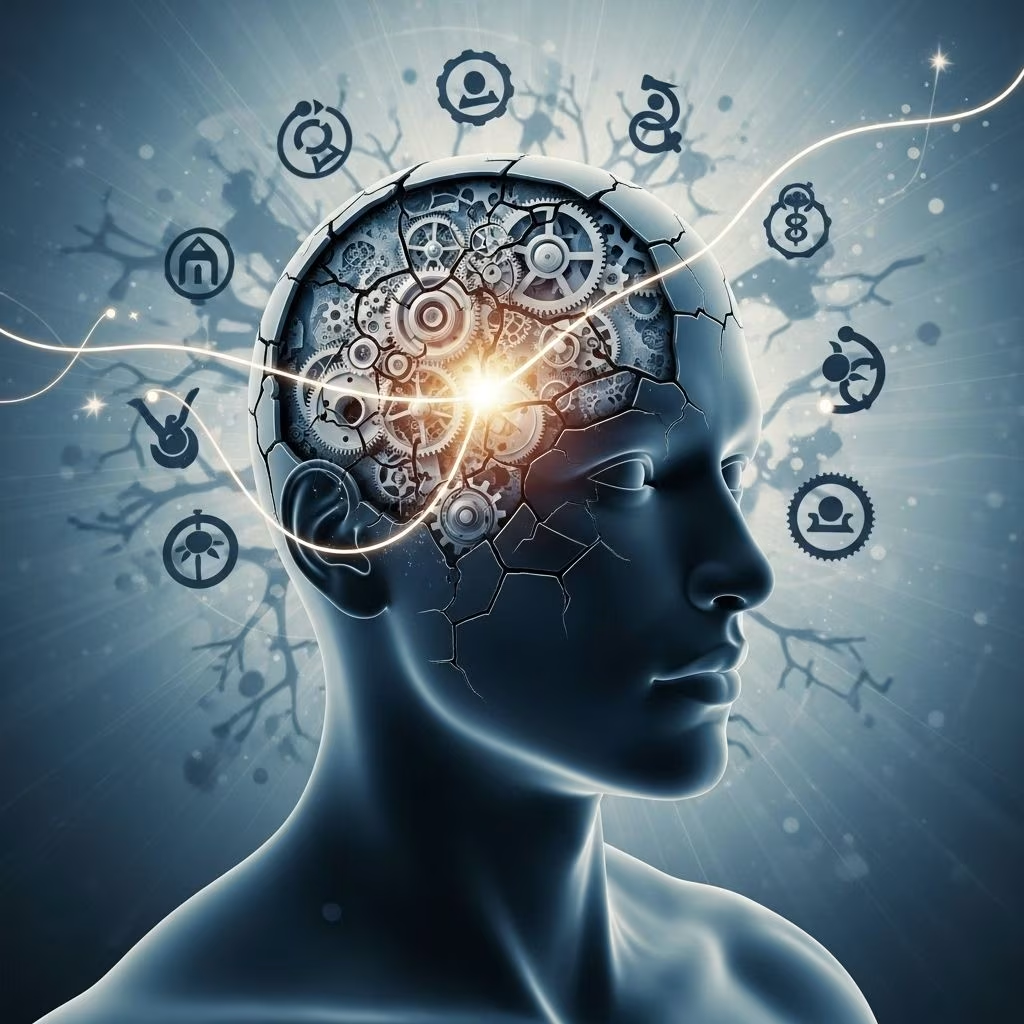
What Are Defense Mechanisms?
Defense mechanisms are unconscious psychological strategies that individuals use to protect themselves from anxiety, unacceptable thoughts, or feelings. Originally conceptualized by Sigmund Freud and further developed by his daughter Anna Freud, these mechanisms play a crucial role in how we manage internal conflicts and stressful events. By distorting or denying reality in various ways, defense mechanisms allow us to cope with emotional pain and maintain psychological equilibrium, at least temporarily.
Why Do People Use Defense Mechanisms?
At their core, defense mechanisms serve as coping tools when individuals face emotional conflict, stress, or threatening events. These reactions often occur automatically and outside of conscious awareness. They can help us navigate social and emotional challenges, but they may also prevent healthy emotional processing or the resolution of underlying issues.
- Reduce anxiety and internal stress: By protecting from overwhelming emotions, defense mechanisms enable continued functioning.
- Maintain self-image: They help to preserve a positive view of oneself even in difficult or shameful situations.
- Avoid confrontation: They can postpone having to face unpleasant truths or interpersonal conflict.
- Allow gradual emotional processing: Sometimes, denial or repression gives space to come to terms with distressing events gradually.
The Origins of Defense Mechanisms
The concept of defense mechanisms traces back to psychoanalytic theory formulated by Sigmund Freud. According to Freud, these mechanisms are driven by the ego’s attempt to mediate between primal desires (the id), moral constraints (the superego), and the demands of reality (the external world). Freud’s daughter, Anna Freud, expanded and systematized the list of common defense mechanisms, explaining how these responses helped individuals adjust to and cope with life’s difficulties.
How Defense Mechanisms Work
Most defense mechanisms operate unconsciously, meaning people are often unaware they’re employing them. For example, someone may deny the severity of a problem or project their insecurities onto others without realizing it. While these mechanisms can be temporarily helpful, overuse or reliance on them can hinder emotional growth and healthy coping in the long run.
Common Types of Defense Mechanisms
There are numerous defense mechanisms, each with distinct features and purposes. Below, we explore some of the most recognized mechanisms in psychology, along with illustrative examples for each.
- Denial
- Repression
- Projection
- Displacement
- Regression
- Rationalization
- Sublimation
- Reaction Formation
- Compartmentalization
- Intellectualization
Denial
Denial involves refusing to accept reality or facts, often to avoid painful feelings or events. It is one of the most primitive and common defense mechanisms, frequently observed in situations involving loss, addiction, or illness. Example: Someone diagnosed with a chronic illness may insist they are perfectly healthy despite contradicting medical evidence.
Repression
Repression is the unconscious blocking of unacceptable thoughts, feelings, or memories. Unlike suppression, which is intentional, repression happens without awareness, pushing painful or threatening experiences out of conscious memory. Example: An adult who experienced trauma in childhood may have no conscious recollection of the event, yet the trauma still affects their behavior and relationships.
Projection
Projection occurs when a person attributes their own unacceptable feelings or impulses to someone else. This mechanism helps protect self-esteem by allowing one to deal with uncomfortable feelings as if they belong to another person. Example: Someone who is angry with a colleague may instead accuse the colleague of being angry or hostile towards them.
Displacement
Displacement means redirecting emotional impulses from a threatening target to a safer one. This mechanism is frequently observed in daily life.
Example: A person frustrated by their boss channels that anger toward a family member or pet at home.
Regression
Regression is a return to earlier developmental behaviors when faced with stress or anxiety. Both children and adults can regress, exhibiting immature or childlike behaviors as a way of coping.
Example: An overwhelmed adult starts whining, sulking, or adopting comforting habits from their youth.
Rationalization
Rationalization involves justifying or explaining away an unacceptable behavior or feeling with logical reasons, even if these are not the true motives. This preserves self-esteem and prevents feelings of guilt or shame.
Example: Someone who didn’t get a job promotion claims they never wanted the job anyway, or the position wasn’t that important to them.
Sublimation
Sublimation channels uncomfortable or unacceptable impulses into socially acceptable, even constructive activities. This is considered one of the most adaptive defense mechanisms.
Example: Someone with aggressive urges becomes a competitive athlete or pursues a career in law enforcement.
Reaction Formation
Reaction formation involves behaving in a way that is directly opposite to one’s true feelings or impulses. This helps reduce anxiety generated by those feelings.
Example: Someone who feels insecurity about their abilities may act overly confident, or a person harboring hatred for someone may instead act excessively friendly towards them.
Compartmentalization
Compartmentalization refers to separating conflicting thoughts, feelings, or aspects of one’s life to avoid anxiety or internal conflict.
Example: An individual may maintain a strict, professional demeanor at work and act quite differently in personal relationships, keeping boundaries between these aspects of their life.
Intellectualization
Intellectualization means focusing on logical, abstract, or factual components of a situation rather than confronting the emotional impact.
Example: Someone faced with a serious illness becomes preoccupied with statistical outcomes or treatment details, ignoring the sadness or fear associated with the diagnosis.
Other Defense Mechanisms
- Suppression: A conscious decision to avoid thinking about certain thoughts or feelings. Different from repression, which is unconscious.
- Distortion: Transforming reality to meet psychological needs, such as exaggerating achievements to feel superior.
- Dissociation: Temporarily losing connection to thoughts, feelings, or sense of identity, often in response to trauma.
- Avoidance: Steering clear of people, places, or topics that trigger anxiety, such as someone refusing to drive after an accident.
- Sexualization: Attributing sexual meaning to objects or behaviors as a way to cope with stress or anxiety in unrelated situations.
Comparison Table: Key Defense Mechanisms
| Defense Mechanism | Definition | Example |
|---|---|---|
| Denial | Refusing to accept reality | Ignoring medical advice about addiction |
| Repression | Unconscious blocking of memories | No recollection of traumatic childhood events |
| Projection | Attributing one’s impulses to others | Accusing a friend of being angry when you are |
| Displacement | Redirecting emotions to a safer outlet | Yelling at a pet after a work issue |
| Regression | Returning to earlier developmental behavior | Whining when stressed as an adult |
| Rationalization | Justifying behaviors with logical reasons | Claiming a failed test wasn’t important |
| Sublimation | Redirecting impulses into positive outlets | Taking up kickboxing to manage anger |
| Reaction Formation | Behaving opposite to true feelings | Being overly nice to someone disliked |
| Compartmentalization | Separating parts of life to avoid conflict | Keeping work and personal life distinct |
| Intellectualization | Ignoring emotions, focusing on logic | Organizing medical bills after a loss |
The Role of Defense Mechanisms in Everyday Life
Everyone uses defense mechanisms to some degree, and many are essential for navigating emotional challenges. When used appropriately and flexibly, they can facilitate resilience and adaptation. However, overreliance or chronic dependence on certain defenses may:
- Prevent the resolution of conflicts or traumas
- Lead to distorted perceptions of reality or relationships
- Contribute to mental health issues, such as anxiety or depression
- Cause difficulties in communication or intimacy
How Can You Recognize and Address Defense Mechanisms?
Recognizing one’s own defense mechanisms can be challenging due to their unconscious nature. Self-reflection, therapy, and open communication with trusted individuals can help bring these patterns into awareness. Once identified, individuals can work towards more adaptive coping strategies, such as problem-solving, emotional regulation, and seeking support.
- Self-Monitoring: Reflect on emotional reactions and patterns during stress or conflict.
- Journaling: Document feelings, triggers, and behaviors to identify recurring defenses.
- Therapeutic Support: Professional counselors can help uncover deep-seated defense mechanisms and develop healthier alternatives.
- Mindfulness: Practice being present and accepting feelings without judgment.
When Are Defense Mechanisms Unhealthy?
While some defense mechanisms like sublimation and suppression can be helpful, others—such as denial, repression, or projection—may create more problems if they persist over time. Unhealthy defenses can interfere with personal growth and healthy relationships, so it’s important to strive for self-awareness and adaptive coping skills.
Frequently Asked Questions (FAQs) About Defense Mechanisms
What is the main purpose of defense mechanisms?
Defense mechanisms primarily help reduce anxiety and protect the self from emotional pain by unconsciously distorting or denying reality.
Are defense mechanisms always bad?
No, not all defense mechanisms are inherently harmful. When used appropriately, some—like sublimation and suppression—can support emotional health. Problems arise when defenses are rigid, overused, or prevent healthy processing of emotions.
Can defense mechanisms be changed?
With self-awareness, personal reflection, and often the help of therapy, people can recognize unhelpful defense patterns and develop more adaptive coping strategies over time.
How are defense mechanisms different from coping mechanisms?
Defense mechanisms are unconscious and automatic, while coping mechanisms are usually intentional strategies to manage stress or emotions.
Is it possible to use multiple defense mechanisms at once?
Yes, individuals may employ several different defense mechanisms in response to various situations or at the same time.
Summary
Defense mechanisms are a fundamental aspect of human psychology, helping us manage anxiety, conflict, and emotional pain. Understanding these mechanisms can foster greater self-awareness and healthier ways of coping with life’s challenges.
References
- https://www.healthline.com/health/mental-health/defense-mechanisms
- https://www.choosingtherapy.com/defense-mechanisms/
- https://www.ncbi.nlm.nih.gov/books/NBK559106/
- https://www.simplypsychology.org/defense-mechanisms.html
- https://socialwelfare.stonybrookmedicine.edu/sites/default/files/Licensing%20LMSW%20Test%20Prep%20Defense%20Mechanism%20info%20(1).pdf
- https://www.frontiersin.org/journals/psychology/articles/10.3389/fpsyg.2021.718440/full
- https://www.medicalnewstoday.com/articles/defense-mechanisms


