


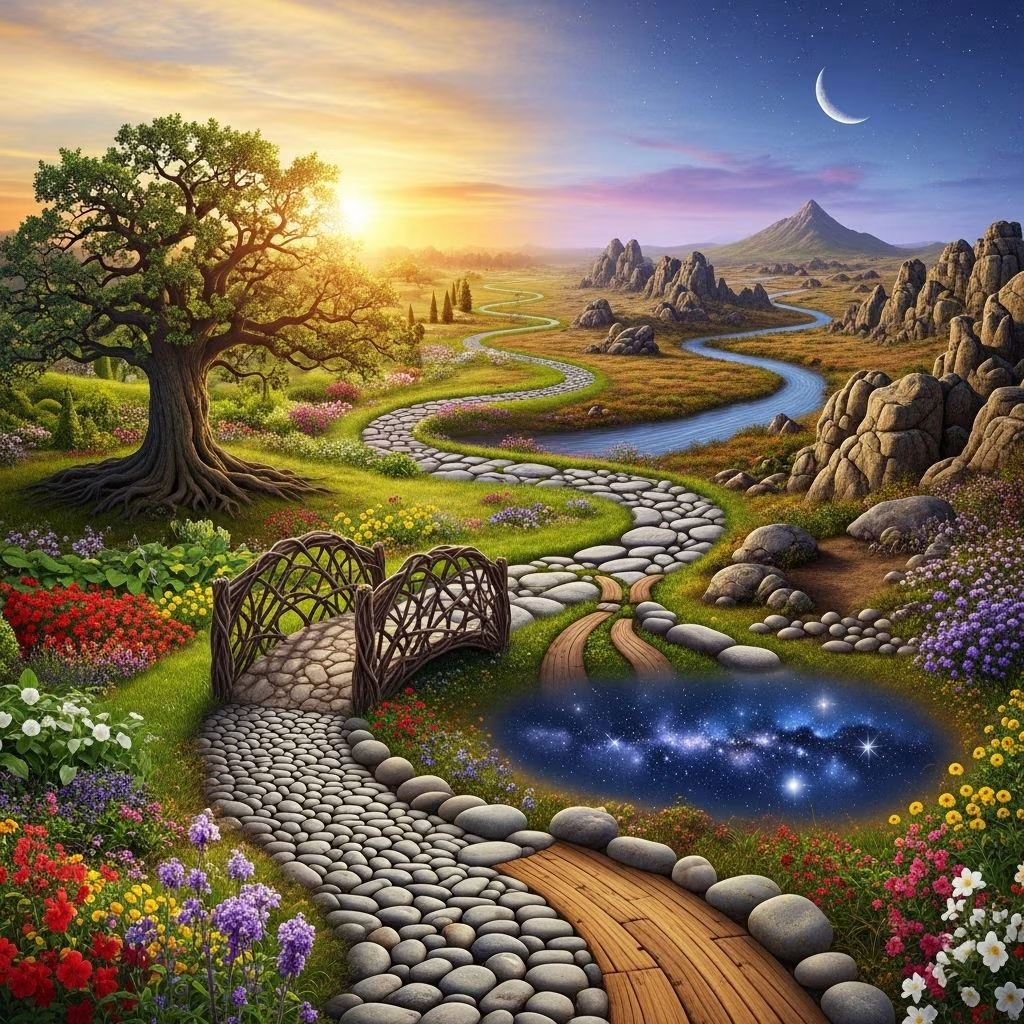
Metaphors for Life: Unlocking the Power of Symbolic Thinking
Human beings naturally seek patterns and meaning in their experiences. Metaphors offer a powerful way to translate complex feelings, events, and concepts into relatable, vivid imagery. Whether it’s seeing life as a journey, a game, or a stage, metaphors help us make sense of who we are and where we’re going, providing insight, encouragement, and a sense of unity within our shared human narrative.
What Are Metaphors for Life?
A metaphor for life is a figurative comparison that frames existence through a symbolic lens. These metaphors are not just literary devices—they represent how we process and talk about abstract experiences. By using metaphors, people can better articulate emotions or ambitions, cope with difficulties, or re-energize their perspective on daily living. Psychologists and language experts have repeatedly shown that the metaphors we carry influence our choices, resilience, and overall outlook.
Why We Turn to Metaphors
Metaphors shape the way we think by helping us frame our perceptions, understand ambiguous experiences, and communicate feelings that resist literal expression. When confronted with uncertainty or adversity, metaphors provide clarity, comfort, and motivation.
- Find patterns and meaning in life’s chaos.
- Motivate positive change through symbolic comparisons.
- Cope with obstacles by reframing setbacks into lessons or opportunities.
- Improve emotional resilience as studies show metaphorical thinking decreases depression and negative emotion.
- Connect with others by sharing universally relatable symbols.
Common Metaphors: Life’s Diverse Pathways
Metaphors vary widely between cultures, personalities, and life stages. Here are some of the most enduring comparisons, each offering its own wisdom and depth of meaning.
Life Is a Journey
This is perhaps the most popular metaphor for life. The journey motif emphasizes growth, change, risk, and discovery. Life’s path isn’t always straight—there are detours, obstacles, and occasionally unexpected wonder. Evaluating your life as a journey shifts focus from destination to process.
- “Life is a journey full of detours, and every wrong turn teaches something new.”
- Other variations: winding road, path, trail, or highway.
Life Is a Roller Coaster
This metaphor frames life as filled with thrills, challenges, and unpredictability. It reminds us to hold on during the tough moments and enjoy the highs while they last.
- “Life is a roller coaster, and the best thing you can do is hold on tight.”
- Symbolizes: unpredictability, excitement, endurance.
Life Is a Garden
The garden metaphor evokes themes of growth, potential, and nurturing. We are responsible for the seeds we plant—good choices, relationships, and personal well-being bloom with care and patience, while neglect can lead to weeds or barren soil.
- “Life is a garden; Sow love into life’s soil, and joy will bloom in abundance.”
- Highlights: responsibility, creativity, patience, renewal.
Life Is a Blank Canvas
A canvas metaphor suggests creative freedom and the power to shape your destiny through intention and self-expression. Every day is another brushstroke or color application, and errors can be repainted or incorporated into the artwork.
- “Every day adds a new stroke on the canvas of life.”
- Ideas: creativity, possibility, self-direction.
Life Is a Game
Games are about strategy, risk, persistence, and sometimes luck. Metaphorically, life as a game compels us to play wisely, accept loss, and savor victory. We learn through participation and the spirit of play.
- “Life is a game of patience play wisely, and you’ll win.”
- Other common variants: chess match, cards, sports.
Life Is a Mirror
The mirror metaphor reminds us that what we project onto the world—attitudes, actions, energy—often returns to us in kind. It emphasizes personal accountability and feedback.
- “The kindness you give becomes the kindness you receive.”
Life Is a Song
Every life is made of rhythm, melody, and emotion. The song metaphor acknowledges both the joyous and sorrowful notes, weaving together a meaningful, memorable experience.
- “Life is a song that becomes memorable with each note.”
Life Is a Puzzle
As a puzzle, life is about fitting experiences together and realizing the bigger picture as pieces fall into place. Setbacks are missing pieces that can eventually be found, and even a scrambled puzzle gives clues about what matters.
- “Each piece matters, and the full meaning appears only when they align.”
Life Is a Test
Tests symbolize challenges, learning, and assessment. Life throws pop quizzes and major exams—often unannounced. Each failure becomes a lesson, and each success, a validation.
- “Life is a test, and every failure is a lesson, not a verdict.”
- “Life is a test you never study for—sometimes you just guess and learn.”
Life Is a Stage
Borrowing Shakespeare’s famous metaphor, this view sees each person as an actor playing unique roles. Life is a performance, where every act, scene, and interaction shapes the final story.
- “Life is a stage, and every act counts.”
Life Is a Dance
With dance, life is about graceful movement through highs and lows. The choreography emerges from the blend of joy and sorrow—sometimes you lead, sometimes you follow, but the rhythm always continues.
- “Life moves through emotional highs and lows—shifting between happiness and pain.”
Life Is a Marathon, Not a Sprint
This metaphor emphasizes endurance, patience, and steady progress. Quick wins are rare—most growth happens over extended periods of persistence.
- “Life is a marathon, not a sprint—pace yourself and breathe.”
Life Rolls Like a River Through Time
The river metaphor captures life’s constant change—sometimes smooth, sometimes wild—always moving gradually forward.
- “Life rolls like a river through time—sometimes calm, sometimes wild.”
Life Is a Chess Match
Chess is a game of strategy and foresight. Life requires careful decisions, thinking several steps ahead, and accepting that some moves shape everything that follows.
- “Life is a chess match—every move counts, even the quiet ones.”
Life Is a Battle Fought Daily
This comparison underlines the struggle, resilience, and determination required to overcome adversity and persist through difficulty.
- “Life is a battle fought daily—some days you win, some days you survive.”
Life Is a Dream
For some, life is a dream—fleeting, mysterious, and filled with fragile beauty. This metaphor evokes a sense of wonder and the ephemeral nature of existence.
Exercises: Practice Using Metaphors for Life
Engaging with metaphors can illuminate hidden aspects of your experience. Try these prompts to stimulate metaphorical thinking:
- Raising her children felt like building a house, brick by brick.
- Life after graduation felt like a novel with missing pages.
- After losing his job, life became a maze with no clear exit.
- Starting over in a new city felt like turning a fresh page.
- Life in her 20s felt like a dance with no set choreography.
- Each mistake was another piece in life’s messy puzzle.
- Their friendship felt like a strong bridge between two hearts.
- After years of struggle, life finally felt like a blooming flower.
- Looking back, his life read like a book with unexpected chapters.
Impact of Life Metaphors on Mental and Emotional Well-Being
Research indicates that adopting figurative thinking and metaphors has tangible benefits. In one experiment, people who described their emotions with metaphors—such as “I felt like a leaf in the wind”—experienced less depression and negative emotion compared to those using literal language.
Metaphors allow for reframing problems: for example, seeing a setback as a detour rather than a dead end makes adversity feel manageable and meaningful. They also provide language for communicating complex emotions to others, strengthening empathy and understanding.
- Inspire motivation to move in a positive direction.
- Help cope with unpredictable challenges and loss.
- Provide perspective on abstract or ambiguous events.
- Encourage creativity and self-expression.
Philosophical and Deep Metaphors
Beyond practical comparisons, some metaphors explore the mysterious, philosophical dimensions of existence:
- Life is a dream—uncertain, gentle, profound.
- Life is a story—constantly being written, with each chapter bringing new themes.
Such deep metaphors invite reflection and remind us of the fleeting, interconnected nature of all things.
Frequently Asked Questions (FAQs)
Why do people use metaphors to describe life?
Metaphors simplify complex ideas, foster emotional resilience, and help people communicate feelings, making them a natural tool for self-reflection and growth.
Do different cultures have unique life metaphors?
Yes, each culture draws on history, experience, and environment, creating rich and varied metaphorical expressions for life’s journey.
Can using metaphors improve mental health?
Research shows metaphorical thinking can reduce depression and negative emotions by providing new perspectives on challenges.
Is it possible to change your metaphor for life?
Absolutely. Metaphors evolve as you grow and your experiences shift, offering renewed meaning and direction.
How can I find my own metaphor for life?
Reflect on personal experiences and what images or symbols best express your journey. Use prompts, journaling, or discussions to clarify and strengthen your metaphorical mindset.
Table: Popular Metaphors for Life and Their Meanings
| Metaphor | Key Meaning |
|---|---|
| Journey | Growth, change, discovery |
| Roller Coaster | Ups, downs, unpredictability |
| Garden | Nurturing, patience, potential |
| Canvas | Creativity, freedom, design |
| Game/Chess | Strategy, risk, learning |
| Mirror | Reflection, accountability |
| Song/Dance | Emotion, rhythm, harmony |
| Puzzle | Meaning, fitting pieces together |
| Test/Battle | Challenge, resilience |
| Stage | Role, performance, meaning |
| Dream | Ephemeral, mysterious |
How Metaphors Create Personal Meaning
Ultimately, the metaphors you choose—or the stories you tell—help shape your life’s purpose. Metaphors are not merely poetic: they are a practical lens that can frame adversity as growth, opportunity, or even adventure. As Danny Weber, a language enthusiast who studies figurative language, notes, metaphors allow us to view our experiences with fresh eyes, continually reimagining the tapestry of our lives.
Conclusion: Life as a Story Written in Symbols
No single metaphor can capture the entirety of life, but together, these symbolic lenses invite us to see the journey as full of meaning, possibility, and transformation. Whether you view your life as a journey, a dream, or a canvas, allow the metaphors to illuminate your path, guide your choices, and inspire your heart.
References
- https://englishlanguageandliterature.com/blogs/metaphors-about-life/
- https://idiomandmetaphor.com/metaphors-for-life/
- https://www.mattnorman.com/why-you-need-a-metaphor-for-your-life/
- https://www.psychologytoday.com/us/blog/stretching-theory/202407/how-metaphors-shape-our-thinking
- https://www.bps.org.uk/research-digest/life-different-people-who-think-metaphors


