


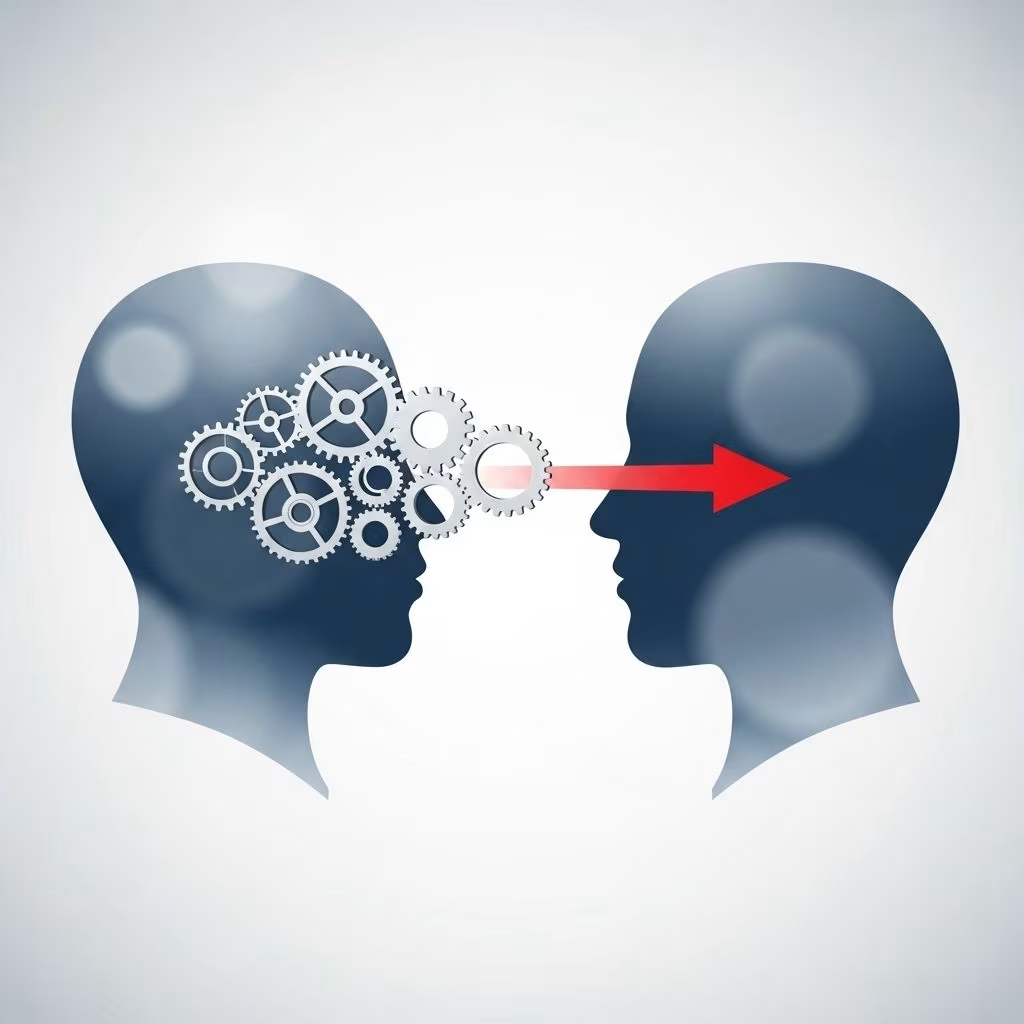
Reverse psychology is a remarkable method of influence that springs from human nature’s drive for autonomy and resistance to being controlled. Often used in parenting, marketing, therapy, and even everyday interactions, this technique can motivate, persuade, or even manipulate—depending on the intent and context. Below, explore what reverse psychology is, the science behind it, practical examples, its advantages and disadvantages, and tips for ethical use.
What Is Reverse Psychology?
Reverse psychology is a technique where a person asks someone to do the opposite of what they genuinely want, hoping the subject’s natural desire for autonomy will make them do what is actually desired. This approach is also known as strategic self-anticonformity (sometimes abbreviated SSA) in psychology literature.
At its core, reverse psychology manipulates a person’s instinct to resist suggestions and assert their freedom—often with surprising results.
Key Features:
- Advocates for an action or belief opposite to the true intent.
- Triggers psychological reactance—an urge to restore threatened freedom.
- Used to covertly influence behavior.
- The target is usually unaware of the true intent.
Common Settings Where Reverse Psychology Appears
- Parenting and education: Encouraging desired behaviors or discouraging unwanted ones.
- Marketing and advertising: Creating intrigue or demand for a product.
- Therapy and motivation: Helping clients push past self-doubt or apathy.
- Everyday interactions: Resolving disagreements, challenging others, or playful banter.
The Psychology Behind Reverse Psychology
Reverse psychology is driven by the principle of psychological reactance. When someone perceives their freedom to choose is threatened, they experience discomfort and strive to restore their sense of autonomy. This reaction often leads to doing precisely what they are told not to do.
How Reactance Works:
- Authority or persuasion cues threaten freedom (e.g., “You can’t do that”).
- The target experiences emotional discomfort or anger—reactance.
- To restore autonomy, they act against the suggestion.
This effect is strongest in individuals with a high need for independence or who have oppositional tendencies. Direct requests tend to work best with compliant individuals, while reverse psychology may be more effective with resistant or rebellious personalities.
Reverse Psychology in Action: Real-Life Examples
Reverse psychology manifests differently based on relationships and the context of the interaction. Here are some widely recognized scenarios:
- Parenting: Instead of insisting, “Eat your vegetables,” a caregiver might say, “I bet you can’t finish those peas,” prompting a child to prove them wrong by eating the peas.
- Marketing: An ad campaign might say, “Don’t read the fine print!” which arouses curiosity, making consumers more likely to do exactly that.
- Interpersonal Relationships: When someone wants a friend to attend an event, they might say, “You probably wouldn’t be interested—it’s not really your thing,” knowing this could increase their friend’s desire to prove otherwise and come along.
- Therapy/Motivation: A therapist might tell a self-doubting client, “Maybe you’re just not ready for such a big step,” prompting the client to rise to the challenge.
- Education: A teacher, noticing a student’s lack of effort, might say, “You probably couldn’t solve this tricky problem anyway,” motivating the student to attempt it in order to prove the teacher wrong.
Notable Reverse Psychology Phrases
- “Don’t click this button!”
- “You probably can’t do it.”
- “This is only for advanced students.”
- “Most people would find this impossible.”
Why Do People Use Reverse Psychology?
People turn to reverse psychology for a variety of reasons, including:
- To motivate action in someone resistant to direct requests.
- To change minds where usual persuasion fails.
- To encourage or discourage a particular behavior, often in children or adolescents.
- To stimulate conversation or self-reflection by challenging beliefs and assumptions.
- To subtly manipulate outcomes in personal or professional relationships.
Significantly, reverse psychology often works better when the target values their independence, resists direct instruction, or enjoys proving others wrong. It is used with caution in adults and typically more often, but not without controversy, in marketing and child rearing.
Benefits and Potential Upsides of Reverse Psychology
When ethically applied and used sparingly, reverse psychology can have some clear benefits:
- Encourages motivation in individuals who struggle with direct requests (e.g., oppositional children).
- Sparks curiosity and engagement (e.g., “Don’t read this article!”).
- Facilitates behavioral change in therapy, parenting, or teaching.
- Creates memorable marketing campaigns that challenge the consumer’s expectations.
For example, a parent telling a child, “I bet you can’t eat all your broccoli,” may gently nudge a stubborn eater toward a healthier habit. In therapy, a strategic suggestion may encourage a client to challenge their limitations and grow.
Risks and Drawbacks: When Reverse Psychology Fails
Reverse psychology is not without controversy. When misapplied or used excessively, it can have negative effects such as:
- Damaging trust: When people realize they’ve been manipulated, they may feel betrayed.
- Promoting defiance or oppositional behavior: Particularly in children or teens prone to rebellion.
- Causing confusion or resentment: Mixed signals can lead to insecurity, resentment, or lowered self-esteem.
- Loss of effectiveness: Overuse can make others immune to the strategy or suspicious of motives.
Experts caution against using reverse psychology with adolescents, who may push back even harder or recognize the manipulation. Psychologists like John Gottman warn that it can be “confusing, manipulative, dishonest, and rarely works” in these cases. Further, frequent use in any relationship can undermine open communication and long-term trust.
Reverse Psychology vs. Other Persuasion Techniques
| Technique | Definition | Common Use | Risks |
|---|---|---|---|
| Reverse Psychology | Advocates opposite of true intent to provoke resistance | Parenting, marketing, motivation, defiance | May erode trust, backfire, cause resentment |
| Direct Persuasion | Openly requests desired action | Instruction, requests, negotiation | Ignored if target is resistant or disengaged |
| Positive Reinforcement | Rewards desired behavior | Education, parenting, training | Can foster dependence on rewards |
| Negative Reinforcement | Removes negative stimulus after desired behavior | Parenting, therapy | May create anxiety |
How to Recognize Reverse Psychology
You might suspect someone is using reverse psychology if:
- They often suggest the opposite of what you think they want.
- Their approach feels indirect, not a straightforward request.
- They use phrases like, “You probably can’t do this…” or “Most people wouldn’t try…”
- You feel a sudden urge to “prove them wrong.”
When (and When Not) to Use Reverse Psychology
Where reverse psychology can be helpful:
- To motivate a resistant child (infrequently and in good humor).
- To add intrigue or entertainment in advertising or content marketing.
- In therapy, to respectfully challenge unhelpful patterns or self-doubt.
Where it can be harmful:
- In close relationships, if it replaces honest communication or is used to manipulate.
- On sensitive or highly reactive individuals who may be hurt by perceived dishonesty.
- With adolescents or adults likely to feel insulted or become more entrenched in opposition.
Ethical use centers on positive intent, transparency, and respect for the other person’s autonomy.
Tips for Using Reverse Psychology Effectively
- Use sparingly and ethically. Overuse or manipulation can backfire.
- Consider your audience. It often works best on young children and rebellious individuals.
- Ensure the stakes are low. Don’t use the technique for high-risk or high-stress situations.
- Be aware of tone. Humor and lightness reduce the risk of resentment.
- Prioritize genuine communication. Don’t let reverse psychology replace honest dialogue.
Frequently Asked Questions About Reverse Psychology
What exactly is reverse psychology?
It’s a persuasion technique where you encourage a certain behavior by suggesting the opposite, hoping the person’s desire for autonomy will prompt them to do what you truly want.
Is reverse psychology manipulative or unethical?
The ethics depend on how and why it is used. When used with positive intent and transparency, it can be helpful. If misused or to deceive/harm, it can be manipulative or damaging.
Does reverse psychology work on everyone?
No. It has the greatest impact on people prone to oppositional behavior or who value their independence. Those who comply easily tend to respond better to direct requests.
Can reverse psychology backfire?
Yes. It can backfire if the person detects manipulation, becomes resentful, or doubles down in their resistance. Used excessively, it can erode trust and communication quality.
How do I know if someone is using reverse psychology on me?
Look for indirect suggestions and language implying you can’t or shouldn’t do something, especially if you sense their motives don’t match their words.
Are there positive alternatives to reverse psychology?
Absolutely. Honest communication, open requests, offering choices, and positive reinforcement are constructive methods that foster trust and cooperation.
Key Takeaways
- Reverse psychology is a persuasion technique that leverages reactance to steer people toward a desired outcome by advocating for its opposite.
- It can be effective for motivating resistant individuals but can damage trust when misused.
- Use the strategy ethically, avoid overuse, and pair it with transparency and respect.
- Alternative persuasion methods often yield longer-lasting and more trusting relationships.
Resources for Further Reading
- Books and articles on behavioral psychology and social influence
- Works by experts on psychological reactance and motivation
- Parenting and communication guides for practical advice
References
- https://www.scienceofpeople.com/reverse-psychology/
- https://helpfulprofessor.com/reverse-psychology-examples/
- https://www.simplypsychology.org/reverse-psychology-what-is-it-and-does-it-work.html
- https://en.wikipedia.org/wiki/Reverse_psychology
- https://www.betterhelp.com/advice/psychologists/reverse-psychology-what-is-it-and-does-it-work/
- https://psychcentral.com/health/reverse-psychology
- https://www.merriam-webster.com/dictionary/reverse%20psychology
- https://www.youtube.com/watch?v=BOQQPt2LoNY


