The Black Russian Terrier (BRT) is a commanding presence among large dog breeds. Once bred as a military super-dog in Soviet Russia, this loyal, robust, and highly intelligent canine has become a sought-after working and family companion worldwide. This guide covers the BRT’s history, characteristics, care needs, and answers common questions for prospective owners and enthusiasts.
Breed Overview
| Category | Working Group |
|---|---|
| Origin | Russia (USSR) |
| Recognized by | AKC, FCI, CKC, KC, ANKC, NZKC |
| Height (male/female) | 27–30 in / 26–29 in (AKC standard) |
| Weight (male/female) | 100–150 lbs / 80–120 lbs |
| Coat | Wiry, wavy double coat; low shedding |
| Color | Black (may have scattered gray hairs) |
| Life Expectancy | 12–14 years |
History and Origins
The Black Russian Terrier was created in the USSR during the late 1940s and early 1950s at the legendary Red Star Kennel. Soviet military experts required a dog capable of performing multiple working roles in harsh climates, especially for guarding and patrolling military installations, borders, and prisons. To achieve this, they carefully crossbred approximately seventeen breeds, including the Airedale Terrier, Giant Schnauzer, Rottweiler, Newfoundland, and various shepherd dogs.
The goal was to engineer a breed that was:
- Loyal and highly trainable
- Exceptionally strong and hardy
- Protective but stable in temperament
- Adaptable to cold Russian winters
The first public appearance for the breed was in 1957 at an all-Russian dog show. Within a few decades, military needs waned, and civilian breeders focused on companionable traits while maintaining the dog’s imposing physique and guarding instincts. The breed was internationally recognized in 1983 (FCI) and joined the AKC Working Group in 2004.
Physical Characteristics
Overall Appearance
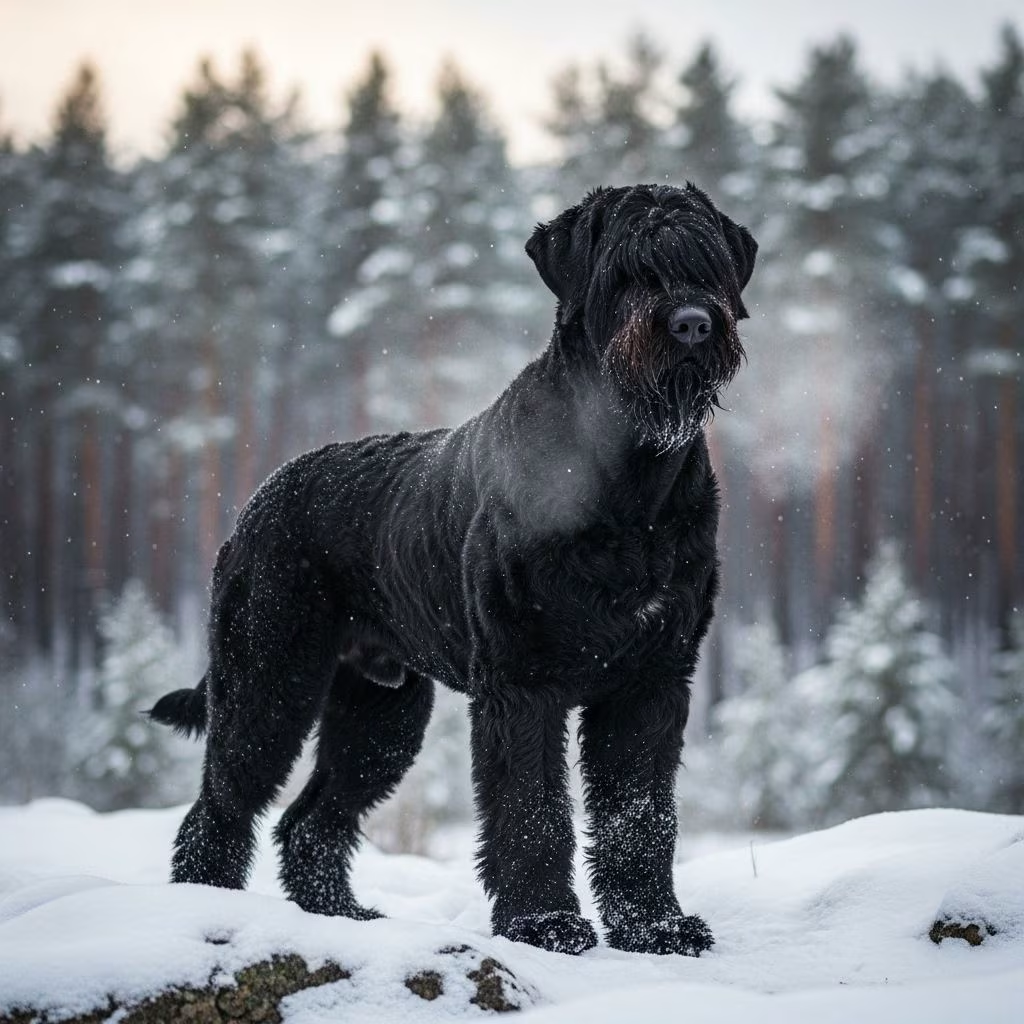
The Black Russian Terrier is a large, heavy-boned dog with a rugged, almost bear-like silhouette. The breed epitomizes strength, power, and agility, built for endurance and hard work.
Head
- Large, block-shaped with a long, powerful muzzle and a notable beard/mustache
- Broad skull, strong jaws, and large black nose
- Medium, dark, almond-shaped eyes set wide apart
- Small, high-set triangular ears sitting close to the face
Body Structure
- Massive, muscular frame, compact yet slightly longer than tall (ideal ratio 9.5:10)
- Thick, strong neck without a pronounced dewlap
- Wide, deep chest and pronounced musculature
- High-set, typically docked tail (3-5 vertebrae in length)
Coat and Color
- Double coat: Coarse, wavy, 1.5 to 4 inches long; dense softer undercoat
- Thick facial furnishings: beards, eyebrows, and falling hair over the eyes
- Always black (may have some scattered gray hairs)
- Low shedding, but requires regular grooming to prevent mats
Size Table
| Sex | Height (AKC) | Weight |
|---|---|---|
| Male | 27–30 in (ideal 27–29 in) | 100–150 lbs |
| Female | 26–29 in (ideal 26–28 in) | 80–120 lbs |
Temperament and Personality
The Black Russian Terrier is known for its blend of calm stability and protective instincts. Despite its intimidating size, the BRT forms deep bonds with its family and is loyal, affectionate, and often playful within the home.
- Devoted: Extremely loyal, forming strong bonds with family
- Protective: Excellent guardian instincts; naturally suspicious of strangers
- Intelligent: Highly trainable, quick to learn new tasks
- Confident: Calm and fearless, rarely anxious or nervous
- Social: Gets along well with children and other pets if socialized early
BRTs are happiest as part of daily family activities and are poorly suited to isolation or kenneling. Early and ongoing socialization is crucial to develop trustworthy behavior around guests and in new situations.
Care and Maintenance
Grooming
- Brushing: 2–3 times per week to prevent mats and remove debris
- Professional grooming: Every 6–8 weeks is recommended to maintain the breed’s tousled outline
- Bathing: As needed; coat is relatively dirt-resistant
- Check eyes, ears, and nails: Regularly to avoid infections and overgrowth
Though often called “non-shedding,” the BRT’s coat drops minimal fuzzy clumps which are easily managed with routine grooming.
Diet and Nutrition
- Feed a high-quality diet appropriate to large, active breeds
- Monitor weight carefully, as BRTs can be prone to overfeeding
- Offer several small meals rather than one large daily feeding to deter bloat (gastric torsion)
Health and Lifespan
The Black Russian Terrier is generally a robust, healthy breed, but as with all purebreds, some health conditions are more common:
- Hip and elbow dysplasia: Screening parents before breeding reduces risk
- Progressive retinal atrophy (PRA) and eye disorders
- Allergies and skin infections, especially if the coat is neglected
- Hypothyroidism
- Lifespan: 12–14 years
Routine veterinary checkups, a balanced diet, and preventive care help ensure optimal health and longevity.
Living with a Black Russian Terrier
BRTs are versatile and adaptable—content in apartments as well as larger homes, provided they have enough exercise and attention.
- Companionship is essential: They must share daily life with their people and are not suited for long periods alone.
- Children and Other Pets: Known for patience and gentleness with children and compatible with other household pets, when raised together and socialized early.
- No Kennel Life: The breed does not tolerate being isolated outdoors or kept in a kennel long-term.
- Service Abilities: BRTs excel as service, therapy, and assistance dogs, as well as K-9 and search & rescue workers.
Training and Exercise
Mental and Physical Stimulation
- BRTs are highly intelligent and require regular mental stimulation through structured training, obedience, agility, or working tasks.
- Positive-reinforcement methods are recommended, as the breed responds best to fair, confident handling.
Exercise Needs
- At least one hour of vigorous activities (long walks, running, play, or sport) daily
- Enjoys both physical and mental challenges such as scent work or advanced obedience
- Bored or under-exercised BRTs may develop unwanted behaviors
Frequently Asked Questions (FAQs)
Q: Is the Black Russian Terrier truly a terrier?
A: Despite the name, Black Russian Terriers are not true terriers. Their ancestry includes various breeds, but they were engineered as working, guarding, and military dogs—not for terrier tasks like hunting vermin.
Q: Are Black Russian Terriers good family dogs?
A: Yes. When socialized early, they are affectionate, protective, and patient with children, making them excellent family companions—provided their need for companionship and stimulation is met.
Q: What is the coat maintenance like?
A: While low shedding, the dense coat requires regular brushing, combing, and periodic professional trimming to prevent mats and maintain hygiene.
Q: How much exercise does a Black Russian Terrier need?
A: At least an hour of daily exercise is crucial for physical health and mental balance. BRTs thrive on structured training, play, and varied activities.
Q: Are Black Russian Terriers suitable for novice dog owners?
A: The BRT’s intelligence, size, and guarding instincts make them best suited to experienced owners committed to consistent socialization, training, and leadership.
Q: Are there any specific health concerns?
A: Like all large breeds, hip and elbow dysplasia are concerns. Responsible breeders test their dogs and take steps to minimize these issues in future generations.
Summary
The Black Russian Terrier is a unique fusion of power, intelligence, and loyalty—an ideal companion for dedicated owners who appreciate an active, trainable, and deeply devoted dog. Its history as a purposeful Soviet creation is evident in its impressive physique and vigilant temperament, while selective breeding has also endowed it with sensitivity and adaptability, making it equally well-suited as a working guardian or cherished family member.
References
- https://guardianbearskennel.com/characteristics-black-russian-terrier
- https://www.akc.org/expert-advice/dog-breeds/black-russian-terrier-history-soviet-superdog/
- https://en.wikipedia.org/wiki/Black_Russian_Terrier
- https://www.dogbreedinfo.com/blackrussianterrier.htm
- https://www.youtube.com/watch?v=vkKy2VlpzKA
- https://georgiapuppiesfromheaven.com/breed-info/working/blaruste/
- https://www.webmd.com/pets/dogs/what-to-know-black-russian-terriers