


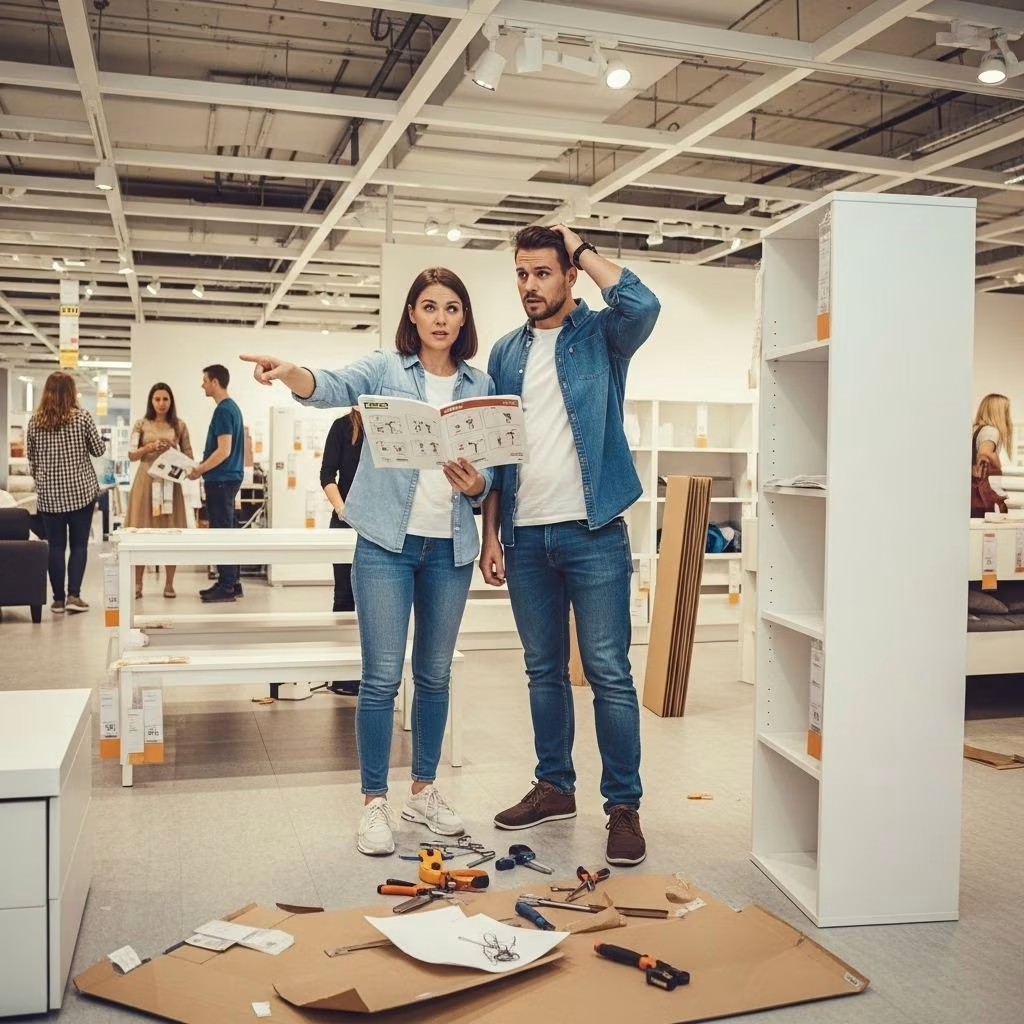
Walk into any IKEA store on a weekend afternoon, and you’ll witness something remarkable: couples navigating the maze-like showroom, debating over BILLY bookcases, and sometimes engaging in heated discussions about whether they really need another throw pillow. What many shoppers don’t realize is that this Swedish furniture giant has inadvertently become a testing ground for relationships, exposing the very dynamics that make or break partnerships.
Dr. Ramani Durvasula, a professor of psychology at California State University Los Angeles and a therapist in San Diego, had an epiphany while sitting in IKEA’s sofa department. As she observed couples moving through the store’s carefully designed room displays, she noticed a pattern that would fundamentally change her approach to couples therapy. Nearly half of the couples she watched were bickering, arguing, or showing signs of relationship stress. This observation sparked an innovative therapeutic technique that would challenge traditional counseling methods.
The Birth of an Unconventional Therapy Method
Dr. Durvasula’s realization that IKEA brought out the worst in relationships wasn’t just a casual observation—it was the foundation for a revolutionary therapeutic approach. She recognized that while therapists often discuss communication, collaboration, and respect in abstract terms, translating these concepts into practical, manageable tasks proved challenging. Furniture assembly, she discovered, provided the perfect metaphor for what couples need to accomplish together in a relationship.
The therapist began incorporating IKEA furniture assembly into her practice, encouraging clients who needed new furniture to purchase items requiring assembly and work together to build them. This wasn’t just about saving money on assembled furniture—it was about creating a controlled environment where relationship dynamics could surface naturally. The beauty of this approach lies in its authenticity: couples can only maintain politeness for so long when faced with confusing instructions, missing screws, and the pressure to complete a task together.
Why IKEA Triggers Relationship Conflicts
The IKEA shopping experience is uniquely designed to be disorienting, according to Dr. Gorkan Ahmetoglu, a lecturer in business psychology at University College London. The store’s layout forces customers to visualize their lives with the products through ready-made kitchens, model bedrooms, and perfectly staged living spaces. This psychological manipulation, known as availability bias, makes it easier to imagine using products, thereby increasing purchase likelihood.
What makes this particularly troublesome for couples is the subconscious nature of these influences. Even when people recognize they’re being manipulated, their brains lack the capacity to process and resist these marketing tactics properly. The perfectly staged rooms make shoppers feel literally at home, triggering deep-seated expectations and desires about what their shared space should look like. When partners have different visions or priorities, conflicts inevitably emerge.
The store’s maze-like design adds another layer of stress. Couples cannot easily exit once they’ve entered, forcing them to navigate through every department regardless of their needs. This creates decision fatigue, where the sheer volume of choices overwhelms shoppers, making them irritable and less patient with their partners. Combined with the crowds, noise, and time commitment required for an IKEA shopping trip, the stage is set for relationship tension.
What Fights in IKEA Really Reveal
When couples argue in IKEA, the surface-level disputes about mattress toppers or shelf quantities mask deeper relationship issues. Dr. Suky Macpherson, a chartered psychologist and associate fellow of the British Psychological Society, explains that these arguments often reflect fundamental tensions within relationships. Money represents a common flashpoint, with disagreements about purchases revealing underlying feelings of being undervalued or exploited.
Arguments about gifts or doing nice things for each other point to problems with time, attention, and emotional investment in the relationship. When one partner criticizes the other’s purchasing decisions or preferences, it may indicate a lack of respect for individual autonomy or taste. These seemingly trivial disputes serve as windows into how couples handle disagreement, compromise, and decision-making in their daily lives.
The pressure-cooker environment of IKEA amplifies existing relationship problems rather than creating new ones. Background stress worsens tensions that already exist, making IKEA an unintentional diagnostic tool for relationship health. Couples who can navigate the store peacefully, making decisions collaboratively and handling stress together, often demonstrate strong relationship foundations.
The Furniture Assembly Challenge
Dr. Durvasula’s therapeutic approach requires couples to purchase furniture they actually want to keep in their homes and assemble it without supervision. This realistic scenario provides invaluable clinical data about how partners interact when facing challenges together. The assembly process demands communication, patience, problem-solving, and the ability to handle frustration—all crucial relationship skills.
When implementing this technique, Dr. Durvasula looks for specific behavioral patterns. Does one partner dominate the task while the other becomes passive? Do they ask questions or issue commands? How do they handle mistakes or missing pieces? Can they compromise when they disagree about the best approach? These observations reveal communication styles, power dynamics, and conflict resolution strategies that might take months to uncover through traditional talk therapy.
The physical nature of furniture assembly makes it particularly revealing. Unlike purely verbal discussions, assembling furniture requires coordinated action, testing whether couples can translate communication into collaborative achievement. Partners must listen to each other, respect different perspectives, and work toward a shared goal—precisely the skills needed for a successful long-term relationship.
Real-World Application and Results
When ABC News documented Dr. Durvasula’s work, they followed Stephanie Aguirre and Samuel Hidalgo, a couple considering moving in together after three years of dating. The couple chose a shelving unit and completed it in approximately one hour, even managing to overcome the initial challenge of missing instructions. Their collaborative approach, marked by questions rather than commands and mutual compromise, demonstrated healthy relationship dynamics.
Dr. Durvasula noted that their communication appeared genuinely collaborative, pointing out that Hidalgo didn’t criticize Aguirre when she struggled with certain tasks. This observation highlights a critical relationship marker: how partners respond to each other’s difficulties reveals their level of emotional support and patience. After the exercise and analysis, both partners felt more confident about moving in together, with Hidalgo expressing that the therapist’s analysis made him feel “much, much better” about taking that next step.
The success stories from this therapeutic approach demonstrate its value beyond traditional counseling methods. Couples gain concrete evidence of their compatibility and areas needing improvement. A successfully assembled piece of furniture becomes a tangible reminder of what they can accomplish together, while a failed attempt provides clear indicators of relationship challenges that need addressing.
The Broader Implications for Relationship Assessment
Dr. Durvasula’s work has highlighted how everyday activities can serve as relationship assessments. The IKEA furniture challenge represents what psychologists call a “behavioral test”—observing how people act in specific situations rather than relying solely on self-reported information. This approach provides more authentic data about relationship dynamics because people struggle to maintain facades when engaged in challenging tasks.
The therapist emphasizes that she gains valuable clinical data regardless of whether couples succeed or fail at furniture assembly. A “busted, broken-up piece of IKEA furniture” becomes a permanent monument to relationship difficulties, serving as a powerful visual reminder of unresolved issues. This metaphor extends beyond therapy: many couples report that certain possessions carry emotional weight related to the circumstances of their acquisition or assembly.
For couples working with narcissistic partners, furniture assembly presents unique challenges. Narcissistic individuals often struggle to listen, collaborate, or share control, making joint tasks particularly difficult. The IKEA test can help identify these dynamics early, allowing therapists to address them before they cause deeper relationship damage.
Practical Strategies for Surviving IKEA Together
For couples determined to navigate IKEA successfully, experts offer several evidence-based strategies. Dr. Ahmetoglu recommends creating a detailed shopping list in advance that both partners agree on, then sticking to it religiously. This prevents impulsive decisions made under the influence of the store’s psychological tactics and reduces opportunities for disagreement.
Setting time limits for the shopping trip can minimize decision fatigue and stress. Couples should schedule their visit during off-peak hours when the store is less crowded, reducing environmental stressors. Taking breaks for Swedish meatballs or coffee allows partners to reset emotionally and discuss purchases away from the pressure of the showroom floor.
Communication strategies prove essential during both shopping and assembly. Partners should practice active listening, asking clarifying questions rather than making assumptions about preferences or instructions. When disagreements arise, focusing on shared goals rather than individual preferences helps maintain collaborative spirit. Recognizing when to take breaks during assembly prevents frustration from escalating into serious conflict.
When Professional Help Becomes Necessary
While IKEA challenges can reveal relationship strengths, they can also expose serious problems requiring professional intervention. Dr. Durvasula works with couples facing a wide range of issues, from depression to eating disorders, using furniture assembly as one tool among many therapeutic approaches. The technique proves particularly valuable for identifying communication breakdowns, control issues, and respect deficits.
Couples should consider seeking professional help if IKEA trips or furniture assembly consistently result in significant arguments, if one partner consistently dominates or dismisses the other’s input, or if the stress of collaborative tasks reveals deeper incompatibilities. Therapists can use these observations as starting points for addressing underlying relationship dynamics.
The furniture assembly challenge isn’t appropriate for all couples, particularly those in abusive relationships where one partner uses tasks as opportunities for criticism or control. Mental health professionals must assess relationship dynamics carefully before recommending this technique, ensuring it serves therapeutic rather than harmful purposes.
The Democratization of Relationship Testing
Dr. Durvasula humorously notes that IKEA furniture assembly serves as a relationship test for the “99 percent”—couples who assemble their own furniture out of economic necessity rather than choice. This democratization of relationship assessment makes the technique accessible to young couples, students, and others who might not have resources for extensive therapy or expensive relationship workshops.
IKEA itself has acknowledged the challenges its products pose, offering services including item picking, delivery, and assembly for customers who prefer to avoid the stress. However, opting for professional assembly eliminates the relationship-testing benefits that make the experience valuable from a therapeutic perspective. The struggle itself provides the learning opportunity.
This accessibility makes the IKEA test particularly relevant for modern relationships. Young couples considering cohabitation or marriage can use furniture assembly as a low-stakes trial run for future collaboration. The lessons learned—about communication styles, conflict resolution, and stress management—apply to virtually every aspect of shared life.
Moving Forward: What IKEA Teaches About Relationships
The phenomenon of IKEA as a relationship testing ground ultimately teaches us that successful partnerships require more than love and attraction. They demand practical skills including effective communication, patience, flexibility, and the ability to work toward shared goals despite frustration or disagreement. These skills don’t develop automatically; they require practice, awareness, and often, challenging situations that force couples to demonstrate their collaborative capabilities.
Rather than viewing IKEA shopping trips or furniture assembly as relationship nightmares, couples can reframe these experiences as opportunities for growth and assessment. Successfully navigating these challenges builds confidence and creates positive shared memories. Even difficulties encountered during the process provide valuable information about areas needing improvement.
The key lies in approaching these challenges with intentionality and self-awareness. Couples who recognize IKEA trips as relationship tests can prepare mentally, establish ground rules for respectful communication, and reflect afterward on what the experience revealed about their partnership. This metacognitive approach transforms a potentially stressful retail experience into meaningful relationship development.
Frequently Asked Questions
Q: Why does shopping at IKEA cause so many relationship conflicts?
A: IKEA’s maze-like layout, overwhelming product selection, and psychologically manipulative display techniques create decision fatigue and stress that amplify existing relationship tensions. The store’s design makes it difficult to exit quickly and forces couples to make numerous decisions together, exposing different priorities and communication styles.
Q: Can assembling IKEA furniture actually improve a relationship?
A: Yes, when approached constructively, furniture assembly can strengthen relationships by providing opportunities to practice collaboration, communication, and problem-solving. Successfully completing challenging tasks together builds confidence and creates positive shared experiences that reinforce partnership bonds.
Q: What should couples do if they consistently fight during IKEA shopping or furniture assembly?
A: Consistent conflicts during collaborative tasks may indicate deeper relationship issues requiring professional attention. Couples should consider working with a therapist to address underlying communication problems, power dynamics, or compatibility concerns that surface during these activities.
Q: Is the IKEA furniture test a reliable indicator of relationship compatibility?
A: While not scientifically validated as a standalone assessment tool, furniture assembly reveals important relationship dynamics including communication styles, conflict resolution approaches, and collaborative capabilities. It provides valuable behavioral data that complements other compatibility indicators.
Q: How can couples prepare for a successful IKEA shopping experience together?
A: Preparation strategies include creating a detailed shopping list in advance, visiting during off-peak hours, setting time limits, establishing ground rules for respectful communication, and planning breaks. Approaching the trip as a team challenge rather than an individual mission reduces conflict potential.
Q: What does Dr. Durvasula look for when couples assemble furniture in therapy?
A: The therapist observes communication patterns (questions versus commands), how partners handle disagreement and mistakes, whether they can compromise, their patience levels, and whether one partner dominates while the other becomes passive. These behaviors reveal fundamental relationship dynamics.
References
- https://www.businessinsider.com/ikea-furniture-relationship-problems-2015-5
- https://www.vice.com/en/article/couples-fighting-in-ikea-expert-876/
- https://abcnews.go.com/Business/california-couples-therapist-ikea-furniture-solve-relationship-issues/story?id=30564302
- https://www.psychologytoday.com/us/blog/intimately-connected/202507/the-ikea-effect-in-dating


