


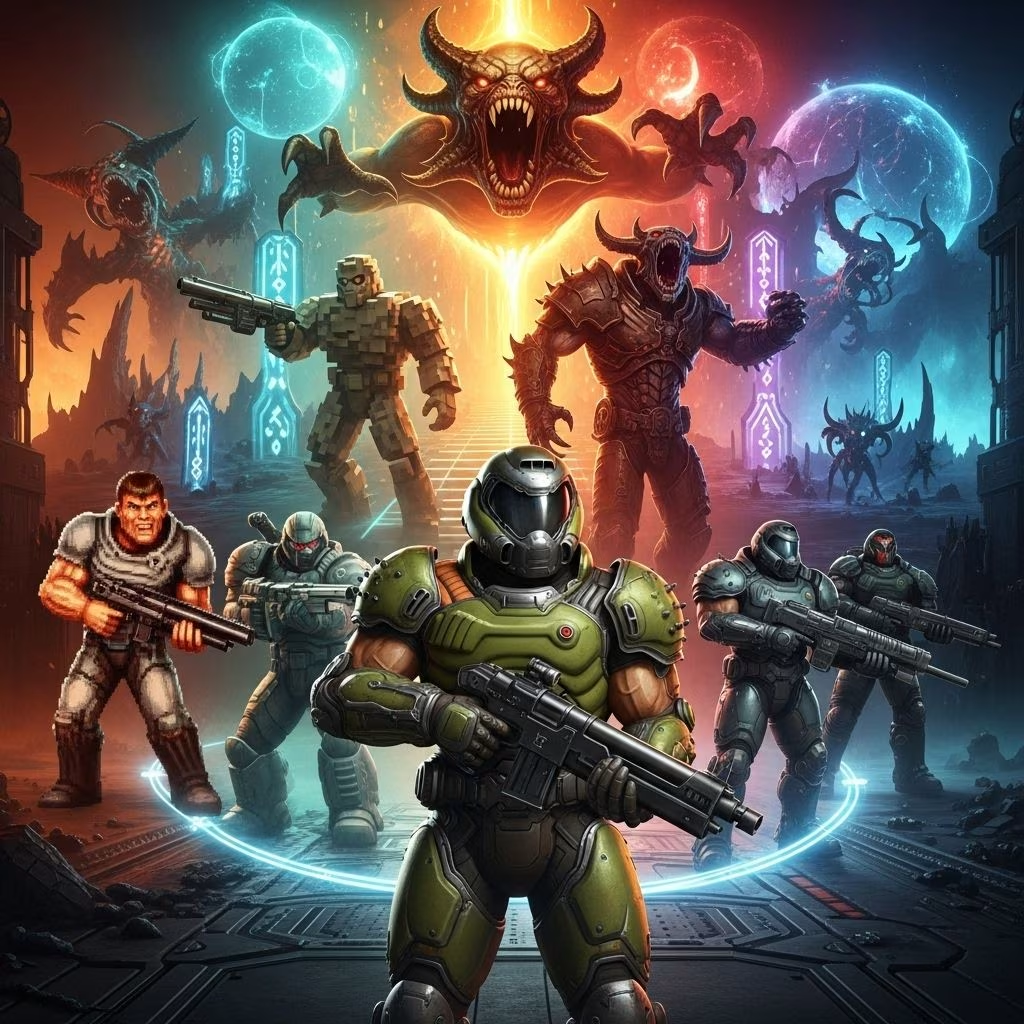
Doom Games In Order: Chronological and Release Date Timeline
The Doom franchise stands as a pillar of first-person shooter (FPS) video game history, shaping the genre since its inception in 1993. From its demonic Martian origins to cosmic and medieval conflicts, the series has evolved remarkably while maintaining its signature run-and-gun gameplay. This comprehensive guide covers every major Doom title, explores the series’ timelines, release orders, and answers frequently asked questions about the franchise’s complex lore and chronology.
Introduction to the Doom Franchise
The Doom series was created by legendary developers John Carmack, John Romero, Adrian Carmack, Kevin Cloud, and Tom Hall. The principal protagonist—known as Doomguy, Doom Marine, or more recently, the Slayer—battles the forces of Hell, aliens, and the undead in settings that range from Mars’ colonies to otherworldly hellscapes. Doom’s legacy stems from its innovative gameplay mechanics, pioneering 3D graphics, multiplayer features, and a mod-friendly design which spawned countless fan creations .
Key features of Doom’s gameplay:
- Iconic arsenal with weapon juggling mechanics
- Maze-like levels brimming with secrets
- Fast-paced action and minimal puzzle elements in classic entries
- Expanded lore and platforming in modern titles
Over the years, Doom has expanded into sequels, spin-offs, novels, comics, tabletop adaptations, and films, with new games regularly revitalizing its core formula .
Doom Games in Release Order
The following table lists every official Doom game by release year, including expansions and significant ports.
| Year | Game Title |
|---|---|
| 1993 | Doom |
| 1994 | Doom II: Hell on Earth |
| 1995 | The Ultimate Doom |
| 1995 | Master Levels for Doom II |
| 1996 | Final Doom |
| 1997 | Doom 64 |
| 2004 | Doom 3 |
| 2005 | Doom 3: Resurrection of Evil |
| 2005 | Doom RPG |
| 2009 | Doom Resurrection |
| 2009 | Doom II RPG |
| 2012 | Doom 3: BFG Edition |
| 2016 | Doom (2016) |
| 2017 | Doom VFR |
| 2020 | Doom Eternal |
| 2020 | Doom 64: The Lost Levels |
| 2020 | The Ancient Gods, Part One |
| 2021 | The Ancient Gods, Part Two |
| 2021 | Doom 3: VR Edition |
| 2023 | Mighty Doom |
| 2023 | Sigil 2 |
| 2024 | Doom + Doom II |
| 2024 | Doom II: Legacy of Rust |
| 2025 | Doom: The Dark Ages |
Some ports and remasters add new story or gameplay, such as Doom 3: BFG Edition and Doom 3: VR Edition. Basic ports (e.g., SNES Doom) are not listed as new releases .
Doom Games in Chronological Order
Doom games do not follow a strict linear storyline across entries; instead, they’re divided into distinct timelines. Here’s how the main timelines are structured :
The Classic Doom Timeline
- Doom (1993): Doomguy battles demonic invaders in UAC bases on Mars and its moons.
- Doom II: Hell on Earth (1994): The fight returns to Earth as it’s consumed by a hellish invasion.
- Final Doom (1996): Standalone missions with new stories, continuing Earth’s struggle against Hell.
- Doom 64 (1997): Doomguy ventures into Hell for a final confrontation to prevent future invasions.
The Doom 3 Timeline (Reboot Continuity)
- Doom 3 (2004): Retells the demonic invasion on Mars with a survival horror focus, rebooting the mythology.
- Doom 3: Resurrection of Evil (2005): Expansion set after Doom 3’s events.
- Doom Resurrection (2009): Mobile game interweaving with Doom 3’s narrative.
- Doom 3: BFG Edition (2012): Remastered compilation with additional story and gameplay.
- Doom 3: VR Edition (2021): VR adaptation expanding the experience.
The Modern Doom Timeline
- Doom (2016): The Slayer returns, introducing a new continuity with deeper lore and fast-paced action.
- Doom Eternal (2020): Expands the story, taking the battle to new dimensions and revealing connections to the Slayer’s origins.
- Doom Eternal: The Ancient Gods Parts One & Two (2020–2021): DLC expansions continuing from Doom Eternal’s events.
- Doom: The Dark Ages (2025, Upcoming): Recently announced as a medieval-themed prequel, revealing origins of the Slayer and events before Doom (2016).
Spin-offs and Alternate Continuities:
- Doom RPG series and mobile games feature parallel stories or side events.
- Mighty Doom (2023) introduces a cartoon-style casual take on classic gameplay.
- Sigil and Sigil 2 are fan-made but officially endorsed mods/extensions by John Romero.
Timeline Breakdown: Original, Doom 3, Modern Series
The Doom universe features three main continuities:
| Timeline | Core Games | Theme/Lore |
|---|---|---|
| Classic Timeline | Doom, Doom II, Final Doom, Doom 64 | Original Mars/Earth/Hell invasion; Doomguy’s saga |
| Doom 3 Timeline | Doom 3, RoE, Resurrection, BFG, VR | Survival horror reboot; new protagonist |
| Modern/Slayer Timeline | Doom (2016), Doom Eternal, Ancient Gods, Dark Ages | Epic mythology; Slayer’s origins and cosmic war |
Each timeline reimagines the universe while nodding to series traditions, resulting in distinct gameplay styles and lore.
Spin-offs, Expansions & Notable Ports
While the above games are the core series, several spin-offs and expansions exist, adding variety or extra lore:
- Master Levels for Doom II (1995): Commercial expansion of fan-made levels for Doom II.
- Doom RPG (2005): Turn-based strategy adaptation for mobile.
- Doom Resurrection & Doom II RPG: Mobile titles set during Doom 3’s events.
- Doom VFR (2017): VR shooter intersecting with Doom (2016).
- Doom 64: The Lost Levels (2020): New content for the Nintendo 64 classic in its remastered release.
- Doom: The Ancient Gods (2020-2021): Two DLC expansions for Doom Eternal, pushing the Slayer’s story into new cosmic conflicts.
- Doom II: Legacy of Rust (2024): Recent expansion, continuing classic Doom II lore.
- Sigil & Sigil 2 (2019, 2023): Fan-made episode mods by co-creator John Romero, officially recognized extensions for the original Doom.
These expansions and spin-offs provide more gameplay and story, supplementing the main experience.
Upcoming & Latest Entries
The Doom franchise continues to evolve in 2025 with the highly anticipated Doom: The Dark Ages. Set during a medieval era, this new entry is positioned as a prequel to the modern Slayer series, exploring origins, new enemies, and dark lore that further intertwine the mythos. Early reports promise fresh gameplay mechanics, upgraded visual fidelity, and more narrative depth than ever before .
Recent and notable releases include:
- Mighty Doom (2023): Top-down shooter with a cartoon aesthetic.
- Doom 3: VR Edition (2021): Full VR remaster of Doom 3 for modern systems.
- Doom II: Legacy of Rust (2024): Most recent classic expansion.
Frequently Asked Questions (FAQ)
Q: What is the best order to play Doom games for newcomers?
A: Most fans recommend playing by release date for context and nostalgia. Start with Doom (1993), then move through major sequels: Doom II, Doom 64, Doom 3, Doom (2016), and Doom Eternal. For lore, try classic, Doom 3, and then the modern Slayer series individually .
Q: Is Doom 3 part of the original storyline?
A: No, Doom 3 is a separate reboot continuity; it retells Mars’ invasion in a distinct horror-sci-fi style .
Q: How is Doom: The Dark Ages connected to other games?
A: Doom: The Dark Ages is a prequel set before the events of Doom (2016) and Doom Eternal, focusing on the ancient history of the Slayer and the series’ medieval roots .
Q: Are the spin-offs like Doom RPG and Mighty Doom required for lore understanding?
A: Spin-offs provide fun gameplay and alternate scenarios but are not necessary to understand the main storyline or mythos .
Q: What makes Doom historically important?
A: Doom introduced mainstream gamers to first-person shooting, network-enabled multiplayer, mod compatibility, and 3D environments—foundations for decades of innovation .
Final Thoughts
The Doom series continues to capture players’ imaginations, offering a dynamic blend of action, horror, and cosmic mythology across original, rebooted, and modern timelines. Whether you’re nostalgic for classic demon-slaying or eager for the genre’s ongoing evolution, Doom’s legacy endures as one of gaming’s most influential franchises.
References
- https://www.space.com/entertainment/space-games-toys/doom-games-in-order-chronological-and-release-date
- https://www.thegamer.com/every-doom-game-chronological-order/
- https://en.wikipedia.org/wiki/Doom_(franchise)
- https://www.youtube.com/watch?v=hD0uYL8Ihtk
- https://gamerant.com/doom-how-play-games-best-order-release-chronological/
- https://www.thepopverse.com/gaming-doom-how-to-play-release-order-chronological-order-timeline
- https://en.wikipedia.org/wiki/Doom_(1993_video_game)
- https://doom.fandom.com/wiki/Timeline
- https://www.trueachievements.com/news/doom-games-in-order
- https://steamcommunity.com/app/2280/discussions/0/4691153809028793817/?l=english
- https://steamcommunity.com/discussions/forum/1/3115897635593318912/
- https://gg.deals/franchise/doom/
- https://www.youtube.com/watch?v=xOczDXArT5I
- https://www.radiotimes.com/technology/gaming/doom-game-in-order/
- https://doom.fandom.com/wiki/Console_timeline
- https://facewestcafe.com/article/every-doom-game-in-chronological-order


