New Species of Space-Adapted Bacteria Discovered on China’s Tiangong Space Station
In a groundbreaking development for both microbiology and space exploration, scientists have identified a brand new species of bacteria thriving aboard China’s Tiangong space station. This discovery sheds light on the complex ways life can adapt to the harsh environment of outer space and presents new challenges and opportunities for future crewed missions.
Background: Microbial Life and Space Stations
Space stations are not sterile environments. Throughout the history of human spaceflight, various missions have revealed that microorganisms—brought from Earth by astronauts, cargo, or equipment—can not only survive but sometimes undergo unique adaptations in response to extraterrestrial conditions. Understanding these changes is crucial, as microbes can impact both astronaut health and the integrity of spacecraft systems[10].
- Microbial monitoring: Routine sampling and genetic analyses are conducted as part of station maintenance and astronaut safety.
- Potential risks: Bacteria are studied for their ability to form biofilms, resist radiation, and survive in microgravity—factors that can affect astronaut health and degrade materials.
The Discovery: Niallia tiangongensis
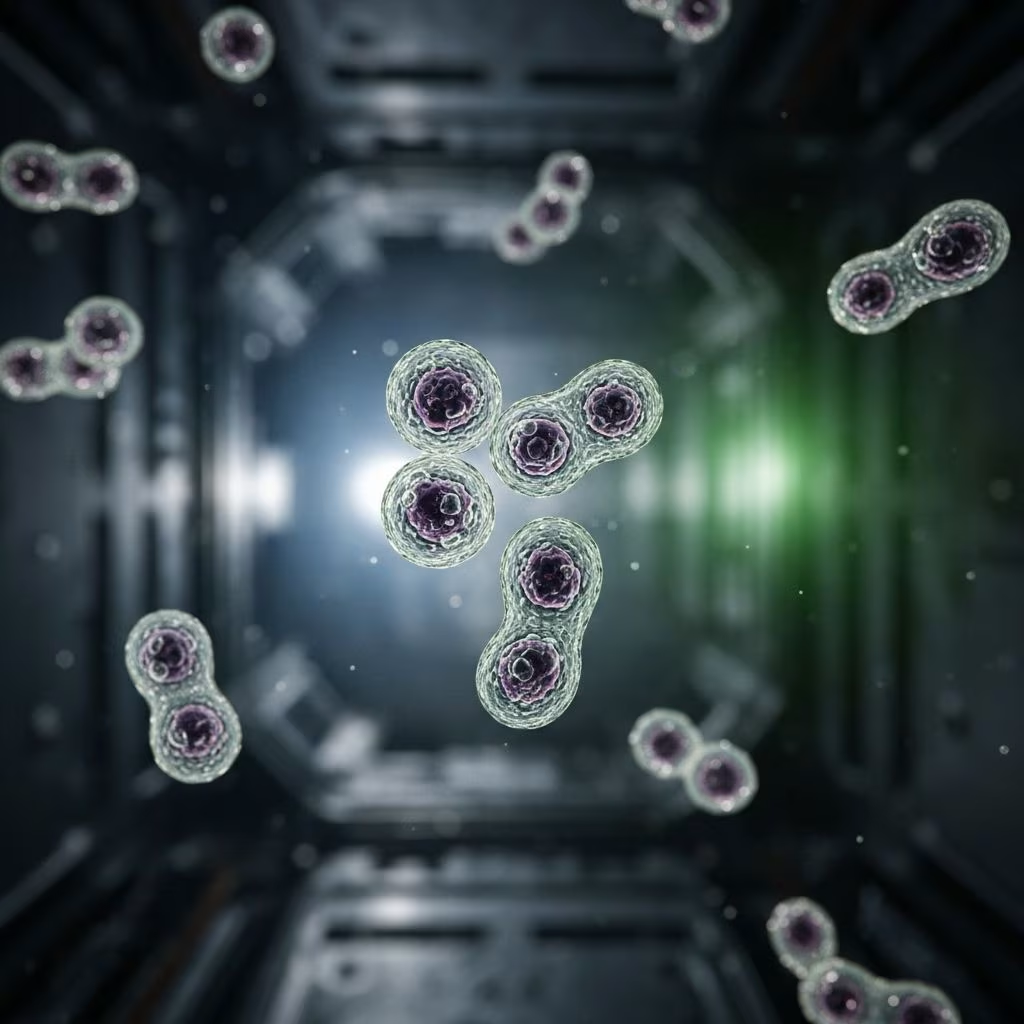
During the Shenzhou 15 mission, microbial samples were collected by astronauts from various surfaces inside the Tiangong space station. These samples were subsequently frozen and analyzed at research institutes in Beijing and Shenzhou. Genetic sequencing and comparative microbiology revealed the emergence of a previously unknown species, which was officially named Niallia tiangongensis in honor of its place of origin[10].
| Characteristic | Description |
|---|---|
| Scientific Name | Niallia tiangongensis |
| Family | Niallia (related to Niallia circulans found on Earth) |
| Discovered During | Shenzhou 15 mission |
| Bacterial Shape | Rod-shaped |
| Metabolism | Aerobic, spore-forming |
Key Findings
- The bacterium closely resembles a known terrestrial species (Niallia circulans) but possesses distinct genetic mutations, likely gained through adaptation to the space environment[10].
- This is the first time a new species has been discovered aboard Tiangong, marking a significant milestone in China’s space program.
Adaptations to Space: Survival Strategies
Outer space presents a set of unique challenges for life, including elevated levels of cosmic radiation, microgravity, and restricted nutrient availability. Niallia tiangongensis demonstrates several vital strategies to survive these conditions[10]:
- Biofilm Formation: The bacterium forms advanced 3D biofilms, which create a protective barrier against environmental threats, including radiation and chemical stresses. Biofilms also facilitate the sharing of resources and enhance survival through coordinated bacterial activity.
- Resilience to Oxidative Stress: Niallia tiangongensis can withstand oxidative stress—damage caused by free radicals—more effectively than its relatives on Earth. This trait is crucial for countering cell and tissue destruction arising from the imbalance of reactive oxygen species, common in space environments[10].
- Advanced DNA Repair: The bacterium possesses enhanced DNA repair mechanisms, allowing it to quickly reverse radiation-induced genetic damage, which is a prominent hazard beyond Earth’s atmosphere[10].
- Spore Formation: As a spore-forming bacterium, it can enter a dormant state to survive periods of extreme stress, such as high radiation or desiccation.
Implications for Space Missions
The discovery of Niallia tiangongensis has wide-ranging implications for future space exploration and human health.
- Astronaut Safety: Understanding the characteristics of space-adapted microorganisms is critical for developing effective health monitoring and protection protocols[10]. Bacteria can sometimes cause infections, degrade air or water quality, or corrode station surfaces.
- Spacecraft Maintenance: Biofilms pose a risk to spacecraft equipment by promoting material corrosion and clogging water recovery or air filtration systems. Knowledge of bacterial adaptations can inform strategies to mitigate these risks[10].
- Planetary Protection: The ability of terrestrial microbes to adapt and thrive in space environments raises important questions about contamination—both to other celestial bodies and by external agents entering Earth systems.
- Life Sciences Research: Mutations and regulatory changes in bacterial genomes can inform our understanding of microbial resilience, evolution under stress, and possibilities for biotechnology and medicine[10].
Broader Scientific Significance
The adaptation strategies observed in Niallia tiangongensis could inform multiple scientific fields:
- Space Technology: Insights from bacterial DNA repair mechanisms may inspire improved materials for withstanding radiation or new safety protocols for future missions.
- Medicine and Biotechnology: Resistance to oxidative stress and novel biofilm properties can influence antimicrobial development and industrial applications.
- Agriculture: Traits gleaned from space-adapted microbes could lead to crops or soil treatments better able to resist extreme conditions.
Research Methodology: How the Discovery Was Made
The research team employed advanced genetic analysis and sample recovery protocols to ensure precise identification of the new species:
- Sample Collection: Swabs and surface samples were obtained from high-traffic zones inside the station during the Shenzhou 15 mission. Samples were immediately frozen to preserve their microbial profile for return to Earth.
- Genetic Sequencing: Comparative genomics revealed significant divergence from known terrestrial species, confirming the emergence of a genuinely novel bacterium.
- Peer-reviewed Publication: The discovery was reported in the International Journal of Systematic and Evolutionary Microbiology, adding credibility and scientific rigor to the findings[10].
China’s Growing Role in Space Biosciences
Tiangong’s ongoing missions continue to advance China’s status as a leader in space biotechnology:
- Regular microbial sampling is now a standard protocol during crewed missions, supporting astronaut health and station longevity.
- Publications resulting from Tiangong’s research contribute to international understanding and cooperation in the field of space life sciences.
Challenges and Future Research Directions
Despite these advances, several open questions remain:
- Mutation Origins: What specific environmental triggers in space—cosmic radiation, microgravity, confinement—drive rapid microbial adaptation?
- Risk Management: How can future missions balance the biological needs of crew members while minimizing unintended consequences of microbial growth?
- Transfer and Containment: What protocols are necessary to prevent cross-contamination between Earth and space habitats? How will knowledge gained from Niallia tiangongensis inform planetary protection strategies?
- Industrial Applications: Will traits from the new bacterium have uses in fields beyond space travel, such as bioremediation or manufacturing?
Frequently Asked Questions (FAQs)
Q: What is the name of the new bacteria discovered on the Tiangong station?
A: The bacterium is called Niallia tiangongensis, named after the Tiangong space station where it was found.[10]
Q: How does Niallia tiangongensis differ from terrestrial bacteria?
A: This species exhibits unique gene mutations and survival mechanisms, like increased biofilm formation, advanced DNA repair, and enhanced resistance to oxidative stress—traits shaped by life in microgravity and space radiation.[10]
Q: Why does the discovery matter for astronaut safety?
A: Monitoring and understanding such microbes is vital for safeguarding astronaut health, managing air and water quality aboard spacecraft, and maintaining station systems that microbes can damage or disrupt.[10]
Q: What could be the wider implications of this discovery?
A: Insights from Niallia tiangongensis could impact biotechnology, medicine, materials science, and planetary protection protocols for future missions to the Moon, Mars, and beyond.
Q: How was the new species confirmed?
A: Scientists conducted genetic analysis on samples collected during the Shenzhou 15 mission, identifying unique genetic markers and adaptations not found in existing terrestrial strains.[10]
Q: Can these bacteria survive on planets other than Earth?
A: While this is not confirmed, their demonstrated resilience to radiation and stress in space suggests potential for surviving in harsh extraterrestrial environments, although this remains an area for continued research.
Conclusion
The identification of Niallia tiangongensis aboard the Tiangong space station marks a new chapter in our understanding of microbial life under extreme conditions. Not only does this discovery highlight the adaptability of life, but it also prompts renewed attention to the possibilities and the risks that come with human expansion into space. Ongoing research will be instrumental in leveraging these insights for safer, more efficient, and more scientifically productive missions in the decades ahead.
References
- https://www.earth.com/news/mysterious-bacteria-found-on-chinese-space-station-has-never-been-seen-before/
- https://thedebrief.org/bacteria-found-on-chinas-tiangong-space-station-shows-unique-adaptations-for-space-survival-study-shows/
- https://davidson.weizmann.ac.il/en/online/sciencenews/microbes-space-new-species-discovered-chinese-station
- https://aiaa.org/2025/05/22/scientists-discover-new-microbe-on-chinas-tiangong-space-station/
- https://www.ndtv.com/science/chinese-scientists-discover-mysterious-bacteria-on-tiangong-space-station-8476161
- https://www.youtube.com/watch?v=c_RL6-MzIus
- https://www.youtube.com/watch?v=xJwaXdtrChM
- https://www.livescience.com/space/space-exploration/unknown-strain-of-bacteria-found-on-chinas-tiangong-space-station
- https://news.sky.com/story/radiation-resistant-bacteria-with-unique-ability-found-on-space-station-could-be-key-for-cosmos-travel-13372032
- https://www.scmp.com/news/china/science/article/3310769/new-strain-bacteria-found-chinas-tiangong-space-station
- https://www.ynetnews.com/health_science/article/rjgxlcymgx
- https://www.friendsofnasa.org/2025/05/chinese-scientists-discover-novel.html
- https://www.ndtv.com/science/bacteria-thriving-in-extreme-space-conditions-found-on-chinese-space-station-8445023
- https://www.marca.com/en/lifestyle/world-news/2025/06/01/683c342eca4741403d8b458a.html
- https://ground.news/article/chinese-scientists-discover-a-novel-species-in-china-space-station
- https://gigazine.net/gsc_news/en/20250523-unknown-bacteria-tiangong-space-station/
- https://integrativebioscience.net/2025/08/11/space-station-microbes-discovering-niallia-tiangongensis/
- https://spaceexplored.com/2025/06/07/new-bacteria-raise-red-flags-for-planetary-protection-efforts/
- https://digitalpaper.stdaily.com/http_www.kjrb.com/ywtk/html/2025-06/07/content_589663.htm?div=-1