The Dark Legacy: Unveiling the History of the Sith Order in Star Wars
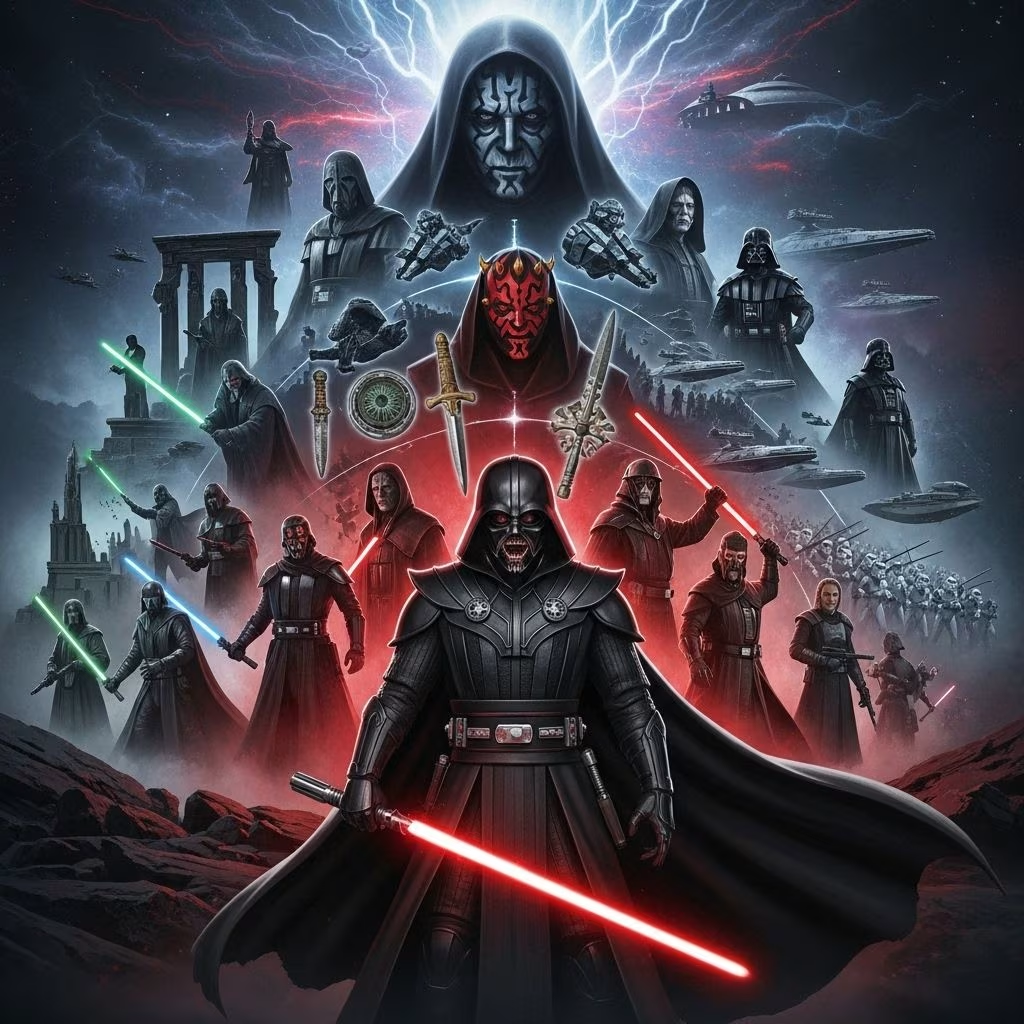
Few antagonists in science fiction have captured attention like the Sith Order of the Star Wars universe. Emerging as embodiments of power, ambition, and darkness, the Sith represent the perpetual counterpoint to the noble Jedi, fueling timeless struggles that shape the destiny of the galaxy. This comprehensive journey explores the origins, philosophy, key eras, and dramatic timeline of the Sith Order, revealing how they came to embody ultimate evil—and why their legacy endures.
Who Are the Sith?
The Sith, a sect of Force users devoted to the dark side, are ancient adversaries of the Jedi Order. To the Sith, strength and domination are virtues, and emotional passion is celebrated rather than suppressed. Their pursuit of power has wrought terrorism, mass murder, and catastrophic destruction across millennia, shaping the fate of countless worlds. Through various incarnations—from the Confederacy of Independent Systems to the First Galactic Empire—the Sith have driven the central conflicts of Star Wars lore and remain the nemesis to all Jedi values.[10]
- Philosophy: The Sith embrace passion, chaos, and control—contrasting the Jedi’s ideals of peace and selflessness.
- Structure: Traditionally, the Sith have been led by powerful Dark Lords, but their internal rivalries led to radical reforms, most famously the “Rule of Two.”
- Legacy: Several galactic powers were founded, manipulated, or led by the Sith, their influence rippling across history.
Origins: The Sith Order Emerges
The roots of the Sith Order reach back thousands of years before the events of the film saga, springing from philosophical divisions among the Jedi. During the “Hundred-Year Darkness,” a period of intense conflict and experimentation with forbidden powers, a group of Jedi became disillusioned with their brethren. These Dark Jedi delved deeper into the Force’s dark side, eventually being exiled—forming a new order that sought mastery through emotion, not restraint.[12]
- Earliest Legends: In the expanded universe, Ajunta Pall is often named as the first Dark Lord of the Sith.
- Canon Timeline: While Disney’s revised canon omits specific names, both legends and canon agree that the Sith began when a rogue Jedi founded the order (around 6000–5000 BBY).
- Hundred-Year Darkness: This formative era marked a permanent rift from the Jedi Order and set the template for centuries of Sith conflict.
Table: Sith vs Jedi Philosophies
| Aspect | Sith Order | Jedi Order |
|---|---|---|
| Force Alignment | Dark Side | Light Side |
| Core Philosophy | Passion, Power, Domination | Peace, Harmony, Selflessness |
| Rule Structure | Rule of Two (for secrecy & survival) | Many members, open teaching |
| Goal | Conquest, Destruction of Jedi | Protection, Mediation, Balance |
The Age of Empires: Rise and Conflict
For centuries following their formation, the Sith built powerful empires and waged devastating wars against the Jedi and the Republic. Their relentless pursuit of power led to periods of openness and secrecy, spectacular defeats, and innovative survival strategies.
The First Sith Empire
Having settled among the native Sith species on Korriban, the exiled Dark Jedi intermarried and took control. These Sith Lords harnessed their new followers’ arcane knowledge and created the first of many dark empires, ruling with absolute power.
- Korriban: Homeworld of the original Sith species and tombs of ancient Dark Lords.
- Dark Side Magic: The Sith developed unique powers, including Sith alchemy and sorcery, amplifying their threat.
- Great Hyperspace War: The earliest major galactic conflict, with the Sith first invading the Republic.
Centuries of War: The Sith-Jedi Rivalry
The eternal struggle between Sith and Jedi shaped the galaxy, repeating in cycles of open warfare and clandestine shadow conflict. Major events included:
- The Great Hyperspace War: The Sith Empire clashed directly with the Republic—the Jedi ultimately prevail.
- Exar Kun & the Dark Lords: In the Legends continuity, fallen Jedi Exar Kun led another wave of Sith resurgence.
- Millennia of Secrecy: Repeated defeat forced Sith to adopt secretive strategies for survival, culminating in the “Rule of Two.”
The Rule of Two: Survival Through Secrecy
Internal conflict plagued the Sith, as their own lust for power resulted in destructive rivalries. A pivotal turning point arrived with Darth Bane, who introduced the “Rule of Two”: only a master and an apprentice could exist at one time, ensuring secrecy and focus.
- Darth Bane: Established the “Rule of Two,” banning large groups and setting the template for Sith evolution over the next thousand years.
- Legacy: This philosophy preserved the Sith, allowing them to operate in the shadows while the Jedi believed the order extinct.
- Master vs Apprentice: Apprentice was expected to surpass—and eventually replace—the master, ensuring only the strongest survived.
Notable Sith Throughout History
- Ajunta Pall: Often cited as founding figure (Legends continuity).
- Darth Revan: Led both the Jedi and then the Sith in the Old Republic era (Legends).
- Exar Kun: Orchestrated a wave of dark side insurgency.
- Darth Bane: Introduced the foundation for future Sith survival.
- Darth Plagueis: Secret master of Darth Sidious.
- Darth Sidious (Emperor Palpatine): Orchestrated the fall of the Republic and Jedi.
- Darth Vader (Anakin Skywalker): Responsible for near-extermination of the Jedi.
- Kylo Ren & the Sith Eternal: Played roles in the ultimate fate of the Sith during the sequel trilogy.
The Final Gambit: The Sith in the Skywalker Saga
The culmination of the Sith’s millennia-long shadowy quest for power explodes in the core Star Wars films. Working through subterfuge, manipulation, and strategic planning, the Sith re-emerge and dominate galactic events from the prequel trilogy through to the sequel trilogy.
- Chancellor Palpatine: Secretly Darth Sidious, engineered the collapse of the Republic and rise of the Empire.[12]
- Order 66: Executed the near-total destruction of the Jedi Order, further cementing Sith dominance.
- Darth Vader: Most famous Sith apprentice, pivotal in enforcing Sith power across the galaxy.
- Battle of Endor: Saw the fall of the Empire and presumed demise of Sidious; the Jedi begin to recover.
- Final Resurrection: Sidious returns as the puppet master behind the First Order and the Sith Eternal cult.
- Ultimate Defeat: Rey and the Jedi legacy bring an end to Sidious and the Sith Eternal at Exegol (“The Rise of Skywalker”).
Table: Major Sith Eras
| Era | Key Figures | Notable Events |
|---|---|---|
| Hundred-Year Darkness | Ajunta Pall | Sith Order founded |
| Old Republic | Darth Revan, Exar Kun | Great Hyperspace War, Sith resurgence |
| Rule of Two Era | Darth Bane, Darth Plagueis | Rule of secrecy, master-apprentice cycle |
| Galactic Empire | Darth Sidious, Darth Vader | Jedi purge, Empire rises |
| First Order & Sith Eternal | Sidious (resurrected), Kylo Ren | Battle of Exegol, final defeat |
The Sith Legacy: Philosophy, Impact, and Enduring Mystique
The legacy of the Sith Order stretches far beyond spectacular battles. Their doctrines, manipulation, and legacy of fear and domination have irreparably shaped galactic civilization. Even after their apparent defeat, remnants and cults dedicated to their cause continue to surface, underscoring their enduring mystique and impact.
- Sith Holocrons: Knowledge vaults ensuring the survival and influence of Sith teachings even after physical defeat.
- Cultural Impact: Countless species, planets, and institutions were warped by Sith ideology and rule.
- Enduring Nemesis: The Jedi-Sith rivalry encapsulates ideas about balance, morality, and power that resonate through the Star Wars saga.
- Expanded Universe: Novels, comics, and games explore Sith philosophy, rituals, and lost empires in far greater detail, adding depth and intrigue beyond what’s seen onscreen.
Frequently Asked Questions About the Sith Order
Q: Who was the first Sith Lord?
A: In Legends, Ajunta Pall is often named as the first Dark Lord of the Sith. In current canon, the founder is an unnamed rogue Jedi exiled during the Hundred-Year Darkness.
Q: What is the “Rule of Two”?
A: Introduced by Darth Bane, the Rule of Two is a doctrine limiting the Sith to only two members at a time—a master and an apprentice—ensuring secrecy and concentrated power.
Q: Why do the Sith always lose?
A: The recurring theme is that the Jedi always manage to overcome the Sith, often due to the Sith’s own internal strife and the resilience of the light side of the Force.[12]
Q: Are there still Sith after “The Rise of Skywalker”?
A: Canonically, the defeat of Sidious and the Sith Eternal at Exegol marks the end of the Sith Order. However, remnants and dark side cults may persist, especially in expanded universe stories.
Q: What distinguishes the Sith from “dark Jedi”?
A: While dark Jedi are Jedi who fall to the dark side, the Sith have their own traditions, history, and organizational order—focused entirely around the pursuit and mastery of the dark side.
The Enduring Allure of the Sith
Throughout the vast Star Wars mythos, the history of the Sith Order is a saga of ambition, betrayal, and cosmic conflict. From their obscure beginnings and empire-building to their secret survival and spectacular downfall, the Sith have left marks upon every era. Their story—bound by rivalry, power, and the nature of the Force—remains essential to the greater Star Wars narrative, a testament to the timeless struggle between light and darkness, order and chaos.
- Always Two, Yet Many: The Sith’s doctrine may limit their numbers, but their legacy, teachings, and influence are scattered throughout the galaxy.
- Symbol of Temptation: Their embrace of passion and power continues to tempt characters and audiences alike.
- Ultimate Foe: Whether in ancient times or the modern era, the Sith remain the archetypal nemesis, ever shaping the destiny of the Star Wars galaxy.
References
- https://en.wikipedia.org/wiki/Sith
- https://starwarstimelinealmanac.com/SWLegends_Sith.html
- https://www.ranker.com/list/sith-star-wars-timeline/tyler-mitchell
- https://starwars.fandom.com/wiki/Order_of_the_Sith_Lords
- https://youtini.com/article/history-of-the-sith-in-legends
- https://starwars.fandom.com/wiki/Sith
- https://starwarstimelinealmanac.com/SWCanon_Sith.html
- https://en.wikipedia.org/wiki/Dark_Lord_of_the_Sith?mobile-app=true&theme=dark
- https://www.youtube.com/watch?v=Hpl-TYp42js
- https://www.starwars.com/databank/sith
- https://www.youtube.com/watch?v=QZUt-4kBvks
- https://screenrant.com/star-wars-sith-history-major-events-explained/
- https://www.starwarstimeline.net/TheSithEra.htm
- https://www.starwars.com/eras
- https://www.comicbasics.com/star-wars-the-complete-history-and-timeline-of-the-sith-explained/
- https://www.youtini.com/article/history-of-the-sith-in-legends
- https://screenrant.com/star-wars-sith-wars-canon-reveals-explained/
- https://www.swtor.com/holonet/galactic-history